

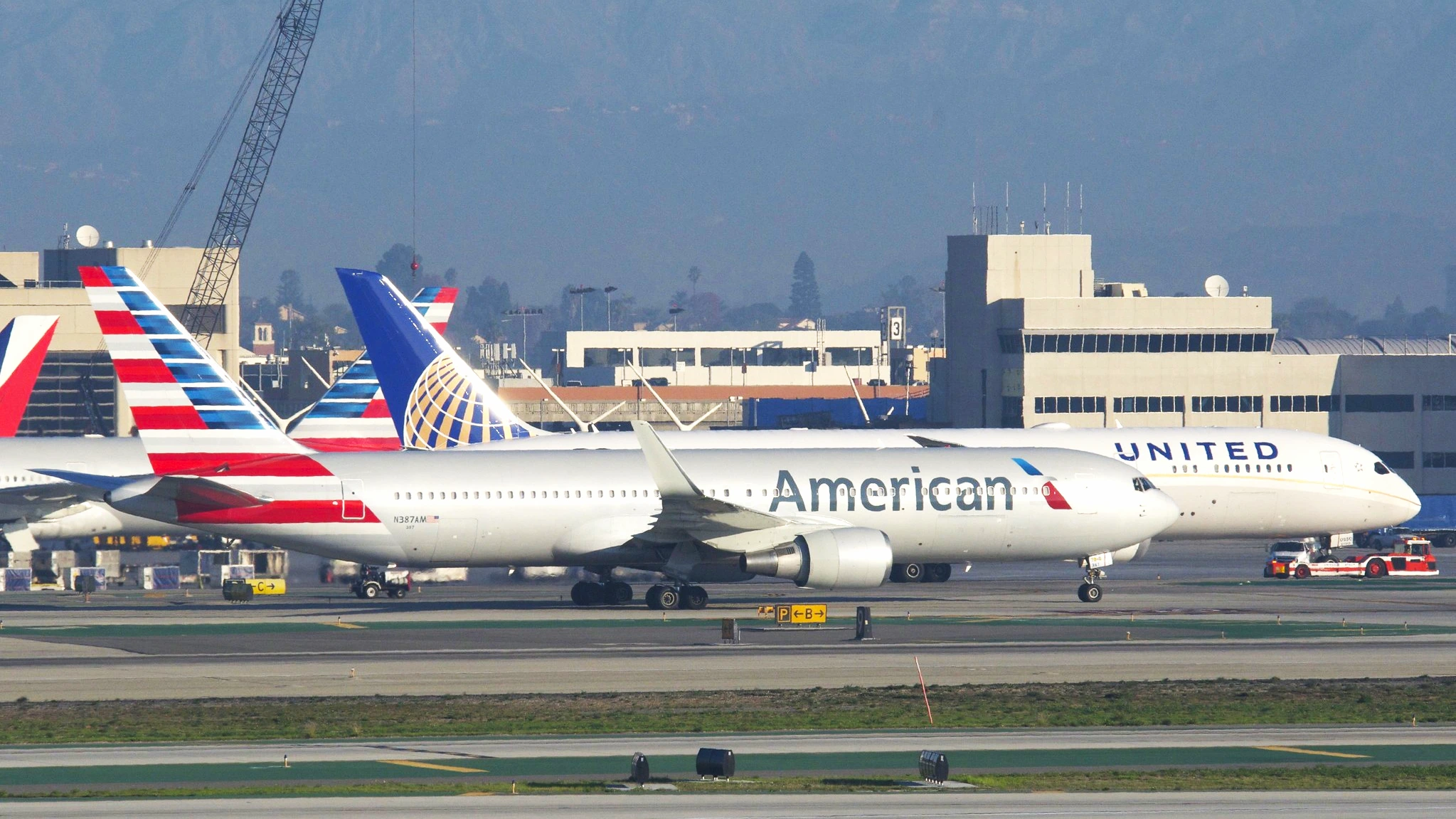
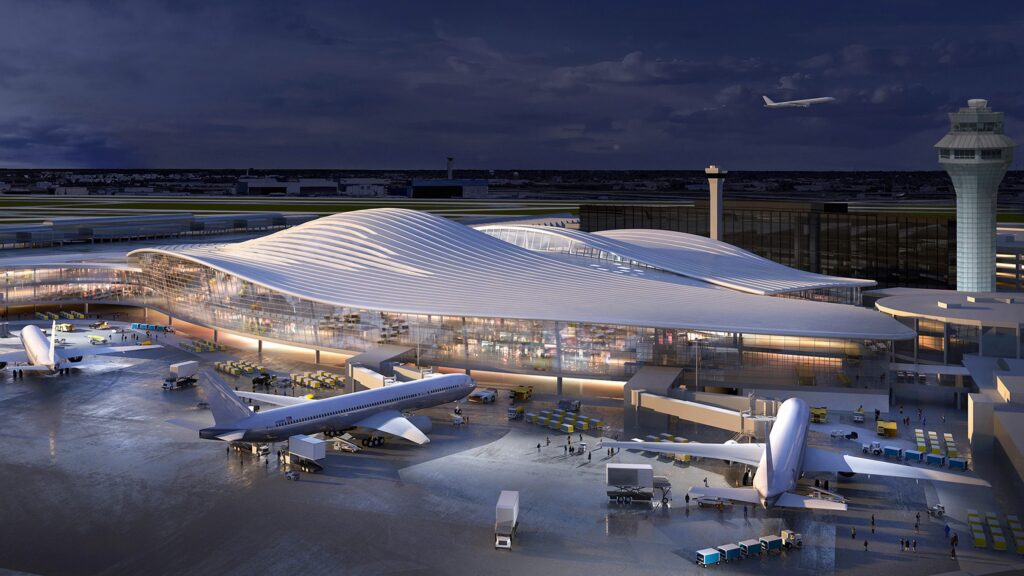
CHICAGO- United Airlines (UA) and American Airlines (AA) are intensifying competition at O’Hare International Airport (ORD). Both airlines operate hubs at the airport, but their market positions have shifted significantly over the past decade.
United has expanded aggressively at ORD and now leads in market share, while American is adding capacity to regain ground.
According to OMAAT, the dispute has escalated publicly, with United executives projecting major losses for American in 2026.
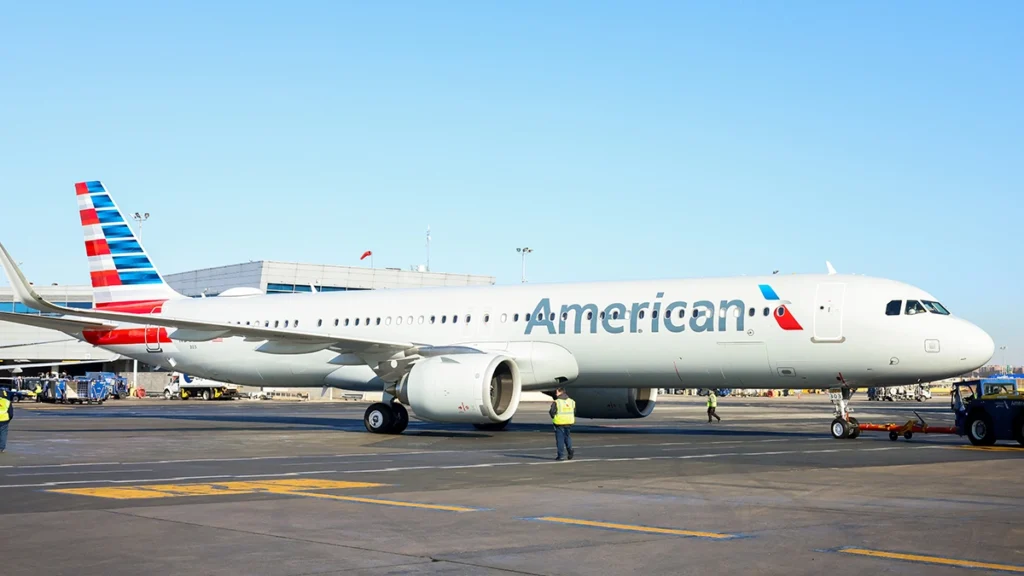
Escalating Rivalry at Chicago O’Hare
Chicago O’Hare remains one of the most strategically important hubs in the United States due to its central geography and strong corporate demand. A decade ago, American held a competitive advantage at ORD.
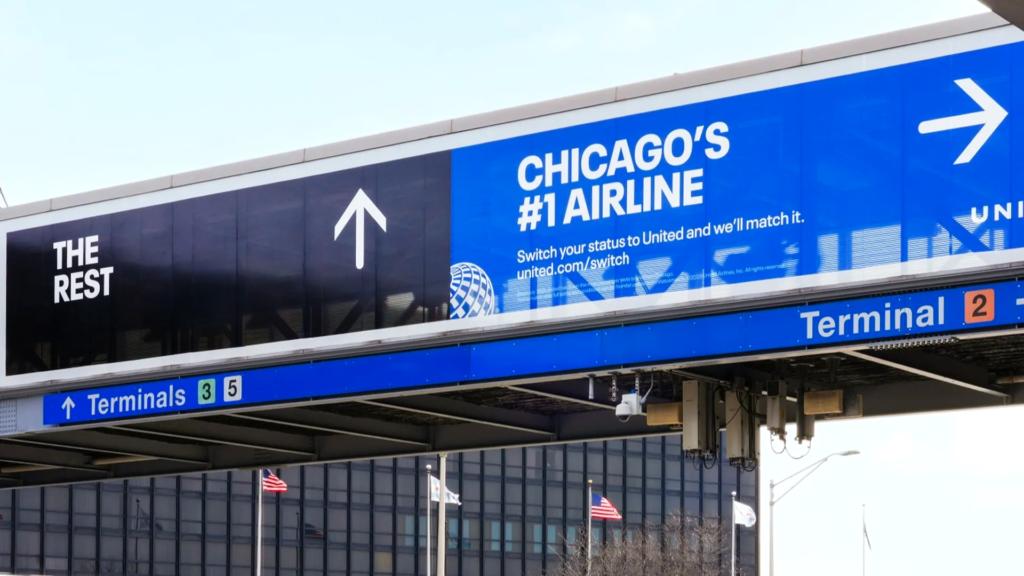
Over time, United increased flights, strengthened corporate contracts, and improved connectivity, pushing American into a distant second-place position.
American has launched a major effort to reclaim its share by adding significant capacity. United has matched that expansion to defend its dominance.
United CEO Scott Kirby has stated that he is “drawing a line in the sand” and will not allow American to grow its market share percentage further at ORD.
He has also claimed that United’s Chicago growth remains profitable, while suggesting American could lose roughly $1 billion in Chicago in 2026.
United released a detailed presentation outlining its competitive position in Chicago and projecting that American could lose $952 million at ORD in 2026.
The presentation characterized United’s Chicago operation as sustainably profitable while portraying American’s expansion as financially destructive.
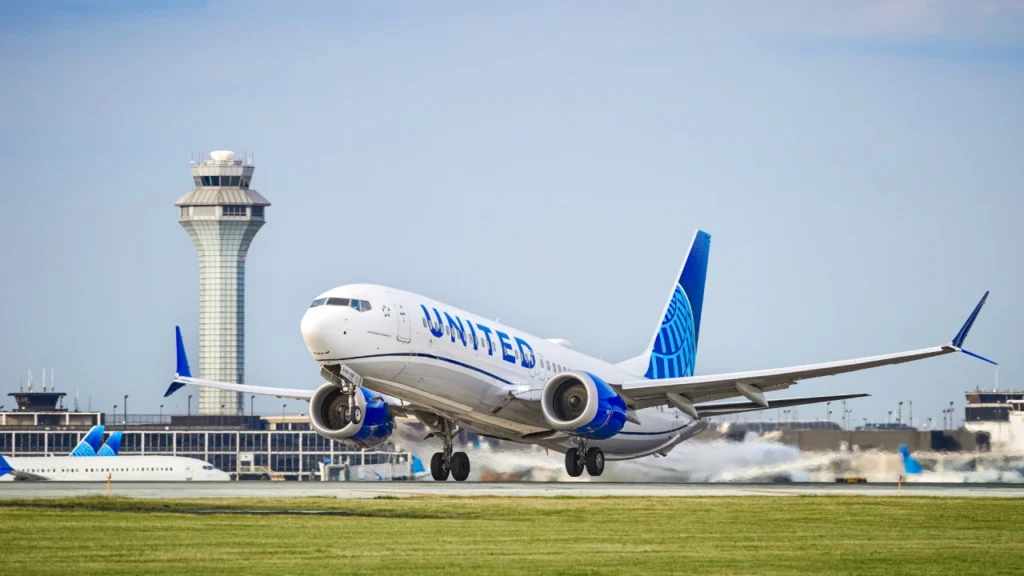
United CFO’s “Temporary Hub” Remarks
United CFO Michael Leskinen addressed the Chicago situation during the Barclays 43rd Annual Industrial Select Conference, in comments first flagged by View from the Wing. When asked about competition in Chicago, Leskinen responded, “Temporarily, they have a hub,” referring to American’s ORD operation.
He emphasized that Chicago is United’s hometown and headquarters location. He stated that corporate customers are shifting from American to United due to what he described as differentiated product quality, stronger schedule connectivity, and superior lounge infrastructure.
Leskinen further remarked that American could “fly around some empty airplanes,” suggesting that increased capacity alone does not ensure profitable performance.
He referenced “gate calculus” and the importance of protecting long-term gate positions at ORD. He stated that the competitive response would have only a modest profitability impact on United and reiterated that United made a solid profit in Chicago last year.
He characterized American’s expansion as “an irrational strategy to accelerate their losses,” arguing that publicly available data supports United’s profitability claims and American’s projected losses.
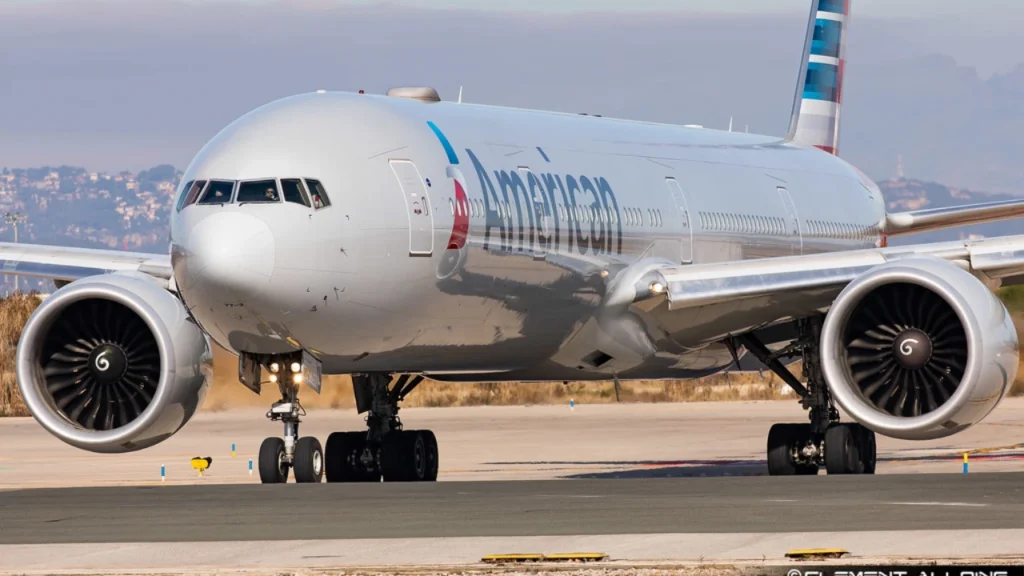
Financial and Labor Cost Dynamics
United’s management has received recognition for operational improvements and financial discipline in recent years.
The airline aims to close the profitability gap with Delta Air Lines (DL), which leads U.S. legacy carriers in financial performance.
However, United’s margin comparisons require context. The airline currently benefits from an estimated $1 billion annual labor cost advantage because certain labor contracts have not yet been ratified.
When adjusting for that temporary advantage, United’s profitability sits roughly between Delta and American.
This nuance affects how analysts evaluate United’s projections regarding American’s potential $952 million loss in Chicago.
Public Messaging and Industry Perception
United’s public commentary has drawn attention for its tone. In addition to labeling American’s hub “temporary,” executives have previously suggested that American is “totally cooked” and has no realistic chance of succeeding in the competitive landscape.
Such remarks have elevated the rivalry beyond routine market competition. Critics argue that describing a long-established hub as temporary, or suggesting a competitor will operate empty aircraft, adds rhetorical intensity to an already aggressive capacity battle.
At the same time, American’s leadership has maintained that 2026 will reflect improved financial performance. The airline disputes projections of severe Chicago losses and insists that its strategy is sustainable.
The contrast in messaging has amplified the perception that United is defining the narrative around the Chicago battle, while American has offered fewer detailed public counterarguments.
2026 Outlook for ORD
The outcome of the Chicago expansion will depend on measurable factors such as yield performance, load factors, cost discipline, and corporate contract retention. Sustained oversupply could pressure fares and margins for both carriers.
United asserts that it can absorb competitive capacity while maintaining profitability. American maintains that its expanded presence will strengthen its long-term market position without producing catastrophic losses.
Chicago O’Hare will serve as a real-world test of hub economics in a high-density legacy carrier market. The financial results in 2026 will determine whether United’s projections prove accurate or overstated.
Stay tuned with us. Further, follow us on social media for the latest updates.
Join us on Telegram Group for the Latest Aviation Updates. Subsequently, follow us on Google News
