

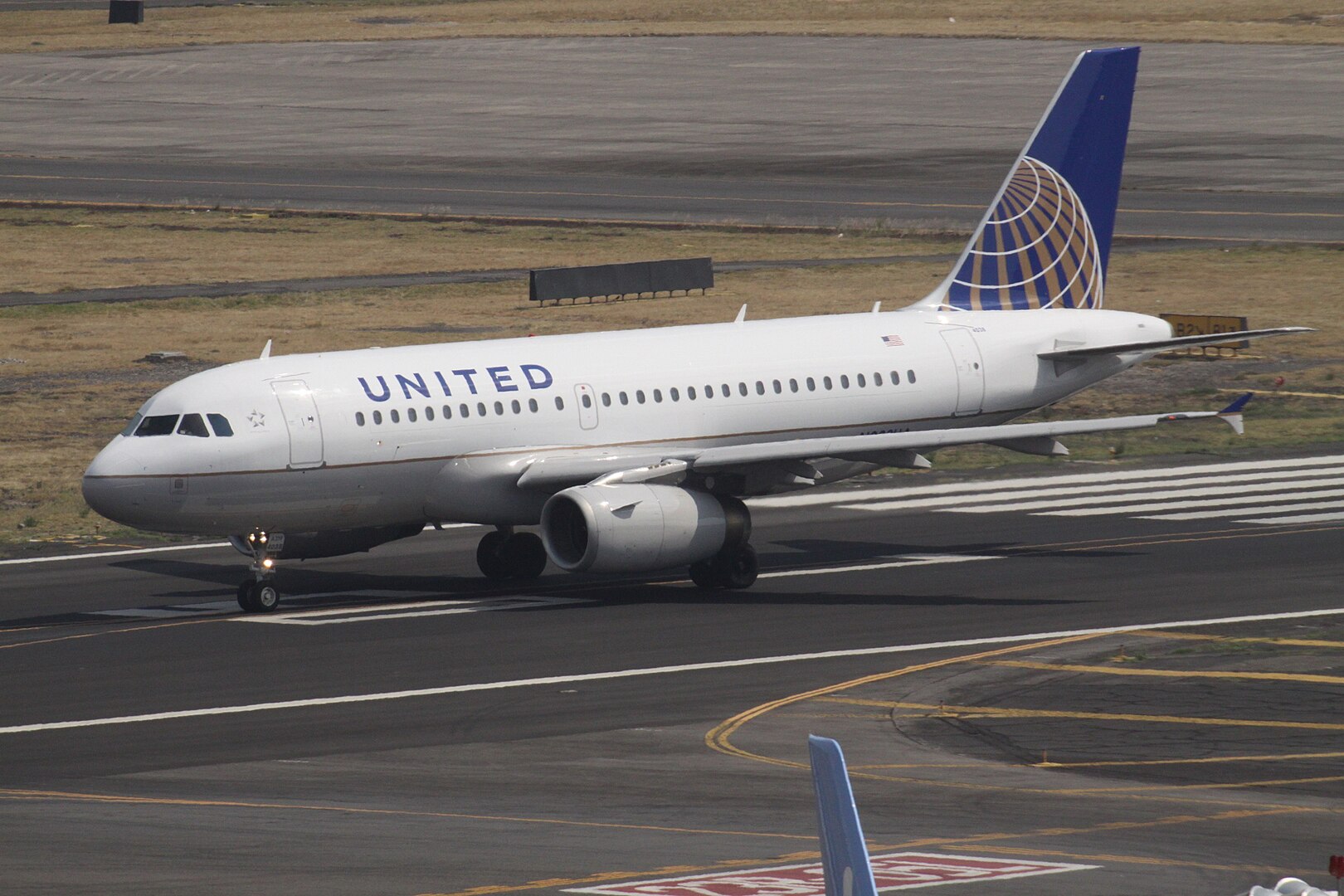
CHICAGO- United Airlines (UA) flight UA2241 returned safely to Washington Dulles after the crew reported a loud noise and engine vibration shortly after takeoff.
The flight departed Washington Dulles International Airport (IAD) for Cleveland Hopkins International Airport (CLE) before the crew requested a return due to uncertain engine indications.
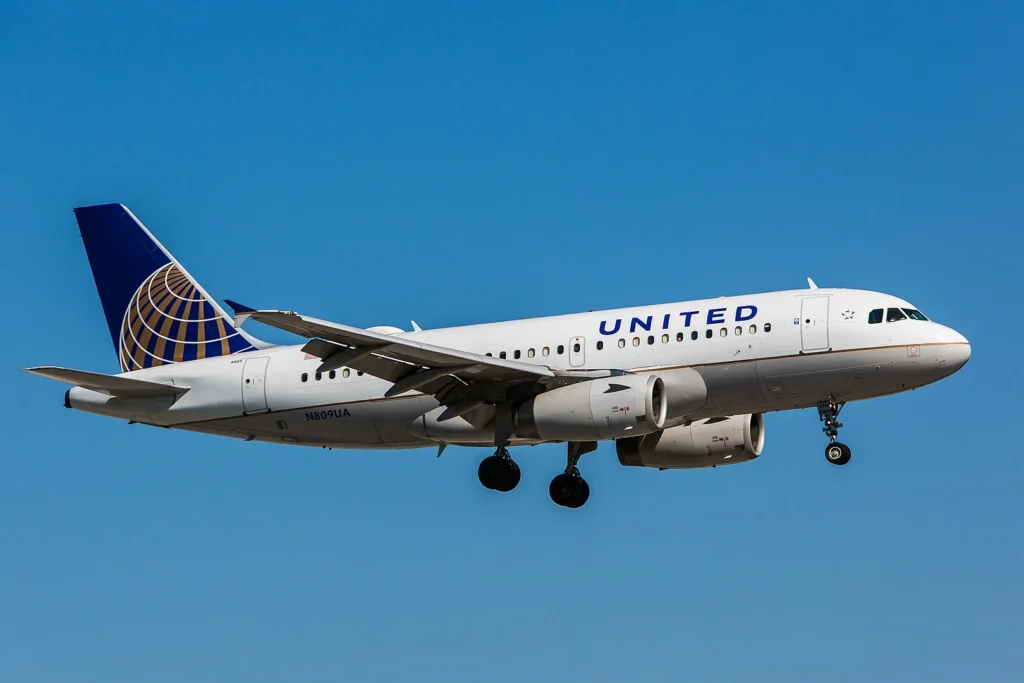
United Flight Emergency Landing at Dulles
United Airlines flight UA2241, operated by an Airbus A319 registered N889UA, departed Dulles bound for Cleveland when the crew heard a loud noise after gear retraction and observed abnormal engine indications.
The aircraft leveled at about 3,000 feet while the crew coordinated with air traffic control to assess the situation. Initially, the crew did not declare an emergency, but later requested emergency services to stand by as a precaution when engine behavior remained uncertain.
Air traffic controllers vectored the aircraft back to Dulles, providing headings and altitude instructions while confirming passenger and fuel details. The crew reported 113 people onboard with approximately 18,000 pounds of fuel remaining.
Both engines continued operating, but unusual vibration and noise were observed when power increased, prompting the decision to return rather than continue to Cleveland.
The flight crew conducted a visual approach and safely landed on runway 19R at Washington Dulles.
After touchdown, the aircraft exited the runway and stopped on a taxiway to allow Aircraft Rescue and Fire Fighting teams to inspect the aircraft externally.
Pilots informed emergency crews that vibration and loud noise occurred during engine power changes. Emergency vehicles examined the aircraft before it taxied for further technical inspection.
No injuries were reported among passengers or crew.
Aircraft and Operational Response
The Airbus A319 involved is part of United Airlines’ narrowbody fleet, commonly used on domestic routes. Standard safety protocol requires crews to return when engine indications are unclear, even if engines continue operating normally.
Coordination between the cockpit crew, air traffic control, and airport emergency teams allowed the aircraft to return safely without escalation.
Airlines train crews to treat unexplained engine indications conservatively. A return to the departure airport allows maintenance teams to quickly inspect the aircraft while ensuring passenger safety.
Precautionary emergency services deployment remains standard practice even when flight crews maintain control and engines continue functioning.
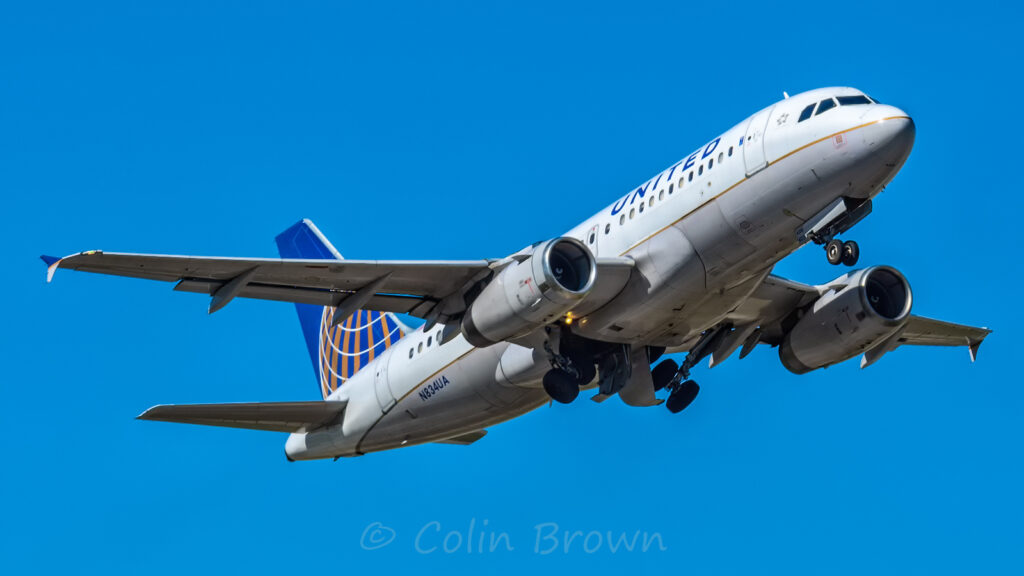
United A319 Pilots and ATC Comms
Here’s a clear transcription of the communication between United Airlines A319 pilots and Washington IAD ATC as flagged by You Can See ATC and recorded by LiveATC.net:
00:13 – United 2241 (Pilot):
Departure, United 2241, we have an extremely loud noise after the gear came up. Can we talk to the tower again and see if they see anything hanging down?
00:28 – Departure (ATC):
United 2241, radar contact. Climb and maintain 11,000.
00:33 – United 2241:
Okay, I don’t know if you caught my transmission. We need to go back to the tower.
00:45 – Departure:
Maintain 3,000.
00:48 – United 2241:
Okay, 3,000. Sorry, what did you say after that?
00:55 – Departure:
United 2241, maintain the present heading. Are you declaring an emergency?
01:00 – United 2241:
Negative, not at the moment. Stand by.
01:07 – Departure:
United 2241, turn right heading 340, vectors for minimum vectoring altitude.
01:13 – United 2241:
Right turn 340. We are having a…
01:21 – Departure:
United 2241, roger. I understand engine issue. Say fuel remaining and souls on board.
01:27 – United 2241:
We have three hours of fuel, about 18,000 pounds, and 113 souls on board. Both engines are operating. We’re just having unusual indications.
01:44 – Departure:
United 2241, cleared back to Dulles via radar vectors. Maintain 3,000. Turn right heading 050. Information Bravo is current. Advise if you need further assistance.
01:57 – United 2241:
Heading 050, maintain 3,000. Can you notify our dispatcher? We have very little time here.
02:06 – Departure:
United 2241, affirmative. Do you want emergency equipment standing by?
02:15 – United 2241:
Let’s have emergency equipment ready just in case. We’re not sure what’s going on.
02:23 – Departure:
Roger. Expect runway 19R. Bravo is current.
02:33 – United 2241:
Runway 19R. Heading 050, maintaining 3,000.
02:44 – Departure:
United 2241, turn right heading 100.
02:47 – United 2241:
Right 100.
02:54 – Departure:
United 2241, descend and maintain 2,000. Dulles Airport is at 2 o’clock, 11 miles. Advise field in sight.
03:02 – United 2241:
Leaving 3,000 for 2,000. Field in sight.
03:07 – Departure:
United 2241, cleared visual approach runway 19R.
03:12 – United 2241:
Cleared visual 19R.
03:19 – Departure:
Contact Dulles Tower on 134.42.
03:25 – United 2241:
134.42.
Tower Frequency
03:31 – United 2241:
Tower, United 2241, emergency aircraft on the visual for 19R.
03:37 – Tower (ATC):
United 2241, Dulles Tower, runway 19R cleared to land. Emergency vehicles are responding.
03:46 – United 2241:
Cleared to land 19R.
03:53 – Tower:
United 2241, if able, exit the runway and come to a stop.
03:59 – United 2241:
We will exit and come to a full stop.
04:21 – Tower:
United 2241, when stopped, contact emergency vehicles on 123.77. After that, contact the ground for a taxi.
04:27 – United 2241:
123.77.
Post-Landing Cockpit and Ground Communications (Partial / Unclear Audio)
04:39 – United 2241:
We have a problem with the jet. Flaps have not retracted. Stand by.
04:51 – United 2241:
We’re just getting in front of the tower.
05:09 onward:
Conversation partially unintelligible, discussing configuration and possible issues with the aircraft systems.
Stay tuned with us. Further, follow us on social media for the latest updates.
Join us on Telegram Group for the Latest Aviation Updates. Subsequently, follow us on Google News
