

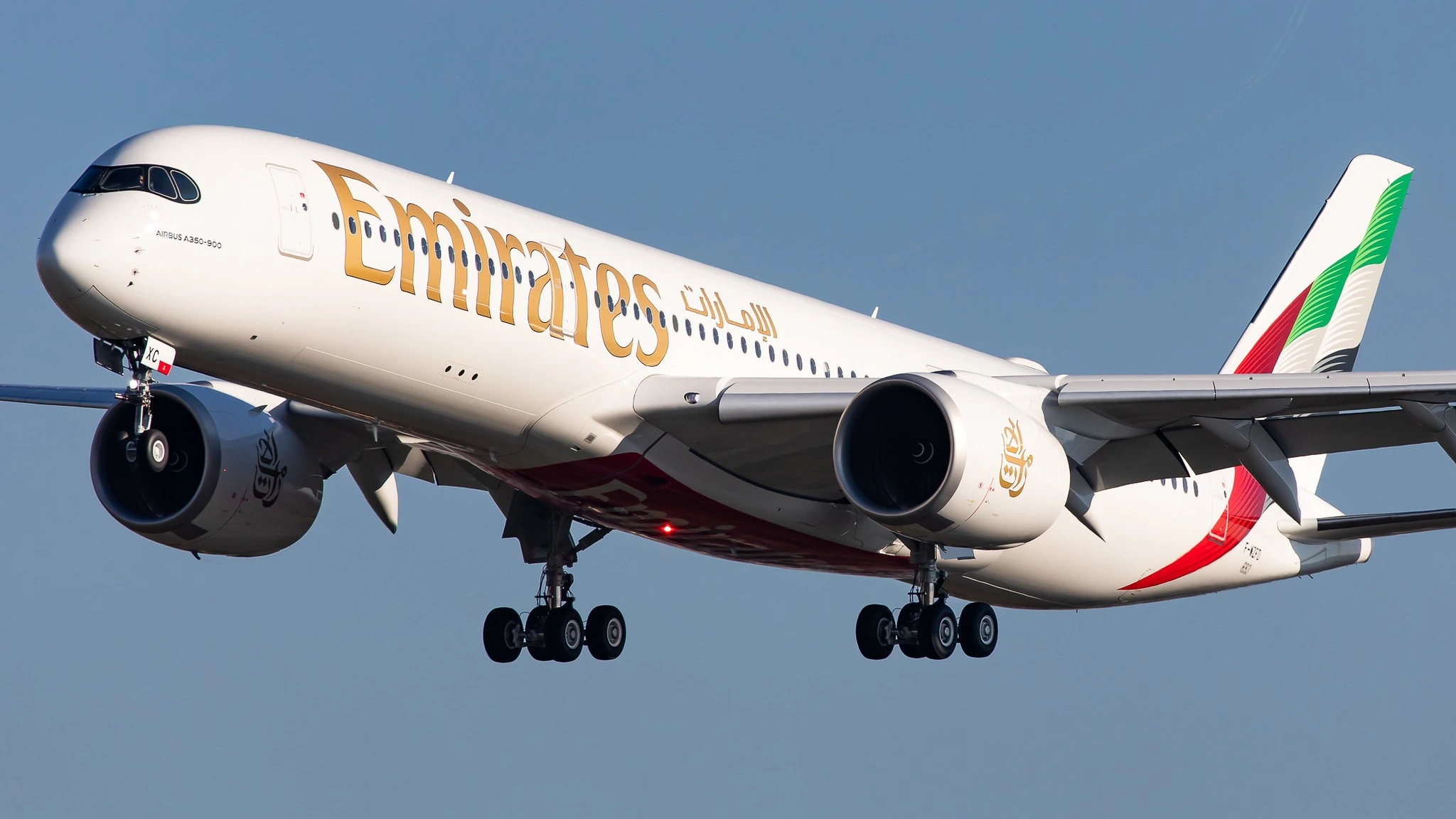
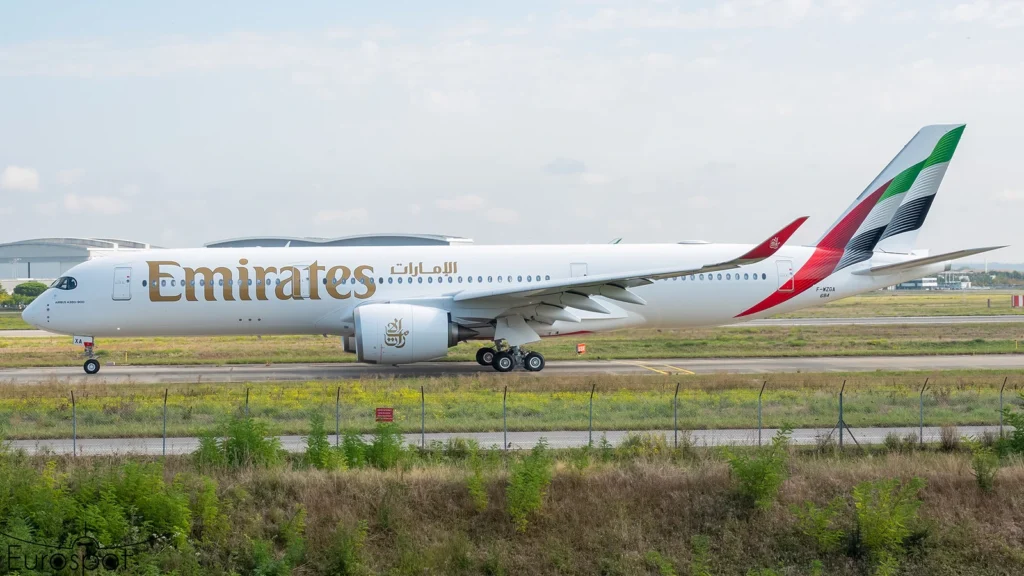
DUBAI- Emirates Airline (EK) would consider ordering a larger Airbus A350 variant if the manufacturer proceeds with the proposed A350-2000 program.
The airline’s position reinforces its long-standing demand for bigger, more capable widebody aircraft designed for long-haul and high-capacity markets.
Emirates’ Interest in New A350-2000
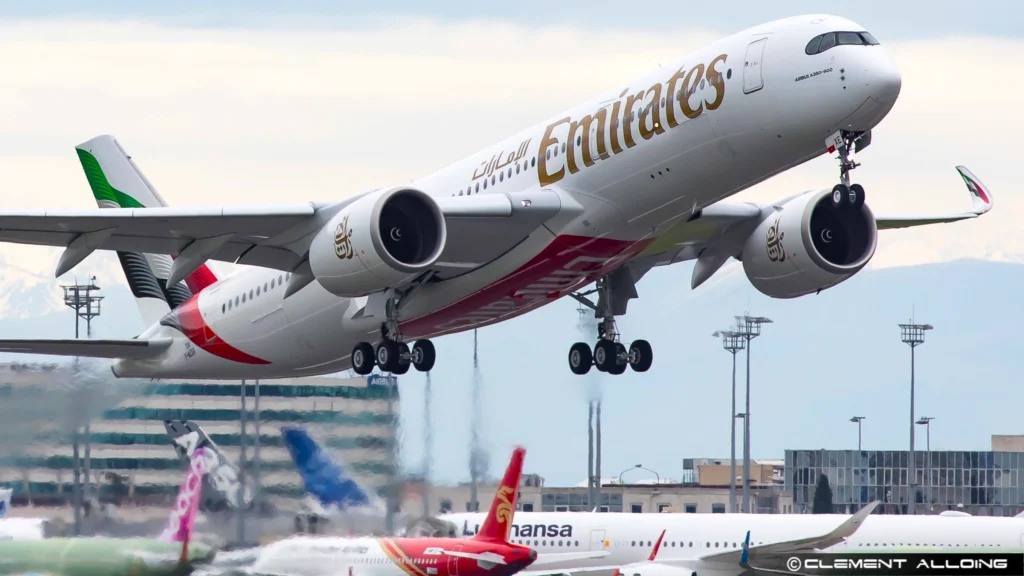
Emirates President Tim Clark confirmed that the airline would actively evaluate the A350-2000 if Airbus formally launches the aircraft.
According to Reuters, Clark reiterated that Emirates closely monitors new aircraft concepts that deliver higher capacity without compromising reliability.
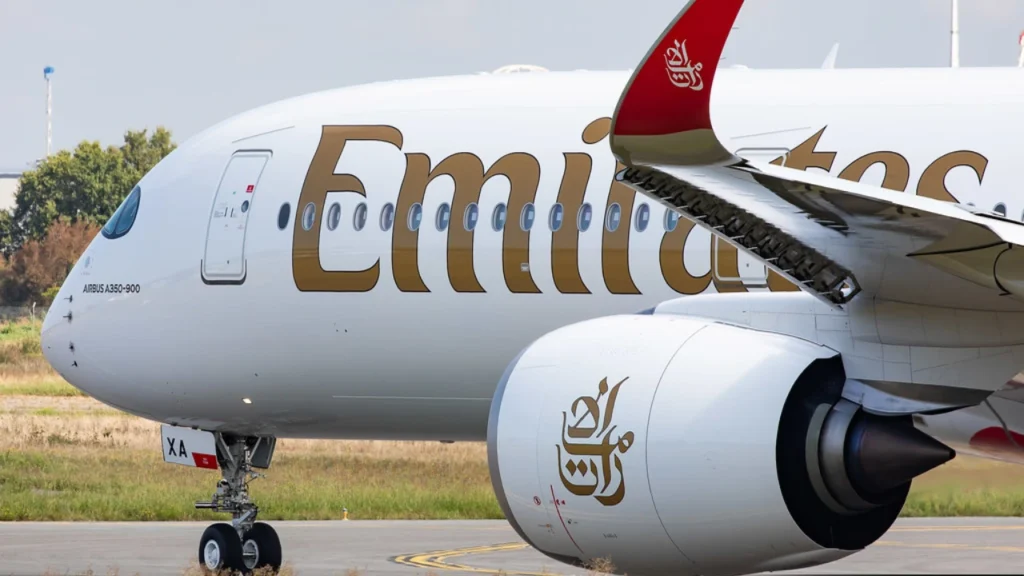
Clark stated that the airline remains highly satisfied with the A350-900, highlighting its strong dispatch reliability, efficient engines, and passenger-friendly cabin configuration.
Emirates has already ordered the A350-900 but has deliberately avoided the larger A350-1000 due to concerns over engine durability in Gulf operating conditions.
These concerns are particularly significant for Emirates, which operates long-haul routes with high utilization rates and demanding environmental exposure.
As the world’s largest buyer of widebody aircraft and the largest customer for the Boeing 777X, Emirates’ fleet decisions carry substantial influence across the industry.
Airbus’ New High Capacity Widebody
Airbus confirmed in November that it is studying the A350-2000, a potential third and largest variant of the A350 family.
The study follows competitive developments after Boeing agreed to examine a larger version of the 777X as part of a deal to secure 65 new orders for the delayed aircraft.
The A350-2000 would sit above the A350-1000, which is currently the largest aircraft in Airbus’ portfolio.
Airbus has not disclosed how far discussions have progressed or whether the aircraft has reached a formal launch decision.
Airbus A350-2000
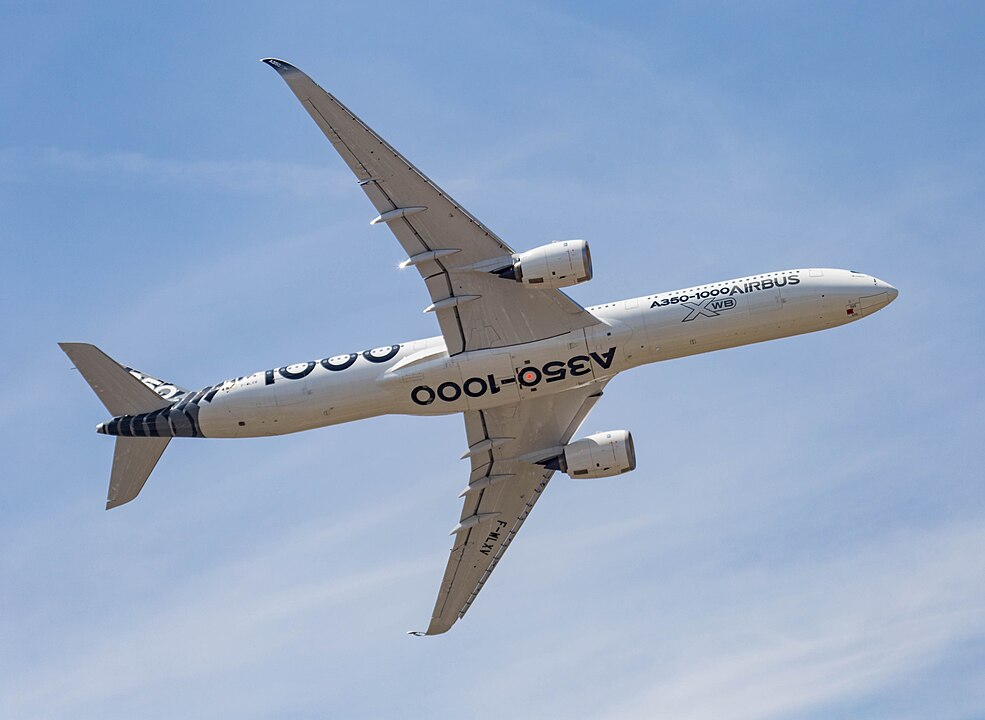
The A350-2000 is expected to be a stretched development of the A350-1000 rather than a clean sheet design.
The current A350-1000 typically accommodates up to 369 passengers, depending on configuration.
The proposed stretch could add approximately 40 seats, increasing total capacity to roughly around 400-410 passengers.
This increase would position the A350-2000 as a direct competitor to the Boeing 777X in the high capacity long-haul segment.
To support the additional passengers, the aircraft may require fuselage extensions and the addition of a Type C emergency exit to meet evacuation certification requirements.
The aircraft would continue to use Rolls-Royce Trent XWB engines, which power the entire A350 family.
The Trent XWB-97 variant currently delivers up to 97,000 pounds of thrust on the A350-1000. Any larger variant would depend on continued improvements in engine durability and performance.

Engine Durability Remains a Deciding Factor
All A350 aircraft are powered by engines from Rolls-Royce. A senior Rolls-Royce executive stated earlier this week that the company is on track with a durability improvement program for the A350-1000 engines.
Rolls-Royce has said these upgrades are already delivering 60 percent more time between overhauls, with further improvements expected from 2028.
Emirates has made clear that measurable progress in extending time between shop visits is essential before it commits to ordering the A350-1000 or any larger derivative.
Competitive Pressure and Market
The A350-2000 study comes as Airbus seeks to close the capacity gap with the Boeing 777X, which targets seating for roughly 420 passengers.
The proposed Airbus variant would offer airlines an alternative optimized for long-range, high-density routes without moving to a new aircraft family.
Airlines in the Middle East and Asia-Pacific represent key potential customers because they rely on ultra-long-haul networks and serve high passenger volumes.
The success of the A350-2000 will ultimately depend on Airbus’s ability to balance added capacity with operating economics and proven engine reliability.
Stay tuned with us. Further, follow us on social media for the latest updates.
Join us on Telegram Group for the Latest Aviation Updates. Subsequently, follow us on Google News
