

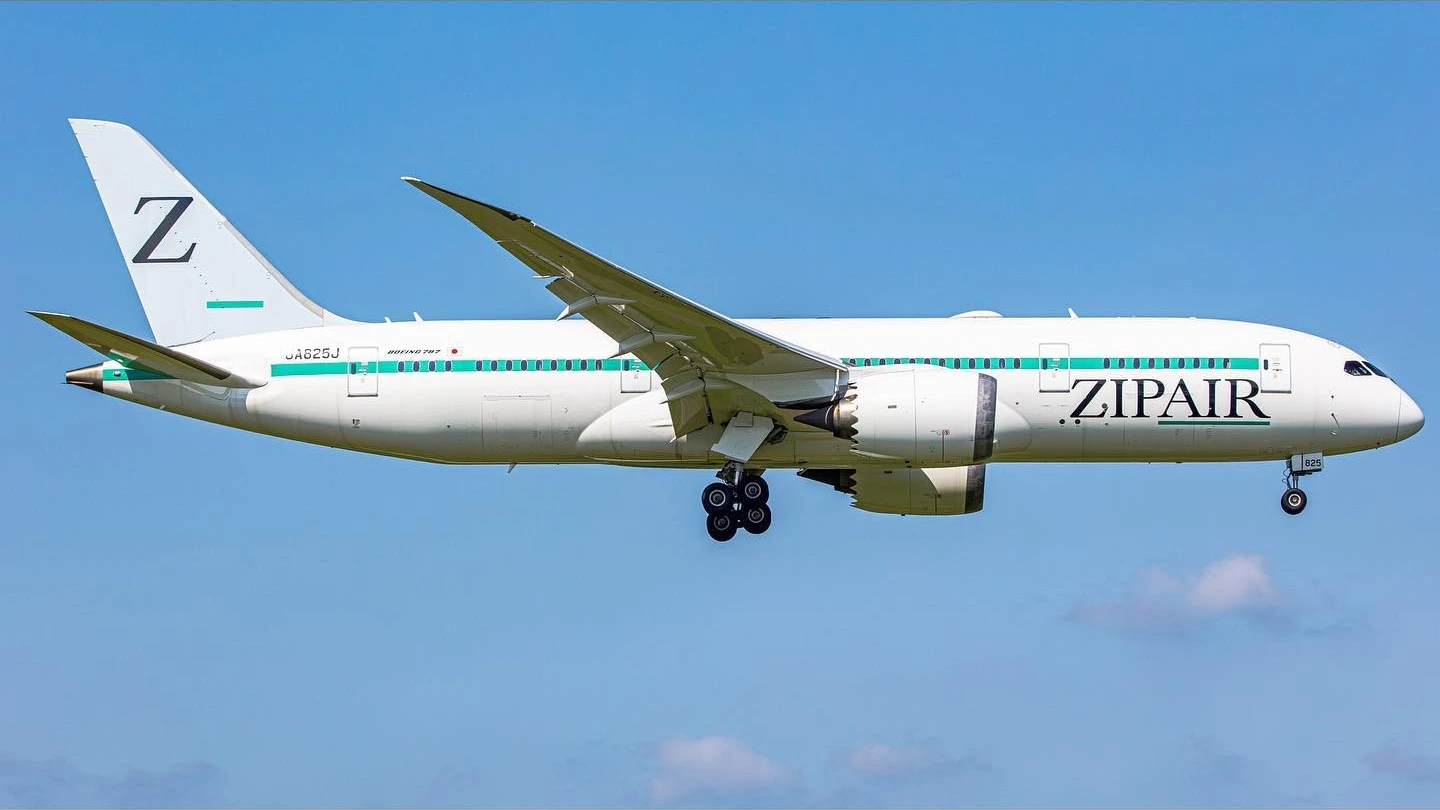
TOKYO- Japan Airlines brand ZIPAIR (ZG) has begun operating a Boeing 787-8 with riblet-shaped coating that reduces drag and improves fuel efficiency on international routes. Narita International Airport (NRT) served as the main base for applying the technology before the aircraft entered service in January 2026.
The initiative, developed with Japan Airlines (JL), JAXA, and O-Well Corporation, aims to cut fuel use and reduce carbon emissions through advanced aircraft surface technology. The move supports ZIPAIR’s carbon neutrality commitments and wider aviation decarbonization efforts.
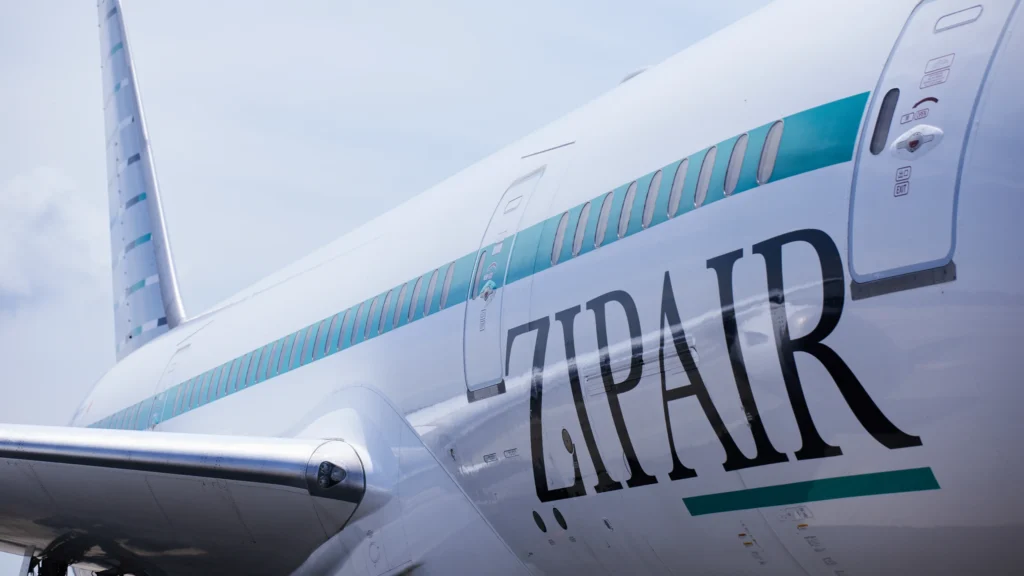
ZIPAIR 787 Painted with Special Coating
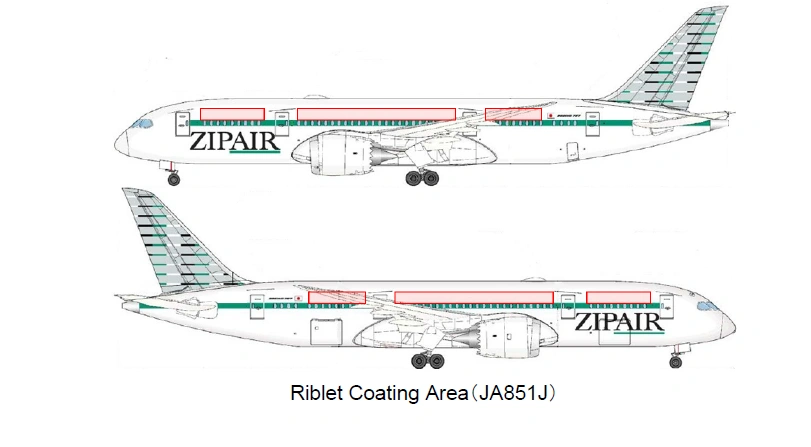
Japan Airlines, JAXA, O-Well Corporation, and ZIPAIR successfully applied riblet-shaped coating to ZIPAIR’s Boeing 787-8 aircraft registered JA851J. The aircraft entered international service on 27 January 2026.
Riblets are microscopic grooves inspired by shark skin. When aligned with airflow across the aircraft surface, they reduce skin-friction drag during cruise. Lower drag means lower fuel burn and reduced CO2 emissions.
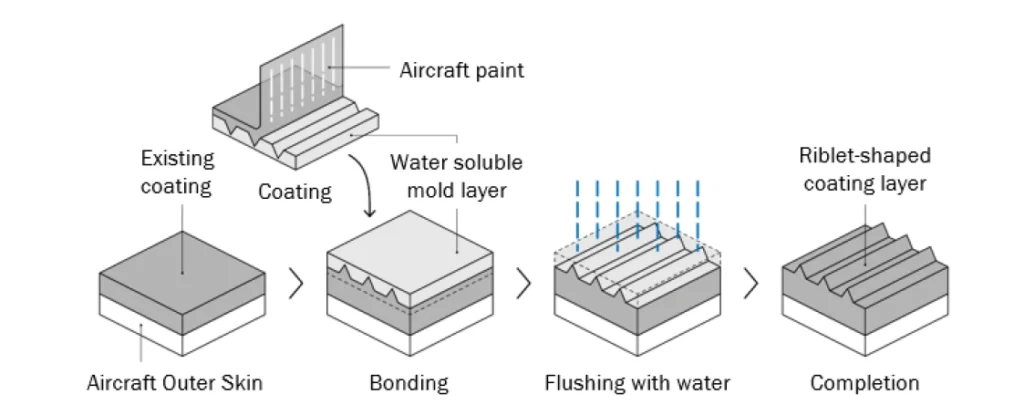
The coating was applied using the improved Paint-to-Paint Method, which creates a textured coating directly over existing aircraft paint using a water-soluble mold. Application efficiency improved through new positioning and crimping jigs that increased accuracy and reduced installation time.
The process was completed at Narita International Airport, in addition to earlier work performed at Haneda Airport, allowing faster deployment across operational fleets.
Demonstrated Fuel and Emission Savings
JAL previously introduced large-scale riblet coating on its Boeing 787-9 aircraft JA868J in January 2025. In November 2025, the coating area expanded to the upper fuselage.
JAXA estimates show cruise drag reduction improved from 0.24 percent to 0.31 percent after expansion. Over one year of operation on routes such as Narita to Frankfurt, this improvement can reduce fuel use by about 154 tons and cut approximately 492 tons of CO2 emissions per aircraft annually.
These figures highlight how small aerodynamic gains can deliver meaningful environmental impact across long-haul operations.
Development of Higher Performance Riblets
Research teams are testing a new riblet geometry known as the sharp single bevel riblet. Its cross-section resembles a single bevel blade and achieves approximately 6 to 6.5 percent skin-friction drag reduction compared with around 5 percent from conventional riblets.
Engineers are now evaluating long-term durability, performance stability, and resistance to weather and operational wear during commercial flights.
J-SPARC Partnership Driving Aviation Innovation
The project advances under JAXA’s Space Innovation through Partnership and Co-creation program, known as J-SPARC. The framework connects aerospace research with industry partners to accelerate practical deployment of new technologies.
Future work will focus on verifying coating durability, maintaining aircraft appearance standards, and expanding riblet application areas across additional aircraft. Wider adoption could significantly support airline carbon reduction strategies worldwide.
Stay tuned with us. Further, follow us on social media for the latest updates.
Join us on Telegram Group for the Latest Aviation Updates. Subsequently, follow us on Google News
