

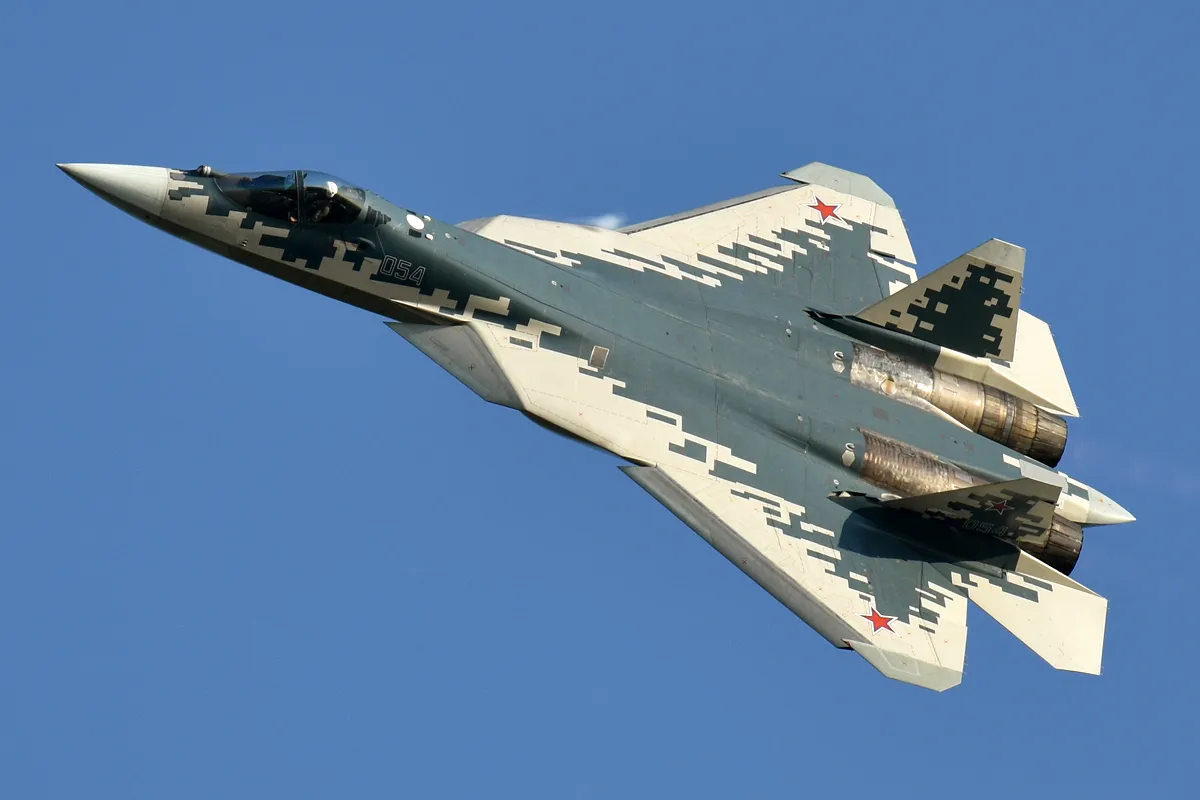
HYDERABAD- There is a renewed Indo-Russian aerospace push following a landmark agreement between Hindustan Aeronautics Ltd and Russia’s United Aircraft Corporation to produce the Sukhoi Superjet 100 in India. The pact was signed on the sidelines of Wings India at Rajiv Gandhi International Airport (HYD), marking a major expansion of bilateral cooperation beyond military aviation.
The agreement has also reignited debate over whether the partnership could extend to advanced combat aircraft, particularly the Sukhoi Su-57 ‘Felon’, as the Indian Air Force evaluates options to bridge a looming capability gap. With civil and defence programmes now moving in parallel, the HAL–UAC relationship is entering a new and potentially consequential phase.

https://commons.wikimedia.org/wiki/File:Sukhoi_Superjet_100_(5096752902)_(cropped).jpg
HAL UAC agreement
The newly signed deal grants HAL a licence to manufacture and sell the SJ-100 in India, including components and spares required for long-term maintenance and support. UAC will assist HAL in certification, validation, and the re-equipment of production facilities through technical consulting and specialist support.
The SJ-100 is a twin-engine regional jet designed to seat up to 100 passengers and is already in service with more than 16 airlines worldwide. Over 200 aircraft have been produced to date, positioning the programme as a mature platform rather than a developmental risk.
This agreement is significant because it represents the first time a complete passenger aircraft will be manufactured in India since HAL’s licensed production of the HS-748 ended in the late 1980s.
It also offers UAC an entry point into one of the world’s fastest-growing civil aviation markets.

https://commons.wikimedia.org/wiki/File:Sukhoi_Superjet_100_EI-FWB_(36902199562).jpg
India’s Aviation Market
India’s civil aviation sector is expanding at a pace unmatched by most global peers.
Passenger traffic has crossed 200 million annually and is projected to approach 300 million by the end of the decade, driven by economic growth and rising middle-class demand.
Industry projections indicate that Indian airlines will require between 1,000 and 1,500 new commercial aircraft over the next ten years to support expansion and fleet replacement. Longer-term forecasts suggest demand for more than 3,000 aircraft by the mid-2040s.
At present, India relies almost entirely on Boeing and Airbus for commercial jets, resulting in substantial capital outflows.
Domestic production of the SJ-100 could reduce this dependency while creating an industrial base capable of supporting future indigenous programmes.
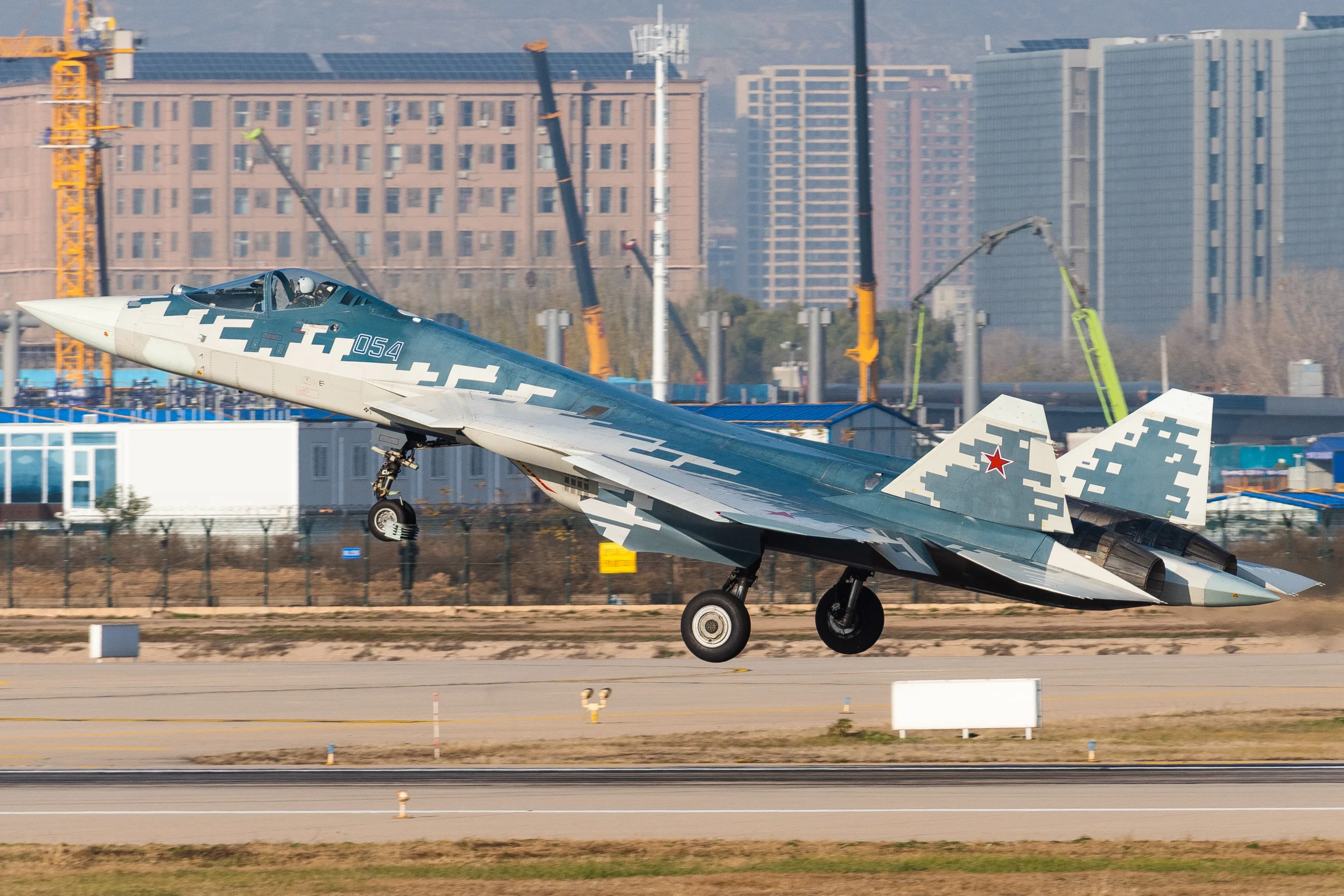
Su-57 fighter prospects
Alongside the civil aviation agreement, HAL is independently assessing a Russian proposal to co-produce the Su-57 fifth-generation fighter in India.
The aircraft is being evaluated as an interim solution to address a projected 10-year gap before the induction of India’s Advanced Medium Combat Aircraft.
Reports suggest the proposal involves manufacturing two to three squadrons of the Su-57 using existing HAL infrastructure. Facilities at Nashik, Koraput, and Kasaragod already support Su-30MKI assembly, engine production, and avionics manufacturing, providing a partial foundation for a new fighter line.
According to Eurasian Times, UAC has stated that technical consultations on the Su-57 are at an advanced stage, although no final decision has been taken.
The recent SJ-100 agreement has strengthened institutional trust, potentially improving the prospects for a broader defence manufacturing arrangement.

https://commons.wikimedia.org/wiki/File:Air-to-air_photo_of_a_Sukhoi_Superjet_100_(97004)_over_Italy.jpg
Bottom Line
The HAL–UAC pact on SJ-100 production represents a strategic expansion of Indo-Russian aerospace cooperation into civil aviation while reinforcing long-standing defence ties.
As India weighs options to meet both commercial and military aviation needs, the possibility of a made-in-India Su-57 now appears more credible than at any point in the past decade.
Stay tuned with us. Further, follow us on social media for the latest updates.
Join us on Telegram Group for the Latest Aviation Updates. Subsequently, follow us on Google News
