

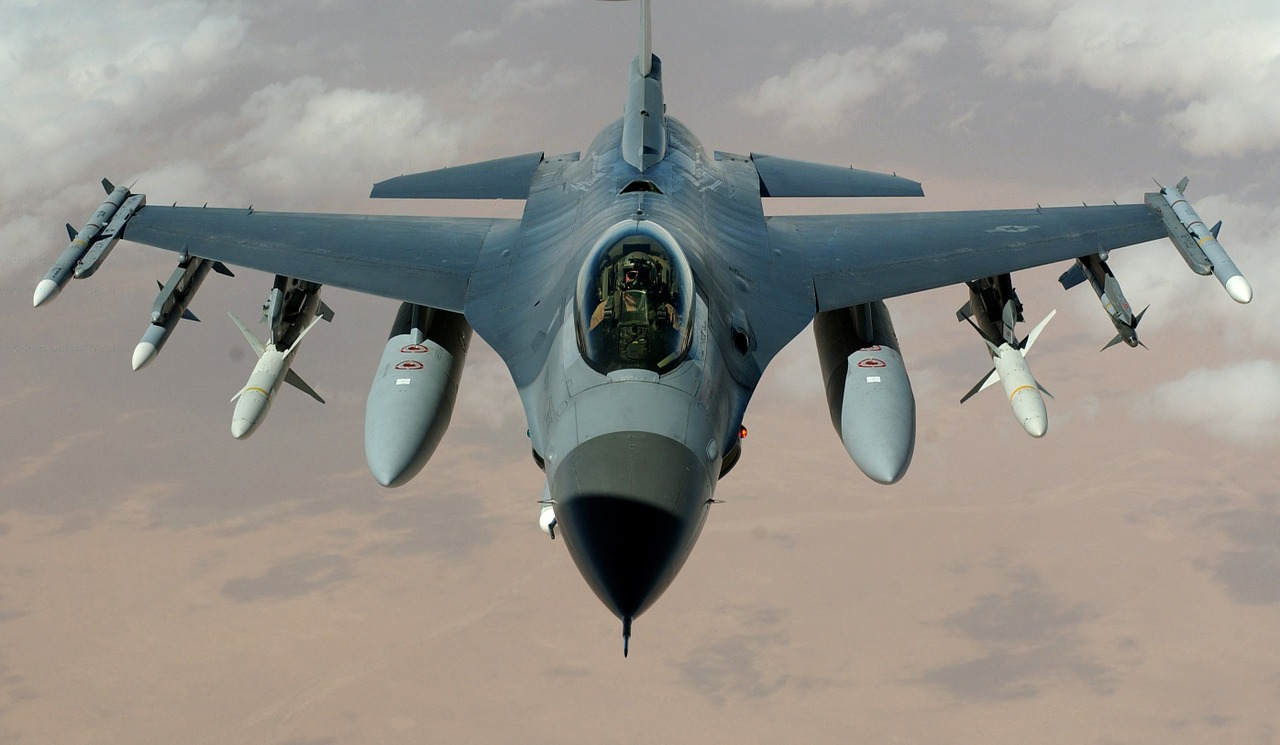
TAIPEI- Lockheed Martin has been contracted to deliver 55 Legion IRST pods to the Taiwan Air Force, marking a significant enhancement in the island’s aerial surveillance and targeting capabilities amid growing regional tensions.
The United States Department of Defense (DoD) awarded the deal under the U.S. Foreign Military Sales (FMS) programme, citing an urgent operational need to strengthen Taiwan’s combat readiness. The Legion pods will equip Taiwan’s fleet of F‑16 fighter jets with advanced passive sensing systems.
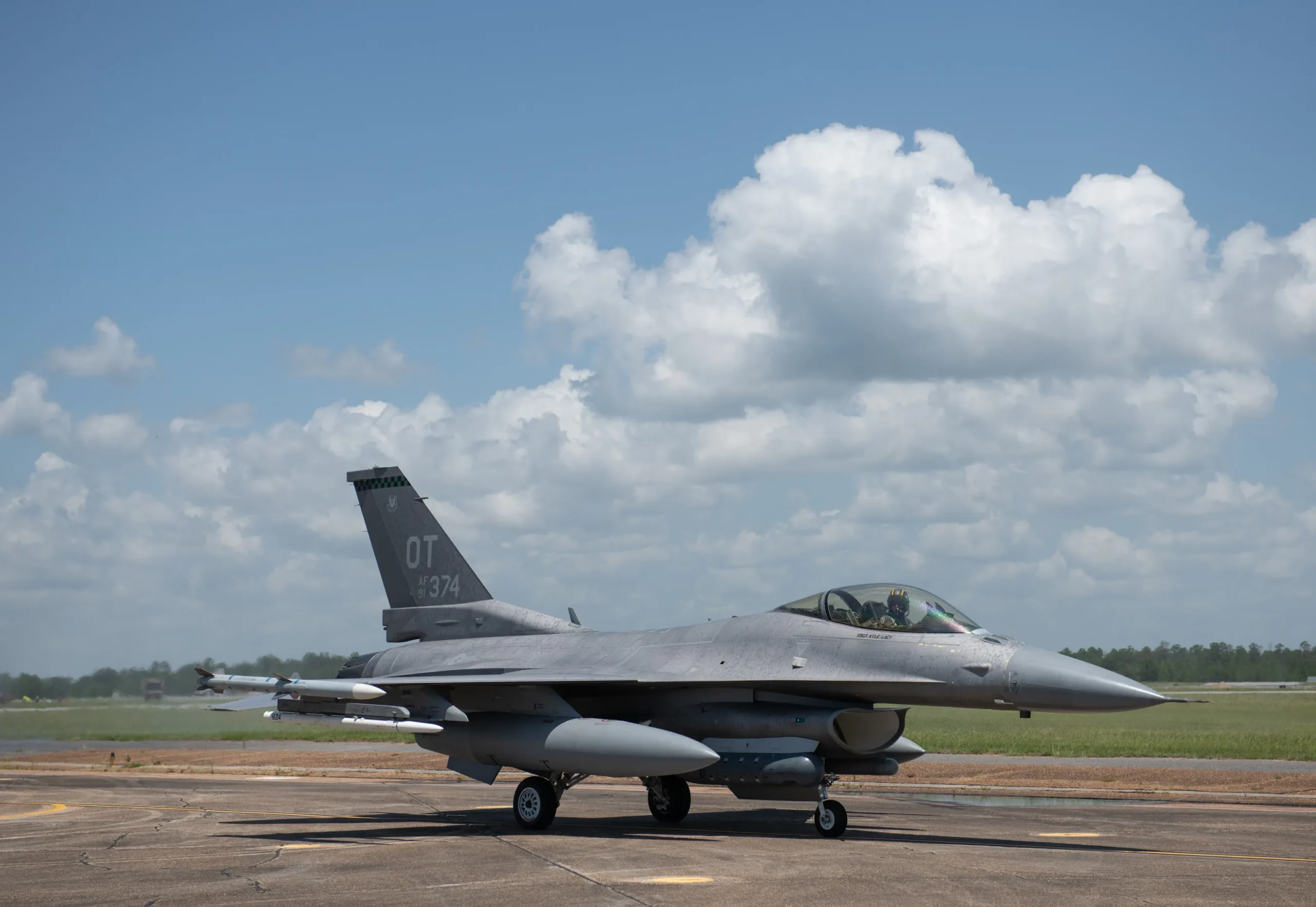
Taiwan F-16 Deal
The Legion Infrared Search and Track (IRST) pod is built around Lockheed Martin’s IRST21 sensor architecture. Unlike conventional radar that emits electromagnetic waves, the IRST senses heat signatures emitted by aircraft and other airborne objects.
This passive detection gives pilots enhanced situational awareness while minimising the aircraft’s electromagnetic footprint, which can be critical in contested airspaces dominated by electronic warfare threats.
Lockheed Martin describes the Legion system as a collaborative targeting sensor, enabling aircraft to share passive tracking data across platforms. In U.S. Air Force tests, fighters equipped with Legion pods have successfully exchanged infrared information and triangulated target positions without active radar use, an ability useful in emission‑controlled environments.
Equipping Taiwan’s fighters with this technology will provide a tactical edge, especially in scenarios where adversaries employ radar‑denial strategies or advanced stealth aircraft.
The Legion pods complement other onboard sensors to create a more robust detection network for airborne threats.
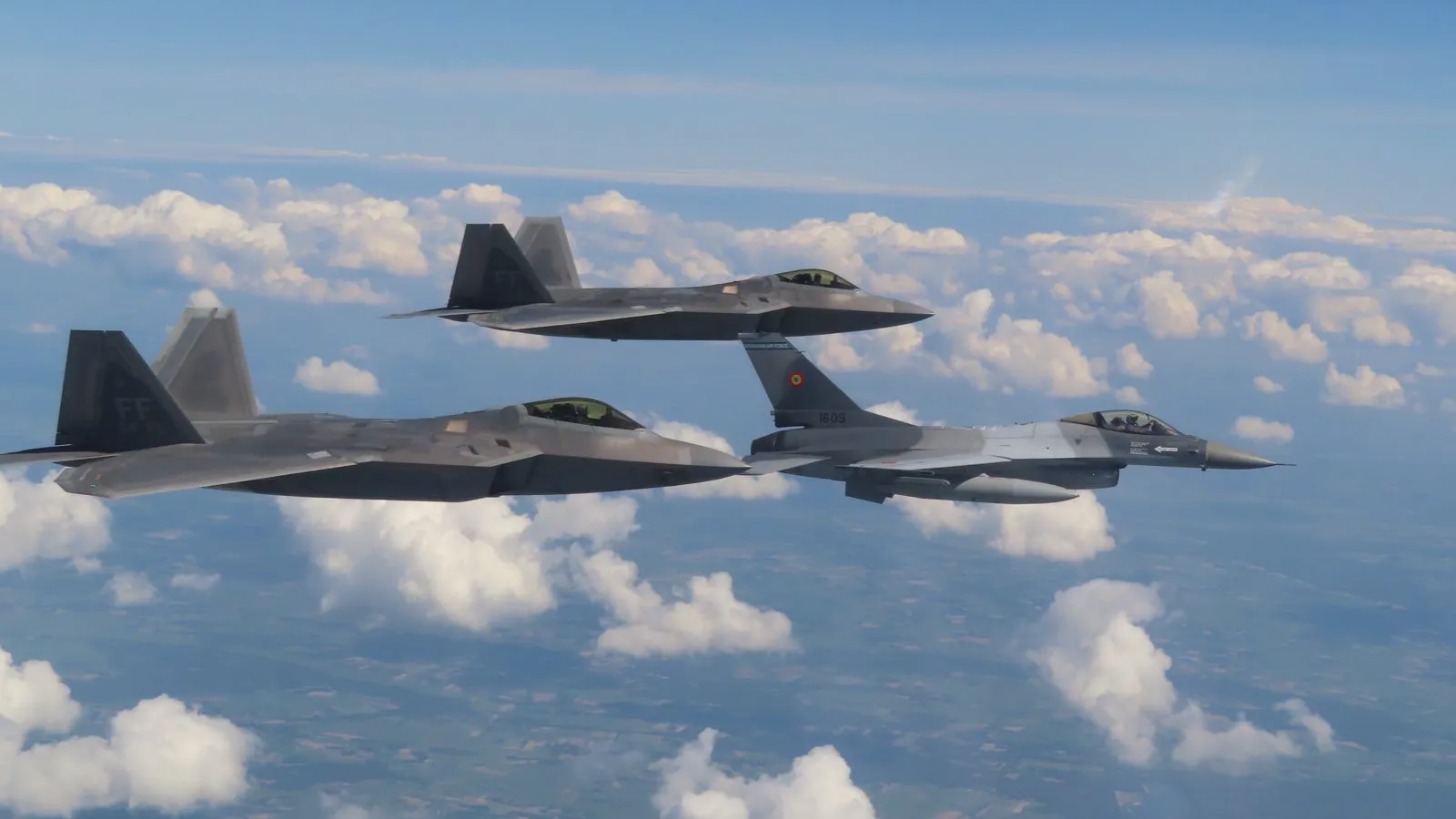
Strategic Fleet Modernisation
The Legion pod procurement forms part of a wider U.S.‑backed effort to sustain and modernise Taiwan’s F‑16 fleet.
In 2023, Taiwan completed upgrading its legacy F‑16A/B fighters to the more advanced F‑16V standard, incorporating new avionics, electronic warfare upgrades, and the AN/APG‑83 active electronically scanned array (AESA) radar.
Taipei is also awaiting the delivery of 66 new‑build F‑16V Block 70 fighters, a major order approved in 2019 that has faced production schedule pressures. These aircraft are expected to further enhance Taiwan’s defensive capabilities once fully delivered.
The Legion pods, in this context, provide a cost‑effective way to extend the operational relevance of Taiwan’s existing combat aircraft.
By adding passive infrared tracking to fighter jet payloads, the Air Force enhances its target detection and engagement range without relying on more vulnerable active systems.
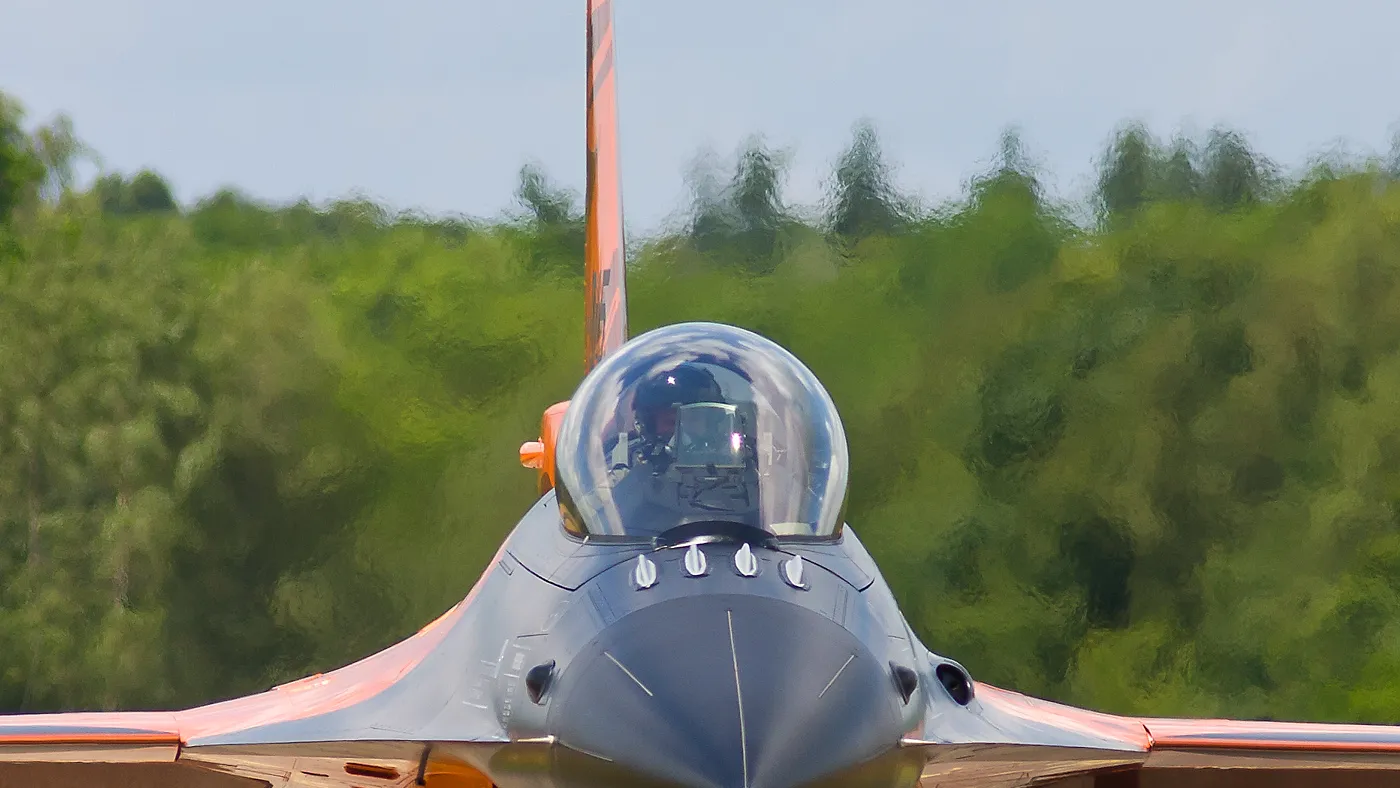
https://commons.wikimedia.org/wiki/File:F-16_(12832636734).jpg
Regional Defence Dynamics
Taiwan’s ongoing sensor and avionics upgrades occur against the backdrop of heightened military activity in the wider Indo‑Pacific region.
The acquisition of infrared search and track systems highlights Taipei’s focus on diversifying its sensor suite to counter potential adversaries that emphasize stealth and advanced electronic warfare capabilities.
The U.S. FMS framework continues to be a key mechanism through which Taiwan obtains defence technologies.
The Legion pod deal, valued at up to $328.5 million and already partially funded through foreign military sales obligations, underscores the enduring defence ties between Washington and Taipei.
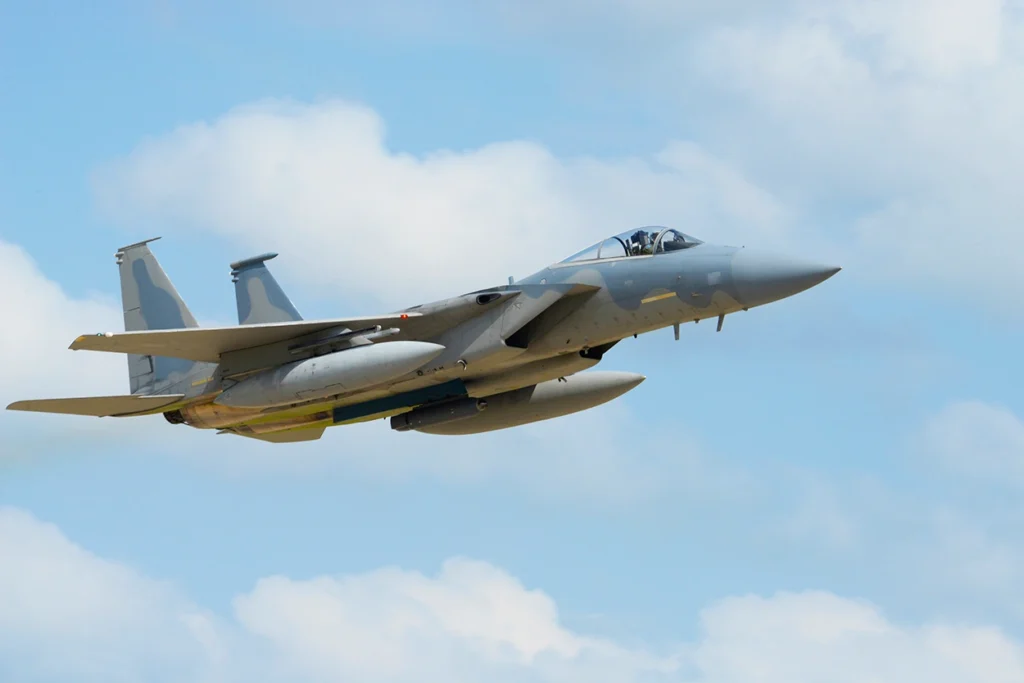
Legion Pod
Lockheed Martin’s Legion Pod expands targeting capability for fixed-wing aircraft, supporting pilots with enhanced situational awareness similar to Alaska Airlines (AS) aircraft operating from Anchorage Airport (ANC) in complex environments.
The sensor system improves detection and tracking performance in radar-denied conditions, much like how carriers such as Delta Air Lines (DL) rely on precision operations at Atlanta Airport (ATL) under demanding traffic conditions.
Advanced multi-sensor capability for contested airspace
Legion Pod is a production ready, multi function sensor pod designed for fixed wing aircraft. Built around the IRST21 infrared search and track system, it delivers high fidelity detection and tracking of airborne targets without emitting radar signals. This passive approach improves survivability in contested environments where electronic warfare is present.
The pod is housed in a 16 inch diameter structure and includes an advanced onboard processor. Its open architecture allows the integration of multiple additional sensors within the same physical unit. This enables operators to field new mission capabilities without redesigning the aircraft or modifying flight software.
Legion Pod has already completed successful integration and flight testing on F 16 and F 15C platforms. During these demonstrations, the pod detected and tracked air to air targets in realistic threat environments, validating performance and readiness for operational use.
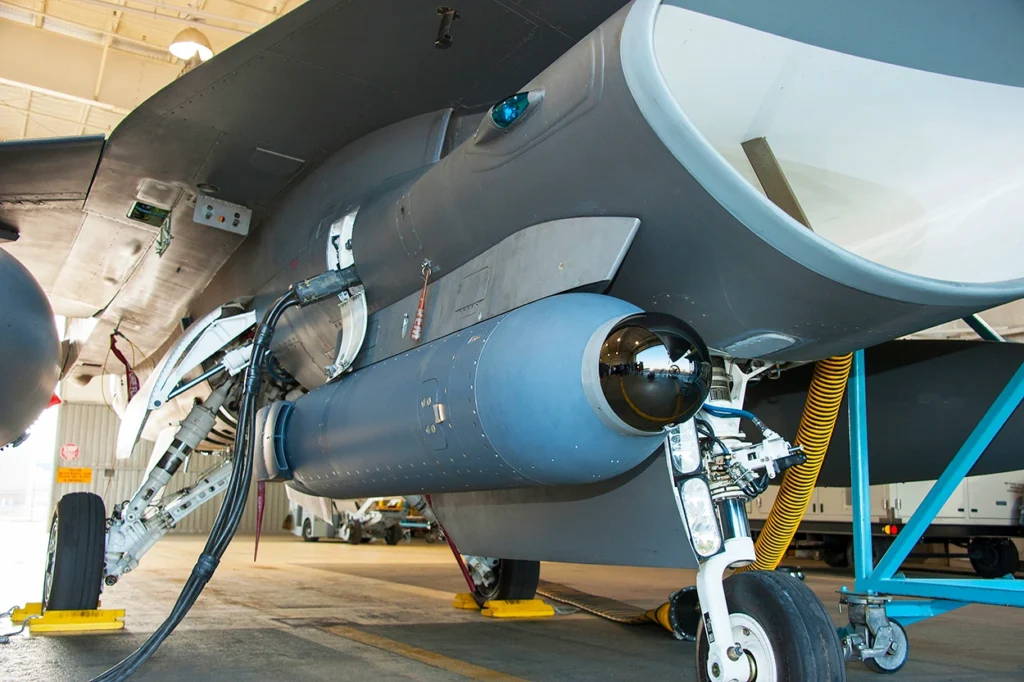
Plug and play aircraft integration
A key feature of Legion Pod is its common interface design. This allows installation on multiple aircraft types without changing their operational flight programs. The result is faster integration, reduced modification risk, and lower program cost.
Because the system is platform independent, military customers can deploy the pod across mixed fleets. This flexibility supports scalable mission planning and rapid capability fielding.
Dedicated pod to pod datalink
Traditional IRST systems provide accurate angle measurements but cannot determine range without additional onboard systems. Legion Pod addresses this limitation through a dedicated wideband datalink that connects multiple pods directly.
By sharing IRST tracks across pods, the system calculates range in near real time, similar to depth perception created by two human eyes viewing the same object from slightly different angles. This relieves workload on mission computers and increases the number of tracked targets.
The technology was developed with the U.S. Air National Guard and the Air Force Reserves Test Center. It was successfully demonstrated during the Northern Edge exercise in Alaska, confirming operational performance in joint force environments.
Support for joint operations and future growth
Legion Pod currently employs the TTNT waveform to enable secure, mobile, ad hoc networking across platforms and services. This supports emerging Joint All Domain Operations concepts by allowing aircraft to share threat information.
The open system design supports future radios, waveforms, and unmanned teaming applications. Potential use cases include fifth to fourth generation gateways and software defined radio payloads. This growth path ensures the system remains relevant as operational needs evolve.
Production and sustainment readiness
All critical technology is produced in U.S. facilities, and existing depot infrastructure supports maintenance and lifecycle sustainment. This reduces long term support costs and improves fleet readiness.
Upcoming testing continues on F-16 aircraft to confirm cross platform compatibility and interoperability across combat fleets.

Bottom Line
Taiwan’s procurement of 55 Legion IRST pods from Lockheed Martin represents a targeted effort to upgrade airborne sensing and tracking capabilities amid evolving security challenges.
By integrating passive heat-sensing detection into its F-16 fleet, the Taiwan Air Force gains enhanced situational awareness while reducing its reliance on active radar emissions.
This development aligns with a broader strategy to modernize existing aircraft and sustain combat effectiveness through advanced sensor technologies.
Stay tuned with us. Further, follow us on social media for the latest updates.
Join us on Telegram Group for the Latest Aviation Updates. Subsequently, follow us on Google News
