

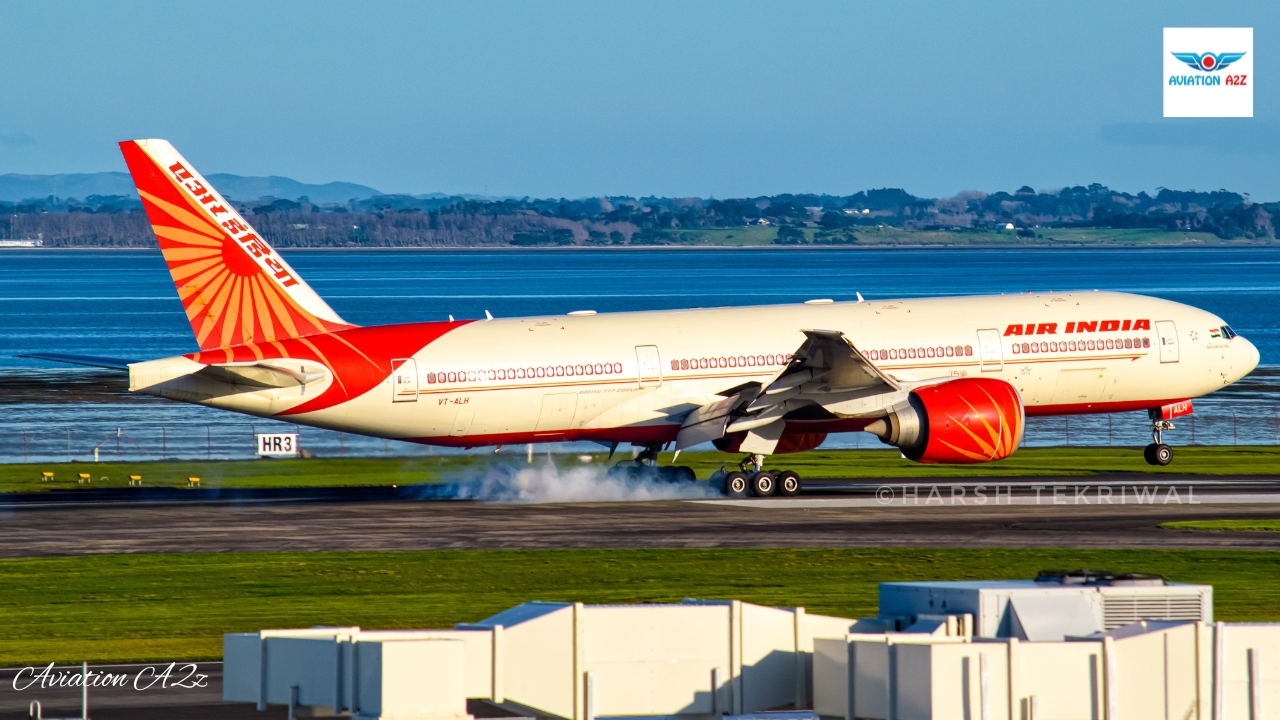
MUMBAI- Tata Group-owned Air India (AI) has confirmed the suspension of its ultra-long-haul flights to San Francisco from Bengaluru and Mumbai starting February, citing persistent airspace restrictions.
The airline will retain San Francisco service only from Delhi while increasing frequency, reinforcing Delhi as its primary long-haul hub.
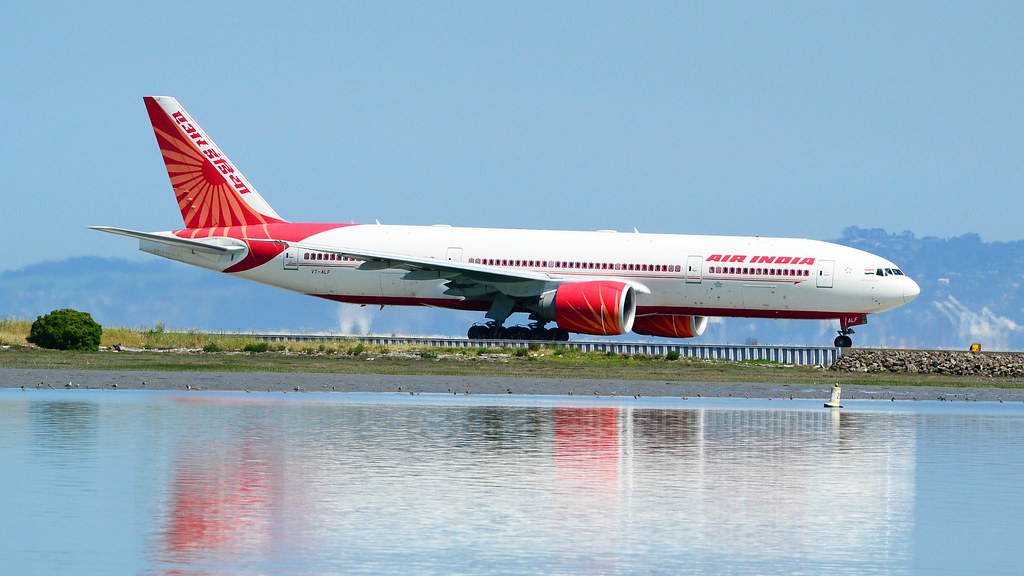
Air India Suspends Two Routes to San Francisco
Air India will end Bengaluru San Francisco and Mumbai San Francisco operations as continued bans on Russian and Pakistani airspace make nonstop flights operationally inefficient. These restrictions have forced technical stops, longer block times, and higher costs, weakening route viability.
With these exits, Air India will rely solely on Delhi San Francisco services. The shift reflects a hub consolidation strategy rather than a withdrawal from the US West Coast market, Simple Flying reported.
India’s Longest Route Set to End
The Bengaluru-San Francisco service connected two major global technology hubs. Operated initially by Boeing 777-200LR aircraft, the route covered approximately 7,561 nautical miles each way, making it one of the longest in Air India’s network.
Launched in 2021 during the pandemic, the route faced early demand challenges and was suspended in 2022 before restarting later that year.
Strong premium demand later emerged, with booking data showing 156,000 round-trip passengers in the year to October 2025. Despite this, three-quarters of travelers chose competing airlines, limiting Air India’s market share.
Operational changes after early 2025 forced flights to stop for refueling, first in Kolkata and later via Delhi or Vienna, depending on direction. The final Bengaluru San Francisco flight is scheduled for February 27.
ALSO READ: Top 10 Longest Non-stop Flights of India in 2024
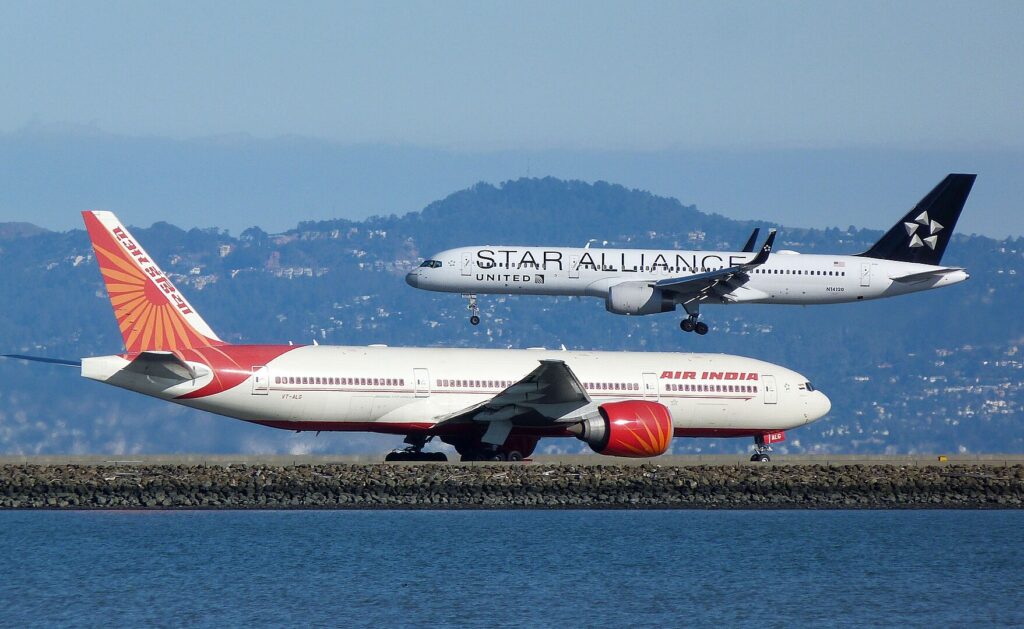
Mumbai-San Francisco Flights Also Ending
Air India launched Mumbai San Francisco nonstop service in December 2022, initially operating mainly four times weekly. The route was among the airline’s most ambitious long-haul offerings.
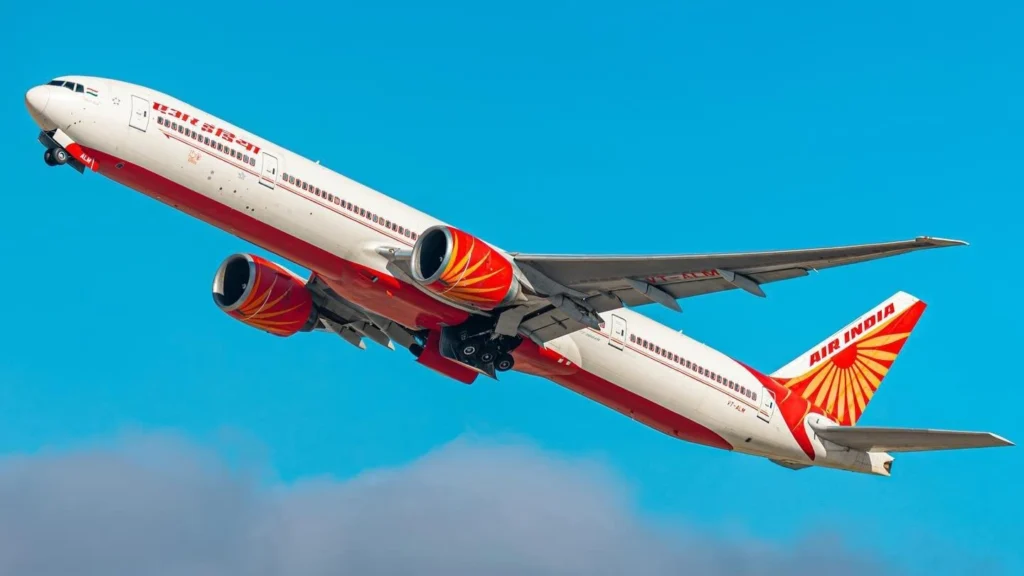
Avoidance of restricted airspace significantly increased return journey times, stretching block times to nearly 20 hours. Aircraft rotations became inconsistent, with refueling stops in Kolkata or Vienna and a shift to Boeing 777-300ER aircraft.
These operational burdens ultimately led to the route’s cancellation, with the final flight scheduled for February 28.
Delhi-San Francisco Capacity Ramps Up
To offset the cuts, Air India will increase Delhi-San Francisco services from daily to ten weekly flights starting in early March. This restores capacity last seen in mid 2025.
Outbound flights will continue nonstop, while return services will include a technical stop in Kolkata. On select days, two daily flights will operate, with return block times reaching up to 20 hours and 45 minutes.
Delhi’s central role allows Air India to funnel connecting traffic from Bengaluru and Mumbai while maintaining a presence in California.
Options Available for Travelers
Airlines Operating Nonstop Flights
Air India (AI)
- Operates nonstop flights between San Francisco (SFO) and Delhi (DEL)
- This is currently the only nonstop service linking San Francisco directly with India
- Flights operate multiple times per week, with frequencies increasing following network changes
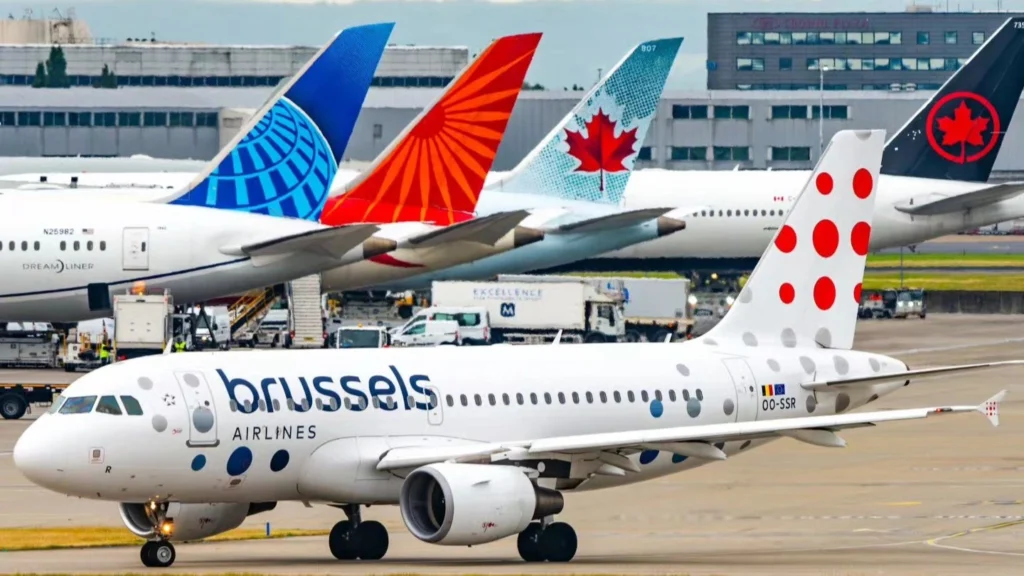
Airlines Operating One-Stop Flights
Several global carriers connect San Francisco and major Indian cities via their hubs:
United Airlines (UA)
- One stop via Newark (EWR) or Chicago (ORD)
- Connects to Delhi, Mumbai, Bengaluru, and other Indian cities through partners or its own services
Lufthansa (LH)
- One stop via Frankfurt (FRA)
- Serves Delhi, Mumbai, Bengaluru, and Chennai
British Airways (BA)
- One stop via London Heathrow (LHR)
- Connects San Francisco with Delhi, Mumbai, Chennai, and Bengaluru
Emirates (EK)
- One stop via Dubai (DXB)
- Extensive connectivity across India, including Mumbai, Delhi, Bengaluru, Chennai, Hyderabad, and Kochi
Qatar Airways (QR)
- One stop via Doha (DOH)
- Serves multiple Indian metros with high frequency
Singapore Airlines (SQ)
- One stop via Singapore (SIN)
- Connects to Delhi, Mumbai, Bengaluru, Chennai, and Hyderabad
Cathay Pacific (CX)
- One stop via Hong Kong (HKG)
- Operates services to Delhi, Mumbai, and Bengaluru
Turkish Airlines (TK)
- One stop via Istanbul (IST)
- Serves Delhi, Mumbai, Bengaluru, Chennai, and Hyderabad
San Francisco Travel Guide
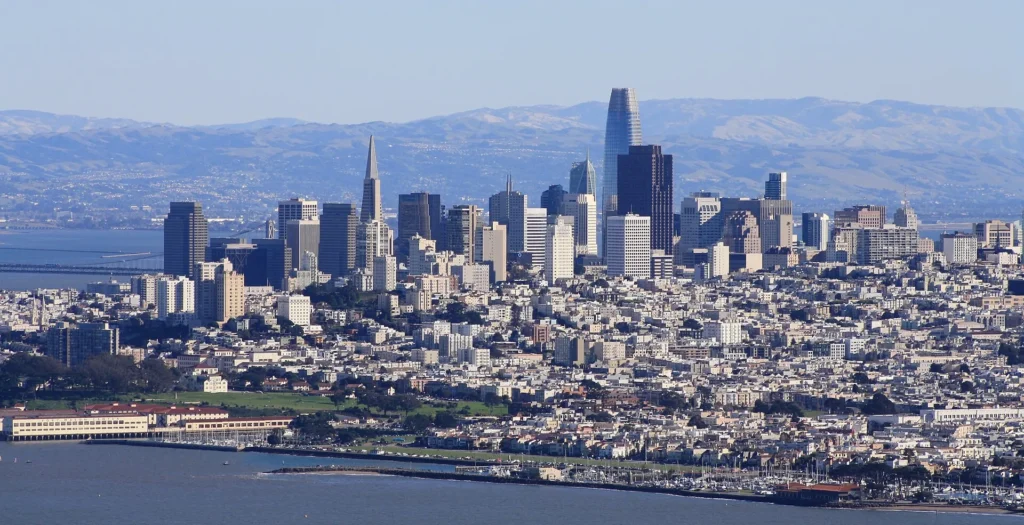
San Francisco is one of the most diverse and culturally layered cities in the United States, blending history, innovation, and natural beauty in a compact urban setting.
This guide breaks down what matters most for visitors, from essential sights and neighborhoods to safety, costs, and practical travel planning.
Understanding San Francisco Beyond the Stereotypes
San Francisco stands apart for its mix of counterculture history, immigrant communities, and global tech influence. Neighborhoods change character block by block, creating a city that rewards walking, curiosity, and time spent outdoors.
Food and public spaces define the visitor experience. The city is known for exceptional Asian cuisine, strong café culture, and expansive parks that connect urban life with coastal and hillside landscapes. While costs are high by national standards, careful planning makes a visit manageable on a range of budgets.
Top Attractions Worth Prioritizing
Alcatraz Island
Alcatraz combines military history, maritime heritage, and the legacy of its federal prison years. Advance ferry reservations are essential due to limited daily capacity.
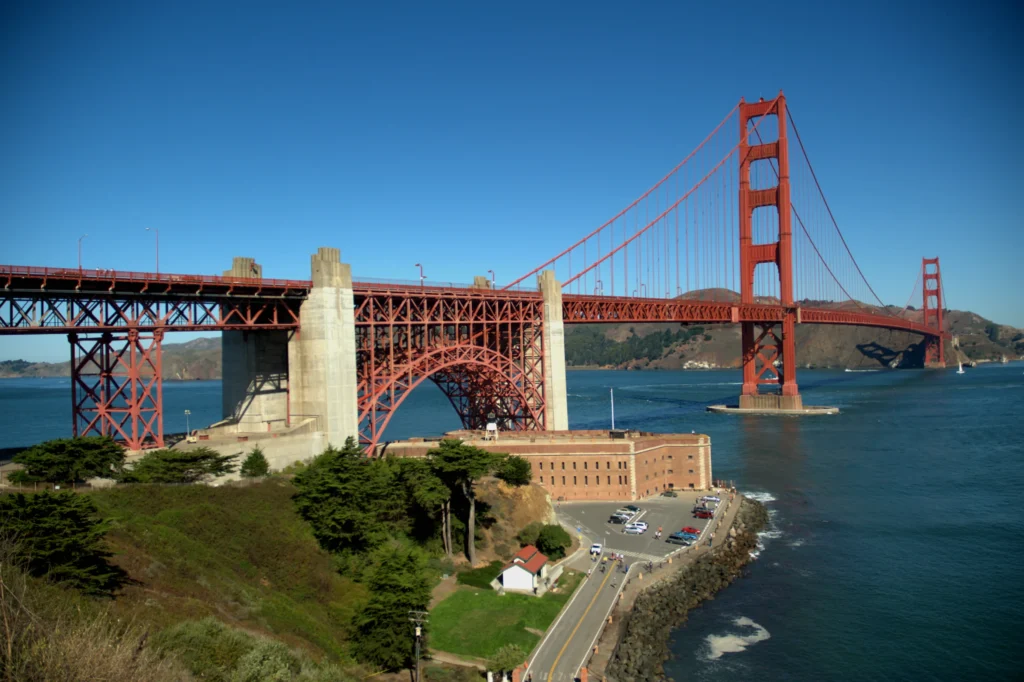
Golden Gate Bridge
Opened in 1937, the bridge remains an engineering landmark. Walking or cycling across offers views of the bay, Marin Headlands, and the city skyline.
Golden Gate Park
Larger than New York’s Central Park, this 1,017-acre space includes museums, gardens, walking trails, and the California Academy of Sciences. Many areas are free to access.
Napa and Sonoma
Wine country lies roughly 90 minutes from the city. Day tours are available, but overnight stays offer better value and flexibility.
Palace of Fine Arts
Built for the 1915 Panama-Pacific International Exposition, this open-air structure is one of the city’s most photographed and freely accessible sites.
Neighborhoods That Define the City
The Mission District
Home to San Francisco’s oldest building, the Mission blends Mexican heritage, street art, parks, and a strong food scene that ranges from casual taquerias to fine dining.
Chinatown
The oldest and largest Chinatown in the US offers historic architecture, traditional markets, teahouses, and some of the city’s best Chinese food.
Haight-Ashbury
Known for its role in the 1960s counterculture movement, the area now mixes preserved history with boutiques and cafés.
Castro
A historic center of LGBTQ culture, the Castro features nightlife, museums, and public landmarks that reflect decades of social activism.
Cultural and Outdoor Experiences
San Francisco rewards travelers who explore on foot. Free walking tours provide context on history and architecture, while parks like Crissy Field and Dolores Park offer open views and relaxed spaces to pause.
Museums such as the Beat Museum and institutions across Golden Gate Park add depth for visitors interested in literature, art, and science.
Safety and Awareness
San Francisco is generally safe, though non-violent crime, especially theft, is common. Visitors should remain alert on public transport, avoid leaving items in parked cars, and stay cautious in areas like the Tenderloin, particularly at night.
Emergency services are accessed by dialing 911. Standard travel precautions apply, including document backups and travel insurance coverage.
Where to Stay
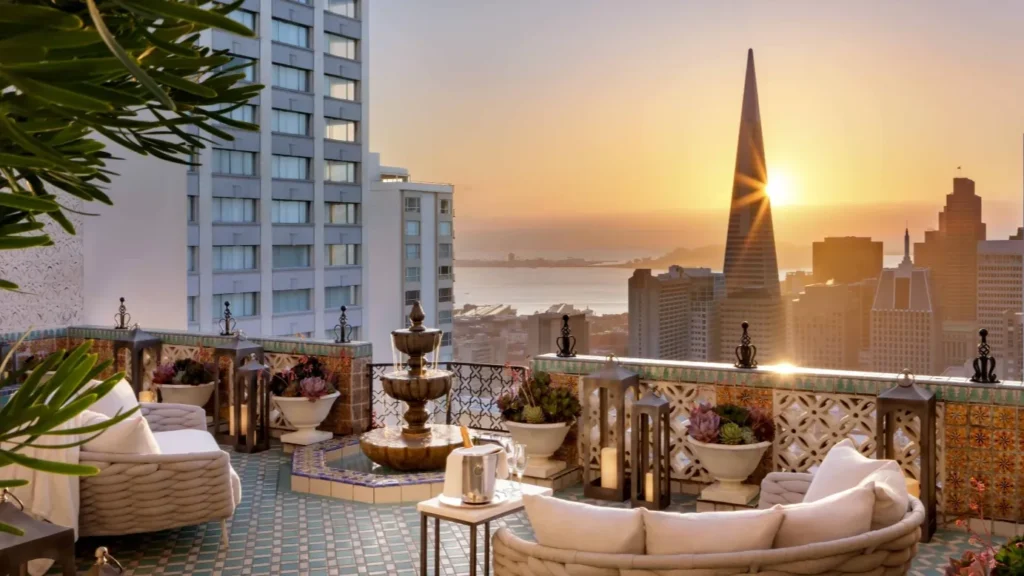
Accommodation prices are high, with limited budget options. Hostels, smaller hotels, and select neighborhoods outside the downtown core offer better value. Booking early significantly improves availability and pricing.
Typical Daily Costs
- Accommodation:
Hostels from $30 per night, budget hotels from $105 - Food:
Street food $12 to $15, sit-down meals $25 to $50 - Transport:
Public transit from $2.50 per ride with a Clipper card - Attractions:
Many parks and landmarks are free, while major sites like Alcatraz are ticketed
Getting Around the City
Public transportation is efficient and extensive. MUNI buses, historic streetcars, and cable cars cover most areas. Visitor Passports offer unlimited rides and better value for short stays.
Ferries provide scenic routes to nearby destinations, while rideshare services are more cost-effective than taxis. Car rentals are unnecessary unless planning trips outside the city.
Best Time to Visit
- Summer: Busy, cool temperatures, major festivals
- Fall: Warm weather, fewer crowds, ideal for sightseeing
- Winter: Lowest prices, higher rainfall, cultural festivals
- Spring: Mild weather, seasonal events, fewer tourists
September through November offers the best balance of weather and crowd levels.
Stay tuned with us. Further, follow us on social media for the latest updates.
Join us on Telegram Group for the Latest Aviation Updates. Subsequently, follow us on Google News
