

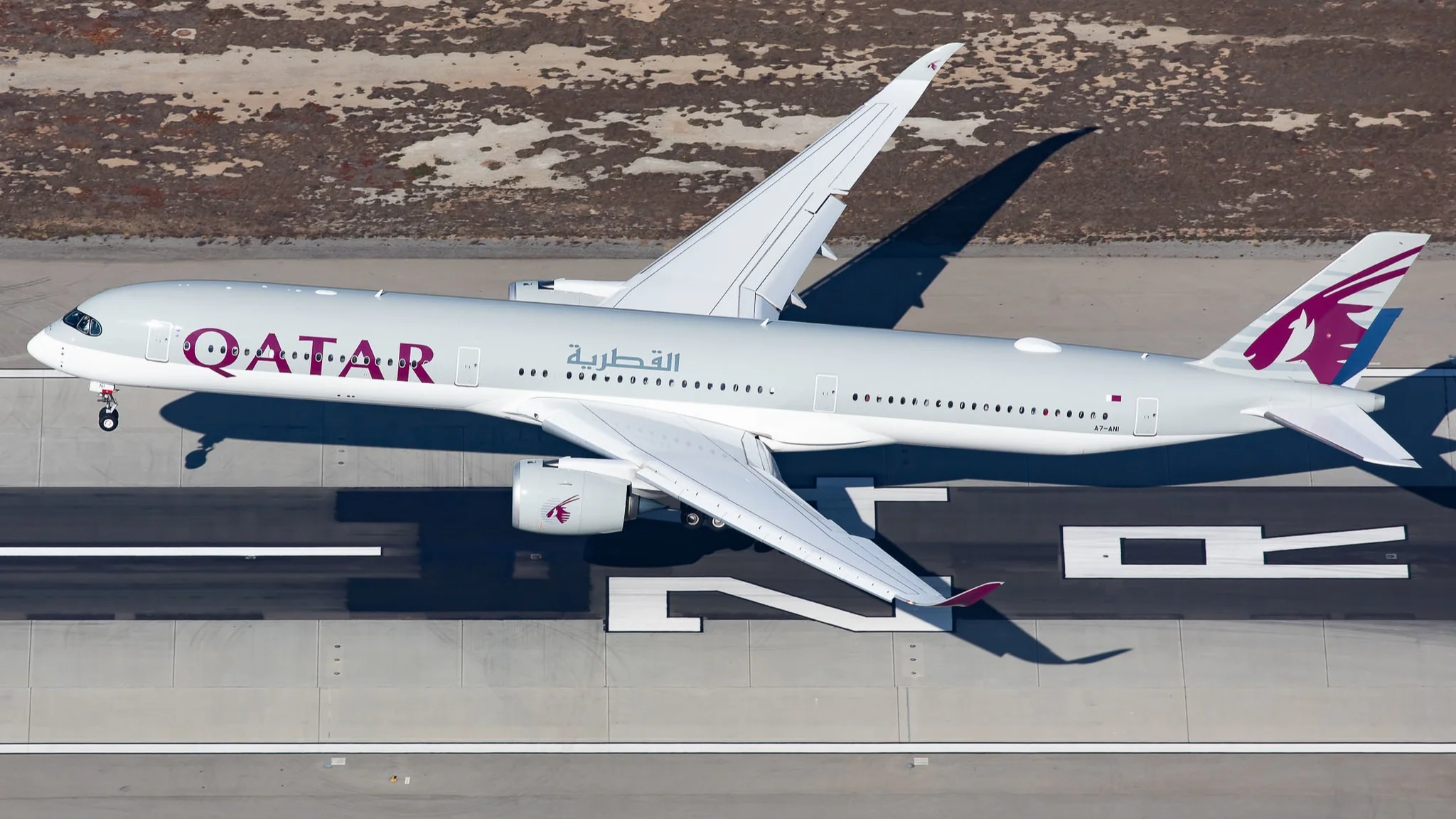
ATLANTA- Qatar Airways (QR) flight QR755 from Doha encountered strong crosswinds while approaching Atlanta’s Hartsfield-Jackson International Airport (ATL). The aircraft performed a go-around after the pilots detected unstable landing conditions caused by the wind.
A widely shared video captured how close the jet appeared to a tailstrike as it tried to land at ATL. The airline later confirmed with The National that the maneuver was a standard safety response.
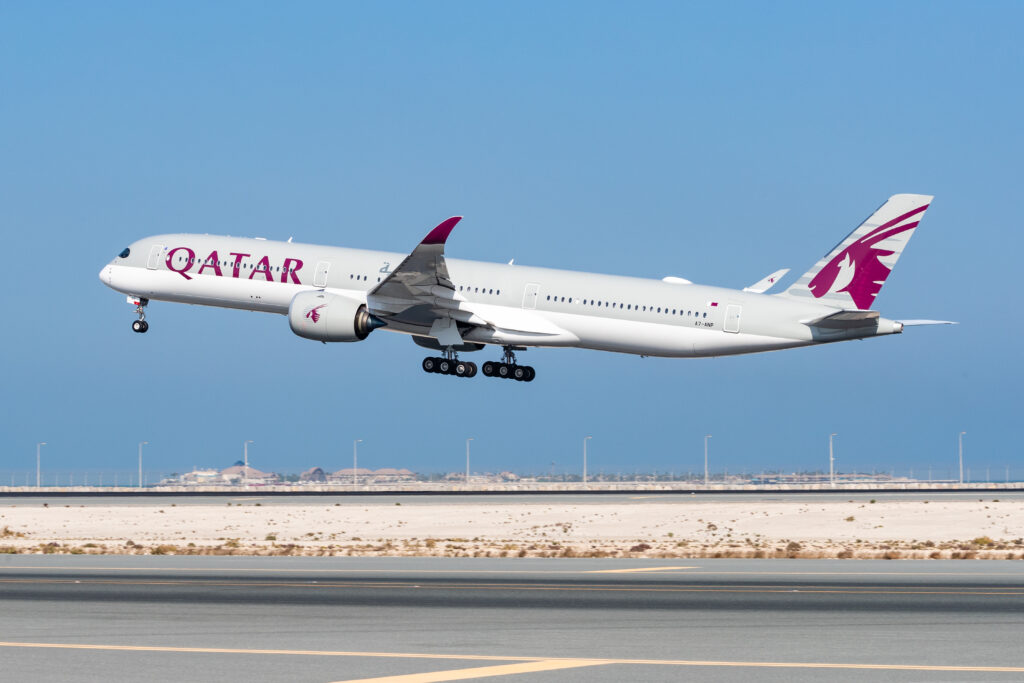
Qatar Airways A350 Go-Around at Atlanta
The footage, recorded by aviation enthusiast Kyle Franklin, showed the aircraft adjusting aggressively during final approach.
Observers reacted strongly as the jet dipped near the runway. Qatar Airways stated that passenger safety remained its top priority and confirmed the go-around occurred due to high winds on 14 December 2025.
A representative from the US Federal Aviation Administration (FAA) told The National that no report related to the event had been filed. QR755 is the airline’s daily nonstop flight service from Doha to Atlanta.
Why Pilots Use Go-Around Procedures
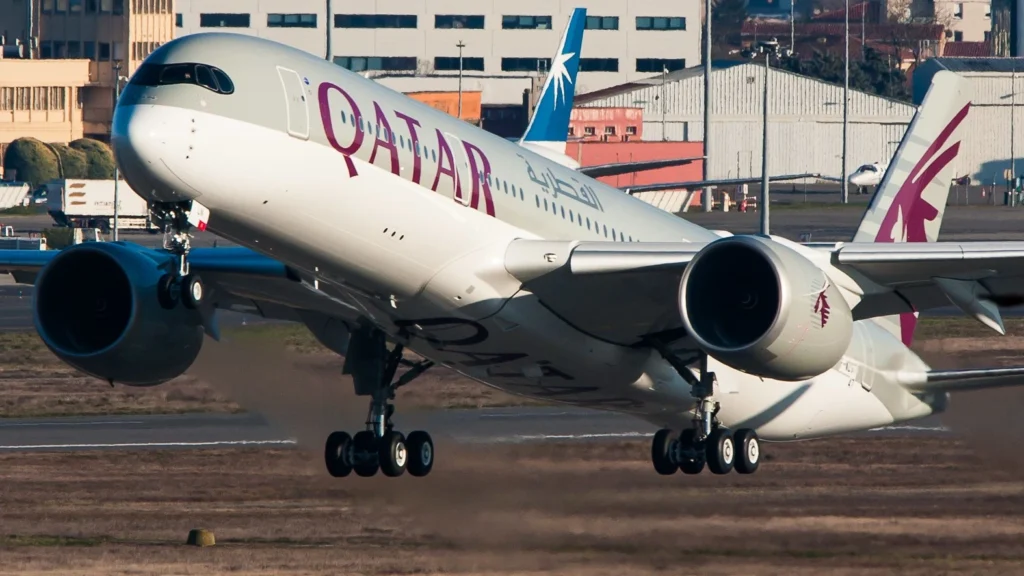
A go-around is a planned and practiced part of aviation safety. Pilots use it whenever a landing becomes unstable, visibility deteriorates, or runway conditions change. Controllers may also order a go-around if the spacing between aircraft tightens or if ground vehicles move close to an active runway.
This maneuver typically adds only a short delay while allowing the aircraft to rejoin the landing sequence. Airlines and regulators treat it as a routine safety measure rather than an incident.
How Windshear Affects Aircraft
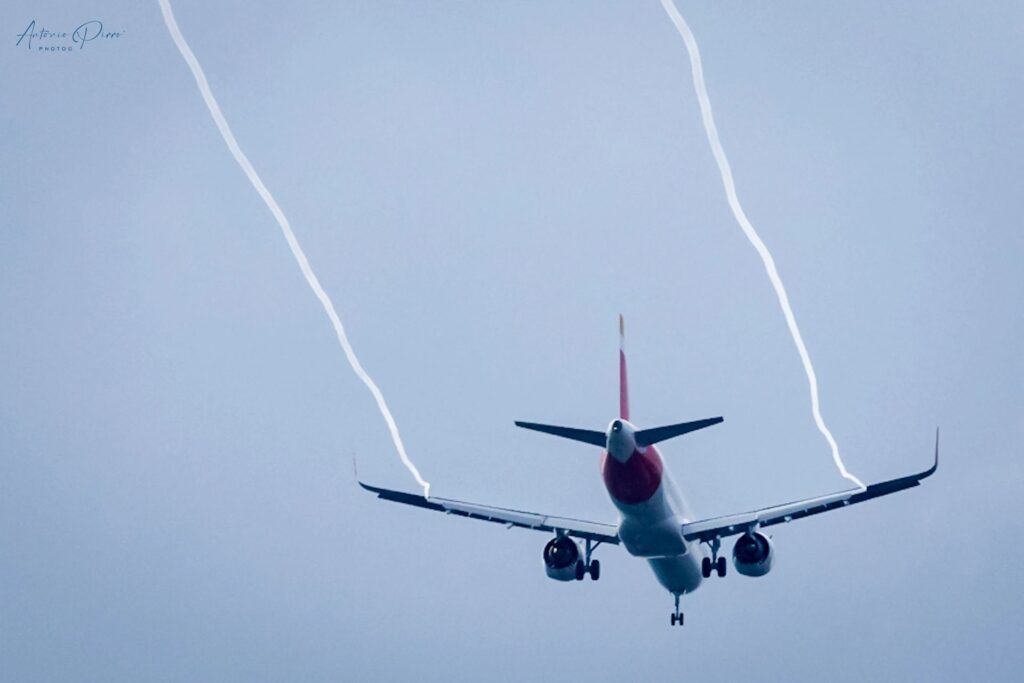
Wind shear creates sudden shifts in wind speed or direction and poses risks during takeoff and landing. It appears as either vertical or horizontal shear, depending on how the wind changes across altitude or distance. Airports use multiple sensors along runways and at different heights to detect these variations.
Low-level wind shear often forms near thunderstorms, frontal boundaries, jet streams, or when stable air flows across mountain ranges. Microbursts produce the most dangerous conditions because they generate strong downward flows that spread outward on impact with the ground.
Aircraft encountering wind shear can lose airspeed or lift abruptly. Pilots must respond instantly by applying recovery procedures.
Training programs focus heavily on recognizing early signs of wind shear and executing the correct actions. Airports in high-risk areas combine detection systems, forecasts, and pilot briefings to reduce exposure to these sudden changes.
Similar Incident
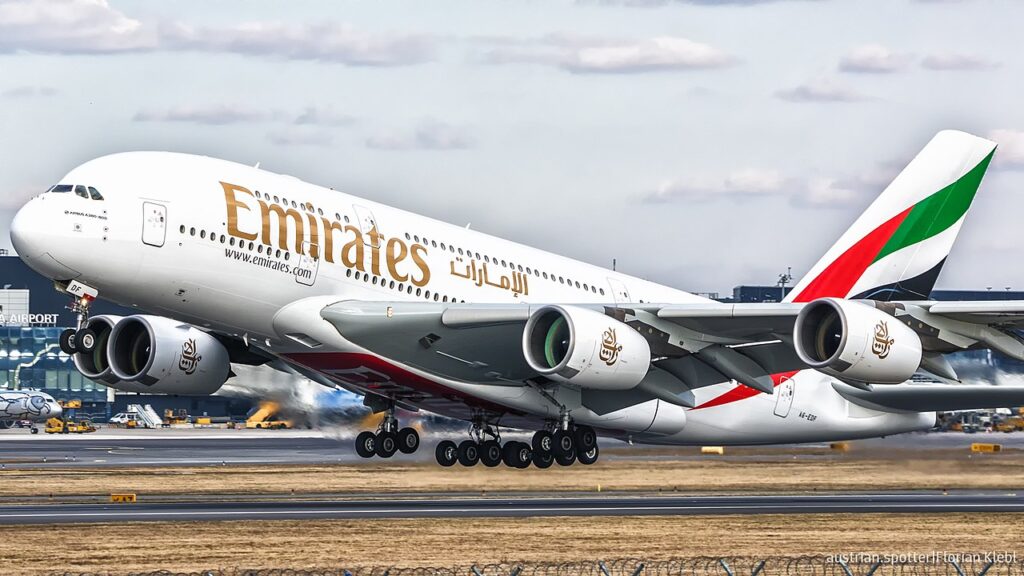
In March 2025, Emirates (EK) flight EK225 encountered windshear on approach to San Francisco International Airport (SFO) yet executed a smooth and controlled go-around. The Airbus A380 returned for a second approach and landed safely after its long sector from Dubai International Airport (DXB).
The maneuver, captured by an aviation channel and later confirmed through flight data, underscored how crews handle dynamic conditions at major hubs. Go-arounds at SFO typically fall within expected operational ranges, and this event aligned with those norms.
EK225 Go-Around
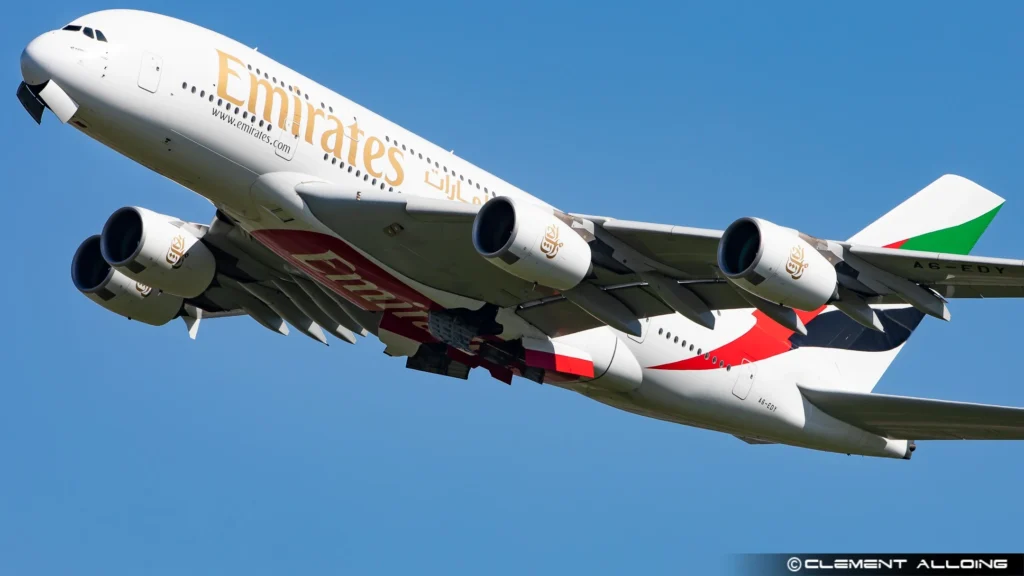
Emirates flight EK225 operated an Airbus A380-841 registered A6-EUV and powered by four Rolls-Royce engines. The aircraft departed Gate A23 at DXB at 8:57 AM local time on March 19, 2025.
After roughly sixteen hours in the air, the crew initiated a go-around at about 50 feet due to windshear detected near the threshold at SFO. The aircraft later landed and taxied to Gate A6 without additional complications.
FlightAware and FAA data help frame this event within normal industry patterns. Go-arounds account for about 0.3 percent of arrivals across major US hubs, with SFO showing similar figures. Variability exists by year, with SFO reporting around two to three daily go-arounds in earlier fiscal cycles. These rates reflect a standard operational environment rather than an anomaly.
Widebody aircraft tend to initiate go-arounds more often than narrowbody fleets, and foreign carriers historically record slightly higher rates than US operators. Analysts studying these patterns track aircraft type, meteorology, air traffic flow, and procedural factors.
The LeighFisher classification model sorts go-arounds into six categories based on risk level, decision triggers, and flight conditions.
Factors That Shape Go-Around Frequency
Aircraft size, performance limits, and required landing configurations all influence go-around probability. Widebodies like the A380 carry high inertia, and any unexpected change in wind, speed, or glidepath stability can prompt crews to discontinue the approach to preserve safety margins.
Meteorological factors also play a decisive role. Windshear and variable crosswind components remain leading causes of aborted approaches. These conditions appear more frequently at coastal airports such as SFO, where terrain and marine layers can create sudden shifts.
Featured Image by Clément Alloing | Flickr
Stay tuned with us. Further, follow us on social media for the latest updates.
Join us on Telegram Group for the Latest Aviation Updates. Subsequently, follow us on Google News
