

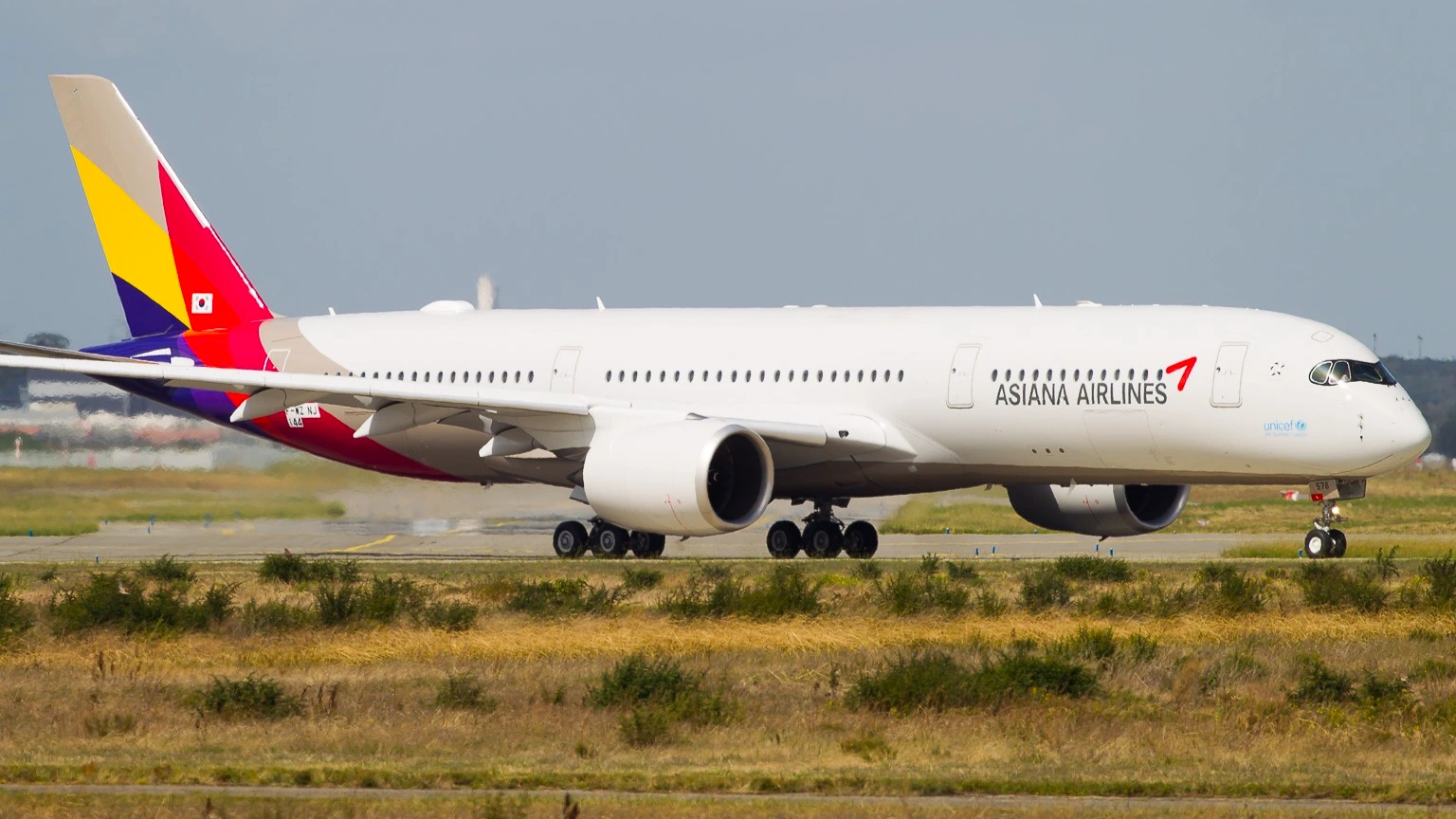
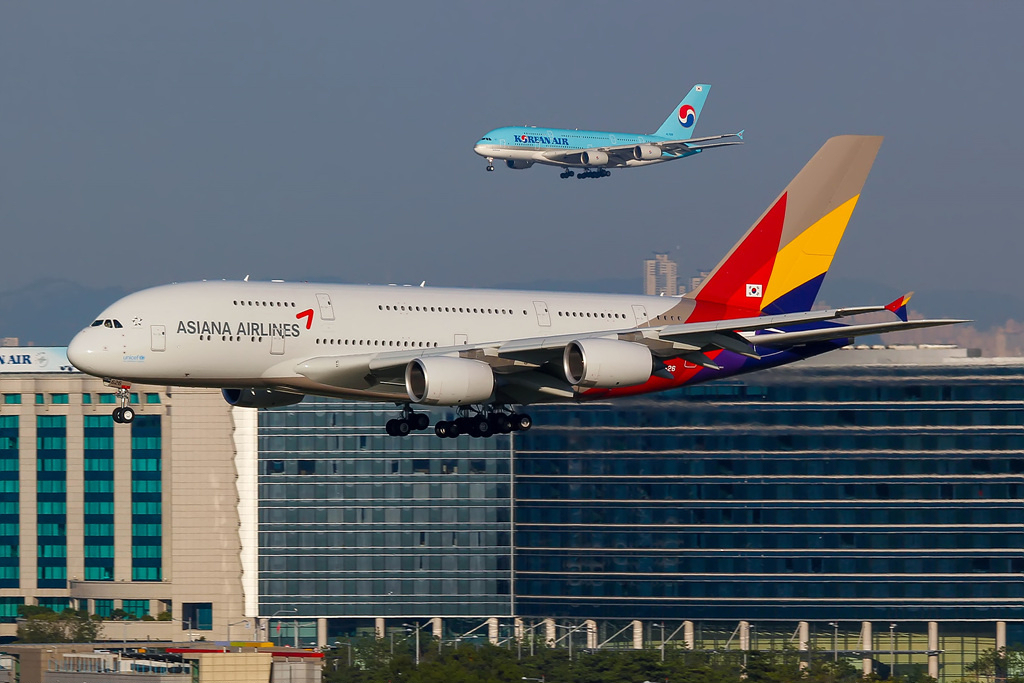
SEOUL- Passengers flying with Asiana Airlines (OZ) may now experience Korean Air (KE) seat designs, as the carrier begins a full cabin refit ahead of their merger.
The transition includes replacing interior seating across Asiana’s Airbus A350 fleet serving medium to long-haul destinations.
Korean Air and Asiana Airlines are aligning product and service features in preparation for full integration, while both airlines continue operating separately.
The seating overhaul marks the first visible change passengers will encounter prior to the merger.
Asiana Airlines Full Cabin Refit
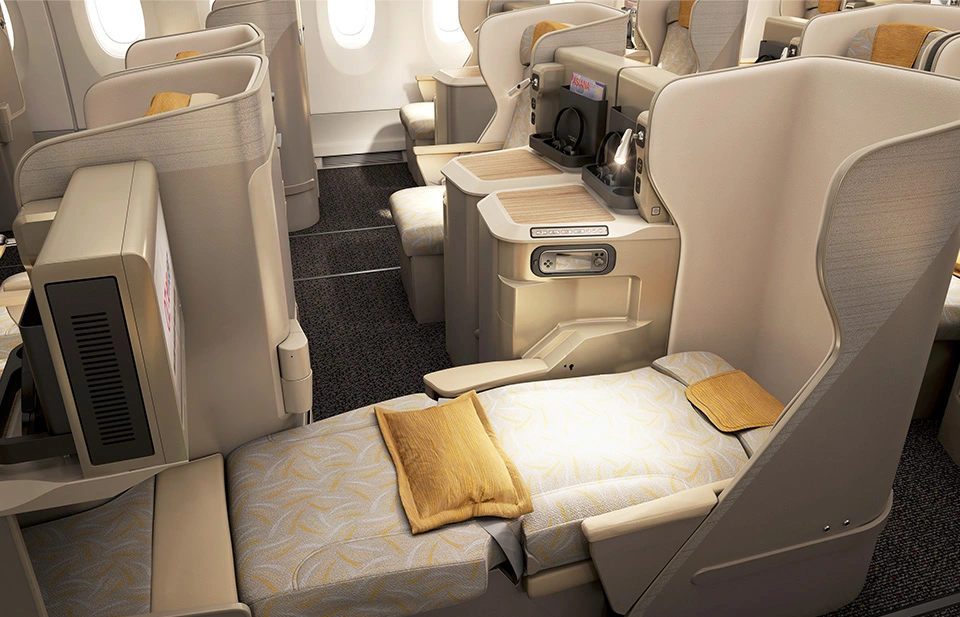
Asiana Airlines (OZ) has begun replacing seats on its Airbus A350 aircraft with Korean Air’s Prestige and Economy seating models.
Two of the 15 A350 units are already completed and operating commercial flights. The updated Prestige Class seats retain the same configuration as Asiana’s former Business Smartium seats, including a 77 inch full flat pitch and a 22 inch width.
Economy class dimensions also remain unchanged at 32-33 inches of pitch and 18 inches of width, ensuring consistent passenger comfort throughout the normalization period.
The A350, Asiana’s flagship model for services to North America, Oceania, and Southeast Asia, serves as the launch platform for the refit, with seating upgrades set to expand across the carrier’s 68 aircraft fleet in phases.
This transition is viewed as a strategic step toward a unified product image. While visual identity and in-flight manuals are aligning, core service protocols such as meal service and entertainment will continue as normal.
According to Korea JoongAng Daily, the change is intended to create a seamless branding experience for travelers ahead of full organizational integration.
Infrastructure Integration
The merge supported transformation extends beyond cabin interiors. Asiana Airlines will relocate to Terminal 2 at Incheon International Airport (ICN), aligning ground operations with Korean Air.
Its main ticketing office has already moved from Mapo District to Korean Air’s headquarters in Seosomun.
Employee training and new hire development operations have also begun relocation to Gangseo District, enabling collaborative instruction under a shared framework.
Safety and in-flight service manuals are undergoing review to unify standards across both airlines.
A step by step integration is being adopted to minimize disruption to passengers and employees while ensuring regulatory compliance.
Korean Air and Asiana Airlines Merger
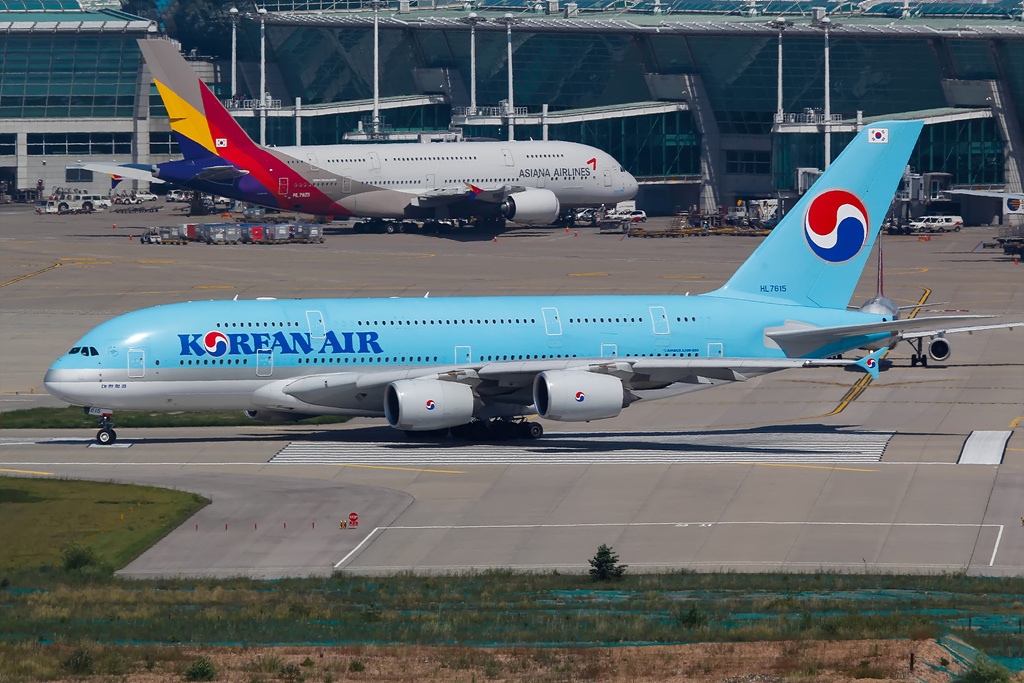
Korean Air has officially completed its 1.8 trillion won ($1.4 billion) acquisition of a 63.9 percent stake in Asiana Airlines, concluding a 4-year merger process.
Both carriers will continue to operate independently for a 2-year transition period, with Asiana functioning as a wholly owned subsidiary.
A structured transition timeline supports gradual workforce relocation, system integration, and improved financial management.
A major priority is stabilizing Asiana’s high debt to equity ratio, where strategic allocation of capital and operational synergies will be critical to sustainability.
Global Expansion and European Regulatory Approval
Moreover, the merged entity aims to become the world’s seventh-largest airline by passenger volume, leveraging a fleet of around 250 aircraft and expanding connectivity across Asia-Pacific and beyond.
To resolve competition concerns in the European Union, Korean Air designated T’way Air as a remedy carrier for Barcelona, Frankfurt, Paris, and Rome. Air Incheon’s takeover of Asiana’s cargo division further supports freight market competitiveness.
Future Roadmap and Challenges
Korean Air reports minimal exposure to exchange rate volatility, supported by a stable 9:1 owned-to-leased aircraft ratio and resilient passenger demand. Consequently, route restructuring and network optimization remain likely as integration advances.
Analysts emphasize that long-term value will rely on disciplined debt management and operational excellence.
Key transition considerations include:
- Reducing inherited debt pressures
- Maintaining uninterrupted flight operations
- Executing safe and fluid organizational consolidation
- Navigating geopolitical and macroeconomic uncertainty
Industry sentiment suggests people feel confident about long-term benefits, even though there are short-term challenges.
Experts expect that the market will become more combined and that South Korea’s airlines will become stronger internationally, which will change the country’s aviation landscape.
Stay tuned with us. Further, follow us on social media for the latest updates.
Join us on Telegram Group for the Latest Aviation Updates. Subsequently, follow us on Google News
