

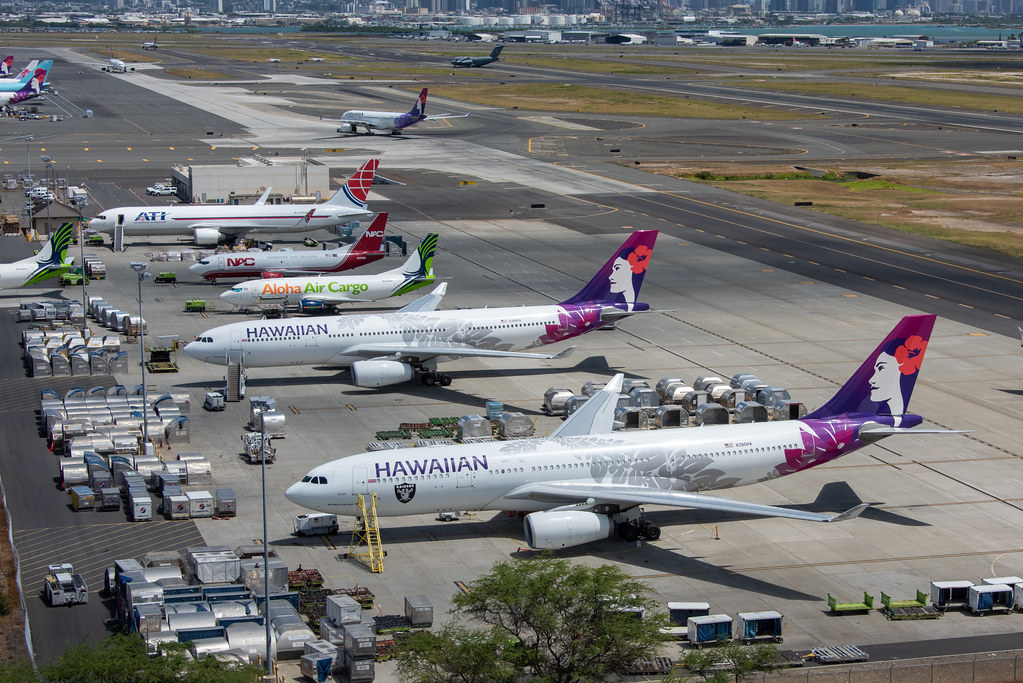
Hawaiian Airlines (HA) has always been a unique carrier in the U.S. aviation landscape. Based in Honolulu, the airline plays a dual role: it connects Hawaii’s islands with frequent short-haul flights, while also linking the islands to major destinations across North America and Asia-Pacific. Its fleet reflects this balance, combining smaller narrowbody aircraft for inter-island services with widebodies for long-haul operations.
As of September 2025, Hawaiian Airlines operates a fleet of 75 aircraft, with no pending direct orders but with important changes ahead. The airline’s Boeing 787-9 Dreamliners, delivered only recently, are set to be transferred to Alaska Airlines by 2026, marking a turning point in Hawaiian’s international long-haul ambitions.
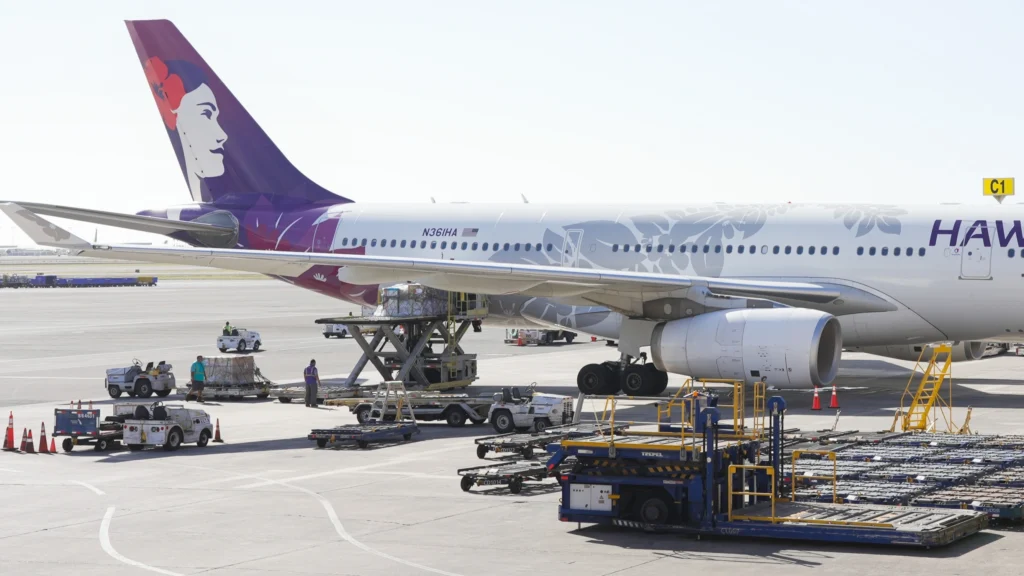
At the same time, Hawaiian has leaned into dedicated freighters, operating Airbus A330-300P2Fs for Amazon Air, a first among U.S. passenger carriers.
Hawaiian Airlines Fleet
Below is a breakdown of Hawaiian’s current fleet across narrowbody, widebody, and cargo operations.
Narrowbody Fleet
Boeing 717-200
The backbone of Hawaiian Airlines’ inter-island service remains the Boeing 717-200, with 19 aircraft in service. These jets are perfectly suited for the short hops between Hawaii’s islands, typically under 45 minutes in duration. Configured to carry 128 passengers, the 717s are highly utilized, often making multiple flights per day between Honolulu and airports like Kahului, Kona, and Lihue.
Despite their age, the 717s remain indispensable because of their durability and efficiency on high-frequency short-haul routes. However, Hawaiian will eventually need to address replacement options, as the type is no longer in production. The fleet’s reliability and role in keeping Hawaii connected highlight its continued value despite looming retirement concerns.
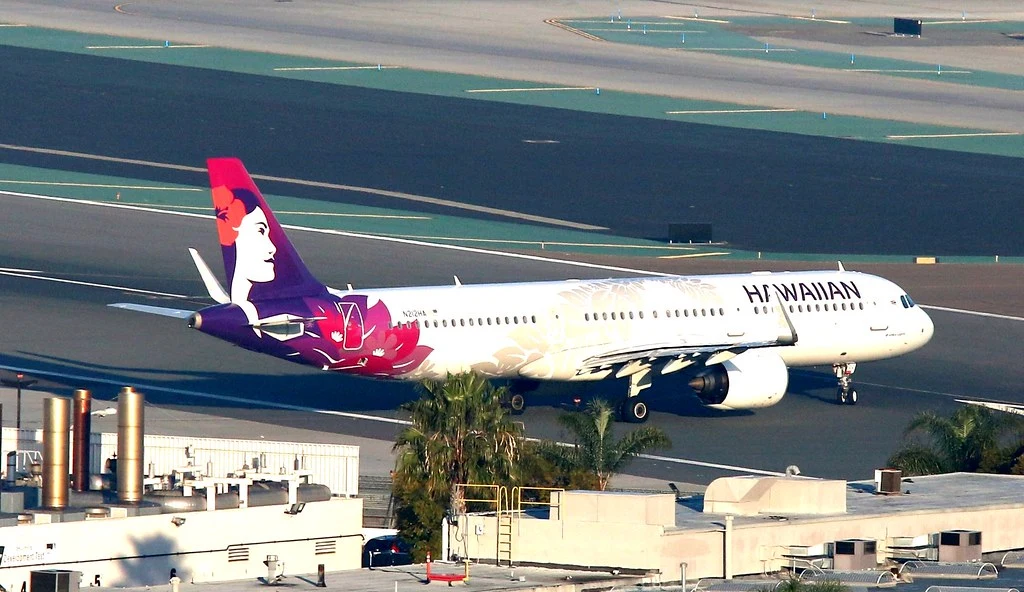
Airbus A321neo
For longer narrowbody flying, Hawaiian operates 18 Airbus A321neos, primarily connecting Hawaii with West Coast U.S. destinations such as Los Angeles, San Francisco, and Seattle. With seating for 189 passengers, the A321neo provides a fuel-efficient option on thinner transpacific routes that do not require the capacity of a widebody.
The aircraft has become an important part of Hawaiian’s fleet modernization strategy. Its lower operating costs allow the airline to compete effectively against U.S. mainland carriers on routes between Hawaii and smaller or secondary markets. The A321neo also provides greater flexibility in network planning, complementing the larger Airbus A330s.
Widebody Fleet
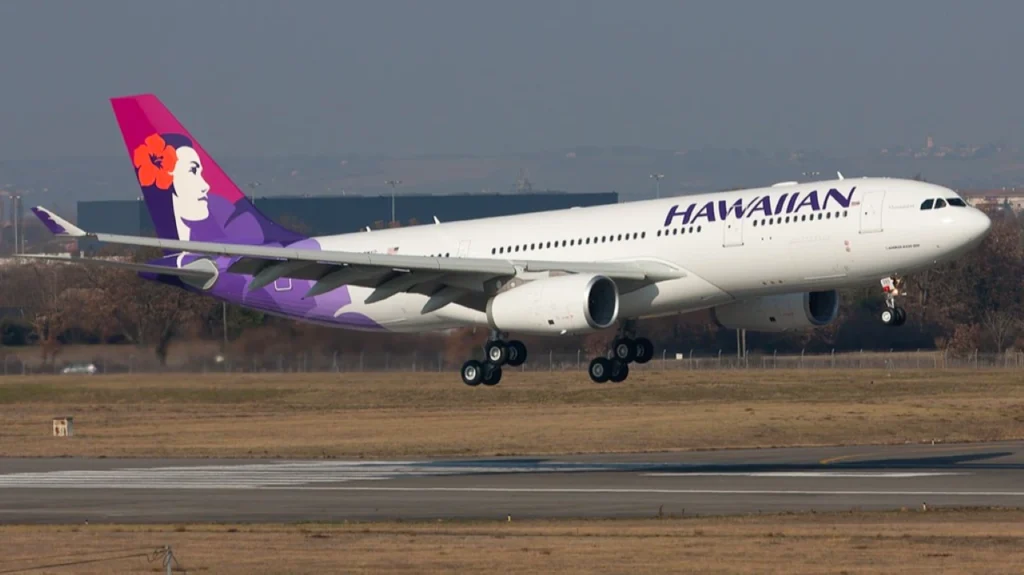
Airbus A330-200
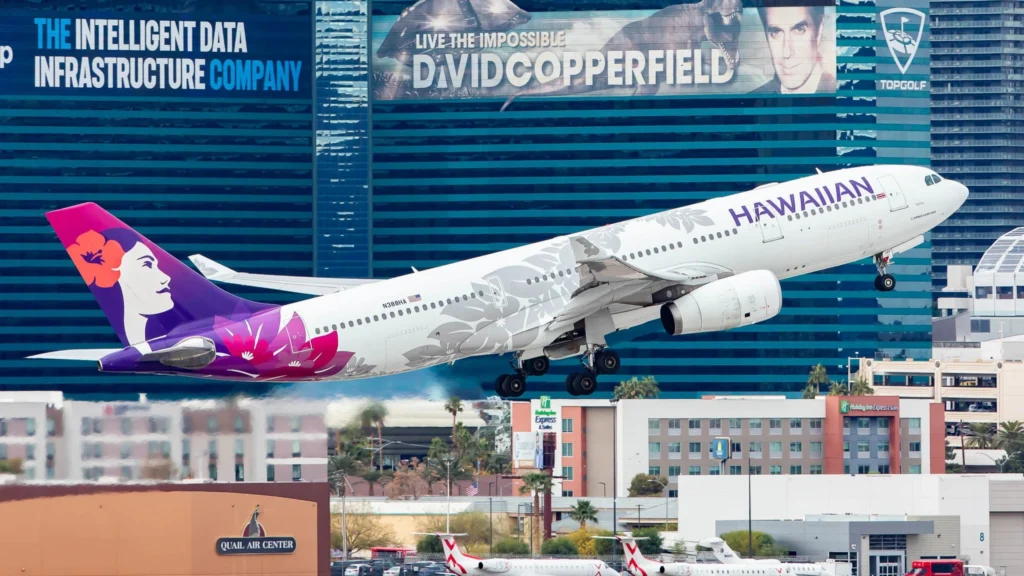
The Airbus A330-200 is Hawaiian’s mainstay widebody aircraft, with 24 aircraft in service. Configured to seat 278 passengers, the A330s are deployed on long-haul routes to Asia-Pacific (Tokyo, Seoul, Sydney) as well as major North American hubs like Los Angeles, New York, and Boston.
The A330 has been central to Hawaiian’s international network, offering both range and efficiency. It remains the workhorse of the long-haul fleet and is expected to continue in service for years to come, given Hawaiian’s lack of new widebody orders. While competitors are phasing out older A330s, Hawaiian continues to find value in the type, especially as its size fits well with Hawaii’s demand profile.
Boeing 787-9 (Exiting the Fleet)
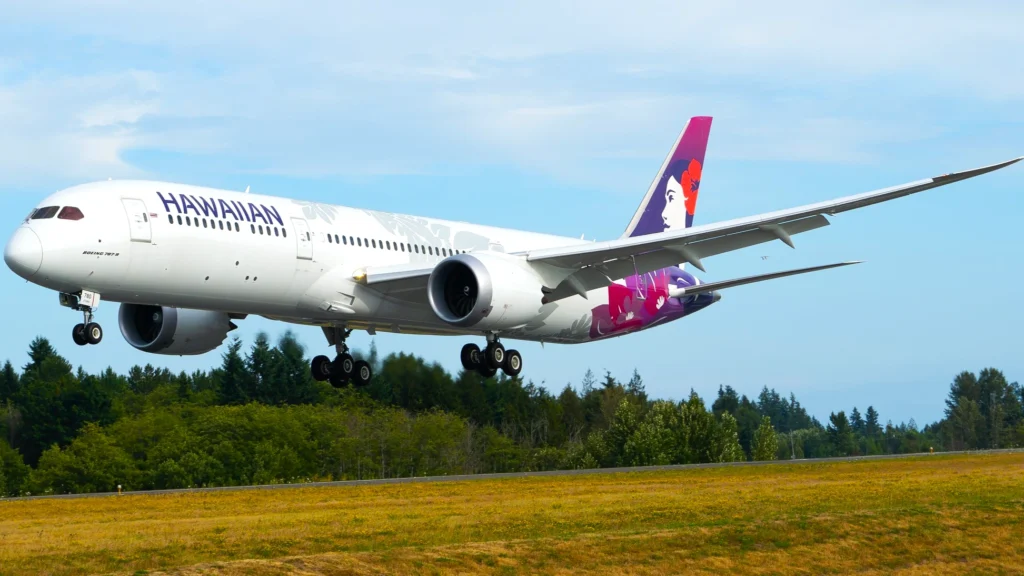
In 2023–24, Hawaiian Airlines introduced the Boeing 787-9 Dreamliner, with four aircraft delivered. Configured to carry 300 passengers, the 787-9 was expected to usher in a new era of Hawaiian’s long-haul flying, offering improved fuel efficiency and passenger comfort.
However, in a major strategic shift, Hawaiian announced that all four of these Dreamliners will be transferred to Alaska Airlines (AS) by spring 2026. This decision effectively ends Hawaiian’s 787 program and suggests a refocus on its A330-200 fleet for international operations. While the 787s were a sign of modernization, the transfer highlights the financial pressures and fleet simplification strategies shaping Hawaiian’s future.
Cargo Fleet
Airbus A330-300P2F
A distinctive part of Hawaiian Airlines’ fleet is its 10 Airbus A330-300P2Fs (passenger-to-freighter conversions), operated exclusively for Amazon Air. Hawaiian is the first U.S. airline to operate widebody freighters for the e-commerce giant, marking a significant diversification of its business model.
The A330-300P2Fs are not used for Hawaiian’s passenger network but instead serve Amazon’s growing air cargo needs across North America. This fleet provides Hawaiian with steady revenue outside of the highly competitive passenger sector, adding resilience to its operations in the face of demand swings. The decision to enter the cargo market underscores Hawaiian’s adaptability and willingness to leverage its fleet expertise beyond tourism-focused flying.
Outlook
Hawaiian Airlines’ fleet in 2025 is at a crossroads. On one hand, its Boeing 717s and A321neos secure its stronghold on inter-island and U.S. mainland routes. On the other hand, its A330-200s remain the backbone of international flying, even as the airline exits the 787 program and transfers its new Dreamliners to Alaska Airlines.
At the same time, Hawaiian’s partnership with Amazon Air through the A330-300P2F fleet ensures diversification and a unique revenue stream not shared by other U.S. passenger carriers. This dual focus on tourism-driven passenger services and dedicated cargo operations positions Hawaiian differently from its rivals.
With 75 aircraft in service, the airline’s fleet is smaller than that of major U.S. carriers, but it remains precisely tailored to its geographic and market needs. Hawaiian’s next challenge will be replacing its aging Boeing 717s while sustaining long-haul competitiveness in the Pacific.
The choices it makes in the coming years will determine whether it continues as a niche specialist or evolves into a broader player under the shadow of its growing ties with Alaska Airlines.
Stay tuned with us. Further, follow us on social media for the latest updates.
Join us on Telegram Group for the Latest Aviation Updates. Subsequently, follow us on Google News.
