

The global air cargo industry demonstrated remarkable resilience in 2024, navigating complex geopolitical, economic, and logistical challenges while continuing its steady growth.
According to the Airports Council International (ACI) World 2025 dataset, air cargo volumes reached 126.5 million metric tonnes in 2024, up 9.9% year-on-year and 4.1% above pre-pandemic levels.
The data highlights the concentration of global air cargo activity in a relatively small group of airports, while regional hubs in emerging markets continue to expand.
This article explores the key drivers, trends, and implications of this growth for the global logistics and e-commerce sectors.

Top Air Cargo Hubs: Who’s Leading?
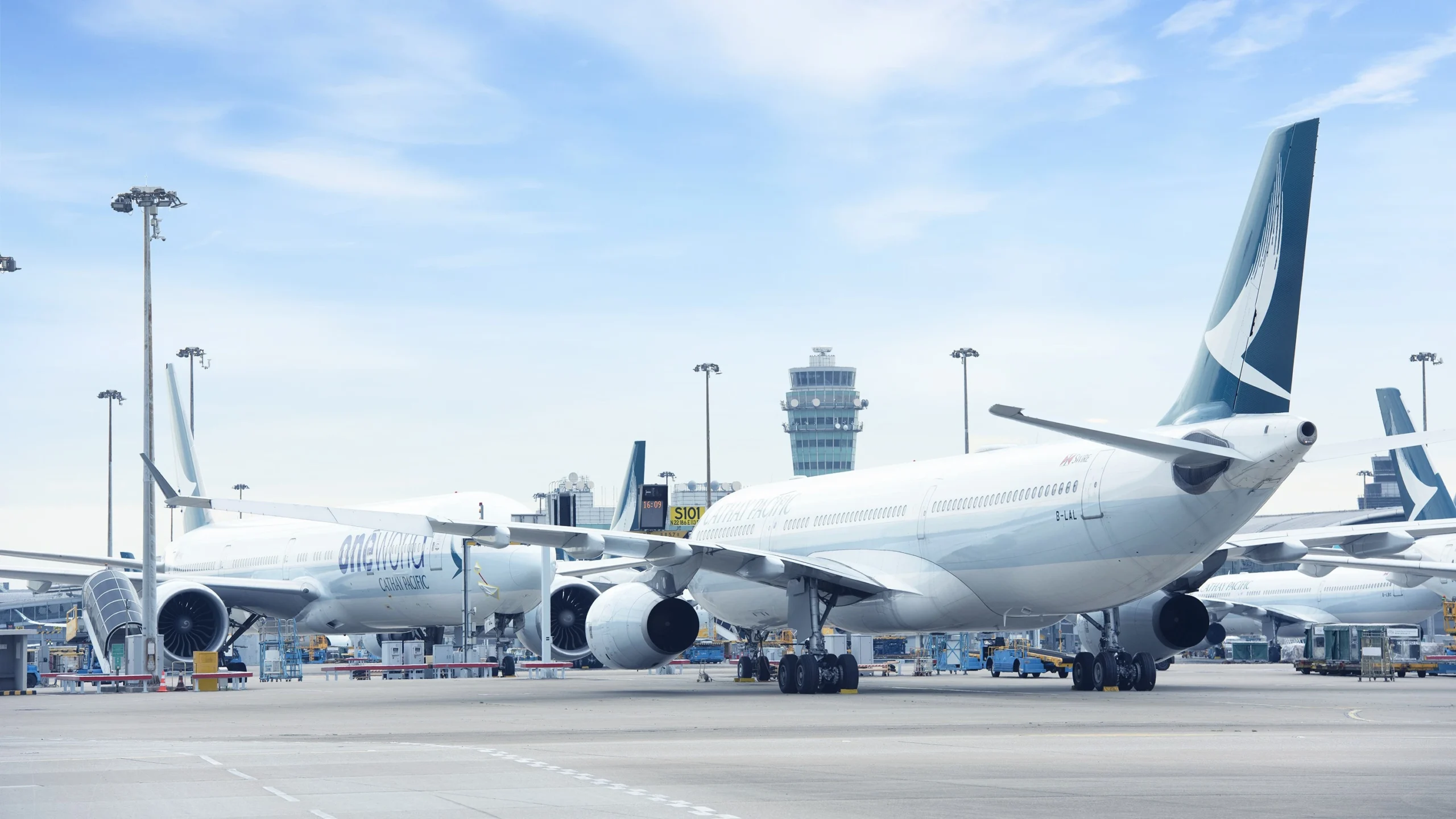
The 2024 rankings revealed that Hong Kong International Airport (HKIA) regained its top position, handling 4.9 million tonnes of cargo—a 14% increase from 2023, surpassing pre-pandemic levels. HKIA’s resurgence underscores East Asia’s continuing dominance in global logistics.
Other leading hubs included:
- Shanghai Pudong International Airport, with 3.78 million tonnes (+9.8%), bolstered by China’s export rebound and Belt and Road Initiative connectivity
- Dubai International Airport, with 2.2 million tonnes (+20.5%), climbing from 17th to 11th place, thanks to strategic investments under Dubai’s Economic Agenda D33
- iGA Istanbul Airport with 1.98 million tonnes (+24%), reflecting Turkey’s geographic advantage and the rapid expansion of Turkish Cargo
ACI World’s director general, Justin Erbacci, noted,
Concentration remains very high. In 2024, the top 20 airports handled about 42% of world cargo, nearly identical to 2023. Extending to the top 30 airports, they processed 52% of global volume.
This concentration highlights the pivotal role of major hubs as integrators, transshipment gateways, and export nodes.
Drivers of Air Cargo Growth in 2024
Several factors contributed to the robust growth in air cargo volumes last year:
Maritime Disruptions
Maritime volatility, especially in the Red Sea and Suez Canal, forced shippers to seek faster, more reliable alternatives. Transit through the Suez Canal fell by over 55% between November 2023 and February 2024, prompting carriers to reroute cargo via the Cape of Good Hope.
These delays increased costs for sea transport, driving high-value and urgent shipments to air freight. As a result, Middle Eastern and European hubs captured significant sea-to-air cargo flows.
E-Commerce Expansion
The structural rise of cross-border e-commerce is a consistent driver of air cargo demand. In the United States, the number of e-commerce users is projected to grow from 254 million in 2023 to 316 million by 2028.
Meanwhile, the Asia-Pacific saw 15.3% cargo growth in 2024, primarily due to e-commerce exports from China and Southeast Asia. Consumer expectations for faster delivery and global reach continue to favor air transport over slower sea options.
Falling Jet Fuel Costs
Lower jet fuel prices reduced operating expenses and made air freight more competitive, enabling carriers to maintain profitability despite rising global trade costs. This reduction, combined with improved operational efficiency, further encouraged the shift from sea to air for high-value and time-sensitive goods.

https://commons.wikimedia.org/wiki/File:Atlanta_Airport_%E2%80%93_Hartsfield-Jackson_Atlanta_International_Airport_in_Georgia_19.jpg
Regional Trends: Asia Pacific, Middle East, Europe, and Beyond
Asia Pacific
Asia Pacific’s dominance was reinforced by rising exports and strategic infrastructure development. Shanghai Pudong and Hongqiao airports together handled 4.2 million tonnes of cargo and mail in 2024, an 11% increase from the previous year.
The addition of flights to Belt and Road countries, as well as the establishment of overseas cargo stations in Ethiopia and Mexico, strengthened international cargo connectivity.
The Ethiopian station is projected to handle 600,000 tonnes annually, while the Mexico facility is expected to handle over 100,000 tonnes.
Middle East
Middle Eastern hubs saw the fastest growth in 2024, with cargo volumes rising 17%. Dubai International Airport was the standout, with a 20.5% year-on-year increase to 2.2 million tonnes.
Investments under Dubai’s Economic Agenda D33 aim to establish the city as one of the world’s top five logistics hubs, targeting expanded trade connections to 400 cities globally.
Europe
European hubs experienced moderate growth of 9.7% overall. Istanbul Airport’s remarkable 24% increase reflected the benefits of its strategic location between East and West, the expansion of Turkish Cargo, and the opening of the SmartIST Mega Cargo Terminal in 2022, which has an annual handling capacity of 2.2 million tonnes and specialized facilities for pharmaceuticals, cold storage, and sensitive cargo.
Latin America and Africa
Latin America grew by 6.9% in 2024, with Colombia and Brazil leading the expansion. African cargo volumes increased by 6.5%, though growth remains concentrated in five countries: South Africa, Egypt, Kenya, Ethiopia, and Nigeria.
Despite no African airport reaching the global top 20, the region is on a clear growth trajectory.
North America
North American growth was modest at 2.8%. Cincinnati/Northern Kentucky International Airport celebrated the opening of F&F LLC’s new 80,000 sq ft cargo facility at the CVG Global Logistics Park, expanding general airfreight capabilities.
The airport serves as a major hub for Amazon Air and DHL Express, highlighting the ongoing importance of integrator-driven e-commerce flows.
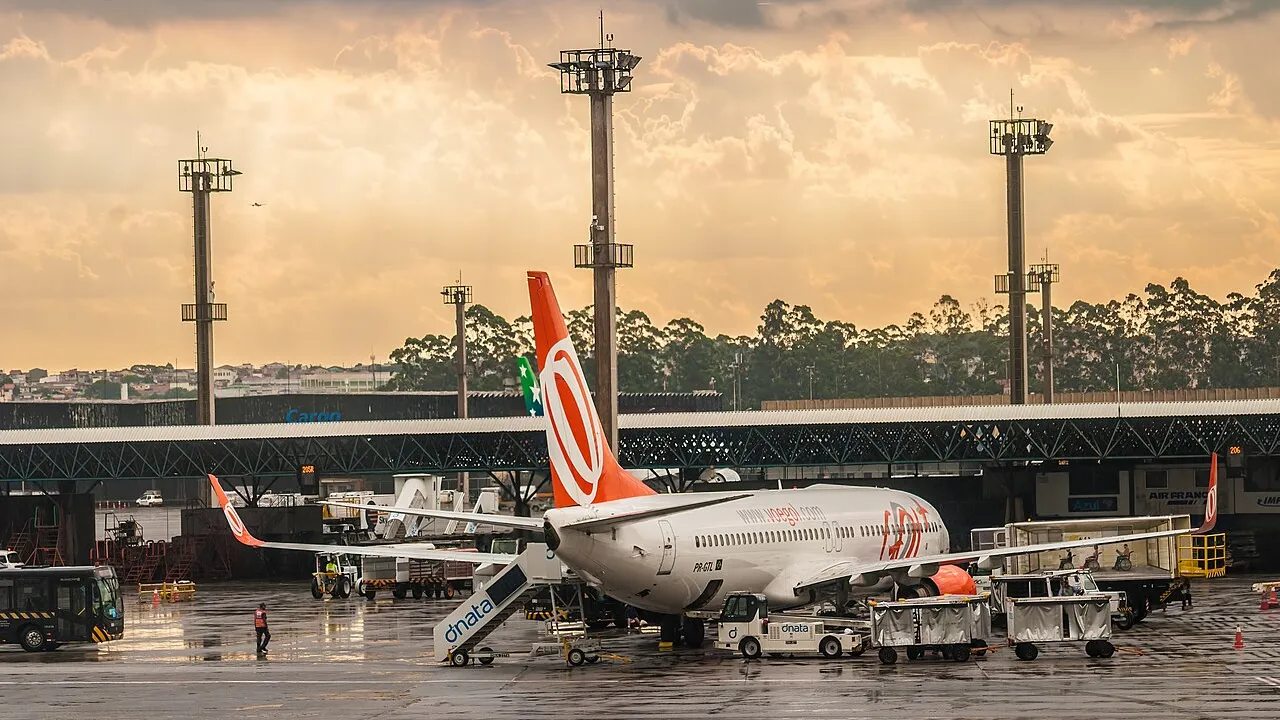
https://commons.wikimedia.org/wiki/File:PR-GTL_GOL_Boeing_737-800,_Guarulhos_International_Airport,_S%C3%A3o_Paulo,_Brazil.jpg
Specialized Cargo and High-Value Segments
E-commerce is not the only growth driver. Airlines and airports are increasingly focusing on specialized cargo, including:
- Pharmaceuticals and medical supplies, benefiting from temperature-controlled facilities
- Electronic goods and sensitive equipment
- Live animals and perishable goods
- Hazardous or radioactive materials requiring dedicated handling
Facilities like Istanbul’s SmartIST Mega Cargo Terminal demonstrate the rising importance of integrated infrastructure for specialized, high-value cargo.
Similarly, Hong Kong and Shanghai are investing in overseas cargo stations to support global supply chains and e-commerce demand.
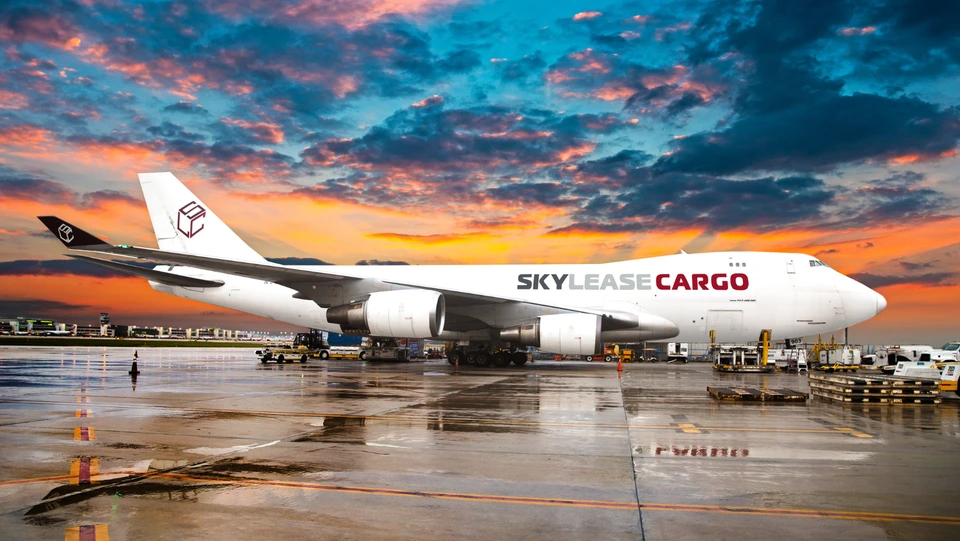
Infrastructure and Expansion: Shaping the Future Cargo Map
Strategic investments are altering the global air cargo landscape. Key projects include:
- Dubai World Central expansion, boosting capacity and attracting international carriers
- Shanghai’s Belt and Road-linked overseas cargo stations, enhancing logistics connectivity
- Incheon and Mexico’s Felipe Angeles International Airport expansions
- Cincinnati’s F&F cargo facility, improving integrator capacity
These investments signal a shift toward modern, technology-enabled, and highly connected hubs that can handle increasing volumes and specialized shipments efficiently.

Challenges and Volatility in 2025 and Beyond
Despite the growth, challenges persist. Justin Erbacci notes that tariffs, regional instability, and maritime disruptions could quickly shift flows.
The China-to-US trade lane, for example, faces tariffs of 30% or more, and recent changes to de minimis exemptions for low-value shipments are already influencing trade patterns.
Other external factors include:
- Geopolitical tensions affecting sea-air substitution
- Infrastructure bottlenecks at emerging hubs
- Volatility in fuel prices is impacting operating costs
Nevertheless, structural drivers such as e-commerce growth and supply chain diversification provide confidence in medium-term demand.

https://commons.wikimedia.org/wiki/File:Terminal_2,_Mexico_City_International_Airport_(Aeropuerto_Internacional_de_la_Ciudad_de_M%C3%A9xico)_Feb_2021.jpg
Outlook: Momentum and Structural Growth
Global air cargo has recovered and exceeded pre-pandemic levels. In the first half of 2025, total volumes were approximately 5% above 2019, demonstrating that the rebound is sustainable rather than a temporary spike.
Asia Pacific and US integrator hubs are expected to maintain dominance, with Middle Eastern airports climbing further as they capture sea-air volumes and expand infrastructure.
E-commerce continues to drive structural demand, while investments in specialized terminals, automation, and connectivity are enabling airports to handle larger, more complex cargo flows.
Airports like Istanbul, Dubai, Shanghai, and Hong Kong are well-positioned to leverage these trends.
Emerging Hubs and Regional Growth
While top-tier airports continue to dominate global air cargo volumes, emerging hubs in Latin America, Africa, and Southeast Asia are showing notable growth.
In Latin America, airports in Colombia and Brazil saw cargo volumes rise by 8% in 2024, driven largely by e-commerce exports and diversification of trade routes outside the US.
African hubs remain concentrated in five countries—South Africa, Egypt, Kenya, Ethiopia, and Nigeria—but even modest growth reflects increasing investment in logistics infrastructure and airfreight connectivity.
Southeast Asian airports are benefiting from strong e-commerce demand, especially from China and regional manufacturing centers, with smaller airports serving as feeder points to major international hubs.
These emerging hubs are increasingly integrating technology-enabled handling facilities, temperature-controlled storage, and specialized services for pharmaceuticals, electronics, and perishables.
The growth of these regional airports not only helps decongest larger hubs but also supports faster, more reliable local and cross-border logistics.
As global supply chains diversify and shippers seek alternatives to congested routes, these emerging airports are poised to play a strategic role in the next phase of air cargo expansion, complementing established hubs and contributing to more resilient, distributed cargo networks worldwide.
Top 20 Cargo Airports
| Rank | +/- | Airport | Tonnes | YoY % |
|---|---|---|---|---|
| 1 | 0 | Hong Kong/Hong Kong (HKG) | 4,938,211 | 14.1 |
| 2 | +1 | Shanghai/China (PVG) | 3,778,331 | 9.8 |
| 3 | -1 | Memphis/US (MEM) | 3,754,236 | -3.3 |
| 4 | 0 | Anchorage/US (ANC)** | 3,699,284 | 9.4 |
| 5 | +1 | Louisville/US (SDF) | 3,152,969 | 15.6 |
| 6 | -1 | Incheon/Korea (ICN) | 2,946,902 | 7.4 |
| 7 | 0 | Miami/US (MIA) | 2,753,450 | 9 |
| 8 | 0 | Doha/Qatar (DOH) | 2,616,849 | 11.1 |
| 9 | +2 | Guangzhou/China (CAN) | 2,381,901 | 17.3 |
| 10 | 0 | Taipei/Taiwan (TPE) | 2,270,974 | 7.5 |
| 11 | +6 | Dubai/UAE (DXB) | 2,176,843 | 20.5 |
| 12 | -3 | Los Angeles/US (LAX) | 2,174,455 | 2.1 |
| 13 | 0 | Chicago/US (ORD) | 2,074,006 | 8.8 |
| 14 | +4 | Singapore/Singapore (SIN) | 2,008,300 | 14.1 |
| 15 | -3 | Tokyo/Japan (NRT) | 2,004,716 | 5.1 |
| 16 | 0 | Frankfurt/Germany (FRA) | 1,991,048 | 6.5 |
| 17 | +2 | Istanbul/Turkey (IST) | 1,984,744 | 23.8 |
| 18 | -3 | Paris/France (CDG) | 1,914,681 | 2.3 |
| 19 | +1 | Shenzhen/China (SZX) | 1,881,468 | 17.6 |
| 20 | -6 | Cincinnati/US (CVG) | 1,695,904 | -10.8 |
Bottom Line
The air cargo industry’s 2024 performance demonstrates resilience amid volatility. Key hubs in East Asia, the Middle East, Europe, and the US are consolidating their positions, while emerging markets continue to grow.
E-commerce, maritime disruptions, and falling fuel costs are primary growth drivers, supported by strategic infrastructure investments.
As global trade patterns evolve, airports and carriers that adapt to changing demand, invest in specialized facilities, and expand international connectivity will capture the largest share of future cargo growth.
Despite geopolitical and economic uncertainties, the fundamentals of air cargo remain strong, pointing to sustained growth in the years ahead.
Stay tuned with us. Further, follow us on social media for the latest updates.
Join us on Telegram Group for the Latest Aviation Updates. Subsequently, follow us on Google News
