

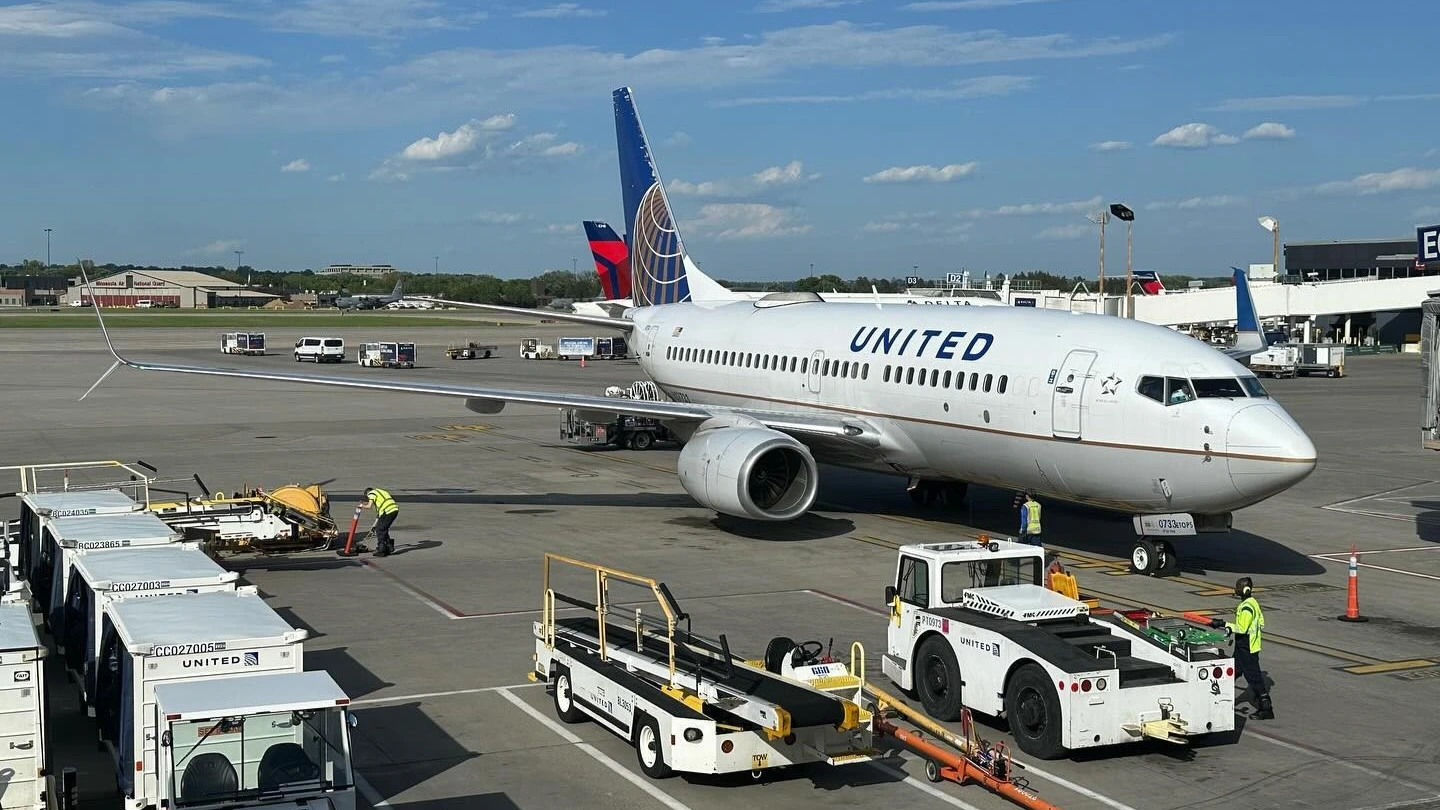
CHICAGO– A United Airlines (UA) flight attendant reportedly refused a disabled passenger’s request to store a manual wheelchair in an onboard closet designed specifically for that purpose, citing crew baggage already occupying the space.
The incident occurred on a long-haul flight from a United Airlines hub, leaving the passenger’s spouse frustrated over the crew’s refusal to move their luggage despite federal laws mandating priority storage for wheelchairs.
United Airlines Faces Backlash
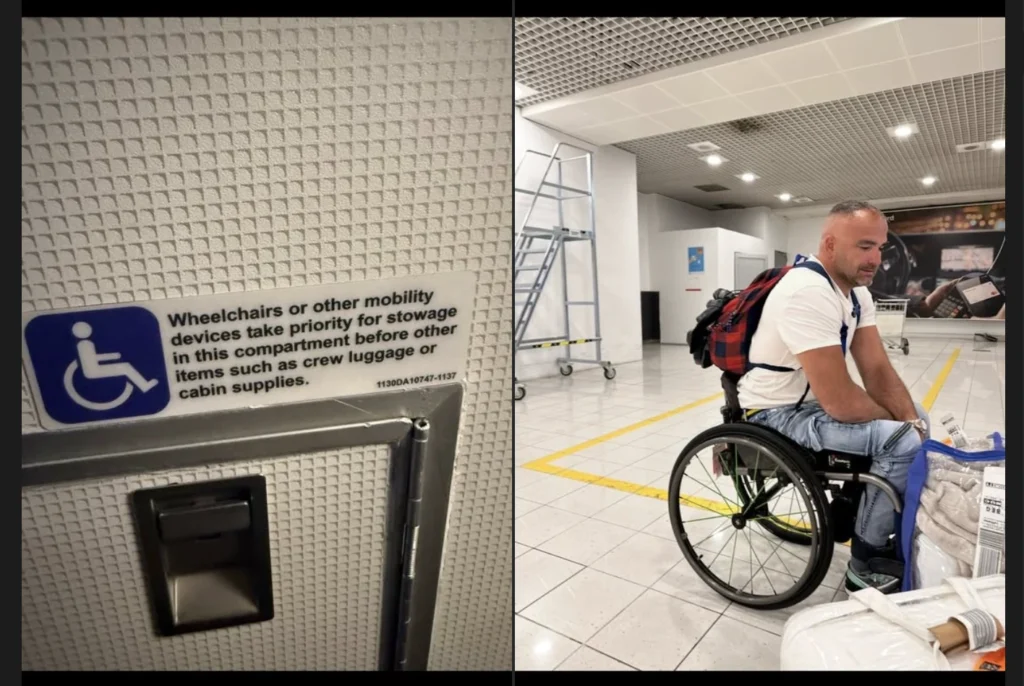
Sarah Bambur shared the experience on a Facebook page for United passengers, explaining that crew members denied her husband’s custom wheelchair access to the aircraft’s designated stowage closet.
According to her post, the closet even displayed a sign reading “Wheelchair Storage First,” yet flight attendants insisted their own bags took priority.
Bambur clarified that she had stored the same wheelchair in similar closets on past international flights without issue.
The chair’s removable wheels and compact frame allow it to fit properly, enabling her husband to use it to reach the accessible lavatory. The specialized cushion also helps prevent pressure sores, something aisle chairs cannot accommodate.
She also described the crew’s handling of the situation as curt and dismissive, saying the flight attendant spoke sternly and refused to relocate crew bags. According to PYOK, the post quickly gained attention from other travelers and disability rights advocates.
Federal Law Requires Priority Storage for Wheelchairs
Under U.S. law, airlines operating aircraft with at least 100 passenger seats must provide a designated onboard space for at least one foldable manual wheelchair. The requirement falls under 14 CFR § 382.67, part of the Air Carrier Access Act amendments enacted in 2008.
This rule applies to both U.S.-based and foreign carriers operating to or from the United States. The regulation is explicit: crew baggage or other items must be removed if a passenger requests the designated wheelchair space.
Only if the wheelchair is too large or multiple passengers request the same space can the airline decline, on a first-come, first-served basis.
Despite these clear rules, passenger reports indicate that some crew members remain unaware of or disregard these obligations. The Department of Transportation (DOT) continues to receive complaints involving wheelchair mishandling and accessibility violations.
United’s Record and Previous Incidents
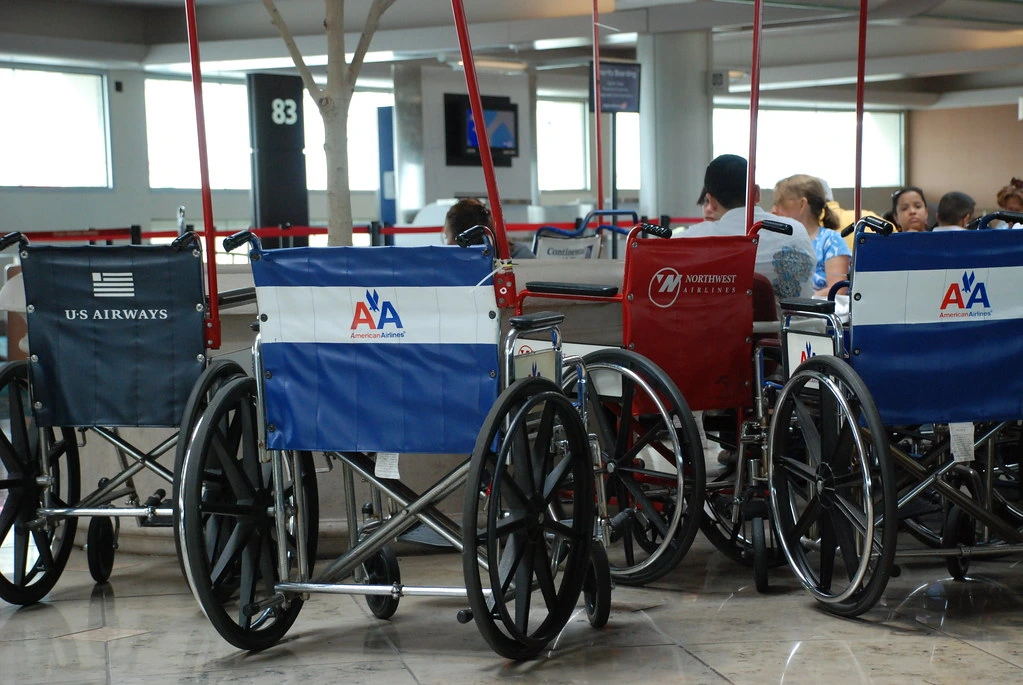
In July 2025, DOT data revealed that United Airlines (UA) mishandled 151 wheelchairs, equating to 1.35 incidents per 100 enplaned wheelchairs. Frontier, Spirit, American, and Hawaiian Airlines reported even higher rates, while Delta Air Lines performed best among major carriers.
United has previously faced scrutiny over accessibility issues. In 2023, the airline pledged service improvements for wheelchair users following a DOT investigation into the death of Engracia Figueroa, a disabled passenger whose custom wheelchair was damaged by the airline. Figueroa later died from complications linked to using a temporary wheelchair.
Earlier, United reached a $30 million settlement with the family of Nathaniel Foster Jr., a quadriplegic passenger who suffered fatal injuries during a deplaning accident at Monroe Regional Airport (MLU) in 2019.
Broader Implications for Accessibility in Air Travel
The recurring incidents underline an ongoing gap between airline policy and consistent execution.
The law is unambiguous—manual wheelchairs take priority in designated onboard closets—but enforcement relies heavily on crew awareness and accountability.
For many travelers with disabilities, keeping their wheelchairs onboard is not just about comfort but dignity and safety. Each mishandled or damaged chair represents more than inconvenience—it can affect a passenger’s health, mobility, and independence.
Stay tuned with us. Further, follow us on social media for the latest updates.
Join us on Telegram Group for the Latest Aviation Updates. Subsequently, follow us on Google News
