

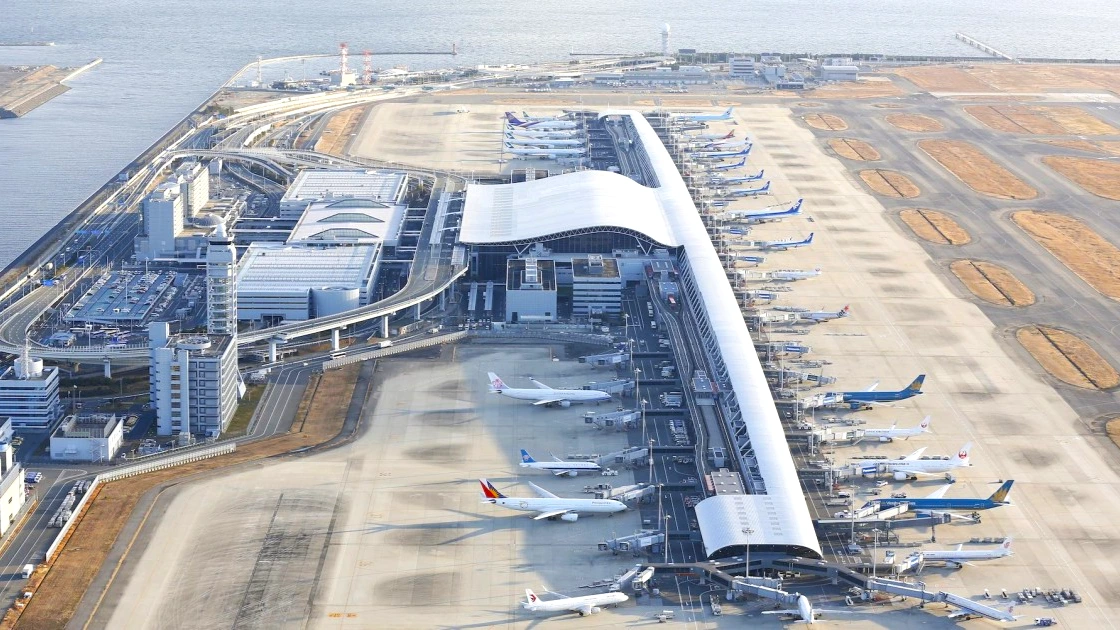
TASHKENT– Japan’s Sojitz Corporation has announced plans to construct a new international airport in the Uzbek capital, set to become the largest aviation hub in Central Asia by 2028.
The $1 billion project, which will be developed through a public-private partnership (PPP) with Saudi Arabia’s Vision Invest, is scheduled to begin construction in 2025.
https://commons.wikimedia.org/wiki/File:Saidov-Kishida_meeting_(2024)_02.jpg
Central Asia’s Largest Airport
According to Express Asia, the new airport will accommodate up to 20 million passengers annually and handle over 40 aircraft movements per hour once operational.
Japan’s financial contribution is expected to reach several hundred million dollars, underscoring Tokyo’s growing commitment to Central Asia’s infrastructure modernization.
The new project will represent one of the most ambitious aviation developments in the region. With advanced terminal infrastructure and expanded runways, the facility aims to enhance Uzbekistan’s status as a major regional transit point.
Sojitz brings to the project a strong portfolio of airport experience from Japan’s Kumamoto (KMJ) and Okinawa (OKA) airports, as well as its involvement in Palau International Airport (ROR), reported The Times of Central Asia.
Its expertise will ensure compliance with the highest international safety, environmental, and operational standards.

https://commons.wikimedia.org/wiki/File:Sojitz_Corporation_Logo.svg
Strategic Partnerships
The joint effort between Sojitz and Vision Invest highlights the strategic depth of Japan-Saudi cooperation in Uzbekistan. The collaboration extends beyond aviation to include projects in energy, healthcare, and urban development.
Sojitz is also working with Turkey’s Rönesans International to develop an 800-bed hospital in Samarkand, a 1 GW wind power plant, and a 1.6 GW thermal power plant.
These developments align with Uzbekistan’s ambitious infrastructure roadmap under President Shavkat Mirziyoyev’s economic modernization agenda.

https://commons.wikimedia.org/wiki/File:Flag_of_Japan_(1870%E2%80%931999).svg
Growing Japanese Investment
Uzbekistan’s consistent GDP growth—averaging nearly 6% annually—has made it a magnet for Japanese investors. Favorable tax incentives and a corporate tax rate of 15% have further boosted the appeal of doing business in the country.
Over the past five years, the number of Japanese firms operating in Uzbekistan has doubled to 54. Among them, Toyota Tsusho, through Eurus Energy Holdings, is developing a 500 MW wind power project, while Marubeni is working with UAE partners on wastewater treatment facilities.
In 2024, President Mirziyoyev met with Tadashi Maeda, Chairman of the Japan Bank for International Cooperation (JBIC), and Sojitz representatives to strengthen bilateral economic ties.
The meeting resulted in a three-year cooperation program and a strategic roadmap for collaboration in high-tech sectors.
JBIC currently finances over $3.7 billion worth of joint ventures across Uzbekistan’s petrochemical, textile, energy, and infrastructure industries.
The upcoming Tashkent airport will likely become one of JBIC’s flagship initiatives in Central Asia, symbolizing Japan’s long-term regional engagement.

Bottom Line
The new proposed airport in Tashkent represents a defining milestone for Central Asia’s aviation future.
Backed by Japan’s Sojitz Corporation and Saudi Arabia’s Vision Invest, the project underscores the growing role of international partnerships in shaping Uzbekistan’s transformation into a regional transport and trade hub.
Stay tuned with us. Further, follow us on social media for the latest updates.
Join us on Telegram Group for the Latest Aviation Updates. Subsequently, follow us on Google News
