

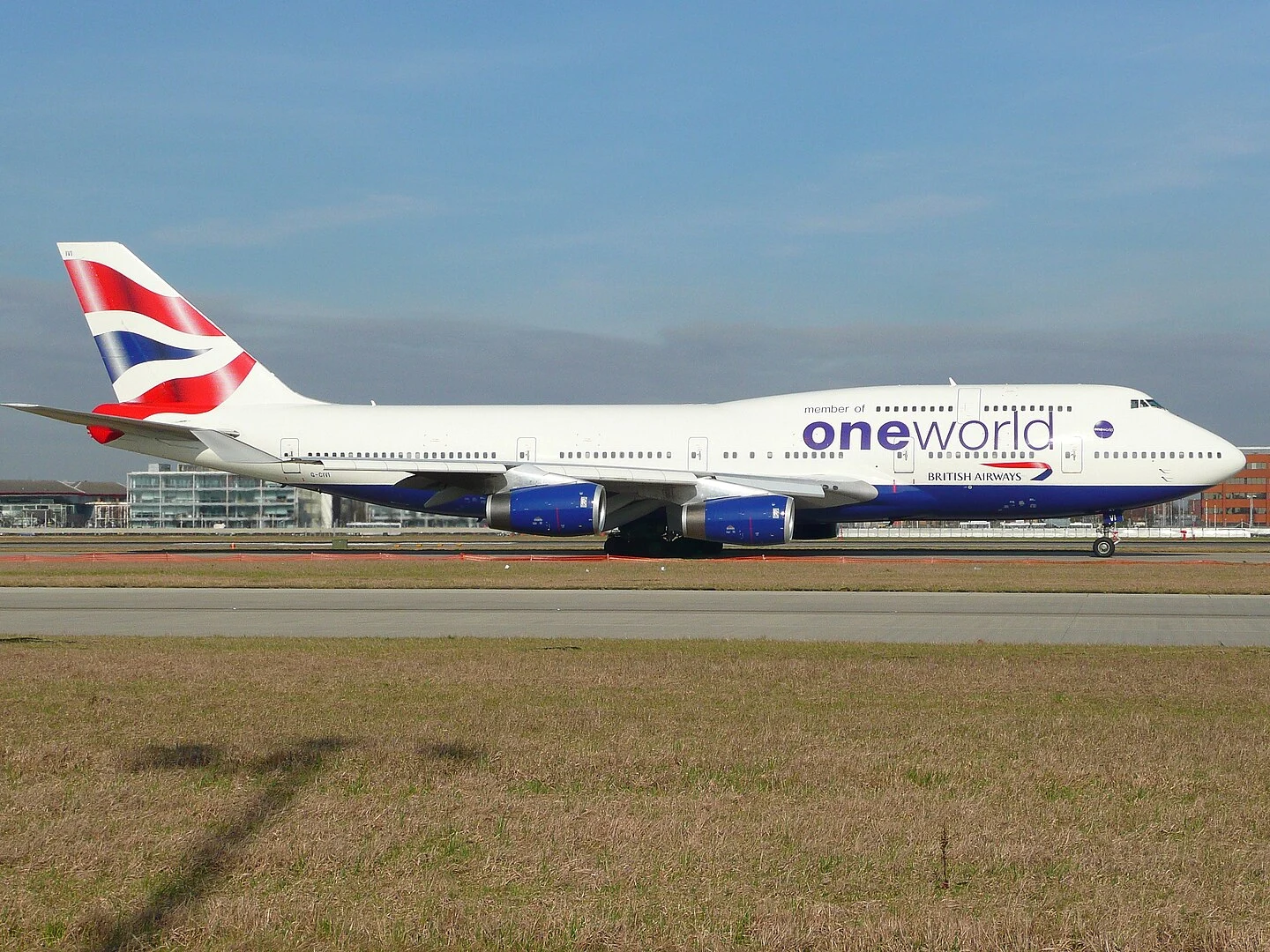
LONDON- Flying for British Airways (BA) is often viewed as a dream job offering high salaries and global travel. Yet, behind the glamour lies a demanding profession built on years of training, regulation, and responsibility.
Retired BA Boeing 747 captain Martin Drake, who also represented the British Airline Pilots’ Association, shares his experience, from starting on modest pay to earning over £200,000 a year, and what it truly means to fly at the top of the aviation world.
Secrets of a Pilot
Starting salaries for newly qualified pilots are often far lower than the public expects, typically between £30,000 and £40,000 per year. As experience grows and pilots move into long-haul operations, pay can rise sharply.
According to Sky News, a long-haul captain may earn between £125,000 and £200,000, with senior captains at certain airlines exceeding that range.
However, these figures come after significant financial and personal investment. There are few government or industry-backed loans for flight training, so most aspiring pilots self-fund their education.
A handful of airline sponsored programs exist, but the majority rely on personal savings or private loans, often repaying them for years after entering service.
Drake emphasizes the importance of financial planning early in a pilot’s career, advising newcomers to “get on the pension ladder as soon as possible” because retirement “comes around quicker than anyone expects.”
Pilots’ schedules are tightly controlled by law, accounting for duty time, flight hours, rest periods, and recovery time.
Regulations stipulate that a pilot cannot fly for more than 100 hours in any 28 day period. Factors such as time zones crossed, number of flights, and start times are carefully calculated to manage fatigue.
At British Airways, Drake recalls receiving 4 weeks of annual leave, split evenly between summer and winter, plus an additional 2 weeks in lieu for weekends and public holidays, as pilots work year-round.
Despite these structured safeguards, crew fatigue remains one of aviation’s biggest challenges. Tight schedules, long-haul demands, and irregular rest cycles can impact alertness.
Drake warns that “fatigued people make mistakes” and urges regulators and airlines, including the Civil Aviation Authority, to take stronger action to protect pilot welfare.
Industry Challenges
The aviation landscape has changed dramatically over the decades. Early in Drake’s career, routes were more regulated, with specific airlines operating designated paths.
Today, deregulation allows far more competition and flight variety. While passengers benefit from lower fares and more options, pilots face increasingly complex air traffic systems and denser airspace.
Routes over the Middle East, for example, require frequent coordination with multiple air traffic control units, often compared to navigating “Spaghetti Junction” in the sky. These complexities increase workload and demand constant focus, especially on long multi-country routes.
Role of Technology and AI in the Cockpit
Modern aviation is becoming more automated, but Drake cautions against excessive reliance on technology. Some aircraft manufacturers are exploring reduced crew operations, potentially replacing one pilot with automated systems and ground support.
He argues this “goes against basic flight safety principles,” noting that redundancy, “two of everything essential, including pilots”, is fundamental to aviation safety.
While automation assists with flight management, human judgment remains irreplaceable. Pilots are trained to handle emergencies, make real-time decisions, and ensure safety even when systems fail.
Passenger Awareness
Passenger behavior plays a crucial role in flight safety. When the seatbelt sign illuminates, Drake stresses that it is a legal instruction, not a suggestion. Ignoring it during turbulence or takeoff can result in serious injury.
Similarly, failing to switch a mobile device to airplane mode may cause interference on pilots’ audio systems. Drake describes it as a “repetitive dinging noise” that disrupts communication with air traffic control, not dangerous, but a persistent nuisance during critical moments.
Cabin crews are also trained to manage unruly passengers through verbal de-escalation. Physical restraint is only used as a last resort. Airlines carry restraint kits on board for emergencies, though such situations are rare.
For all its technical and physical demands, piloting offers extraordinary life experiences. Drake recalls his scariest flight over Greenland, where severe turbulence forced him to deviate up to 2,000 feet from assigned altitude. “It was extremely uncomfortable,” he says.
“Passengers were jostled, drinks spilled, and we had to ride the conditions rather than fight them.” Eventually, the aircraft stabilized, a reminder of nature’s unpredictability at 35,000 feet.
When it comes to emergencies, Drake emphasizes clarity: “Pilots tell it like it is. There’s no time for secret codes, confusion is dangerous.” The standard mayday protocol remains essential for communicating distress precisely and professionally.

Destinations and Personal Favorites
Drake’s favourite route was from London Heathrow (LHR) to San Diego International Airport (SAN).
The flight covers nearly all of the US, ending with a steep descent past nearby hills and a short runway that requires GPS guidance instead of the Instrument Landing System (ILS). He describes it as “challenging but deeply satisfying.”
Beyond the cockpit, New York (JFK) stood out as his favorite layover. With only 24 hours in the city, Drake advises researching plans in advance and choosing quality over quantity: “Have a backup plan, but don’t try to cram too much in.”
He also shares a practical travel tip, always carry a large square feather pillow in a cotton case. “It compresses easily, adds comfort, and guarantees you a proper pillow wherever you stay.”
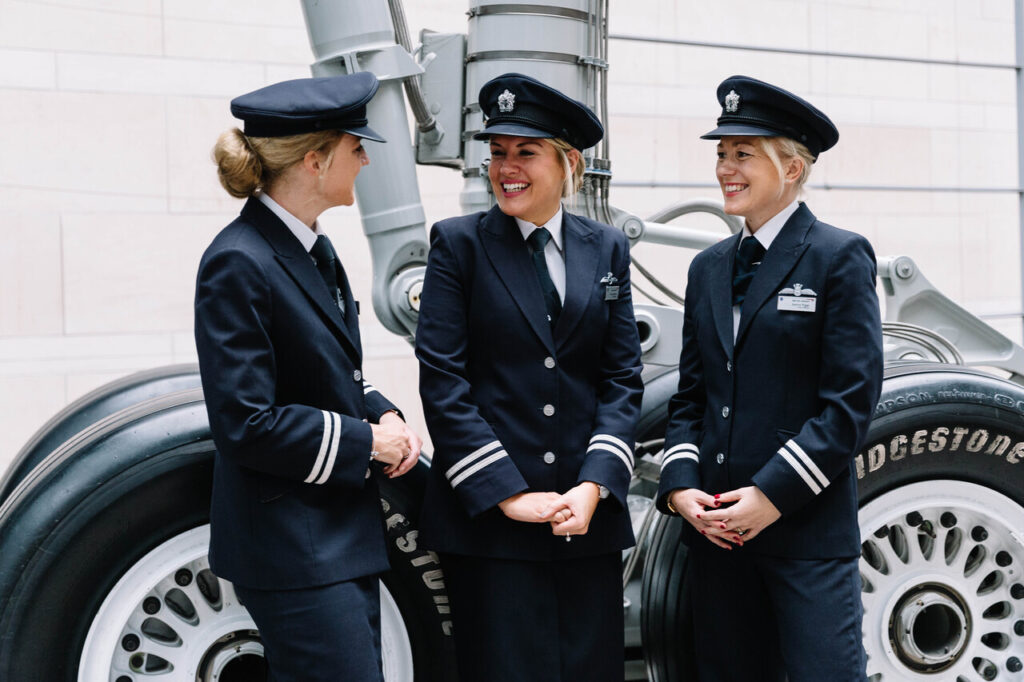
Career Like No Other
Despite long hours, tight regulations, and rising automation, Drake describes flying as a deeply fulfilling profession.
Pilots play a vital role in connecting people, whether reuniting families or transporting goods across continents.
“There are very few places I haven’t been,” he reflects. “I cannot remember a time when I wasn’t looking forward to going to work.”
Stay tuned with us. Further, follow us on social media for the latest updates.
Join us on Telegram Group for the Latest Aviation Updates. Subsequently, follow us on Google News
