

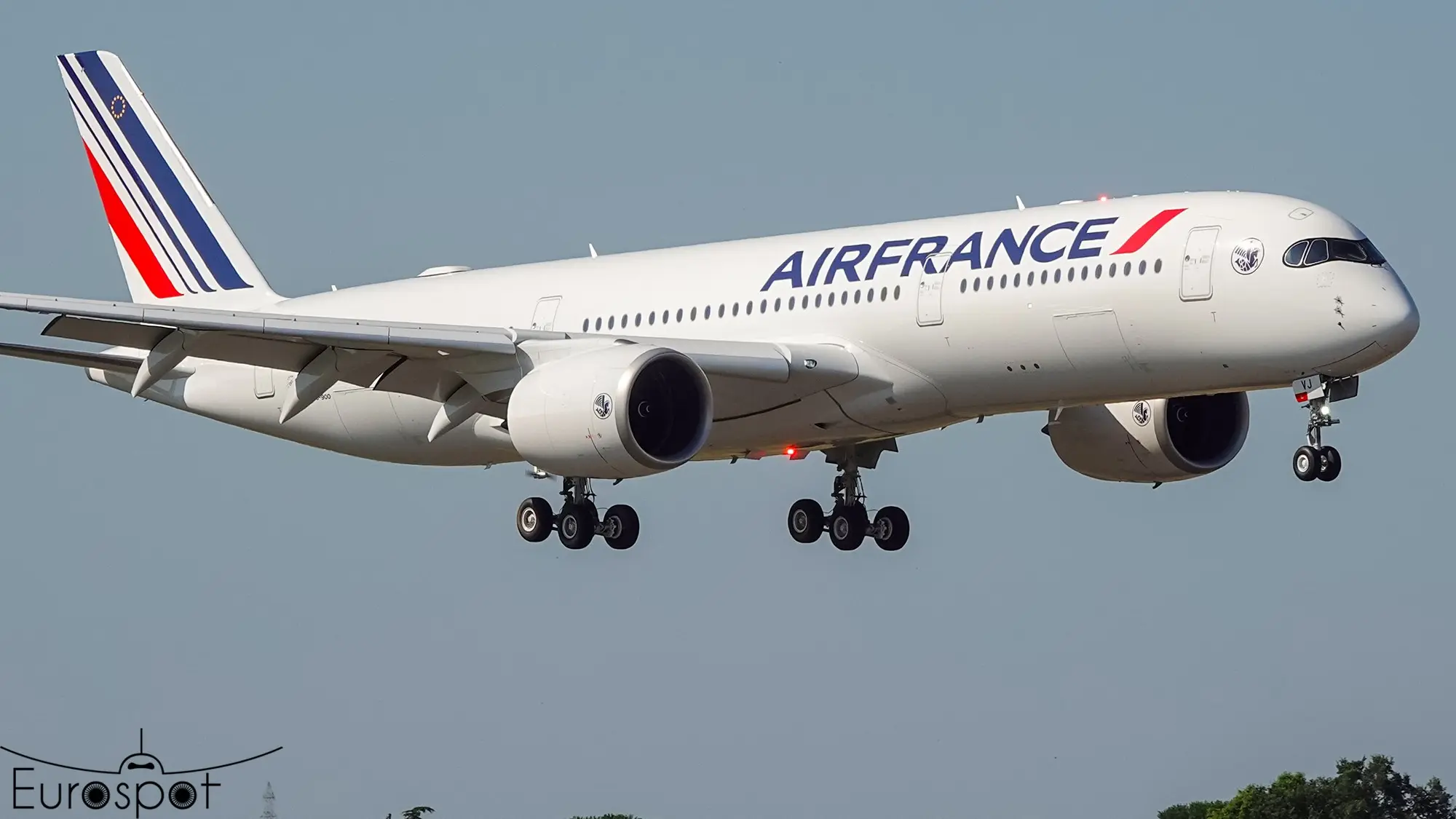
LOS ANGELES- An Air France (AF) Airbus A350-900 and an American Airlines (AA) Airbus A321 came within 400 feet (121 meters) of vertical separation shortly after departing Los Angeles International Airport (LAX) on November 7, 2026. An unauthorized turn by the Air France aircraft triggered a traffic alert, forcing air traffic controllers to intervene to prevent a potential mid-air collision.
Air France Flight AF28 was heading to Papeete (PPT), while American Airlines Flight AA1660 was operating to Dallas/Fort Worth International Airport (DFW). Both aircraft received immediate instructions from air traffic control (ATC) to change course and maintain separation. Neither flight reported injuries, and both continued to their intended destinations.
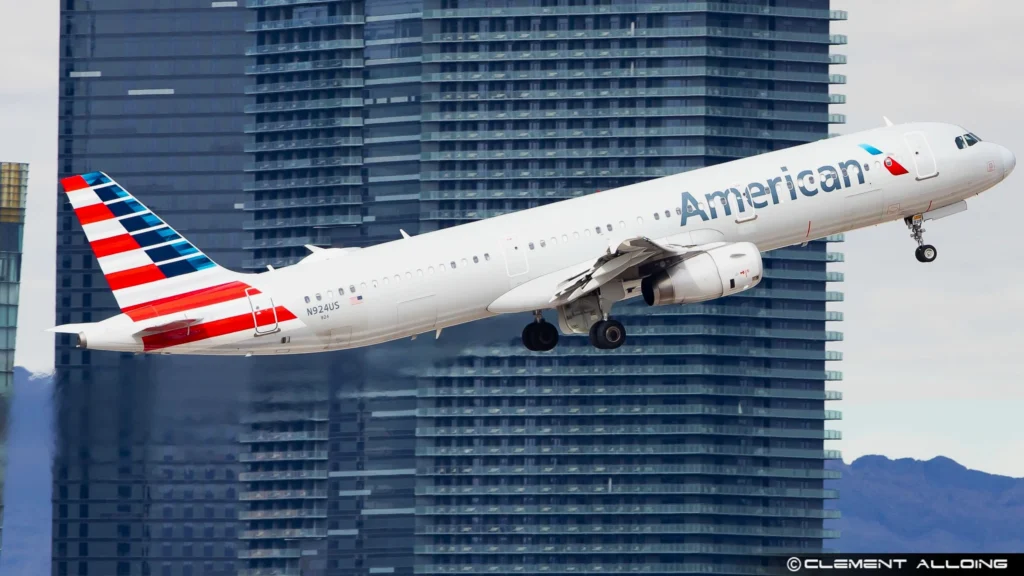
Air France A350 and American A321 Avoid Collision
The incident involved an Air France Airbus A350-900, registered F-HUVK, and an American Airlines Airbus A321-200, registered N191UW. Both aircraft departed Los Angeles International Airport within approximately one minute of each other during the early hours of Saturday, November 7.
According to available flight information, Air France Flight AF28 departed at approximately 12:15 AM local time for Papeete, French Polynesia. American Airlines Flight AA1660 followed at approximately 12:16 AM, operating to Dallas/Fort Worth in Texas.
The two aircraft had different departure instructions designed to maintain safe separation during their initial climb. However, the Air France aircraft reportedly deviated from its assigned departure procedure shortly after takeoff, placing it on a conflicting flight path with the American Airlines aircraft.
The aircraft came within approximately 400 feet (121 meters) of vertical separation, according to the incident account. Considering the size of the two wide- and narrow-body aircraft and their combined passenger capacity, the situation required immediate intervention from air traffic controllers.

Unauthorized Air France Turn Triggers Air Traffic Control Alert
The Air France Airbus A350-900 was cleared for takeoff from Runway 24L at Los Angeles International Airport. The aircraft was assigned the SUMMR2 Standard Instrument Departure (SID), which establishes the required flight path for departing aircraft.
According to the Federal Aviation Administration (FAA), the SUMMR2 departure procedure requires aircraft departing from Runways 24L/R and 25L/R to initially climb straight ahead before following the assigned route.
Meanwhile, American Airlines Flight AA1660 was instructed to maintain an altitude of 2,000 feet to allow the Air France aircraft to complete its departure and turn safely.
However, according to aviation commentator TurbineTraveler on X, the Air France aircraft made an unauthorized left turn shortly after departure instead of following the assigned SUMMR2 procedure.
The deviation brought the A350 into the departure path of the American Airlines A321, creating a loss-of-separation event.
The departure controller quickly identified the developing conflict and issued immediate instructions to both aircraft. Air France Flight AF28 received an instruction to turn immediately to a heading of 270 degrees, while American Airlines Flight AA1660 was instructed to maintain 2,000 feet.
The controller also issued a traffic alert to the American Airlines crew, warning them about the Air France aircraft approaching from their 12 o’clock position at less than one mile.

ATC Audio Reveals Emergency Instructions and Pilot Deviation
The air traffic control audio provides further details about how controllers managed the situation and restored separation between the two aircraft.
After issuing the immediate heading instruction to Air France, the controller questioned the crew about its departure clearance.
The exchange revealed that the Air France aircraft had been instructed to follow the SUMMR2 departure rather than turn directly onto a separate heading.
The controller repeatedly asked the crew to confirm which departure procedure it had received from the tower. The Air France pilots eventually confirmed that they had been instructed to fly the SUMMR2 departure.
The controller subsequently advised the crew of a possible pilot deviation and provided a telephone number for further communication.
Meanwhile, American Airlines Flight AA1660 received additional instructions to maintain its assigned altitude before being cleared to climb to 17,000 feet and continue its flight.
The controller also apologized to the American Airlines crew for the incident, explaining that the other aircraft had turned in front of them despite receiving instructions to follow the correct departure procedure.
The exchange highlighted the importance of clear communication between pilots and air traffic controllers during busy departure operations.
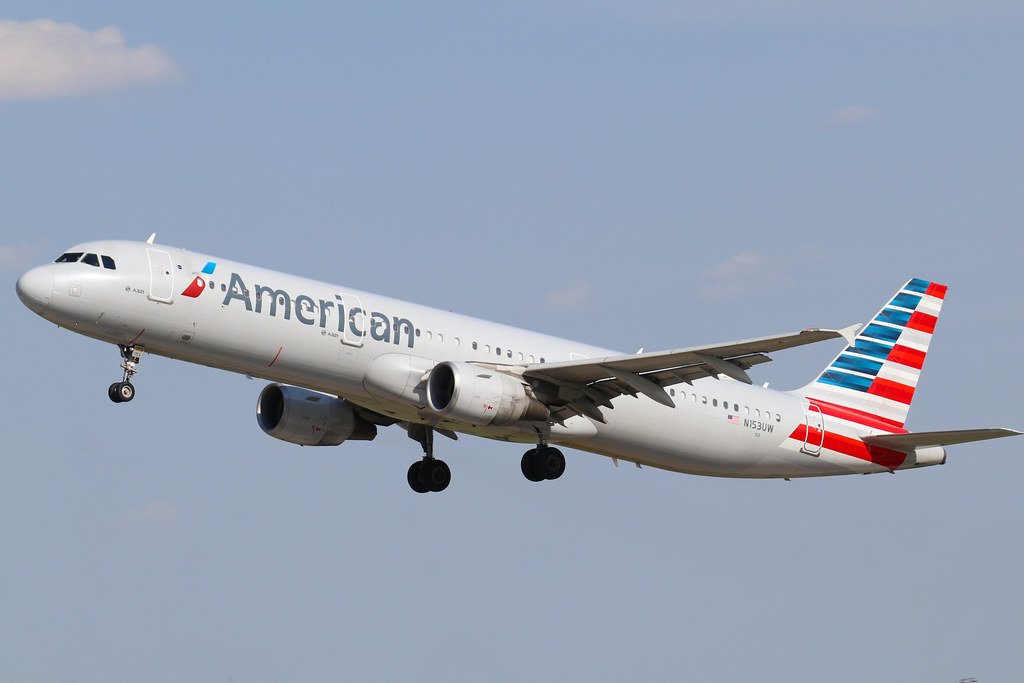
Air France and American Airlines Flight Details
Both aircraft eventually received clearance to continue their journeys after ATC resolved the conflicting flight paths.
| Flight details | Air France | American Airlines |
|---|---|---|
| Flight number | AF28 | AA1660 |
| Airline | Air France (AF) | American Airlines (AA) |
| Destination | Papeete (PPT) | Dallas/Fort Worth (DFW) |
| Departure airport | Los Angeles (LAX) | Los Angeles (LAX) |
| Departure time | 12:15 AM | 12:16 AM |
| Date | November 7, 2026 | November 7, 2026 |
| Aircraft | Airbus A350-900 | Airbus A321-200 |
| Registration | F-HUVK | N191UW |
Neither aircraft reported injuries or damage associated with the incident. Both flights continued toward their respective destinations following the intervention.
ATC and Pilots Comms
Here’s a detailed transcript of communication between pilots and LAX ATC as flagged by You Can See ATC and recorded by LiveATC.net:
[00:05] ATC: Air France 28 Heavy, RNAV Del Rey, wind 330 at 3, Runway 24L, cleared for takeoff.
[00:12] Air France 028: RNAV Del Rey, cleared for takeoff, Runway 24L, Air France 028.
[00:27] ATC: Air France 28 Heavy, contact SoCal Departure.
[00:30] Air France 028: SoCal Departure, Air France 028 Heavy, good night.
[00:36] ATC: Air France 028 Heavy, good evening.
[00:36] Air France 028: Passing 1,500, climbing 5,000.
[00:44] ATC: Air France 028 Heavy, SoCal Departure, radar contact. Climb via SID.
[00:48] Air France 028: Climbing via SID, Air France 028.
[00:55] American 1660: American 1660, we are at 2,000, climbing 5,000.
[01:01] ATC: Air France 028 Heavy, fly heading 270 immediately.
[01:05] Air France 028: Heading 270 immediately.
[01:09] ATC: American 1660, SoCal Departure, traffic alert. Traffic 12 o’clock, less than a mile. Maintain 2,000.
[01:15] American 1660: Okay, we’ll go back to 2,000, American 1660.
[01:20] ATC: Air France 028 Heavy, you were instructed to climb via SID, not to turn to a heading.
[01:28] Air France 028: Copy, Air France 028.
[01:29] ATC: Air France 028 Heavy, why did you turn to a heading?
[01:32] Air France 028: Standby.
[01:34] ATC: Thank you.
[01:37] ATC: Air France 028 Heavy, what departure were you instructed to fly?
[01:42] Air France 028: Standby one.
[01:44] Air France 028: Standby two, standby one.
[01:48] Air France 028: We were… give me a minute.
[01:53] ATC: No problem, Air France 028 Heavy.
[01:57] ATC: American 1660, climb and maintain 17,000, maintain 250 knots.
[02:03] American 1660: 250 knots, 17,000, American 1660.
[02:10] ATC: Air France 028 Heavy, proceed direct DART, resume climb via SID. That’s the SUMMR2 departure, sir.
[02:18] Air France 028: Resuming SUMMR2 departure via SID. And which direct DART?
[02:27] ATC: DART.
[02:28] Air France 028: DART, yes, sorry. Roger that, Delta, Alpha, Romeo, and Romeo, Kilo, Air France 028 Heavy. And just to confirm, you were on the SUMMR, correct?
[02:38] ATC: You were instructed by the tower to fly the SUMMR2 departure, correct?
[02:44] ATC: Air France 028 Heavy, I need an answer, sir.
[02:52] Air France 028: Air France 028 Heavy, how can you hear?
[02:55] Air France 028: Sorry, go ahead, Air France 028.
[02:58] ATC: All right, Air France 028 Heavy, climb and maintain [altitude unclear in supplied transcript], and I need an answer. What departure were you instructed by the tower to fly?
[03:06] Air France 028: Okay, climbing [altitude unclear]. We were cleared, we were instructed to fly SUMMR2 departure.
[03:14] ATC: Air France 028 Heavy, thank you very much.
[03:16] ATC: Possible pilot deviation. I have a number for you to call when you’re ready.
[03:24] Air France 028: We repeat the number, go ahead.
[03:28] ATC: Stand by.
[03:30] ATC: Air France 028 Heavy, it’s…
[03:35] Air France 028: Air France 028.
[03:36] ATC: Air France 028 Heavy, thank you very much. Contact Los Angeles Center on 119.05.
[03:42] Air France 028: 119.05, bye-bye, sir.
[03:45] ATC: Bye.
[03:47] ATC: American 1660, sorry about that.
[03:49] ATC: That aircraft just turned in front of you.
[03:52] ATC: They were instructed they were on the right departure, but, you know, pilot deviation.
[03:57] ATC: Proceed direct DOTS.
[03:59] American 1660: Okay, direct DOTS, American 1660. Great job, thank you.
[04:05] ATC: No problem.
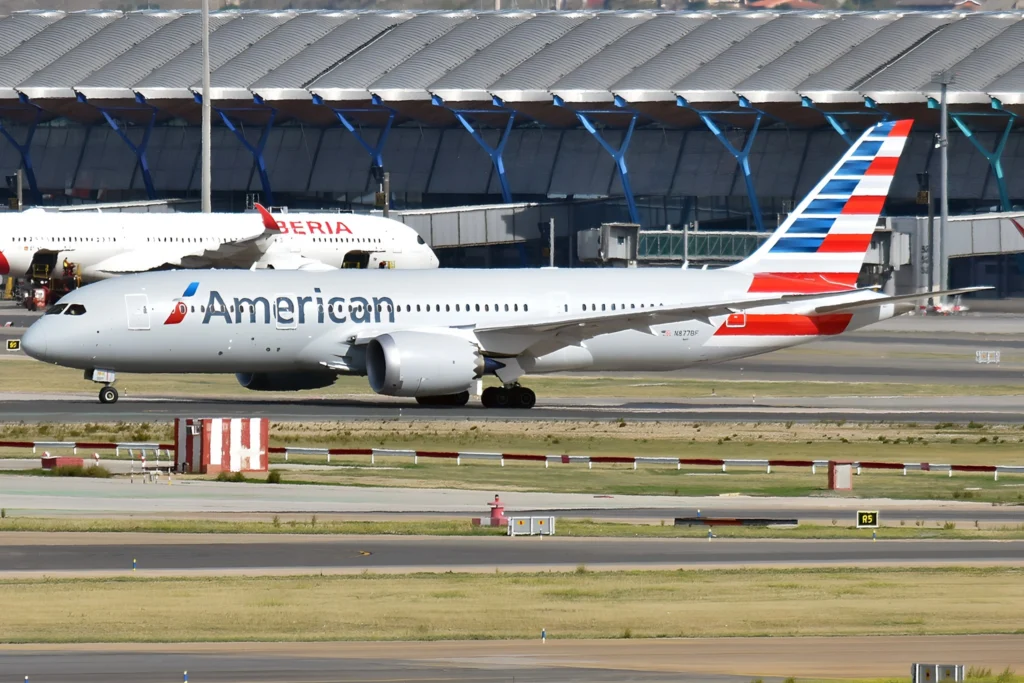
Similar American Airlines Incident Occurred at LAX in 2025
The latest incident is not the first time an American Airlines aircraft has been involved in a reported loss-of-separation event at Los Angeles International Airport.
In 2025, an American Airlines aircraft and an ITA Airways aircraft reportedly came dangerously close to each other after a pilot deviation during their departure from LAX.
The incident also required intervention from air traffic controllers, who issued instructions to prevent the two aircraft from entering conflicting flight paths.
Both incidents highlight the importance of pilots following assigned departure procedures, particularly at airports with complex runway configurations and high volumes of departing and arriving traffic.
Complex Departure Procedures at Los Angeles International Airport
Los Angeles International Airport is one of the busiest airports in the United States, handling substantial domestic and international traffic throughout the day.
Its departure procedures help controllers maintain separation between aircraft operating on different routes, particularly during periods of heavy traffic.
The SUMMR2 Standard Instrument Departure is designed to guide aircraft away from the airport before they transition to their assigned en-route flight paths.
The procedure is particularly relevant to westbound departures heading toward destinations across the Pacific, including Hawaii, Asia, and other international markets.
Aircraft departing from Runways 24L/R and 25L/R must initially follow the prescribed straight-ahead climb before making subsequent turns according to their assigned departure instructions.
In this incident, the reported unauthorized left turn by the Air France A350 brought it into conflict with the American Airlines A321 departing from Runway 25R.
The departure controller identified the developing conflict and issued immediate instructions that allowed both aircraft to change course and restore separation.
The incident demonstrates how closely coordinated pilot actions and air traffic control instructions help prevent potentially serious accidents during busy airport operations.
Stay tuned with us. Further, follow us on social media for the latest updates.
Join us on Telegram Group for the Latest Aviation Updates. Subsequently, follow us on Google News
