


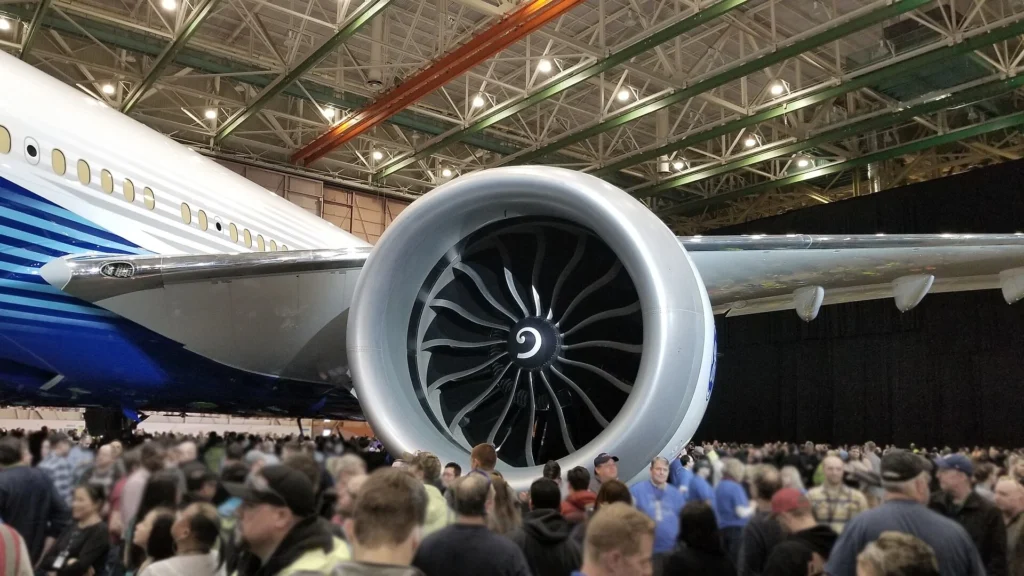
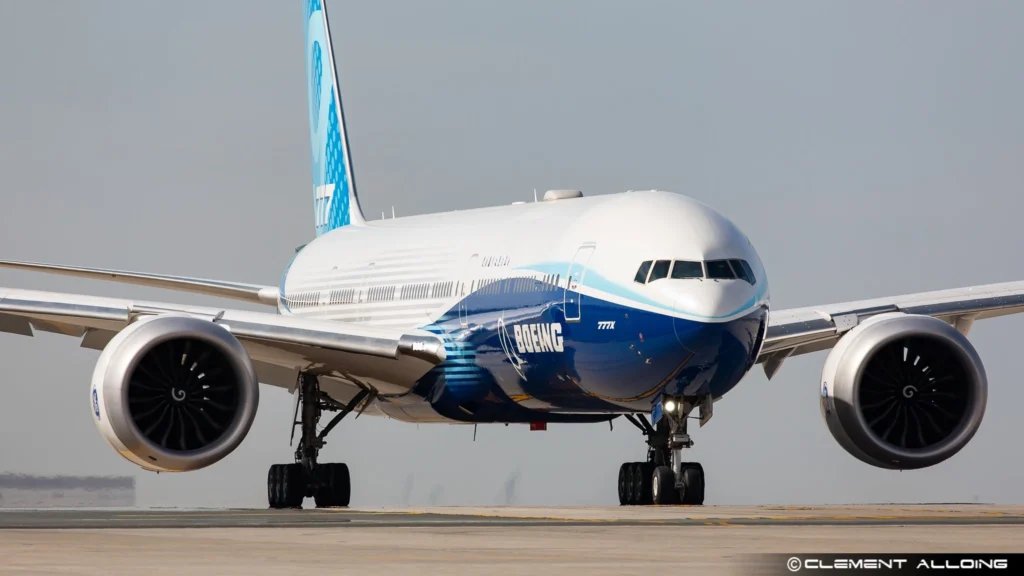
EVERETT– Boeing has taken a different approach to engine noise reduction with its next-generation 777X family. Unlike the 787 Dreamliner and 747-8, which feature distinctive sawtooth edges known as chevrons around their engine nacelles, the 777X uses smooth engine housings around its General Electric GE9X powerplants.
The decision reflects a change in how aircraft manufacturers balance noise control and aerodynamic performance. Rather than relying on external serrated edges, Boeing and GE Aerospace have developed an engine configuration that uses high-volume airflow and internal acoustic treatments to reduce noise while protecting the aircraft’s long-haul fuel efficiency.
Why Boeing Removed Chevrons
Engine chevrons are serrated edges installed around an engine’s exhaust nozzle. Their primary purpose is to reduce jet noise by encouraging the hot exhaust stream to mix more smoothly with the cooler air outside the engine.
Boeing previously incorporated this technology into aircraft such as the 787 Dreamliner and 747-8. However, the design comes with an aerodynamic trade-off because the serrated edges create additional resistance and interfere with the exhaust flow.
Although chevrons help reduce noise during takeoff and initial climb, their effects continue throughout the flight.
According to the supplied technical reference, the resulting aerodynamic penalty can reach approximately 0.5%, making the design less attractive for aircraft expected to operate on long-haul routes for decades.
For the 777X, eliminating this penalty supports Boeing’s broader focus on reducing operating costs and improving aircraft efficiency.
GE9X Uses Advanced Airflow
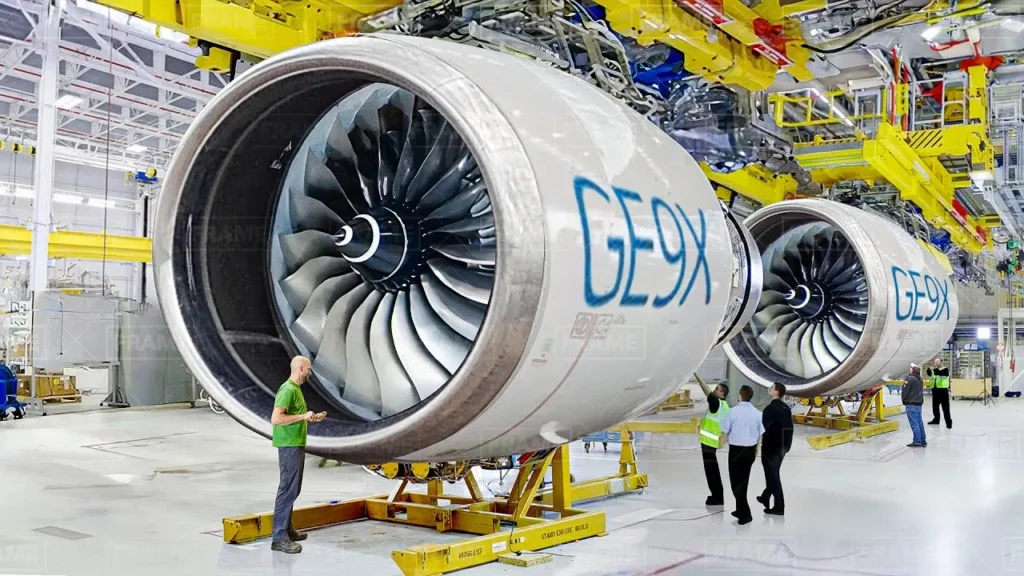
The GE9X engine provides another way to control exhaust noise without depending on external chevrons. Its approximately 10:1 bypass ratio allows the engine to move a significantly larger volume of air around its core, reducing the need for extremely high exhaust velocities.
The engine features a 134-inch front fan with 16 carbon-fibre composite blades. These components help generate substantial thrust while improving airflow efficiency and reducing weight compared with the GE90-115B.
The slower-moving exhaust reduces the intensity of the turbulence created when engine airflow meets the surrounding atmosphere. This helps limit the jet noise produced during operation.
GE Aerospace says the GE9X delivers up to 10% better specific fuel consumption than the GE90-115B. The engine also incorporates advanced materials, including ceramic matrix composites, which improve durability while reducing weight.
Advanced Internal Noise Reduction Systems
Removing the external chevrons does not mean Boeing has abandoned noise-reduction technology. Instead, the 777X’s exhaust system uses acoustic treatments within the engine structure to absorb unwanted sound.
Safran Nacelles manufactures the GE9X exhaust system, which incorporates titanium components and strategically positioned honeycomb acoustic treatments. Thousands of small holes in the structure allow sound energy to enter the honeycomb material, where it is absorbed.
This approach allows the engine to manage noise without relying on serrated external edges that can affect aerodynamic performance. Boeing also identifies an 8-decibel margin against Stage 5 aircraft noise limits for the GE9X, Simple Flying reported.
The change highlights how modern aircraft engines increasingly depend on integrated aerodynamic and acoustic engineering rather than individual external noise-reduction features.
For Boeing, the smooth GE9X design represents a practical balance between regulatory noise requirements, fuel consumption, and long-term operating efficiency.
Stay tuned with us. Further, follow us on social media for the latest updates.
Join us on Telegram Group for the Latest Aviation Updates. Subsequently, follow us on Google News
