

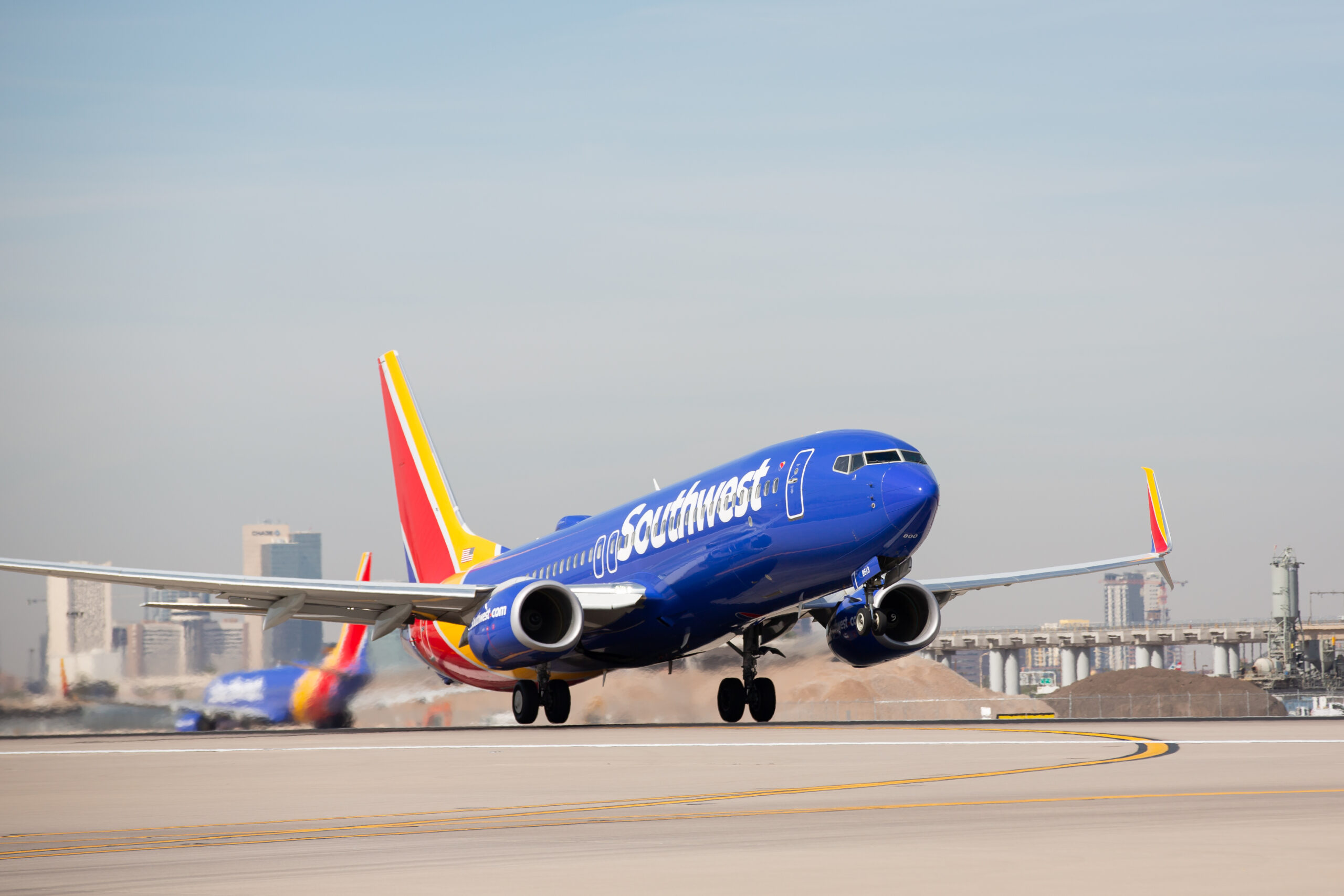
DALLAS- Southwest Airlines (WN) recorded an on-time arrival rate of 68.90% in October 2026. The airline ranked last among 10 North American carriers in aviation analytics company Cirium’s monthly performance report.
Delta Air Lines (DL) led the rankings with 86.86% on-time arrivals and a cancellation rate of just 0.24%. Southwest’s cancellation rate increased to 0.51%, more than twice Delta’s figure. The results mark a setback for Southwest, which had previously maintained an advantage by cancelling fewer flights despite its weaker punctuality.
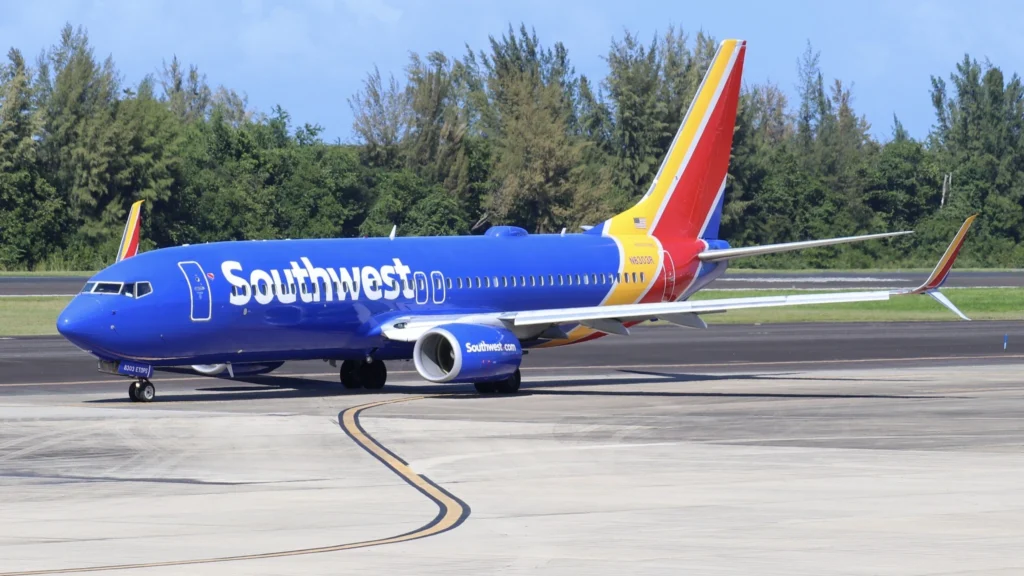
Southwest Records Lowest On-Time Performance
Southwest’s October performance highlights a growing gap between the airline and its North American competitors. Its on-time arrival rate fell from 71.14% in September to 68.90% in October, a decline of 2.24 percentage points.
The airline finished last among the 10 carriers included in Cirium’s October rankings. Air Canada (AC), the next-lowest airline, recorded 75.74%, leaving a gap of 6.84 percentage points between the two carriers.
Cirium defines an on-time flight as one that arrives at the gate within 15 minutes of its scheduled arrival time. Under this measurement, approximately 31.10% of Southwest’s flights failed to reach the gate within the accepted time window in October.
The results also represent a decline from October 2025, when Southwest achieved an on-time arrival rate of approximately 75.5%. Its performance dropped by about 6.6 percentage points year over year.
Delta improved during the same period, increasing its on-time rate from approximately 84.5% in October 2025 to 86.86% in October 2026.
Southwest’s weaker punctuality had previously been balanced by its ability to complete more scheduled flights without cancellations.
During the preceding two months, the airline cancelled fewer flights than its competitors, allowing passengers to reach their destinations despite delays.
That advantage disappeared in October. Delta, United Airlines (UA) and Frontier Airlines (F9) all recorded lower cancellation rates than Southwest.
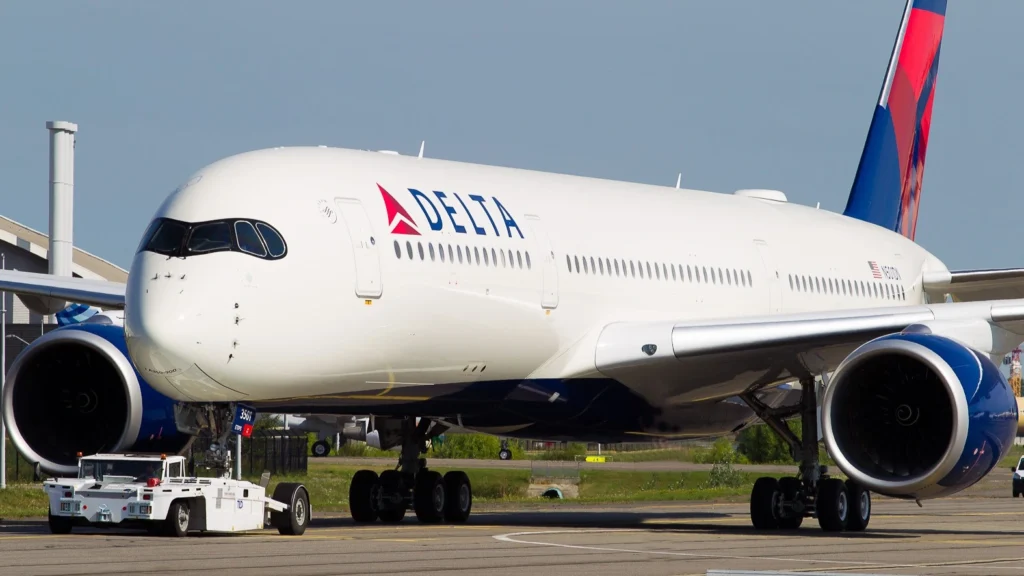
Cirium’s October 2026 North American Airline Rankings
The following table compares September and October on-time arrival performance and October cancellation rates across the 10 airlines.
| Airline | IATA Code | September On-Time | October On-Time | October Cancellations |
|---|---|---|---|---|
| Delta Air Lines | DL | 82.52% | 86.86% | 0.24% |
| United Airlines | UA | 78.65% | 84.06% | 0.31% |
| WestJet | WS | 85.31% | 83.56% | 0.90% |
| JetBlue Airways | B6 | 74.64% | 82.27% | 0.57% |
| Alaska Airlines | AS | 80.73% | 81.06% | 1.10% |
| American Airlines | AA | 77.11% | 80.10% | 0.63% |
| Allegiant Air | G4 | Not listed | 77.89% | 1.13% |
| Frontier Airlines | F9 | 75.49% | 77.62% | 0.38% |
| Air Canada | AC | 73.19% | 75.74% | 2.80% |
| Southwest Airlines | WN | 71.14% | 68.90% | 0.51% |
Southwest’s cancellation rate increased from 0.38% in September to 0.51% in October. This represents approximately five cancellations per 1,000 scheduled flights.
Delta cancelled approximately 2.4 flights per 1,000, while United cancelled approximately 3.1. Frontier also performed better than Southwest, recording a cancellation rate of 0.38%.
These figures show that Southwest no longer had the cancellation advantage that previously helped offset its weaker on-time performance.
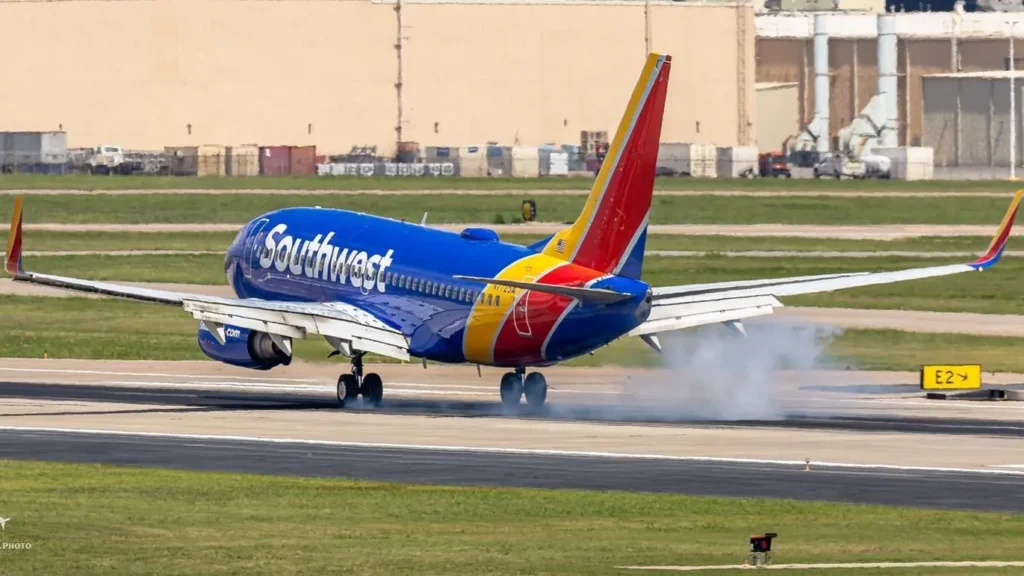
Southwest Plans Operational Changes
Southwest management has acknowledged the airline’s punctuality problems and outlined several operational changes to improve performance.
During the October 22, 2026, earnings call, Chief Operating Officer Andrew Watterson explained that many of the airline’s delays fell within the 15-to-45-minute range. He said Southwest generally started aircraft turnaround procedures effectively but lost time during the final stages.
Aircraft turnaround time measures how quickly an airline prepares an aircraft for its next flight after arrival. Efficient turnarounds allow airlines to complete more flights with the same aircraft during a day.
Southwest relies on fast aircraft turnarounds as part of its operating model. However, delays during boarding, baggage handling and final departure procedures can disrupt subsequent flights and reduce the benefits of this approach.
The airline outlined three important operational improvements.
1. Changes to gate-checked baggage procedures
Southwest plans to improve its gate-check baggage process beginning in November 2026.
The airline handles a significant volume of gate-checked bags because passengers often prefer carrying more belongings onboard rather than paying checked-baggage fees. When overhead-bin space becomes insufficient, gate agents must collect and transfer additional bags to the aircraft’s cargo hold.
These procedures can add time to the boarding process. Improving baggage handling is intended to reduce delays and help flights depart closer to schedule.
2. Faster flight-closing procedures using iPads
Southwest also plans to allow agents to close flights using an iPad directly at the aircraft.
Previously, employees needed to return to the gate podium to complete certain flight-closing procedures. Allowing agents to perform these tasks at the aircraft should reduce unnecessary movement and help complete the departure process more efficiently.
3. Adjusted flight schedules beginning in January
Southwest plans to introduce revised flight schedules in January 2027.
These schedule adjustments are intended to address operational timing problems and improve the airline’s ability to maintain its daily flight schedule.
The November process changes and January schedule adjustments represent important steps in Southwest’s effort to improve punctuality.
Poor Punctuality Is Increasing Southwest’s Operating Costs
Southwest’s operational problems also have financial consequences.
The airline’s fast-turnaround strategy is designed to maximize aircraft utilization. However, when delays affect the final stages of a turnaround, they can disrupt the schedules of subsequent flights.
Passengers who miss connecting flights may require rebooking and additional assistance, creating further operating expenses.
Chief Executive Officer Bob Jordan acknowledged that weaker punctuality was adding to the airline’s costs, including expenses associated with passengers missing connections.
Improving turnaround efficiency is therefore important for both customer satisfaction and cost control. Southwest needs to reduce delays without losing the operational benefits of its aircraft utilization strategy.
Delta Leads North America as United Narrows Gap
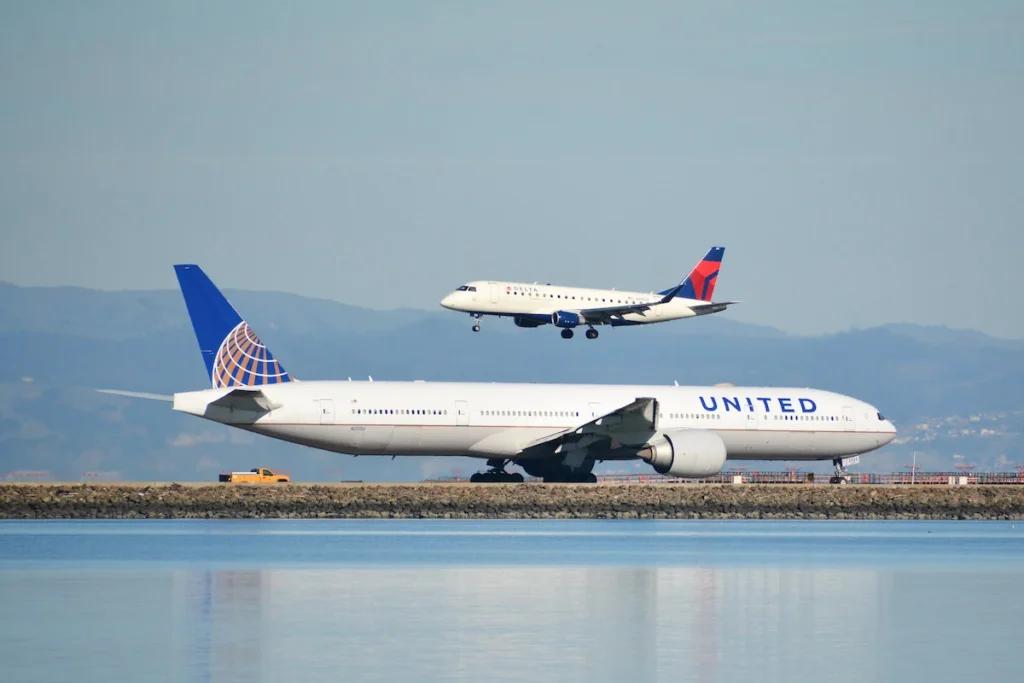
Delta Air Lines took first place in Cirium’s North American rankings in October, ending WestJet’s five-month run at the top of the regional list.
Delta achieved an on-time arrival rate of 86.86%, compared with WestJet’s 83.56%. The airline also ranked third in Cirium’s global punctuality rankings.
Delta’s cancellation performance improved significantly during the three-month period. Its cancellation rate declined from 1.77% in August to 0.92% in September and 0.24% in October.
This improvement represents a substantial recovery from its weaker summer operations.
United Airlines also recorded a stronger month, increasing its on-time performance from 78.65% in September to 84.06% in October.
The punctuality gap between Delta and United narrowed from 3.87 percentage points in September to 2.80 percentage points in October.
Their cancellation rates were also close. Delta recorded 0.24%, while United recorded 0.31%, a difference of just 0.07 percentage points. This equals seven additional cancellations per 10,000 scheduled flights for United compared with Delta.
The operational difference between the two airlines was considerably smaller than the gap between Delta and Southwest. Delta was nearly 18 percentage points more likely than Southwest to arrive within Cirium’s on-time window.
American Airlines Improves but Falls Behind Delta and United
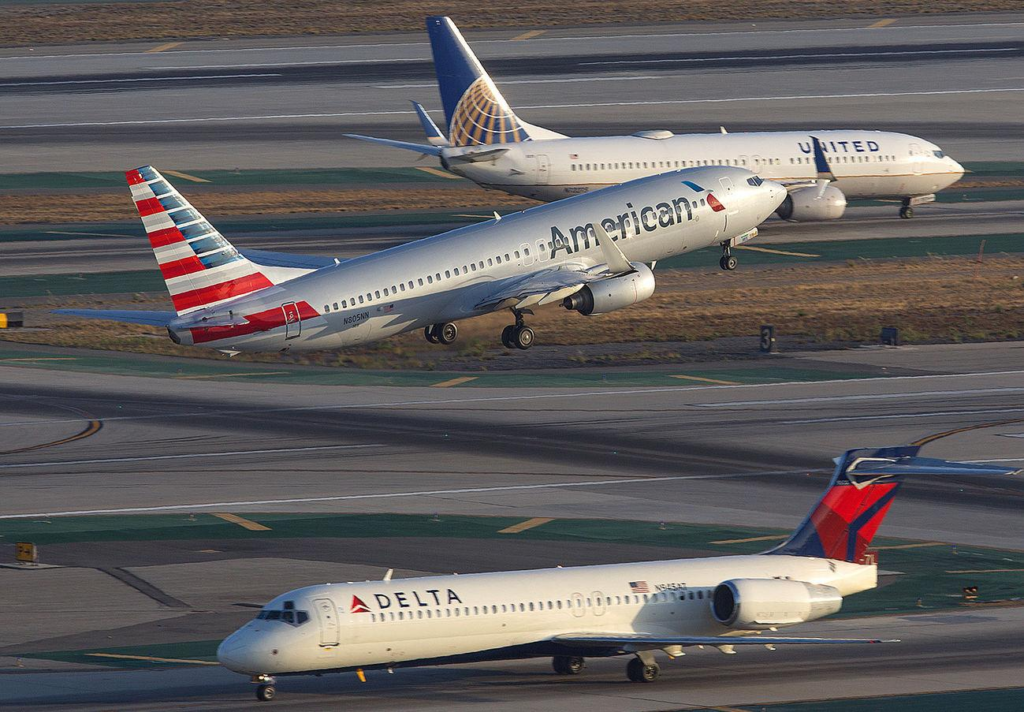
American Airlines (AA) increased its on-time arrival rate from 77.11% in September to 80.10% in October.
Despite the improvement, American finished sixth among the 10 North American airlines.
Its relative position against Delta and United weakened during the month. Delta’s lead over American widened from 5.41 percentage points in September to 6.76 percentage points in October.
United’s lead also increased from 1.54 to 3.96 percentage points.
American’s cancellation rate was 0.63%, higher than Delta’s and United’s October figures but lower than those of WestJet, Alaska and Allegiant.
The results show that improved punctuality did not translate into a stronger competitive position against American’s two largest US rivals.
JetBlue Records the Largest On-Time Improvement
JetBlue Airways (B6) delivered the largest improvement in on-time performance among North American airlines in October.
Its punctuality increased from 63.85% in August to 74.64% in September and 82.27% in October.
The 7.63% improvement between September and October was the largest monthly gain among the 10 airlines in the report.
JetBlue moved ahead of both Alaska Airlines and American Airlines in the October rankings.
Its cancellation rate also improved substantially, falling from 5.09% in August to 0.57% in October.
JetBlue therefore recorded fewer cancellations than both Alaska, at 1.10%, and American, at 0.63%.
The combination of stronger punctuality and fewer cancellations made October a particularly strong month for JetBlue.
WestJet, meanwhile, moved from first to third place after its on-time performance declined from 85.31% in September to 83.56% in October.
6 US Airports Enter Cirium’s Global On-Time Rankings
Cirium’s October airport report also showed stronger performance among several major US airports.
Unlike the airline rankings, which measure on-time arrivals, the airport rankings measure on-time departures. The distinction is important when comparing airline and airport performance.
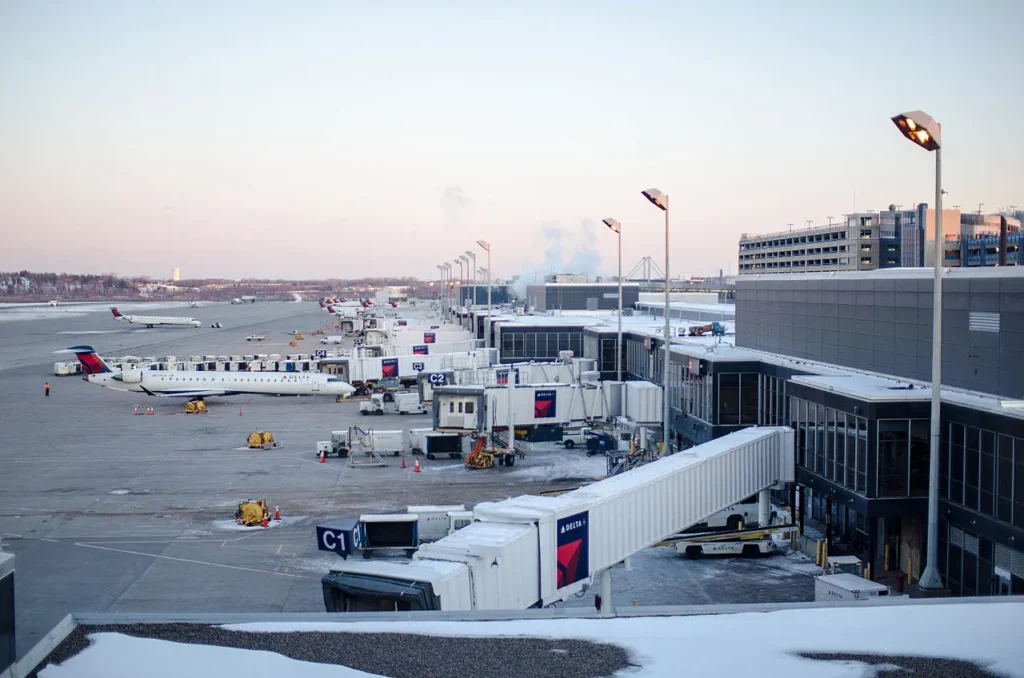
Six US airports entered Cirium’s top 20 large airports worldwide in October 2026, compared with only two in September.
The 6 airports were:
| Airport / City | IATA Code | On-Time Departures | Global Rank |
|---|---|---|---|
| Minneapolis–St. Paul International Airport | MSP | 87.00% | 8th |
| Washington Dulles International Airport | IAD | 86.25% | 11th |
| Detroit Metropolitan Airport | DTW | 86.13% | 12th |
| Salt Lake City International Airport | SLC | 85.69% | 13th |
| Newark Liberty International Airport | EWR | 85.64% | 14th |
| Hartsfield-Jackson Atlanta International Airport | ATL | 85.17% | 18th |
Four of these airports are major Delta hubs: Minneapolis–St. Paul, Detroit, Salt Lake City and Atlanta.
The other 2, Washington Dulles and Newark, are important United hubs.
No American Airlines hub appeared in the top 20 large-airport rankings.
Airport punctuality is influenced by the airlines operating there, particularly when one carrier accounts for a large share of scheduled flights. This means that the performance of a major airline can have a considerable effect on its hub airport’s overall results.
Newark Liberty International Airport’s fourteenth-place position was particularly notable. Its 85.64% on-time departure rate placed it among the world’s 20 best-performing large airports for the month.
However, monthly airport rankings can change with seasonal weather and other operating conditions. They are useful when comparing similar connecting options, but they should not be treated as a guarantee of future flight punctuality.
Stay tuned with us. Further, follow us on social media for the latest updates.
Join us on Telegram Group for the Latest Aviation Updates. Subsequently, follow us on Google News
