

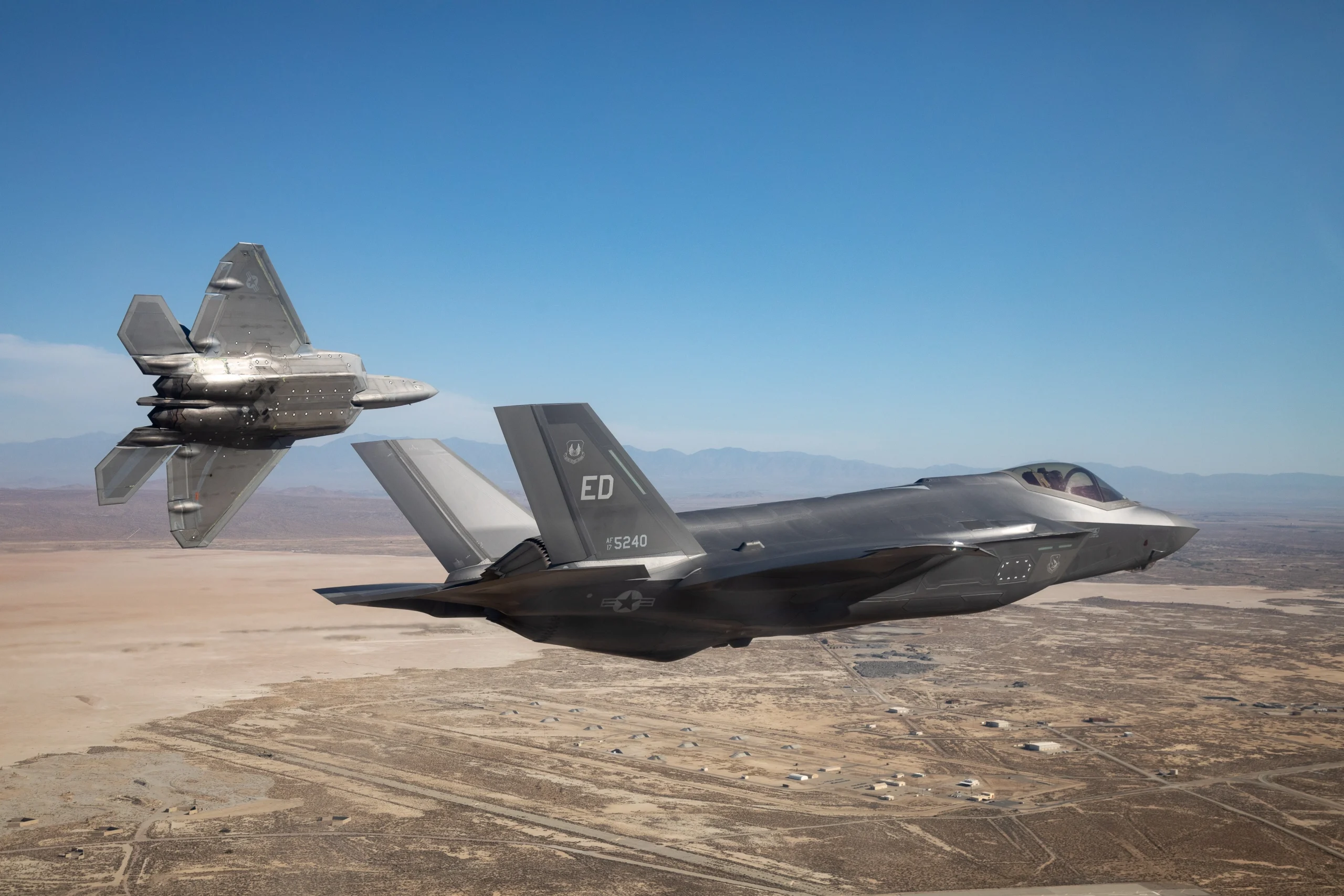
Fifth-generation fighter aircraft represent some of the most advanced military aviation technology in the world.
Designed to combine stealth, advanced radar systems, sensor fusion, high manoeuvrability, and networked combat capabilities, these aircraft have transformed how modern air forces approach aerial warfare.
5th-Gen Fighter Aircraft Flying in the World
The United States introduced the first operational fifth-generation fighter, the Lockheed Martin F-22 Raptor, in 2005. Since then, China and Russia have developed their own stealth fighters, while countries such as Turkiye, South Korea, and India have pursued ambitious next-generation combat aircraft programmes.
1. Lockheed Martin F-22 Raptor – United States
Status: Operational
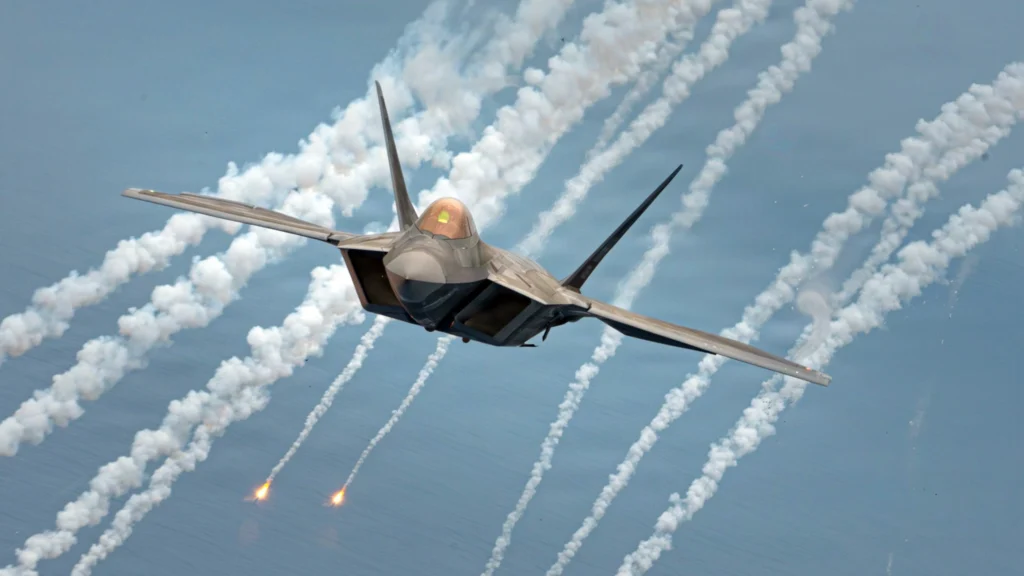
The Lockheed Martin F-22 Raptor was the world’s first operational fifth-generation fighter aircraft, entering service with the United States Air Force in December 2005.
Developed primarily for air superiority, the F-22 combines stealth technology, advanced avionics, supercruise capability, and exceptional manoeuvrability. Its twin-engine configuration and thrust-vectoring nozzles allow it to perform demanding aerial manoeuvres.
The aircraft carries its primary weapons internally to maintain a reduced radar signature. Its armament includes AIM-120 AMRAAM and AIM-9 Sidewinder missiles, alongside an internal 20 mm cannon.
Unlike the F-35, the F-22 was never exported to foreign countries. It remains exclusive to the United States Air Force and continues to play an important role in American air defence and air superiority operations.
Although production ended in 2011, upgrades to sensors, communications, and weapons have helped keep the aircraft relevant.
2. Lockheed Martin F-35 Lightning II – United States
Status: Operational
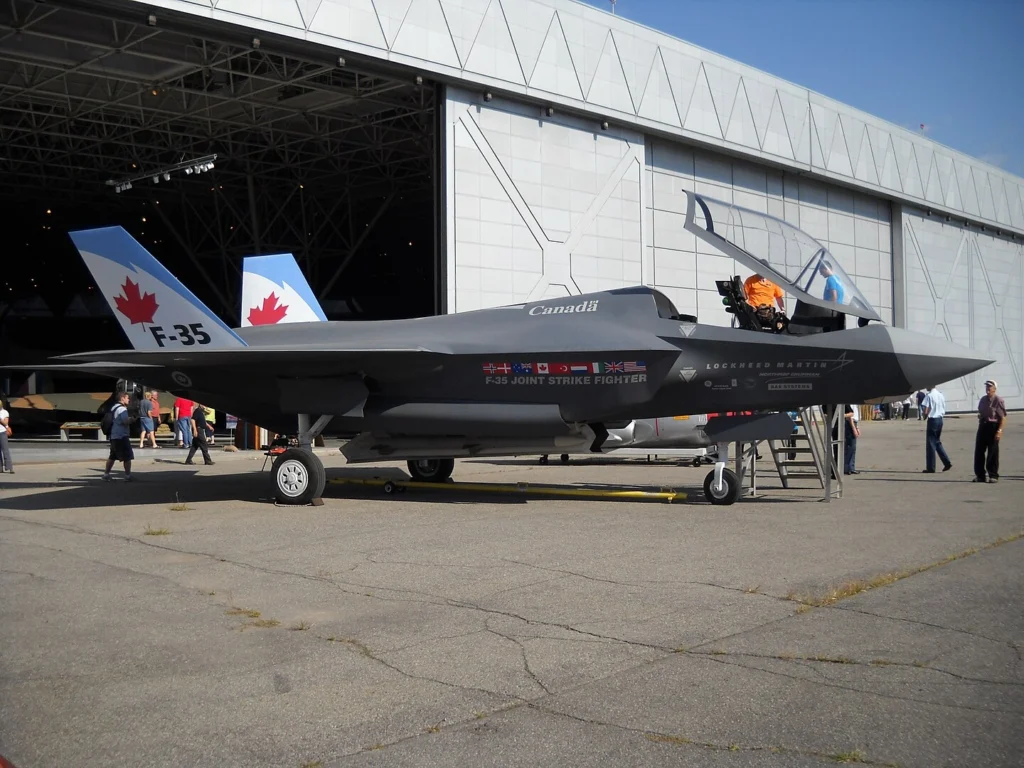
The F-35 Lightning II is the most widely operated fifth-generation fighter family in the world. Developed by Lockheed Martin, it is designed for multirole operations, including air-to-air combat, ground attacks, intelligence gathering, and electronic warfare.
The aircraft is available in three main variants: the conventional take-off and landing F-35A, short take-off and vertical landing F-35B, and carrier-based F-35C.
One of its greatest strengths is sensor fusion. The F-35 combines information from its radar, electro-optical sensors, electronic warfare equipment, and other sources to provide pilots with an integrated picture of the battlefield.
Its stealth characteristics and internal weapons bays improve its ability to operate in contested environments.
The F-35 is operated by the United States and several allied countries, including the United Kingdom, Australia, Japan, Italy, Norway, and others.
Continued production and international deliveries have made the F-35 a central part of modern Western combat aviation.

3. Chengdu J-20 Mighty Dragon – China
Status: Operational
The Chengdu J-20 is China’s first operational fifth-generation stealth fighter. Developed by Chengdu Aircraft Corporation, it entered service with the People’s Liberation Army Air Force in 2017.
The J-20 is a twin-engine aircraft designed primarily for long-range air combat and operations in heavily defended environments.
Its design incorporates stealth shaping, internal weapons bays, advanced sensors, and modern electronic systems. The aircraft’s large airframe also provides space for fuel and weapons, supporting missions over considerable distances.
The J-20 can carry air-to-air missiles internally, including long-range weapons intended to engage hostile aircraft beyond visual range.
China has continued to develop the aircraft through improvements to its engines, avionics, and other systems.
The J-20 is particularly significant because it represents China’s growing ability to design, manufacture, and operate advanced combat aircraft domestically.
Its operational deployment has also made it an important element of the changing military aviation balance in the Indo-Pacific region.

4. Sukhoi Su-57 Felon – Russia
Status: Operational in limited numbers
The Sukhoi Su-57 is Russia’s first fifth-generation fighter to enter military service. Developed under the PAK FA programme, the aircraft is designed for air superiority and multirole combat operations.
The Su-57 combines low-observable design features, advanced radar systems, internal weapons bays, and high manoeuvrability.
Its twin-engine configuration supports demanding flight performance, while its aerodynamic design allows it to conduct a broad range of aerial manoeuvres.
The aircraft is intended to engage airborne targets and perform precision strikes against ground targets.
Russia began receiving production Su-57 fighters in 2020, although its operational fleet remains considerably smaller than those of established American fifth-generation aircraft programmes.
The Su-57’s stealth characteristics have also attracted debate, particularly regarding its design priorities and radar signature compared with Western aircraft.
Nevertheless, the fighter represents Russia’s most advanced operational combat aircraft programme and remains an important part of its military aviation modernisation efforts.
5. Shenyang J-35 – China
Status: Flight-tested; operational introduction developing
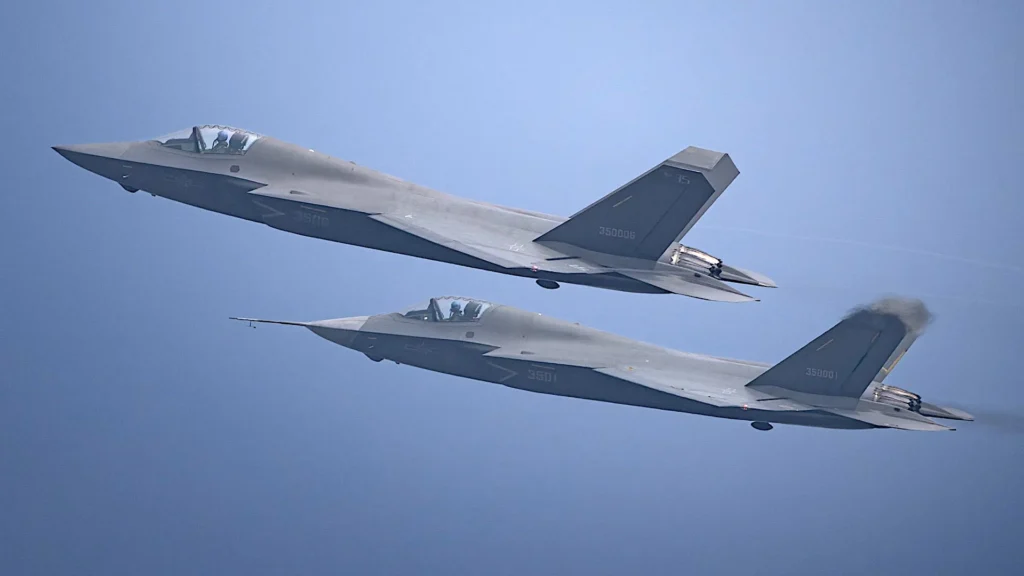
The J-35 is a Chinese stealth fighter developed for modern air combat, including aircraft carrier operations.
The programme evolved from the FC-31 technology demonstrator and is associated with China’s efforts to develop a new generation of carrier-capable combat aircraft.
The J-35 features a twin-engine configuration, stealth-oriented shaping, and internal weapons carriage.
Its development is particularly important for the People’s Liberation Army Navy, which has been expanding its carrier aviation capabilities.
Unlike the larger J-20, the J-35 is intended to provide a different combination of size, mission flexibility, and operational deployment options.
Flight testing has demonstrated progress, while China’s carrier aviation programme continues to develop the aircraft’s operational role.
However, the precise extent of operational deployment and readiness should be distinguished from the fact that prototypes and development aircraft have flown.
The J-35 is among the most significant fifth-generation fighter programmes outside the United States.
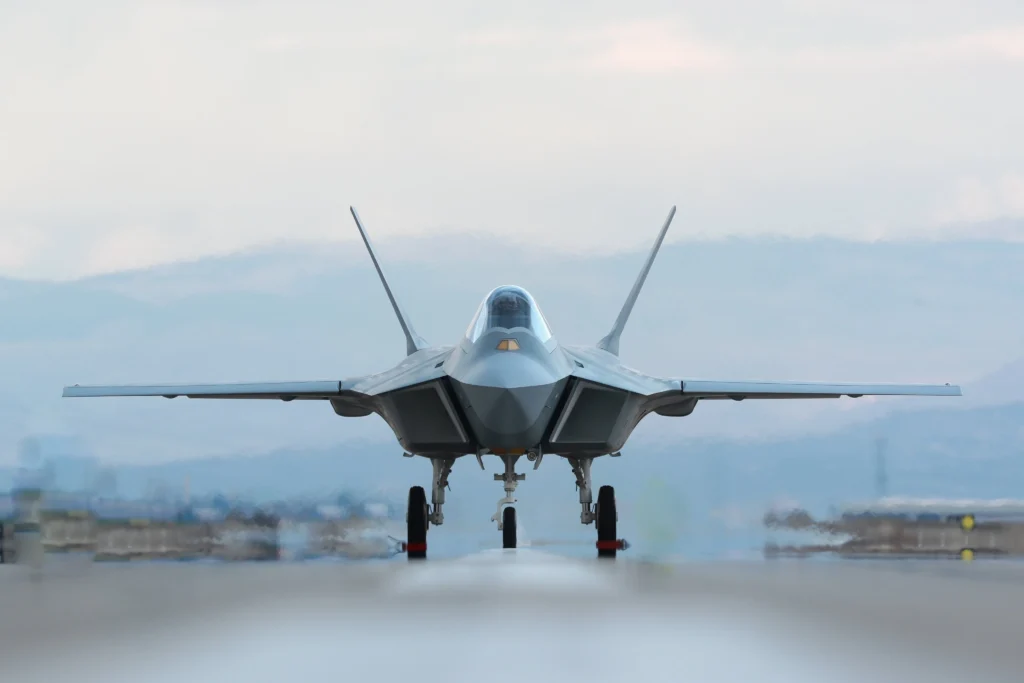
6. Turkish Aerospace KAAN – Turkiye
Status: Flying prototype; under development
The Turkish Aerospace KAAN is Turkiye’s indigenous fifth-generation fighter programme, developed to reduce reliance on foreign combat aircraft and strengthen its domestic aerospace industry.
Previously known as the TF-X, KAAN is designed as a twin-engine multirole fighter incorporating stealth-oriented shaping, advanced avionics, and modern combat systems.
The aircraft completed its maiden flight on 21 February 2024, marking a major milestone for the Turkish aerospace industry.
KAAN is intended to support air superiority missions while providing the flexibility needed for other combat roles.
Its development programme includes further flight testing, avionics integration, engine development, and weapons qualification.
Although the aircraft has flown, it is not equivalent to an operational fighter already serving in front-line squadrons.
KAAN represents one of the most ambitious indigenous combat aircraft programmes currently being pursued by a country outside the established fifth-generation fighter manufacturers.
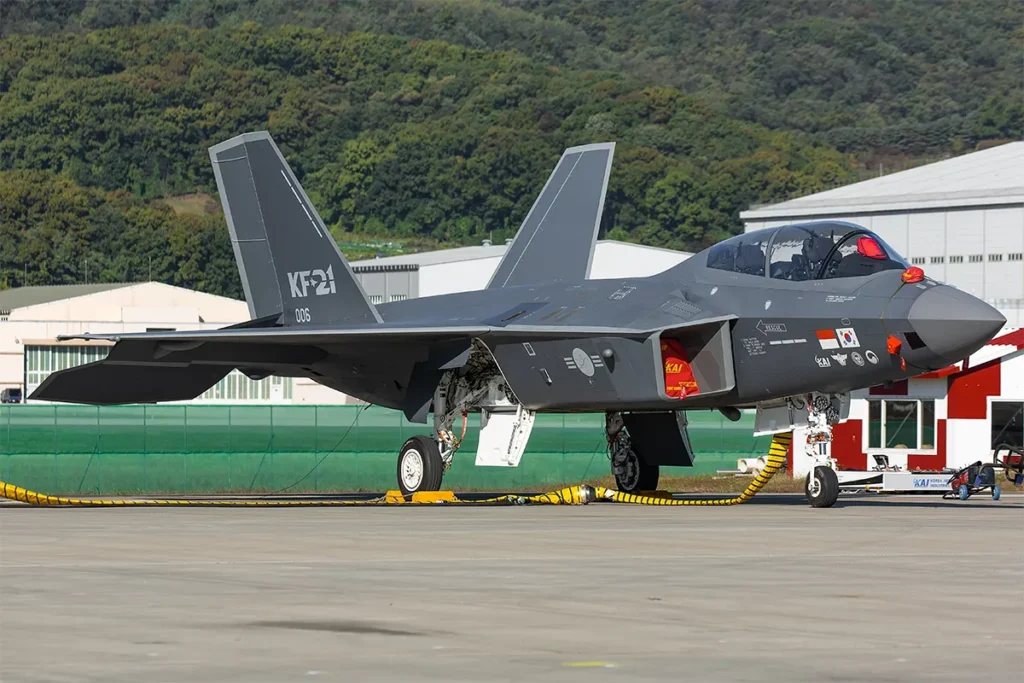
7. Korea Aerospace Industries KF-21 Boramae – South Korea
Status: Flying; progressing towards operational service
The KF-21 Boramae is South Korea’s advanced multirole fighter developed by Korea Aerospace Industries.
The aircraft completed its first flight in July 2022 and has undergone an extensive flight-testing programme.
The KF-21 incorporates modern radar systems, advanced avionics, and features intended to reduce its radar signature. However, its initial configuration carries important weapons externally, making its fifth-generation classification debatable.
For this reason, the KF-21 is frequently described as a 4.5-generation fighter rather than a fully developed fifth-generation stealth aircraft.
South Korea plans to introduce the aircraft as a replacement for older combat aircraft while developing additional capabilities through future production blocks.
Its development is particularly important for the country’s defence industry, as it strengthens domestic expertise in fighter design, manufacturing, and systems integration.
Although included in Military Factory’s fifth-generation catalogue, the KF-21 should not be treated as having the same stealth characteristics as the F-22 or F-35.

8. Mitsubishi X-2 Shinshin – Japan
Status: Flight-tested technology demonstrator
The Mitsubishi X-2 Shinshin was Japan’s experimental stealth aircraft developed to test technologies relevant to future combat aircraft.
The aircraft completed its first flight in April 2016 and was used to evaluate technologies such as stealth shaping, flight-control systems, and advanced aerodynamic concepts.
Unlike operational fighter aircraft, the X-2 was not designed for regular military deployment.
Instead, it provided Japanese engineers with valuable experience in developing and testing advanced aircraft technologies.
Its relatively compact design and experimental systems helped Japan study technologies that could influence future combat aircraft programmes.
The X-2 programme also contributed to Japan’s broader ambitions in advanced military aviation, including subsequent international fighter development efforts.
Although the aircraft has flown, it remains a technology demonstrator rather than an operational fifth-generation fighter.

9. Northrop-McDonnell Douglas YF-23 – United States
Status: Historical flying prototype; retired
The Northrop-McDonnell Douglas YF-23 was an experimental stealth fighter developed for the United States Air Force’s Advanced Tactical Fighter competition.
The aircraft first flew in August 1990 and competed against the Lockheed YF-22, which ultimately became the F-22 Raptor.
The YF-23 featured a distinctive aerodynamic design, including diamond-shaped wings and a V-shaped tail arrangement.
Its design emphasised stealth, speed, and aerodynamic efficiency.
Two prototypes were built and successfully completed flight testing, demonstrating technologies relevant to future air superiority aircraft.
However, the United States Air Force selected the competing YF-22 design in 1991, bringing the YF-23 programme to an end.
The aircraft remains an important example of early fifth-generation fighter development.
Although it appears in Military Factory’s catalogue, it is not flying today and should not be counted among currently operational fighters.

10. Boeing-Saab T-7 Red Hawk – United States
Status: Flying advanced trainer; not a fighter
The Boeing-Saab T-7 Red Hawk is an advanced jet trainer developed for the United States Air Force.
It is intended to replace the ageing T-38 Talon and prepare pilots for modern combat aircraft.
The T-7 incorporates digital design techniques, modern avionics, and flight characteristics intended to support advanced pilot training.
Its development programme includes extensive flight testing and systems evaluation.
However, the aircraft is not a fifth-generation combat fighter. Its inclusion in Military Factory’s broader catalogue reflects its relationship with advanced military aviation and pilot training rather than operational stealth combat capability.
The T-7 is designed primarily to train pilots, not to perform front-line air superiority or strike missions.
Its importance lies in helping future pilots transition to increasingly complex aircraft such as the F-35 and other modern fighters.
Other Fifth-Generation Aircraft Projects
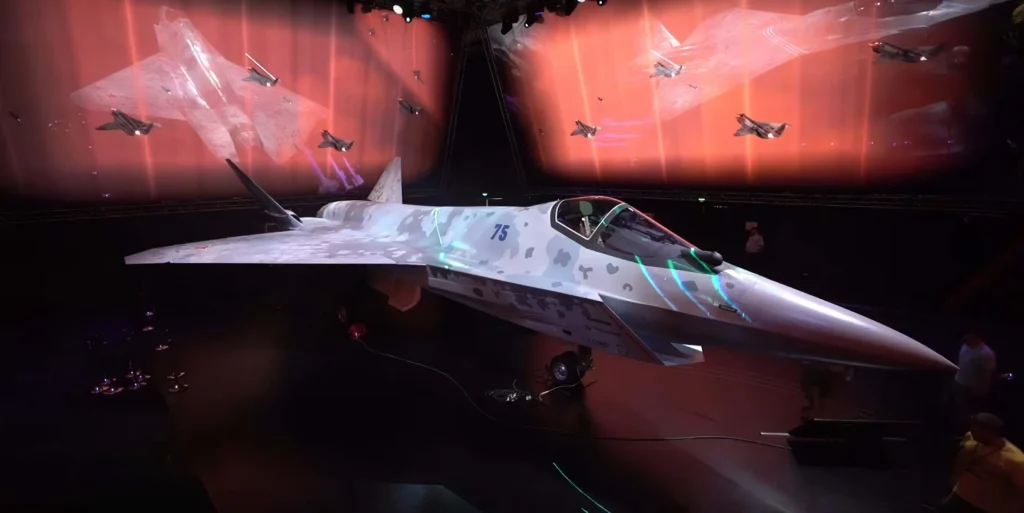
11. Sukhoi Su-75 Checkmate – Russia
The Su-75 Checkmate is a proposed lightweight, single-engine stealth fighter intended to provide a lower-cost alternative to larger combat aircraft.
Russia unveiled the concept in 2021, but the programme has faced development and funding uncertainties.
It should not be counted as an operational or confirmed flying fighter.
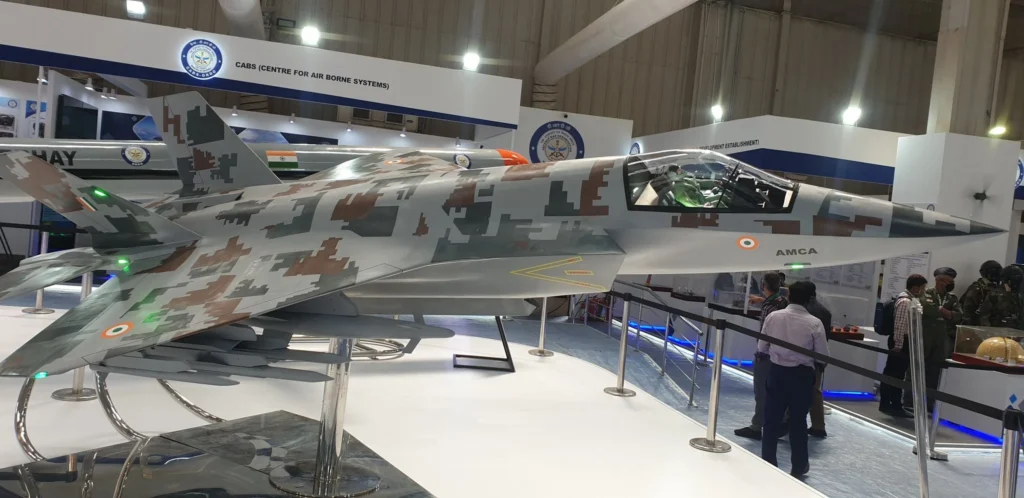
12. HAL AMCA – India
India’s Advanced Medium Combat Aircraft programme aims to develop an indigenous fifth-generation multirole stealth fighter.
The proposed aircraft is intended to incorporate internal weapons bays, advanced avionics, and low-observable design features.
However, the AMCA remains a development programme rather than a flying operational fighter.
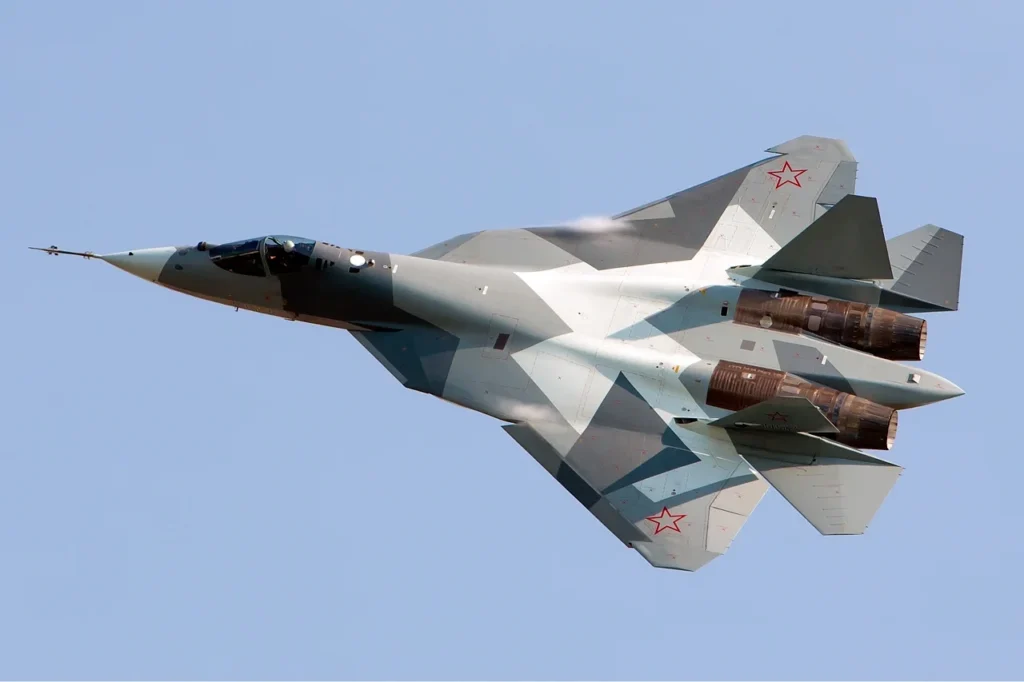
13. HAL Sukhoi FGFA – India and Russia
The Fifth Generation Fighter Aircraft programme was a proposed Indian-Russian collaboration based on the Sukhoi PAK FA development.
India withdrew from the joint programme in 2018.
The proposed Indian-specific FGFA was never introduced into operational service.
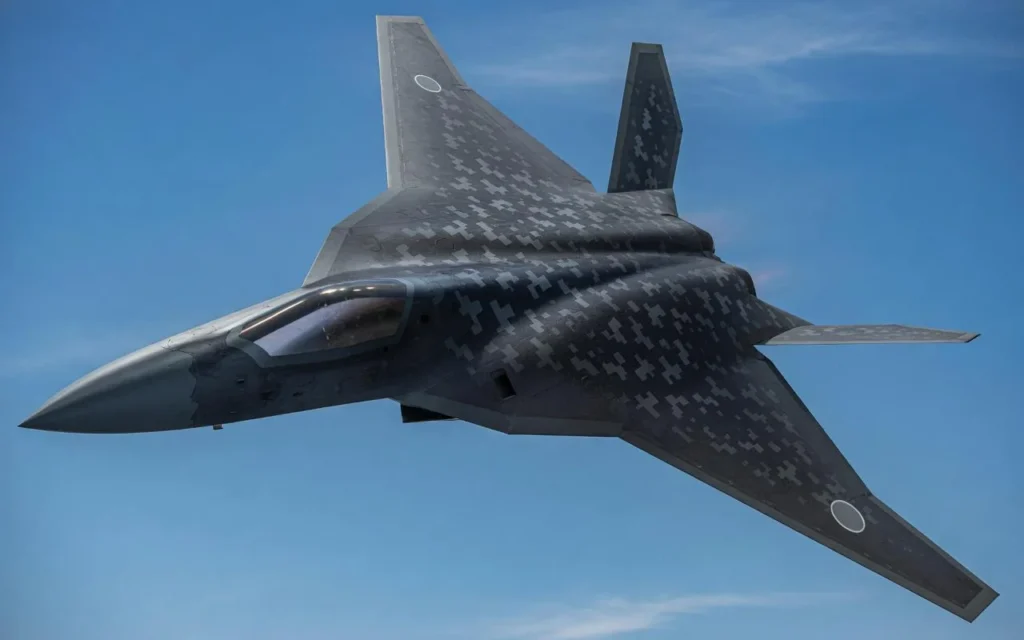
14. Mitsubishi F-X – Japan
Japan’s F-X programme was conceived as a future advanced fighter development effort.
Japan subsequently joined the United Kingdom and Italy in the Global Combat Air Programme, which aims to develop a next-generation combat aircraft.
The proposed F-X design should not be treated as an independently operational fifth-generation fighter.
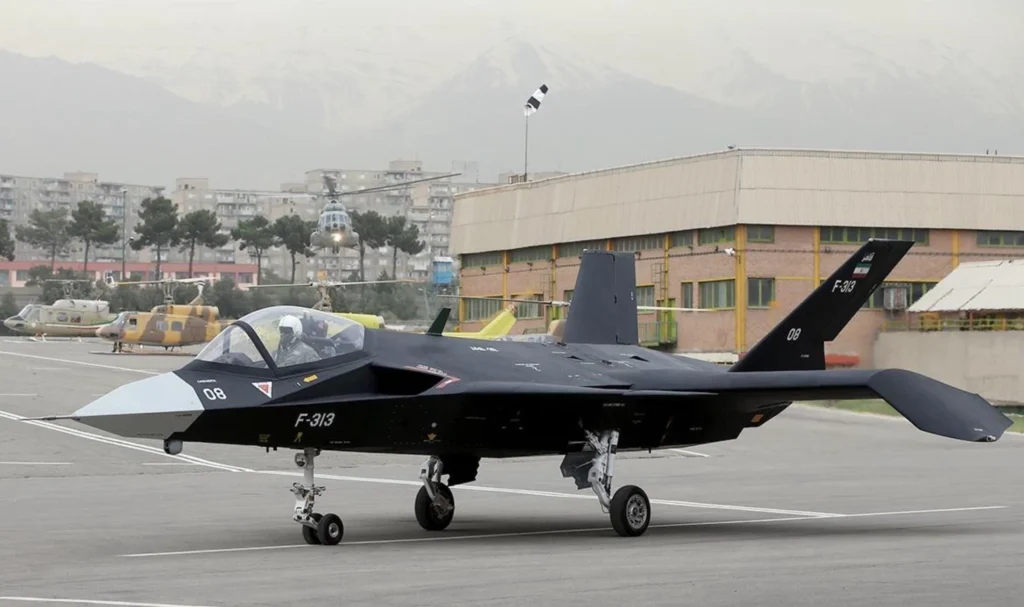
15. HESA F-313 Qaher – Iran
Iran unveiled the Qaher F-313 as a proposed stealth fighter in 2013.
The aircraft attracted considerable scepticism concerning its dimensions, design, and claimed capabilities.
There is no reliable public evidence establishing that the original F-313 became an operational fifth-generation combat aircraft.
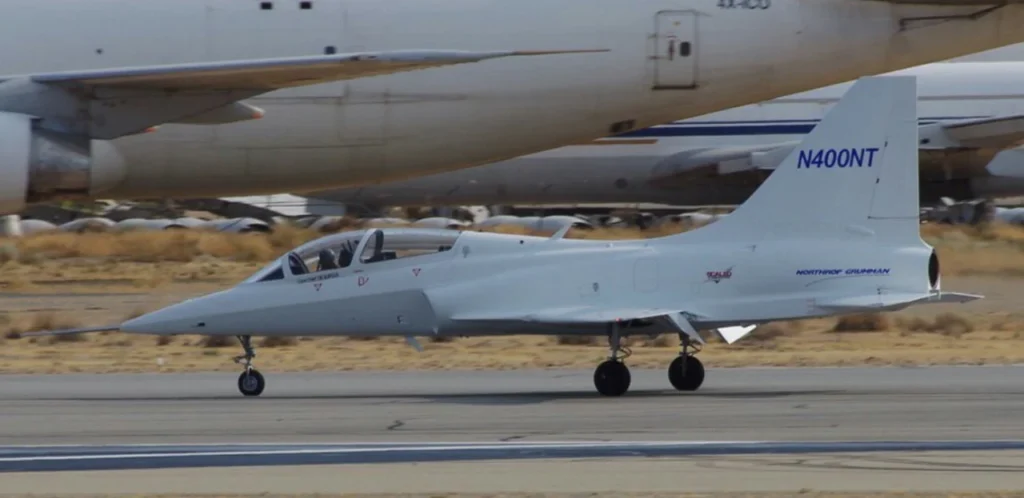
16. Northrop Grumman T-X Model 400 – United States
Northrop Grumman’s T-X Model 400 was an advanced trainer proposal associated with the United States Air Force’s trainer replacement competition.
The programme did not result in an operational fifth-generation fighter.
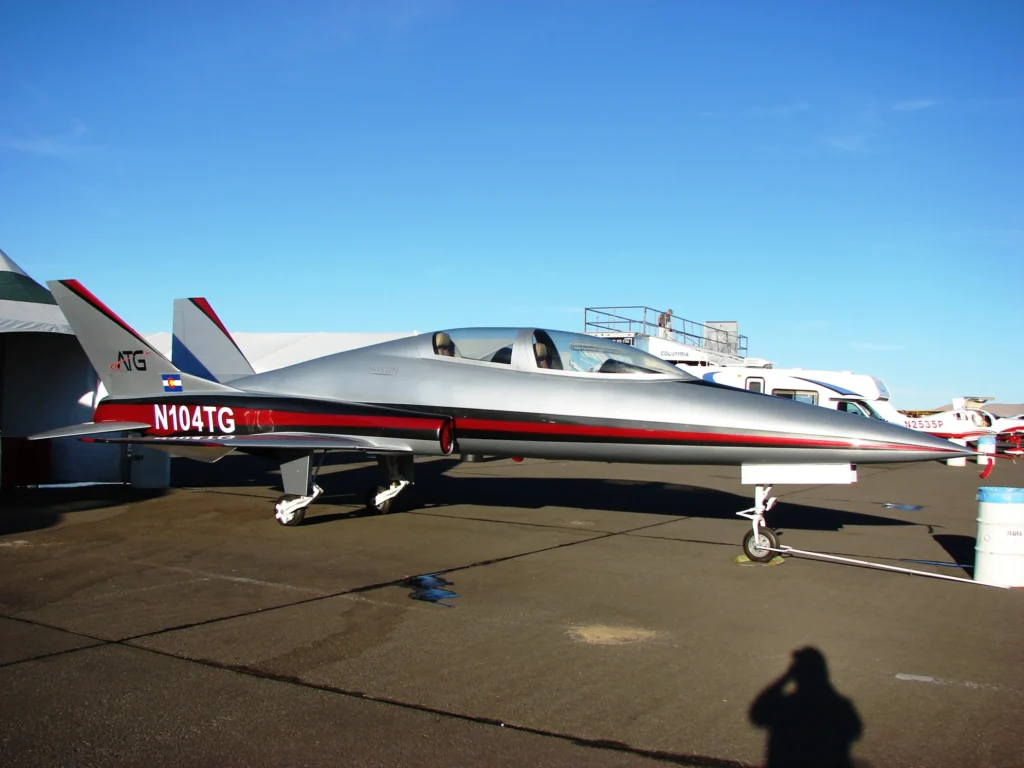
17. Stavatti Javelin T-X – United States
The Stavatti Javelin T-X was another advanced trainer concept rather than an operational stealth fighter.
It should not be included in a list of fifth-generation fighters currently flying in military service.
What Makes a Fighter Aircraft Fifth-Generation?
Fifth-generation fighters are generally associated with a combination of technologies that improve survivability, situational awareness, and combat effectiveness.
Stealth is one of the most recognisable characteristics. Aircraft incorporate low-observable shaping, specialised materials, and internal weapons bays to reduce detection by radar.
Advanced avionics and sensor fusion are equally important. Modern fighters combine information from radar, electronic warfare equipment, and other sensors to help pilots understand the battlefield.
Networked communication systems allow aircraft to exchange information with other fighters, airborne surveillance platforms, and supporting military units.
Some fifth-generation aircraft also offer supercruise capability, allowing sustained supersonic flight without relying on afterburners.
However, there is no universally accepted definition of a fifth-generation fighter. Different countries and manufacturers use the classification differently, and the presence of individual advanced technologies does not automatically make an aircraft a fully operational stealth fighter.
Bottom Line
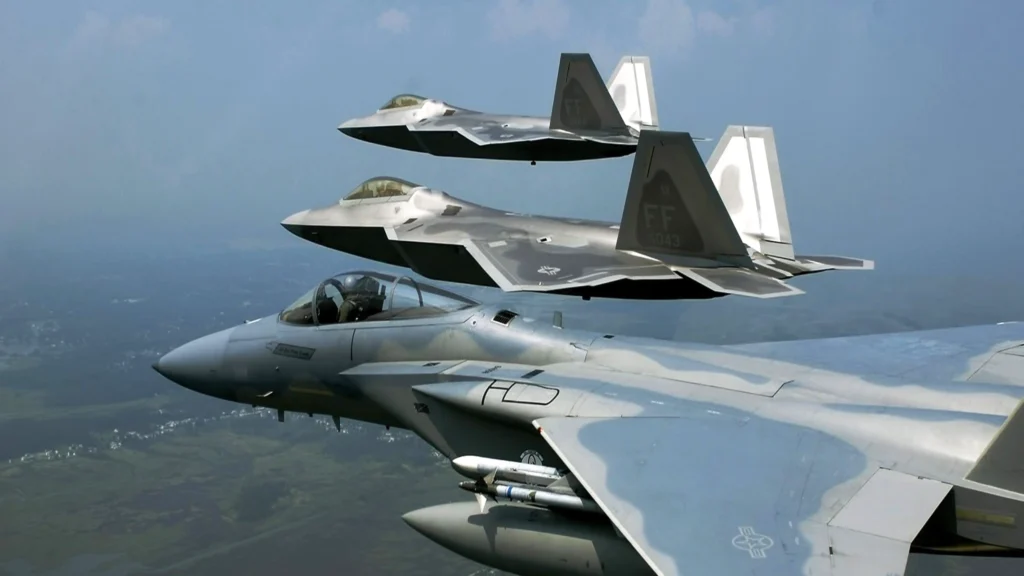
The United States, China, and Russia currently operate the most established fifth-generation fighter types, including the F-22 Raptor, F-35 Lightning II, J-20, and Su-57.
China’s J-35 programme is also progressing, while Turkiye’s KAAN and South Korea’s KF-21 have completed important flight-testing milestones. However, the KF-21’s initial configuration is more commonly classified as a 4.5-generation aircraft.
Experimental aircraft such as Japan’s X-2 Shinshin and America’s YF-23 demonstrate how advanced fighter technology has developed, but they are not operational combat aircraft.
Military Factory’s catalogue includes 17 entries, although several are proposed designs, discontinued projects, or trainer aircraft rather than active fifth-generation fighters.
The distinction between an aircraft that has flown and one that is ready for operational military service remains essential when comparing the world’s most advanced fighter programmes.
FAQs
The Lockheed Martin F-22 Raptor was the first operational fifth-generation fighter, entering service with the United States Air Force in December 2005.
The United States, China, and Russia operate domestically developed fifth-generation fighters. Several other countries, including the United Kingdom, Japan, Australia, Italy, and Norway, operate the American-built F-35 Lightning II.
India does not currently operate an indigenous fifth-generation fighter. Its Advanced Medium Combat Aircraft programme is being developed to provide the Indian Air Force with a domestically designed stealth combat aircraft in the future.
Stay tuned with us. Further, follow us on social media for the latest updates.
Join us on Telegram Group for the Latest Aviation Updates. Subsequently, follow us on Google News
