


CHICAGO- United Airlines (UA) hired Scott Kirby in 2016 after his departure from American Airlines (AA). His separation benefits were valued at $13.74 million, including cash severance, accelerated stock awards and flight privileges.
Kirby later became United’s CEO in 2020 and says his departure from American felt like a betrayal that motivated him to prove himself at a rival airline. The decision remains a notable case of executive succession, corporate leadership and competition in the US aviation industry.
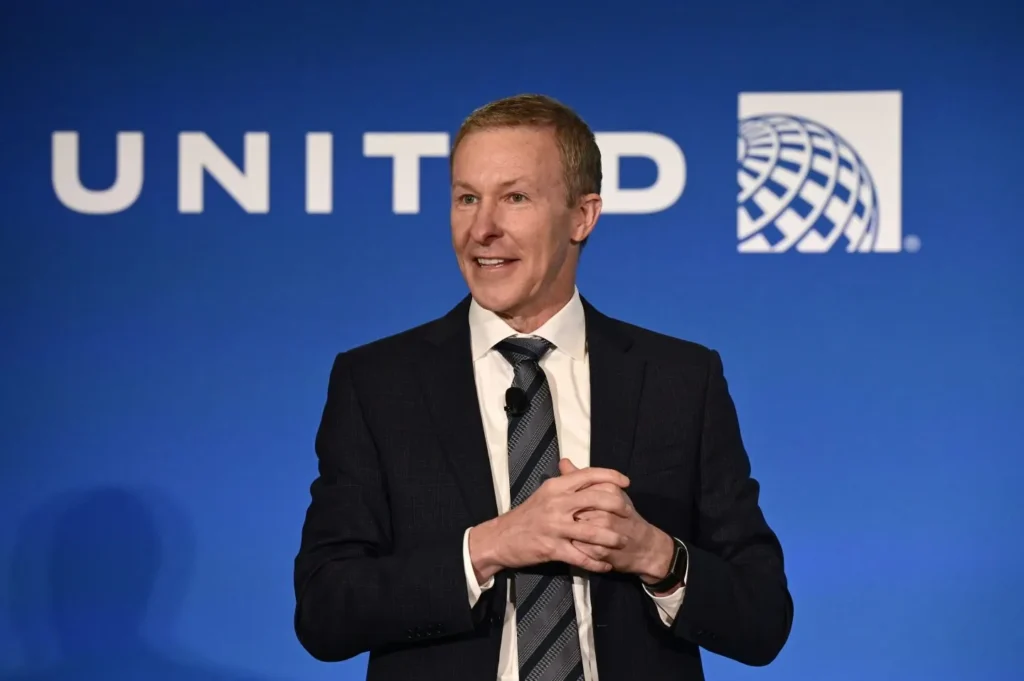
Leadership Decision That Sent Scott Kirby to United
Scott Kirby served as president of American Airlines before leaving the company on August 29, 2016. He had worked closely with Doug Parker through their careers at America West and US Airways, and he had become one of American’s most senior executives following its merger with US Airways.
American’s succession plan ultimately placed Robert Isom, then the airline’s chief operating officer, in the position of president. Kirby was no longer part of the planned leadership structure and left the company.
American’s 2017 proxy statement described his separation as the result of its board’s executive succession planning process rather than his performance as president.
The decision took on greater significance in light of Kirby’s later account. In a 2026 interview with The New York Times, Kirby recalled being told he would become CEO before the decision was reversed and he was dismissed.
According to that account, Kirby first told his wife about the decision and then called a United Airlines board member. United hired him as president in 2016, giving him a route to the top position at one of American’s largest competitors. He became United’s CEO in May 2020.
Kirby said the experience motivated him to prove himself elsewhere. His subsequent rise placed him in direct competition with the company where he had spent years building his career.
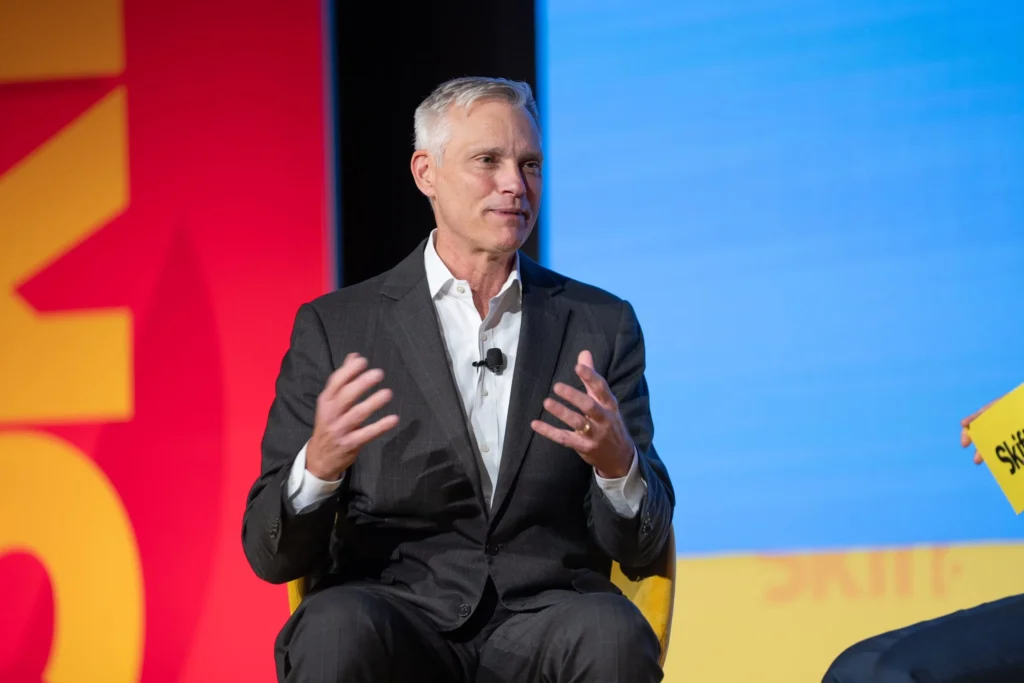
Role of Doug Parker and Robert Isom
The original commentary by Gary Leff argues that the succession decision reflected a conflict between 3 senior executives: Parker, Kirby and Isom. In Leff’s interpretation, American could not retain all 3 in their existing roles because Kirby wanted to become CEO, Parker was not ready to leave the top position, and Isom was a viable successor who was likely to remain with the airline.
This interpretation offers one explanation for why American selected Isom over Kirby, but the company’s regulatory filing does not establish Parker’s personal motives. Its formal explanation was that the decision resulted from succession planning.
The distinction matters because the documented outcome and the interpretation of why it occurred are not the same.
American’s choice removed an experienced executive from its leadership team, while United gained someone with detailed knowledge of its rival’s network, commercial operations and strategic priorities.

What Kirby’s $13.74 Million Separation Package Included
American Airlines’ SEC filing provides a detailed breakdown of the benefits Kirby received when he left the company in August 2016. The total was $13,740,552, but it was not a $13.74 million cash payout.
According to American Airlines’ 2017 proxy statement, the package consisted of:
- $3,850,000 in cash severance, calculated as two times his base salary plus his target short-term incentive.
- $9,576,225 in accelerated restricted stock units, covering stock awards that otherwise would have vested over time.
- $24,501 from an extended stock appreciation rights exercise period, reflecting the additional value associated with extending the exercise period.
- $289,826 in flight privileges, based on the company’s estimated present value of future travel benefits.
The flight privileges require an important distinction. Kirby had already acquired lifetime travel privileges through the US Airways and America West merger.
American’s filing valued the relevant flight benefits as part of the separation calculation and confirmed that he retained additional positive-space travel privileges.
The package also included a two-year nonsolicitation covenant, along with confidentiality and cooperation provisions.
The filed agreement does not list a non-compete clause. A nonsolicitation clause is not the same as a non-compete: it restricts certain efforts to recruit or solicit people covered by the agreement rather than broadly prohibiting an executive from joining a rival.
Leff cites contemporaneous reporting by journalist Ted Reed that American executives lacked employment contracts containing non-compete protections because management believed this arrangement would be less expensive.
The commentary argues that the approach proved costly when Kirby joined United. That explanation should be attributed to the reporting rather than treated as a motive confirmed by American’s formal disclosure.
The strategic consequence was clearer than the motive. American paid substantial separation benefits, and United gained a senior executive who had spent years inside a direct competitor.
The package did not itself cause United’s later performance, but Kirby’s move created a significant competitive development.
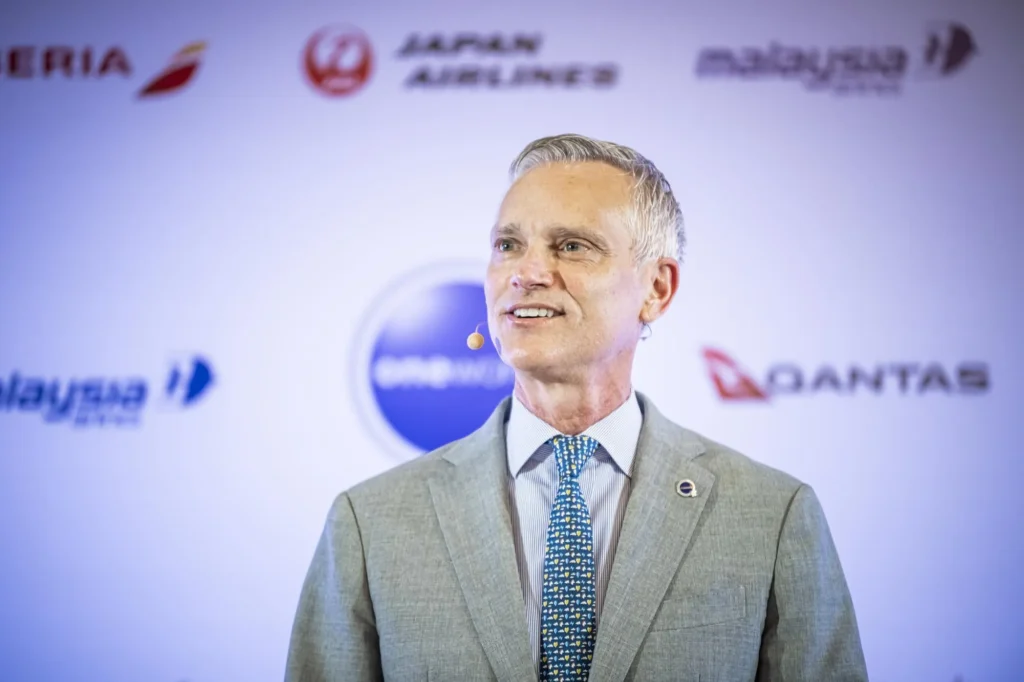
Wider Criticism of Doug Parker’s Leadership
Leff’s argument extends beyond the executive succession decision. He criticises Parker’s tenure at American, arguing that a focus on retaining power and protecting his legacy came at the expense of the airline’s product, brand, employee relationships and financial position.
One major point concerns shareholder distributions and debt. American Airlines’ financial filings report that the company repurchased approximately $12.4 billion of its shares between July 2014 and the end of 2019.
Leff links those buybacks to a more leveraged balance sheet and argues that the financial strategy weakened the airline’s ability to invest in its business.
The amount of the repurchases is documented in company filings. The broader claim that borrowing for buybacks was a principal cause of American’s competitive problems is an interpretation that requires consideration of the airline’s full financial history.
Leff also criticises American’s customer offering and employee relationships. His wider assessment argues that reductions in product quality and a weaker competitive position contributed to the airline’s underperformance.
These criticisms reflect his analysis of Parker’s tenure rather than a single conclusion established by the SEC filing.
Parker’s Public Positioning and Diversity Controversy
A more contentious part of the original commentary concerns Parker’s public image, political associations and approach to diversity as he prepared to leave American.
Leff pointed to Parker’s past donations to Barack Obama and Hillary Clinton, his reported reading of White Fragility and his decision to wear a Black Lives Matter wristband in 2020.
The commentary also alleged that American had not appointed Black executives to airline leadership roles before naming a Black vice president in Philadelphia in December 2020.
Leff further claimed that an executive helping Parker frame his career legacy was removed after suggesting that Parker step down earlier as chairman while retaining the CEO title, which would have opened the board chair position for a Black director.
These are claims and interpretations presented in the original commentary. They are separate from the documented facts in Kirby’s separation agreement and require independent verification before being presented as established conclusions.
Their relevance to the succession dispute lies in Leff’s broader argument that Parker’s approach to leadership and legacy influenced important corporate decisions.

Leadership Lessons Kirby Took to United
Kirby’s experience at American also appears to have changed how he approaches decision-making. In the 2026 interview, he said he had learned that reaching the right answer was not enough. He believed leaders were more effective when they took time to ensure that other people understood and supported the decision.
That lesson has particular importance in an airline, where major decisions affect pilots, cabin crew, mechanics, airport operations, customers and investors. Fleet purchases, network changes, technology investments and new procedures require coordination across many teams.
Kirby’s career at United has placed considerable emphasis on customer experience, fleet growth and technology.
The airline has promoted investments in newer aircraft, seatback entertainment, connectivity and digital services as part of its effort to strengthen customer loyalty. These are elements of United’s broader competitive strategy, not proof that his previous experience at American alone explains its performance.
Leff describes United as one of the strongest improvement stories among major airlines over the past decade. However, his commentary also questions whether every part of Kirby’s long-term vision will deliver its expected results.
One concern is United’s substantial aircraft order book and the investment required to support further growth. A larger fleet can expand network options and customer capacity, but it also requires financing, maintenance resources, trained employees and reliable aircraft deliveries.
Leff also revisits Kirby’s longstanding view that airfares needed to rise. The commentary argues that the expected increase did not occur in the way Kirby had anticipated. This remains an assessment of his industry forecasts rather than a complete measure of their accuracy, since fare trends vary by route, period, inflation and the cost of operating an airline.
Kirby’s Views Beyond Aviation
The New York Times interview also covered Kirby’s broader views on economic and technological issues. As summarised in the original report, these included support for wealth taxes, an inheritance tax approaching 100% and the belief that artificial intelligence can assist with programming but is less useful for generating new ideas.
These opinions provide additional context about Kirby as a public figure, but they are separate from United’s operating strategy and should not be confused with the company’s formal policies.
Taken together, the criticisms create a more balanced picture. Kirby has led an airline that has expanded its network and made visible investments in customer experience, but large growth plans still carry financial and operational risks.
His leadership should therefore be assessed through measurable performance, capital allocation, employee relations and service delivery rather than the outcome of his departure from American alone.
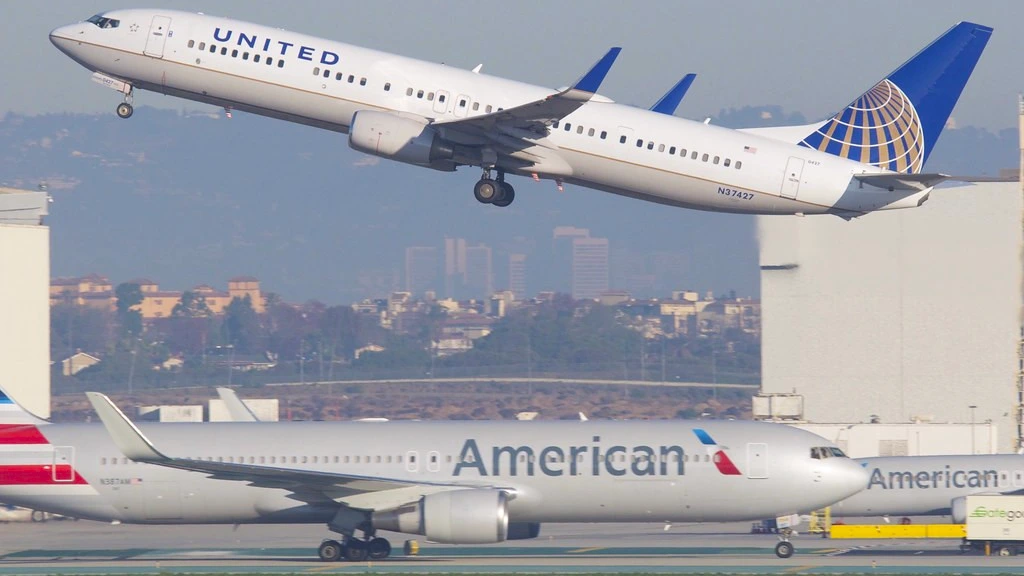
United and American’s Proposed Merger in 2026
The rivalry between the airlines also returned to the spotlight in April 2026, when Kirby confirmed that he had approached American about exploring a merger.
In his April 27 statement, Kirby described the idea as a growth-focused combination designed to improve the customer experience and strengthen the U.S. airline industry’s global competitiveness. He argued that the proposed airline would add capacity and customer options rather than relying mainly on cutting routes, jobs or costs.
American declined to engage. Its position was that a combination with United would raise serious competition concerns and could harm consumers. Kirby acknowledged that such a transaction could not proceed without a willing partner.
The proposal did not amount to a merger agreement, and it did not establish that negotiations would resume. Any combination of two major U.S. airlines would face substantial regulatory and competition scrutiny.
The episode nevertheless demonstrates the scale of Kirby’s ambitions. A decade after he left American, he was leading United and publicly proposing a transaction that would combine the two companies. It also highlights how the airline industry’s competitive landscape is influenced by customer demand, aircraft supply, financial strategy and regulatory limits as well as individual executive decisions.
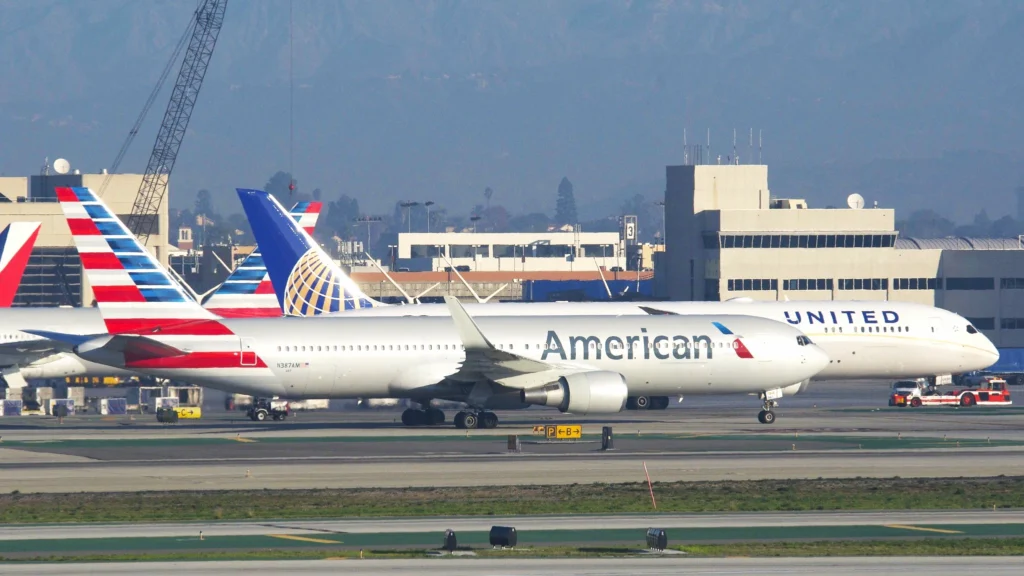
What Kirby’s Career Move Means for Airline Competition
Scott Kirby’s departure from American Airlines illustrates how executive succession can affect the competitive position of a company. American selected Isom as president in 2016, while Kirby moved directly to United and later became its CEO.
The $13.74 million separation package, the lack of a non-compete provision in the filed agreement and Kirby’s immediate move to a major rival make the case notable. His subsequent career gave United access to an executive with years of experience at American and a strong personal incentive to prove himself.
The evidence does not establish that the departure alone explains United’s progress or American’s challenges.
Fleet investments, customer experience, capital allocation, employee relationships, safety procedures and operational reliability all influence the long-term performance of an airline.
The central lesson is that succession planning can create consequences well beyond the executive being replaced.
American’s decision changed Kirby’s career path, strengthened United’s leadership team and became part of a rivalry that continued through safety challenges, engine shortages and merger speculation.
What happens next will depend on how both airlines execute their strategies, manage costs and deliver value to customers.
Stay tuned with us. Further, follow us on social media for the latest updates.
Join us on Telegram Group for the Latest Aviation Updates. Subsequently, follow us on Google News
