

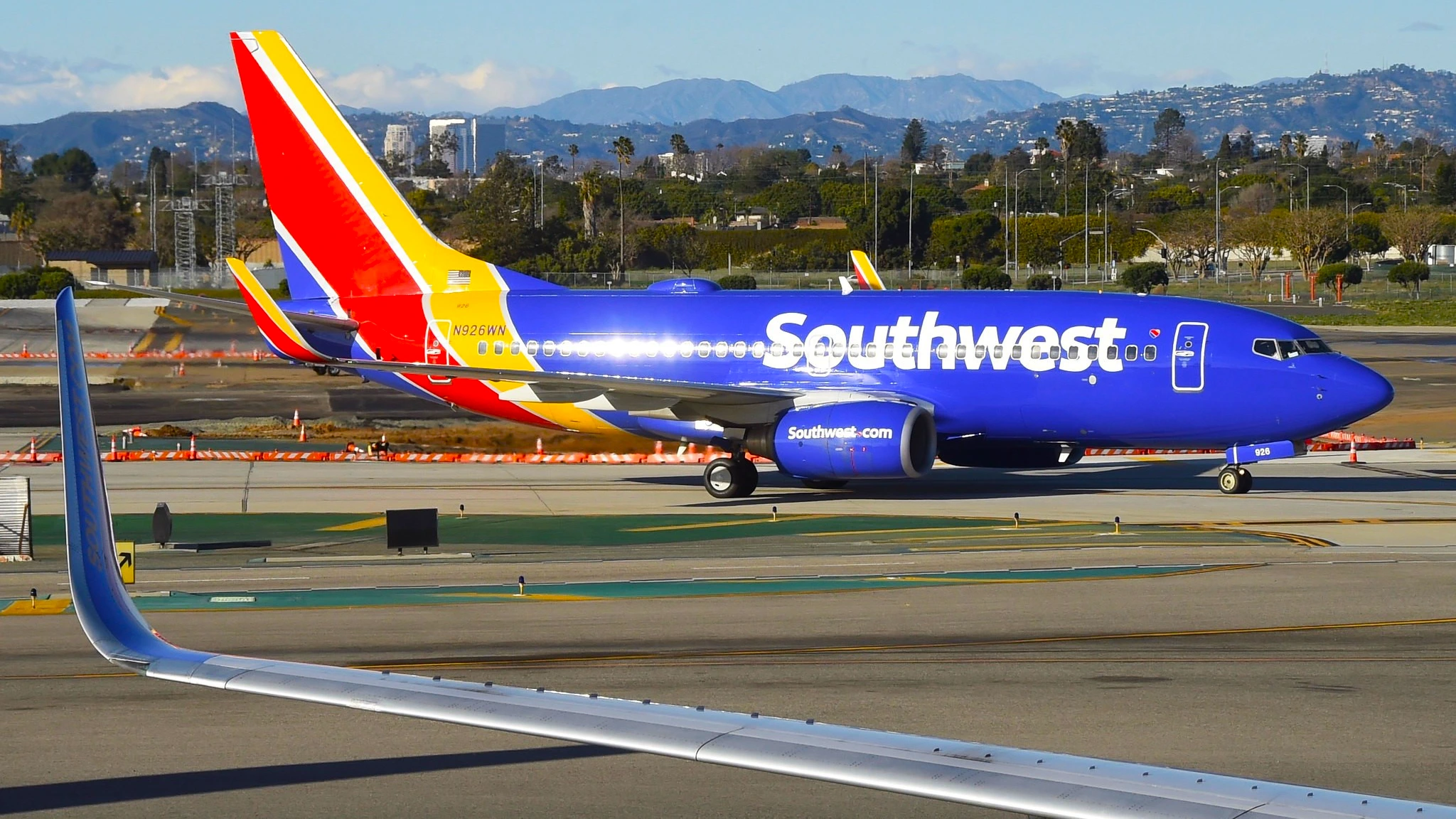
NEVADA- A Southwest Airlines (WN) Boeing 737 returned to the gate at Las Vegas, on Friday after other pilots reported heavy smoke coming from its right main landing gear while the aircraft taxied for departure. The incident involved Southwest Airlines flight WN759, scheduled to fly from Harry Reid International Airport (LAS) to Chicago Midway International Airport (MDW), prompting airport emergency crews to respond.
The aircraft never reached the runway before the crew aborted its departure preparations and returned to the terminal area. Pilots following the jet reported what appeared to be a landing gear fire, along with damaged brake components and fluid on the taxiway, although Southwest later said there were no reports of a fire and identified a possible hydraulic issue as a concern.
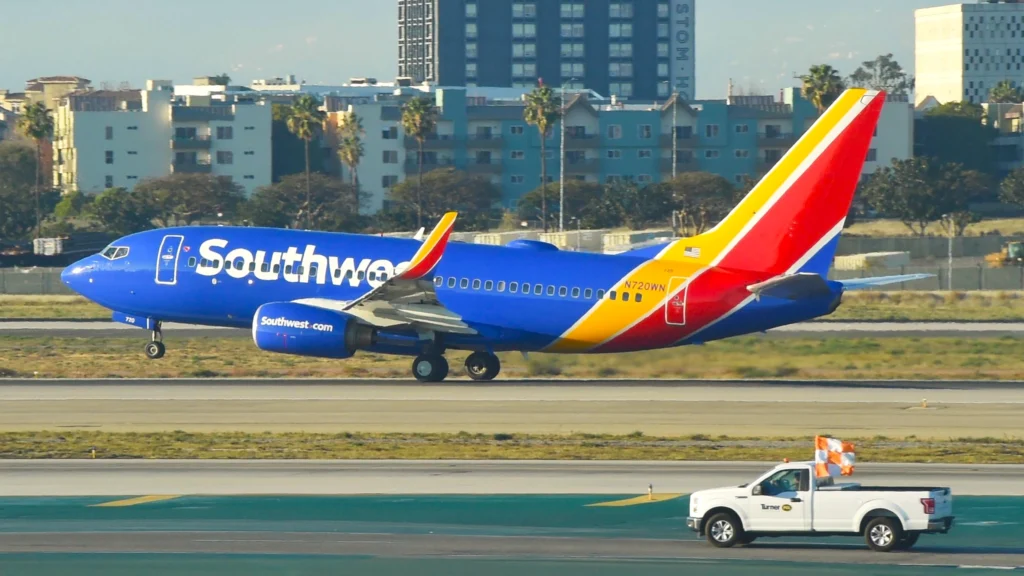
Smoke Delays Southwest’s 737 MAX8
The problem came to light when the crew of another Southwest aircraft, flight WN334 bound for Houston’s William P. Hobby Airport (HOU), alerted air traffic control (ATC) to the condition of the aircraft ahead. The pilots reported that the right landing gear appeared to be on fire and requested airport fire trucks.
Other radio communications described heavy smoke rising from the right main landing gear. A pilot also reported what appeared to be pieces of brake material on the taxiway, with a trail of fluid nearby, raising concerns about damage to the aircraft’s braking or hydraulic systems.
Airport emergency personnel responded as the affected Boeing 737 was taken out of departure operations.
Ground crews subsequently towed the aircraft back to the terminal, allowing passengers to leave the plane and board a replacement aircraft for the journey to Chicago.
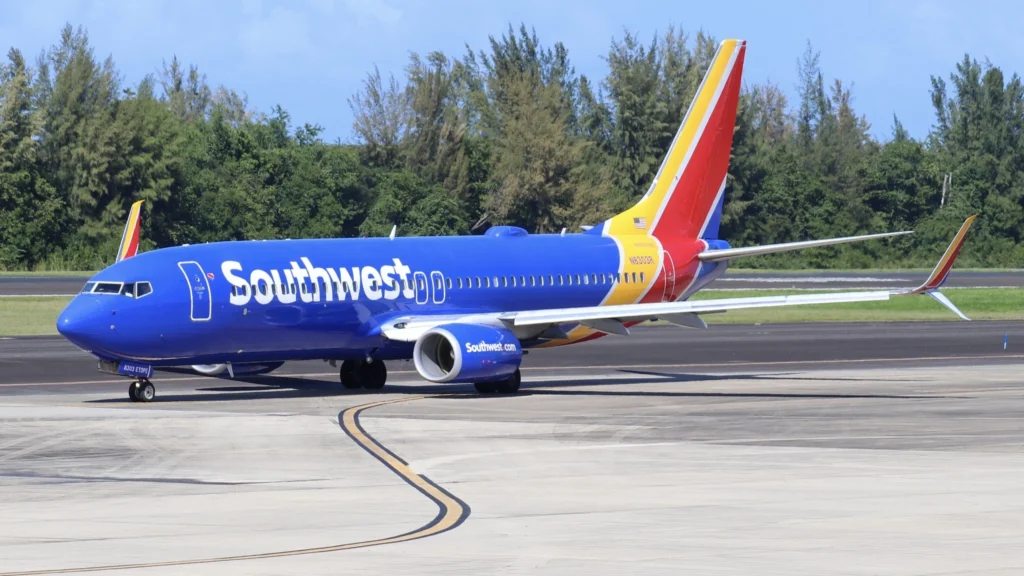
Hydraulic Issue Suspected Aboard Southwest
Southwest spokesperson Lynn Lunsford told local broadcaster KSNV News 3 that the airline was concerned about a possible hydraulic issue.
However, the spokesperson said there were no reports of a fire, distinguishing the initial observations made by pilots from the airline’s account of the incident.
The precise cause of the smoke and reported brake damage was not established in the available information.
A hydraulic fluid leak contacting hot brake components can produce substantial smoke, but the circumstances surrounding this aircraft have not been confirmed as a hydraulic leak or a brake failure.
The Boeing 737 uses brakes on its four main landing gear wheels, while its nose wheels do not have brakes.
The aircraft’s hydraulic systems supply the pressure required for braking, making the main landing gear an important area of attention when smoke or suspected brake damage occurs.
The incident took place during taxiing rather than during the takeoff roll, and the aircraft did not proceed onto the runway.
No passenger injuries were reported in the supplied account, and neither the Federal Aviation Administration (FAA) nor the National Transportation Safety Board (NTSB) had publicly commented at the time of the original report.
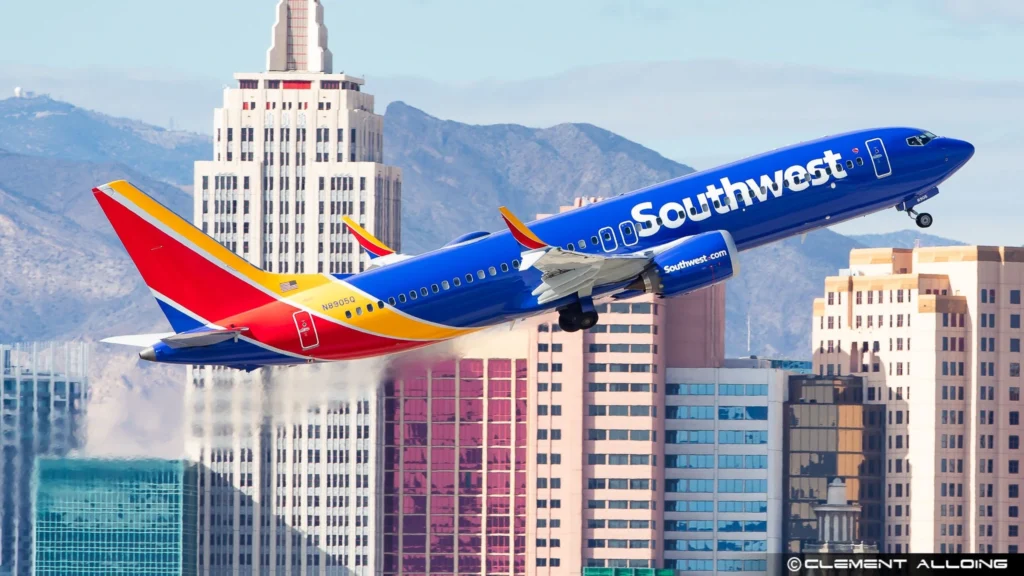
Southwest’s Replacement Departed 4 Hours Late
Southwest arranged another Boeing 737 MAX 8 to operate the delayed service to Chicago Midway.
Flight-tracking data cited in the original report showed that WN759 departed Las Vegas at 4:44 p.m. local time, compared with its scheduled departure at 12:15 p.m.
The replacement aircraft arrived at Chicago Midway at 9:40 p.m., nearly four hours after the scheduled arrival time of 5:45 p.m, Simple Flying noted.
The disruption therefore delayed passengers on the Las Vegas–Chicago route while Southwest dealt with the aircraft involved in the incident.
The Boeing 737 MAX 8 can accommodate up to 175 passengers in Southwest’s configuration, although the airline did not disclose the number of people aboard the affected flight.
The incident adds another operational disruption at Harry Reid International Airport, where Southwest is the leading carrier by passenger volume.
Stay tuned with us. Further, follow us on social media for the latest updates.
Join us on Telegram Group for the Latest Aviation Updates. Subsequently, follow us on Google News
