

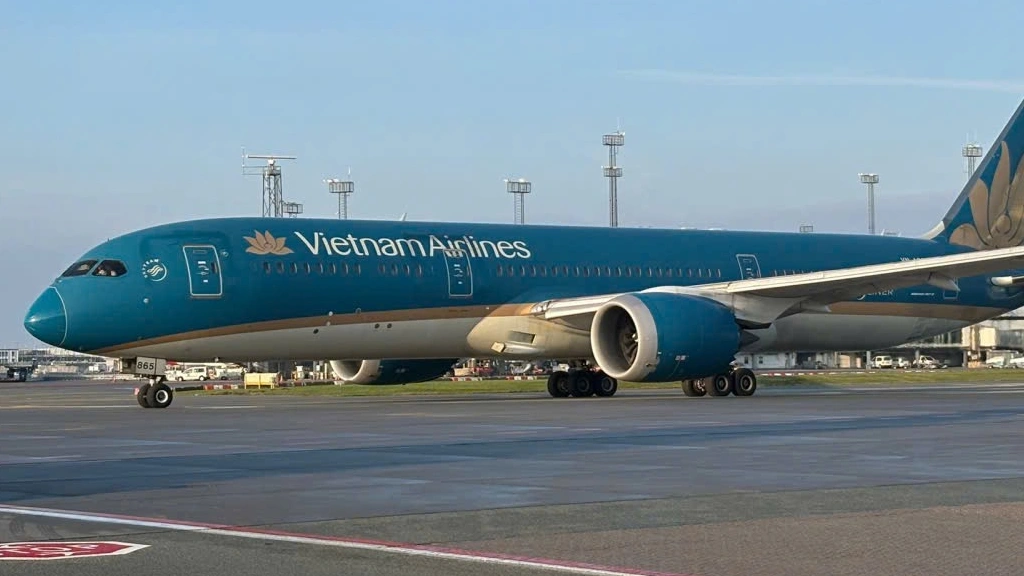
MUNICH— A Vietnam Airlines Boeing 787-9 came dangerously close to overrunning Munich Airport’s runway during takeoff on August 15, after investigators found evidence that the aircraft’s brakes were repeatedly activated during its takeoff roll.
The aircraft eventually became airborne beyond the runway, struck approach lighting and returned to Munich after the crew declared an emergency.
Vietnam Airlines (VN) was operating flight VN34 from Munich Airport (MUC) to Hanoi with 271 passengers and 16 crew members aboard.
No one was injured, but the Boeing 787-9 sustained substantial damage, and Germany’s Federal Bureau of Aircraft Accident Investigation (BFU) has classified the event as an accident while its investigation continues.
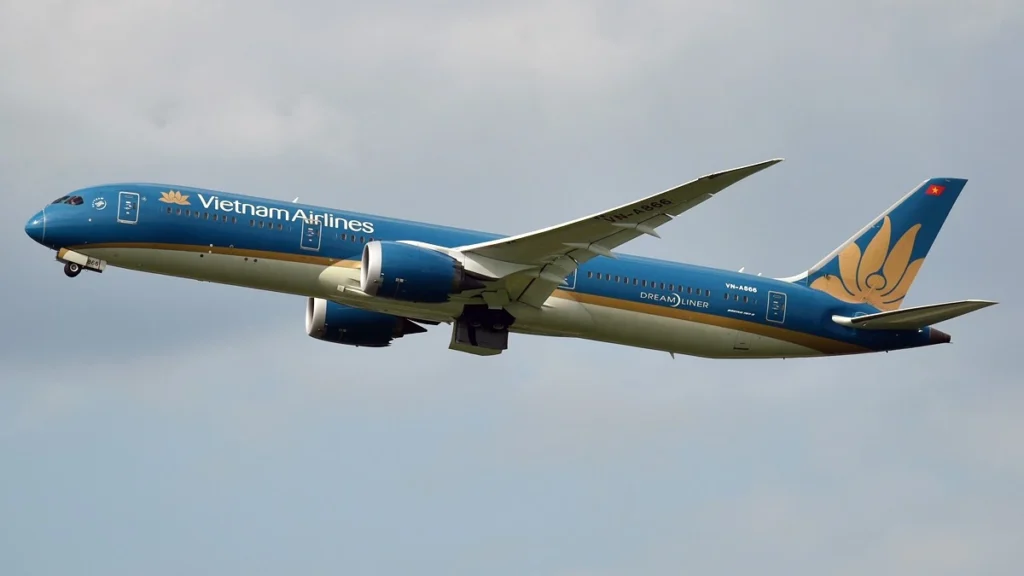
Brakes Activated During Takeoff
The BFU’s preliminary findings provide an unusual explanation for why the widebody failed to accelerate normally despite using Munich’s 4,000-meter (13,123-foot) Runway 26L.
Flight-recorder data showed movements of both brake pedals at the left-hand pilot seat only seconds after the takeoff mode was activated.
Further braking activity occurred during the takeoff roll, with the Brake System Control Unit recording commands of approximately 27% on the left side and 17% on the right.
The aircraft continued moving forward, but its speed remained around 168 knots for approximately 18 seconds, limiting the available runway before rotation.
The aircraft’s calculated rotation speed was 175 knots, yet the crew began rotation at only 163 knots.
The 787 then lifted off from the grass beyond the opposite runway threshold, with its main landing gear and tail striking an approach-light structure during the departure.

Vietnam’s 787 Left Runway
The sequence became particularly critical because the aircraft reached the calculated V1 speed only after becoming airborne.
Its stall-protection system subsequently activated as the aircraft climbed away, while the crew continued the departure and prepared to return to Munich.
After gaining sufficient altitude, the crew returned to the airport and landed on another runway.
The aircraft had sustained damage to its landing gear and rear fuselage, while runway and approach lighting were also damaged during the incident.
The preliminary report does not establish why the brake inputs occurred. Investigators must still determine whether the recorded braking resulted from pilot control inputs, a technical issue, or another factor, meaning the latest findings should not be treated as a final determination of the cause.
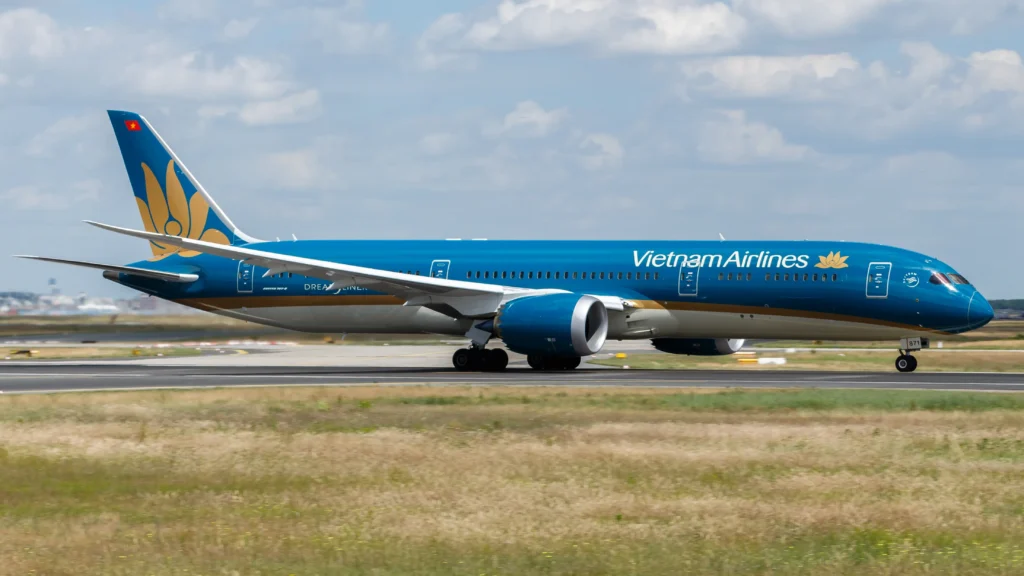
Investigation of VN 34 Continues
The BFU’s findings explain an important part of the aircraft’s poor acceleration, but they do not yet provide a complete explanation for the sequence.
Investigators are continuing to examine the aircraft, flight-recording data and other evidence to establish how the braking commands were generated and why the takeoff continued, OMAAT flagged.
The incident is therefore still under investigation, with the preliminary report providing evidence rather than a final conclusion.
Vietnam Airlines has previously said that the crew followed procedures and safely returned to Munich after the technical problem occurred.
Stay tuned with us. Further, follow us on social media for the latest updates.
Join us on Telegram Group for the Latest Aviation Updates. Subsequently, follow us on Google News
