

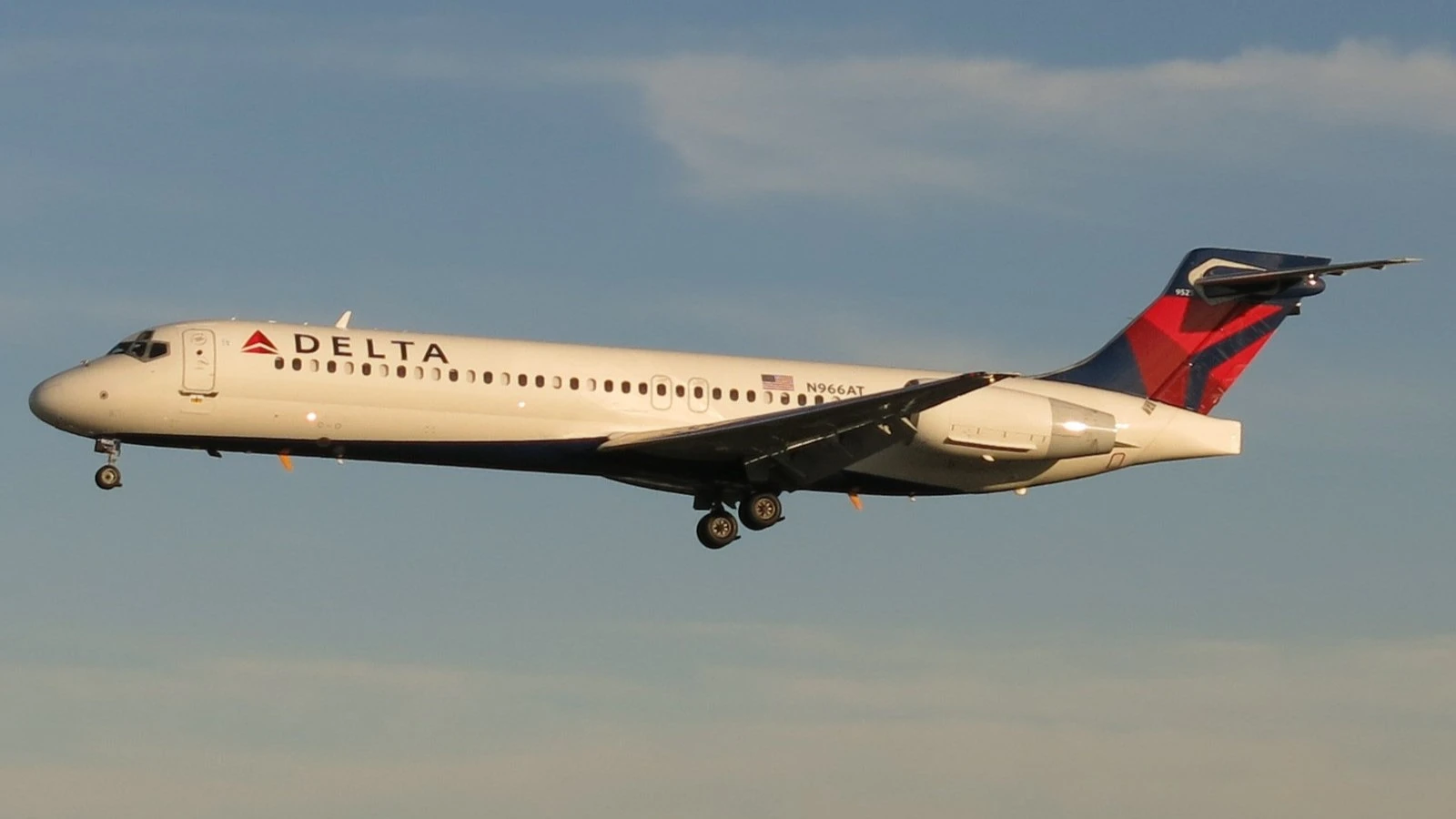
ATLANTA- Delta Air Lines (DL) became the subject of a major passenger injury case after an incident on Flight 1105 between Atlanta (ATL) and Salt Lake City International Airport (SLC).
Atef Bandary was traveling from Buenos Aires (BUE) to Palm Springs International Airport (PSP) with his partner when a dispute over his repeated bathroom trips escalated into a confrontation and restraint by a federal law enforcement officer.
A civil jury later awarded him $7.225 million, but the Ninth Circuit affirmed Delta’s ATSA immunity on September 23, 2026.
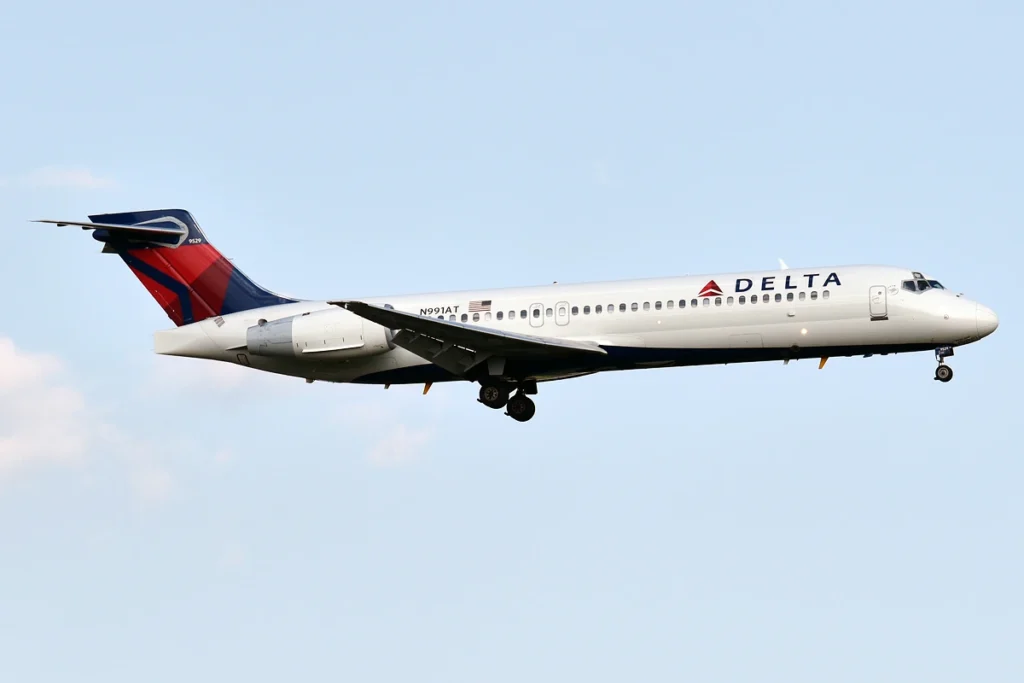
Ninth Circuit Affirms Delta Immunity in Passenger Injury
The US Court of Appeals for the Ninth Circuit ruled 2-1 for Delta Air Lines in Bandary v. Delta Air Lines, Inc., No. 24-7204.
The published opinion affirmed summary judgment for Delta and held, as a matter of first impression in the Ninth Circuit, that immunity under the Aviation and Transportation Security Act (ATSA) can extend beyond a suspicious-activity report to conduct that flows from law enforcement decisions made after the report.
The case began with a 2015 onboard confrontation and later involved both a federal criminal prosecution and a separate civil lawsuit under the Montreal Convention.
The civil jury initially found for Bandary, but the district court later vacated that verdict, granted Delta summary judgment, and concluded that ATSA immunity barred recovery for the injuries at issue. The Ninth Circuit has now affirmed that ruling.
On May 29, 2015, Bandary was traveling on Delta from Atlanta to Salt Lake City as part of his international trip. At the beginning of the three and a half-hour flight, he approached a flight attendant and asked for food to take with his HIV medication.
The first flight attendant told him to return to his seat and wait because she could serve only one person at a time. He then spoke with a second flight attendant, Lucy Cook, who apologized for the service and gave him food and free wine.
The original complaint presented the sequence somewhat differently. Bandary alleged that flight attendants initially refused him food and water, forcing him to take his prescription medication without food or water.
He said that led to diarrhea and created an urgent need to use the lavatory. The later court opinion confirms that he testified his medication caused diarrhea and that he needed to use the bathroom frequently.
During the flight, Bandary repeatedly left his seat, walked through the aisles, visited his partner several rows ahead, used different bathrooms and looked through the mesh curtain toward first class more than once. During one bathroom trip, he photographed two flight attendants. Bandary testified that he took the photograph because he believed they were staring at him and because he intended to file a customer service complaint.
Passengers Reported Behavior They Found Suspicious
Three passengers, including off-duty JetBlue pilot Tim Lunzar, testified at trial that they found Bandary’s behavior concerning or suspicious. Lunzar reported his concerns directly to the flight attendants.
Flight attendant Joy Rodemoyer also learned from two colleagues that passengers in different parts of the aircraft were nervous about Bandary’s behavior and frequent visits to different bathrooms.
Lunzar testified that Bandary paced around the cabin, repeatedly got up from his seat, stared at passengers and appeared to be watching people closely. He described the staring as lasting for extended periods.
One passenger seated near Lunzar also testified that Bandary appeared anxious and seemed interested in identifying people throughout the aircraft.
The captain checked Bandary’s background with Delta personnel on the ground and found nothing noteworthy.
Despite that result, the captain, pilots and Rodemoyer agreed that, with about 45 minutes remaining before landing, Rodemoyer should ask Bandary to stay in his seat for the remainder of the flight.

Bathroom Dispute Escalated
Rodemoyer approached Bandary in the rear galley near the lavatory. According to her testimony, Bandary began screaming, lunged toward her and backed her against a wall. Bandary gave a different account.
He said that when Rodemoyer told him to sit down, he asked to use the restroom and explained that he had diarrhea and an urgent medical need. He also said he had HIV and could not sit down until he used the bathroom.
Bandary’s complaint also alleged that the fasten-seat-belt sign was not illuminated when he was ordered back to his seat and that the flight attendants did not ask whether he had a medical condition or urgent need to use the lavatory. Those points were allegations in the lawsuit rather than findings made by the Ninth Circuit.
The accounts of the physical confrontation also differed. Rodemoyer testified that Bandary screamed and lunged at her. Bandary testified that the flight attendants cornered him at the rear of the plane and caused him to fall on his bottom.
The Ninth Circuit acknowledged the conflicting accounts but concluded that Bandary had not produced sufficient evidence of a bodily injury from that fall to create a triable issue.
Federal Agent Involved
Rodemoyer called the cockpit after the confrontation escalated. The captain reminded her that Special Agent Nicholas Vahe, a federal law enforcement officer traveling on the aircraft, was onboard. Rodemoyer went to get his assistance.
When Vahe arrived at the rear of the aircraft, he heard Bandary screaming. Flight attendant Lucy Cook moved to place plastic handcuffs, also called flex cuffs or “tuff cuffs,” on Bandary. Vahe testified that he saw Bandary swing his hands toward Cook in an attempt to strike her.
Cook testified that Bandary struck her hand hard enough that she thought he might have broken it. Bandary denied striking or attempting to strike Cook.
Vahe then took control of the situation. He placed himself between Cook and Bandary while Rodemoyer applied the flex cuffs. The first set was too tight, so Vahe cut them off Bandary’s wrists and applied a second set. Vahe kept Bandary restrained for the rest of the flight.
Bandary Alleged Injuries and Exposure
Bandary alleged that the restraints caused cuts and bleeding to his arms, hands and wrists. He also alleged a temporarily dislocated left shoulder, as well as neck and shoulder pain from being held with his hands behind his back.
The Ninth Circuit specifically identified wrist injuries and shoulder and neck pain in its discussion of the civil claim.
The complaint also described a separate bathroom-related incident. Bandary alleged that his pants fell to the floor during the struggle and that he was not wearing underwear. He said the restraints left him unable to pull his pants up, exposing him to nearby passengers.
He alleged that he asked flight attendants to pull them up and that they refused for several minutes because he was HIV-positive. A flight attendant eventually pulled his pants up.
Bandary further alleged that he continued to be denied access to the lavatory and had a diarrhea accident in his pants while still onboard. These details came from his civil complaint and were allegations rather than findings adopted by the Ninth Circuit.
What Happened After Landing
After the aircraft reached Salt Lake City, police boarded the plane and removed Bandary. The complaint says he was taken by ambulance to a hospital for a psychological evaluation and was later released.
Bandary alleged that when he returned to the airport, a Delta agent told him he was banned from the airline and refused to refund the unused portion of his and his partner’s tickets.
He also alleged that Delta removed their checked luggage and marked the bags with large black Xs. Bandary and his partner then rented a car and drove about 10 hours to Palm Springs at their own expense.
Criminal Case Ended in Acquittal
Months after the flight, Bandary was indicted in connection with the incident. The complaint said the charges alleged assault of a flight attendant and interference with the duties of the flight crew. Under 49 U.S.C. § 46504, interference with flight crew through assault or intimidation can carry a sentence of up to 20 years in prison.
A federal jury acquitted Bandary on March 10, 2017. The Ninth Circuit’s dissent later noted that the criminal trial lasted nine days.
A KSL report referenced in the original account included footage of police removing Bandary from the aircraft and an interview after his acquittal. The footage did not show the beginning of the confrontation or establish which side initiated the physical encounter.

Bandary’s Civil Claims Included Alleged Discrimination
Bandary filed his civil complaint against Delta on May 26, 2017. The complaint asserted claims for negligent hiring, training and supervision, intentional infliction of emotional distress, assault and battery. It alleged that Delta employees mishandled his medical needs, failed to properly manage the confrontation and improperly restrained him.
The complaint also alleged that Bandary was targeted because he was gay, HIV-positive, a naturalized citizen and had a dark complexion.
It alleged that Delta personnel failed to ask whether he needed medical assistance and that employees later described his appearance and HIV status in terms that Bandary regarded as discriminatory. Those claims were allegations in the lawsuit, and the Ninth Circuit majority stated that it found no evidence that racial animus influenced the flight attendants’ conduct.
The lawsuit further alleged that Delta’s employees lacked adequate training in areas such as racial profiling, sexual-orientation discrimination, HIV transmission, conflict de-escalation, cabin service and the proper use of restraints.
Ninth Circuit Expands the Scope of ATSA Protection
Section 44941(a) of the ATSA protects an airline or airline employee from civil liability for a voluntary disclosure to law enforcement of a suspicious transaction relating to a possible violation of law or regulation, air piracy, a threat to aircraft or passenger safety, or terrorism.
The statute excludes disclosures made with actual knowledge that they are false, inaccurate or misleading, or with reckless disregard for their truth or falsity. The latter exceptions were not at issue in this appeal.
Bandary argued that the statute protects the disclosure itself, not later conduct by airline employees. Delta argued that immunity would be weakened if airline employees could face civil liability for consequences resulting from the law enforcement response they triggered.
The Ninth Circuit majority adopted Delta’s interpretation. It held that ATSA immunity applies not only to the initial suspicious-activity report but also to conduct that flows from law enforcement decisions following the report.
The court said that approach was consistent with the statutory text and purpose and joined the Second and Fifth Circuits, which had reached similar conclusions in Baez v. JetBlue Airways Corp. and Abdallah v. Mesa Air Group, Inc.
Majority Found Suspicious-Activity Requirement
The majority concluded that there was no genuine dispute of material fact over whether Bandary’s conduct was suspicious to a reasonable airline employee.
It pointed to his repeated pacing, multiple bathroom visits, peering into the first-class cabin, photographing flight attendants, and staring at passengers. It also relied on the concerns reported by Lunzar and other passengers and the concerns Rodemoyer received from colleagues.
The court acknowledged that Cook and Rodemoyer had not viewed Bandary as suspicious at certain earlier points in the flight. The majority also noted that the captain’s background check found nothing noteworthy.
It nevertheless concluded that the overall record did not create a material factual dispute about whether Rodemoyer had a reasonable basis to report potentially suspicious behavior to law enforcement.
The majority separately rejected the argument that Delta alone caused Bandary’s injuries. Agent Vahe testified that he personally assessed the scene before intervening, that the flight attendants were there to assist him, and that he effectively had Bandary in his custody after his intervention.
The court therefore concluded that the injuries after that point flowed from the law enforcement response.
The court also held that Bandary could not establish a qualifying bodily injury before Vahe arrived. His only claimed pre-intervention physical harm was that his bottom hurt after the alleged fall, and the court found that testimony insufficient to create a triable issue.
Final Effect of September 2026 Ruling
The Ninth Circuit affirmed summary judgment for Delta. The decision leaves the $7.225 million jury award without legal effect and does not require a new civil trial.
The ruling also establishes the Ninth Circuit’s position that ATSA immunity can extend to conduct flowing from law enforcement decisions after an airline makes a qualifying suspicious-activity disclosure.
The majority’s ruling turned on the specific record before it, including the evidence of reported passenger concerns, Agent Vahe’s intervention and the absence of a demonstrated bodily injury before his involvement.
View from the Wing previously covered Bandary’s case and the dispute over whether he would receive another civil trial.
Stay tuned with us. Further, follow us on social media for the latest updates.
Join us on Telegram Group for the Latest Aviation Updates. Subsequently, follow us on Google News
