

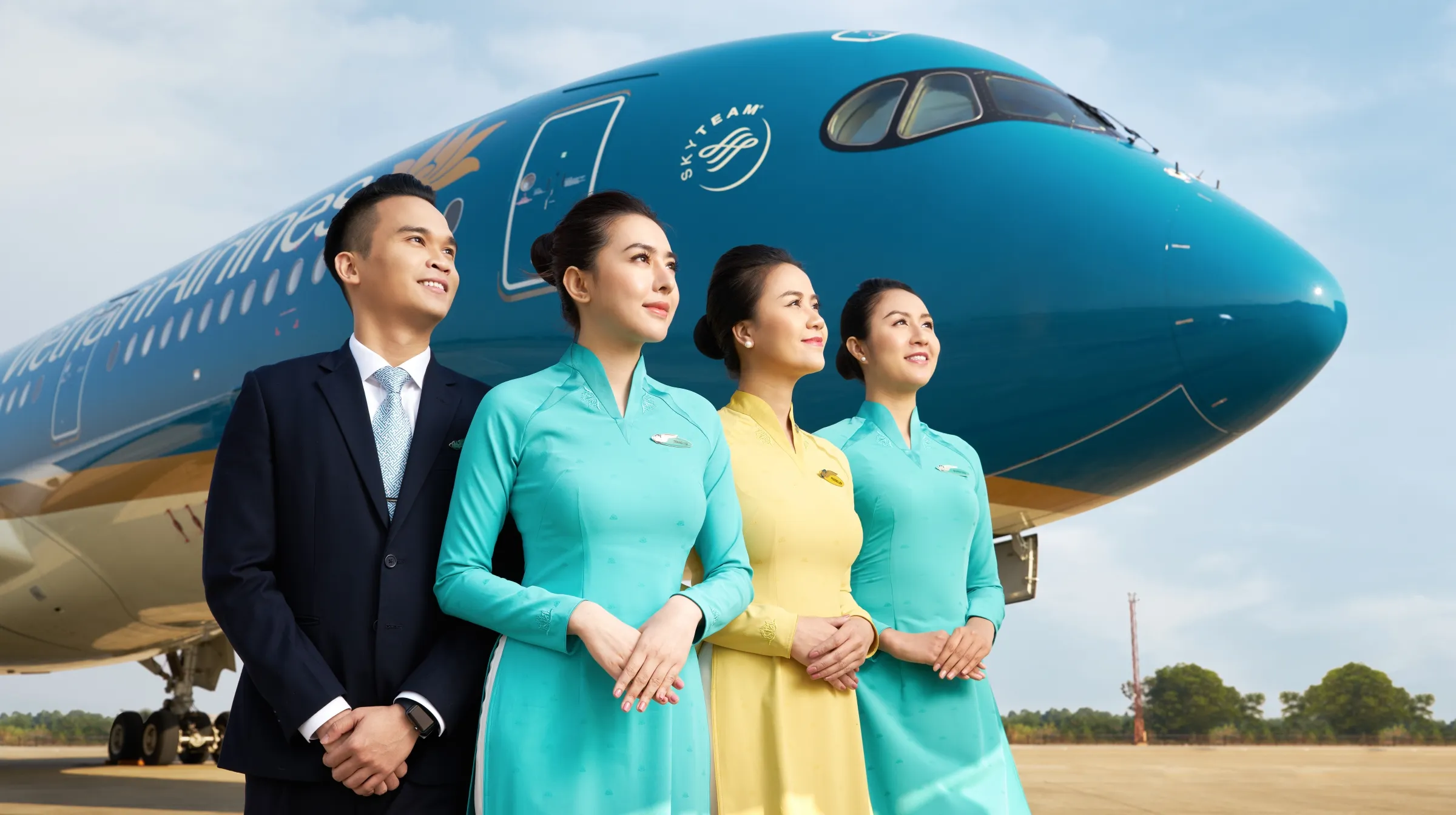
Vietnam Airlines (VN) remains one of the most recognisable airlines in Southeast Asia and the national flag carrier of Vietnam. With a growing international network and a large domestic operation, the airline continues to offer cabin crew a chance to build a career in an industry that combines travel, customer service and aviation.
For anyone considering becoming a flight attendant in Vietnam, salary is naturally one of the biggest considerations. Vietnam Airlines cabin crew earnings depend on experience, seniority, flying hours, route assignments and allowances. The overall package can become considerably more attractive as a crew member gains experience and moves into senior positions.
The airline is also expanding its workforce in 2026, creating more opportunities for people looking to enter the profession. Alongside salary, staff travel, training, career progression and international exposure make the role appealing to candidates who are comfortable with an active and demanding working environment.

Vietnam Airlines Cabin Crew Salary
The average Vietnam Airlines cabin crew salary in 2026 is estimated at around VND 32 million to VND 40 million per month, equivalent to approximately USD 1,200 to USD 1,500 per month. The actual amount can vary considerably depending on flying activity, experience, position, and additional allowances.
A newly recruited cabin crew member generally starts towards the lower end of the range. During the early stages of the career, the focus is largely on completing training, gaining operational experience and becoming familiar with the airline’s service and safety procedures. As the amount of flying experience increases, so does the potential for higher earnings.
Experienced cabin crew members can earn around VND 40 million to VND 50 million per month, or approximately USD 1,500 to USD 1,900 per month, particularly when flying duties and other allowances are taken into account. International assignments can also provide additional payments depending on the nature and duration of the duty.
Senior cabin crew members and those taking on leadership responsibilities can earn towards the upper end of the salary scale. These employees are responsible not only for passenger service but also for supervising other crew members, maintaining onboard standards and assisting with operational situations.
Salary is therefore not simply a fixed figure paid every month. The amount received can change according to the roster and the number and type of flights operated. A month containing more international flying or additional duties can result in a higher overall income.
ALSO READ: Riyadh Air Cabin Crew Salary in 2026
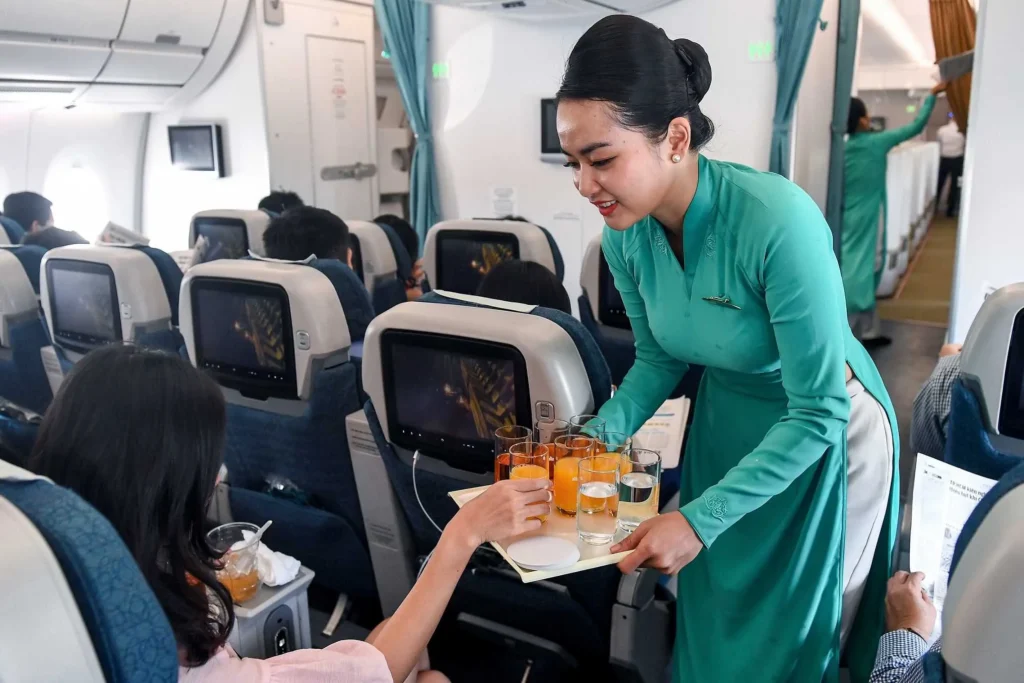
Benefits of Working as Vietnam Airlines Cabin Crew
Vietnam Airlines cabin crew are entitled to the following benefits.
- Competitive salary and allowances – Cabin crew receive a combination of basic pay and additional payments connected with their flying duties, allowing total earnings to rise with experience and activity.
- Staff travel privileges – Employees can benefit from discounted or preferential travel arrangements, which is particularly useful for cabin crew who enjoy exploring new destinations during their time off.
- International exposure – Vietnam Airlines operates flights to destinations across Asia and other international markets, giving cabin crew regular exposure to different cultures and passenger groups.
- Training and development – New employees undergo professional training covering safety, emergency procedures, service standards, security and other essential aspects of cabin crew work.
- Career progression – Cabin crew can progress into more senior onboard positions as they gain experience and demonstrate the ability to take responsibility.
- Professional experience – Working for a major national airline provides valuable experience in aviation, hospitality, communication and international customer service.
- Uniform and professional standards – Cabin crew receive the training and equipment needed to represent the airline professionally while working onboard.
- Long-term career opportunities – Employees who perform well can continue developing within the airline rather than treating cabin crew work simply as a short-term job.

Requirements to Become Vietnam Airlines Cabin Crew
Vietnam Airlines cabin crew must fulfil the following requirements.
- Minimum Age – Applicants must be at least 21 years old.
- Education – Completion of high school or equivalent is required.
- Height and Physical Fitness – Candidates must meet airline standards for height and physical ability to reach safety equipment and perform duties.
- Language Proficiency – Fluency in Vietnamese is essential; good English skills are required for international flights.
- Appearance – Professional grooming is mandatory, including no visible tattoos or piercings.
- Customer Service Skills – Strong interpersonal and communication skills are necessary to assist passengers effectively.
- Medical Fitness – Candidates must pass a medical examination to ensure physical and mental readiness for the role.
- Legal Eligibility – Applicants must have the legal right to work in Vietnam and meet all employment regulations.
ALSO READ: Bangkok Airways Cabin Crew Salary in 2026

Recruitment Process for Vietnam Airlines Cabin Crew
Vietnam Airlines’ hiring process for cabin crew consists of the following steps.
- Online application – Candidates begin by submitting their personal information, education details and other required documents through the airline’s recruitment system.
- Application screening – Vietnam Airlines checks applicants against the basic age, education, physical and language requirements before creating a shortlist.
- Initial assessment – Shortlisted candidates may undergo checks involving appearance, height, communication ability and general suitability for cabin crew duties.
- Interview – Candidates who progress are assessed on their personality, confidence, English communication, customer-service approach and ability to work in a team.
- Further assessments – Depending on the recruitment campaign, applicants may complete additional language, behavioural or practical assessments.
- Medical examination – Successful candidates must satisfy the relevant aviation medical and fitness requirements before employment is confirmed.
- Training and induction – Selected recruits complete intensive cabin crew training covering safety, emergency procedures, service, security and onboard operations before beginning their flying careers.
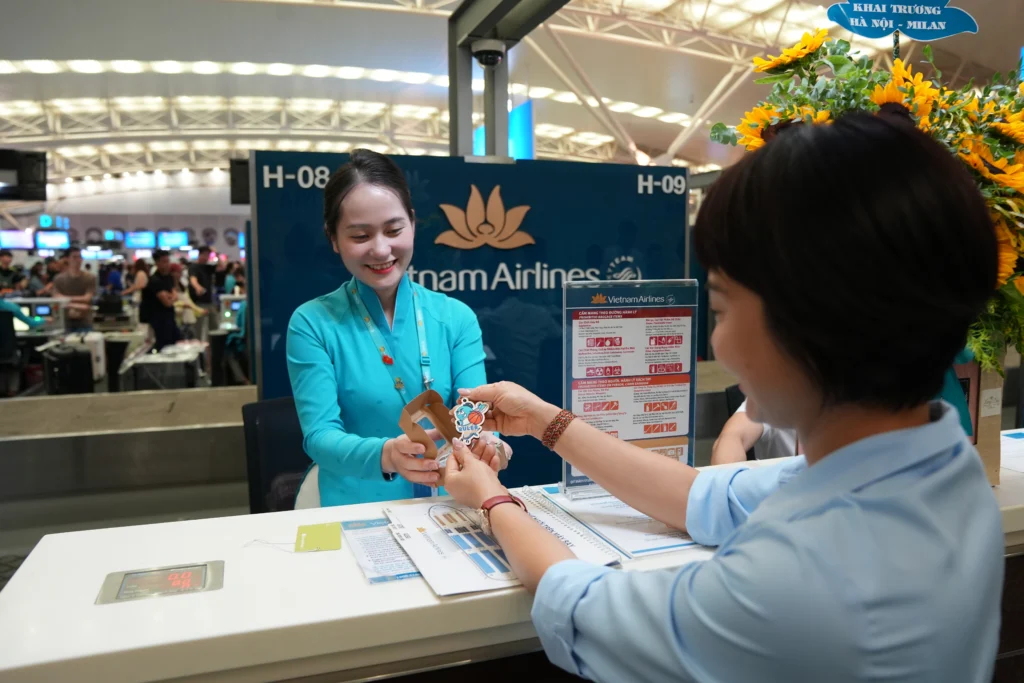
Bottom Line
Vietnam Airlines cabin crew can expect estimated earnings of around VND 32 million to VND 50 million per month, or approximately USD 1,200 to USD 1,900, depending on experience, seniority, flying duties and allowances. New recruits normally start lower on the scale, while experienced and senior crew members have greater earning potential.
The job offers considerably more than a monthly salary. Staff travel, structured training, international exposure and opportunities for career progression make Vietnam Airlines an attractive option for people interested in aviation and customer service.
At the same time, cabin crew work should not be mistaken for an easy travel job. Long flights, changing schedules, time away from home and the responsibility of passenger safety are all part of the profession. For candidates who enjoy working with people and can handle an unpredictable routine, however, Vietnam Airlines can provide a solid long-term aviation career.
FAQs
Vietnam Airlines cabin crew can earn approximately VND 32 million to VND 50 million per month, equivalent to around USD 1,200 to USD 1,900, depending on experience, seniority, flying hours, and allowances.
Yes. Successful applicants undergo specialised cabin crew training before beginning operational flying. The training covers areas such as aircraft safety, emergency procedures, security, passenger service and onboard responsibilities.
Yes. Cabin crew can progress as they gain experience and demonstrate strong operational and leadership abilities. Senior positions involve additional responsibility for supervising other crew members and maintaining safety and service standards.
Stay tuned with us. Further, follow us on social media for the latest updates.
Join us on Telegram Group for the Latest Aviation Updates. Subsequently, follow us on Google News
