

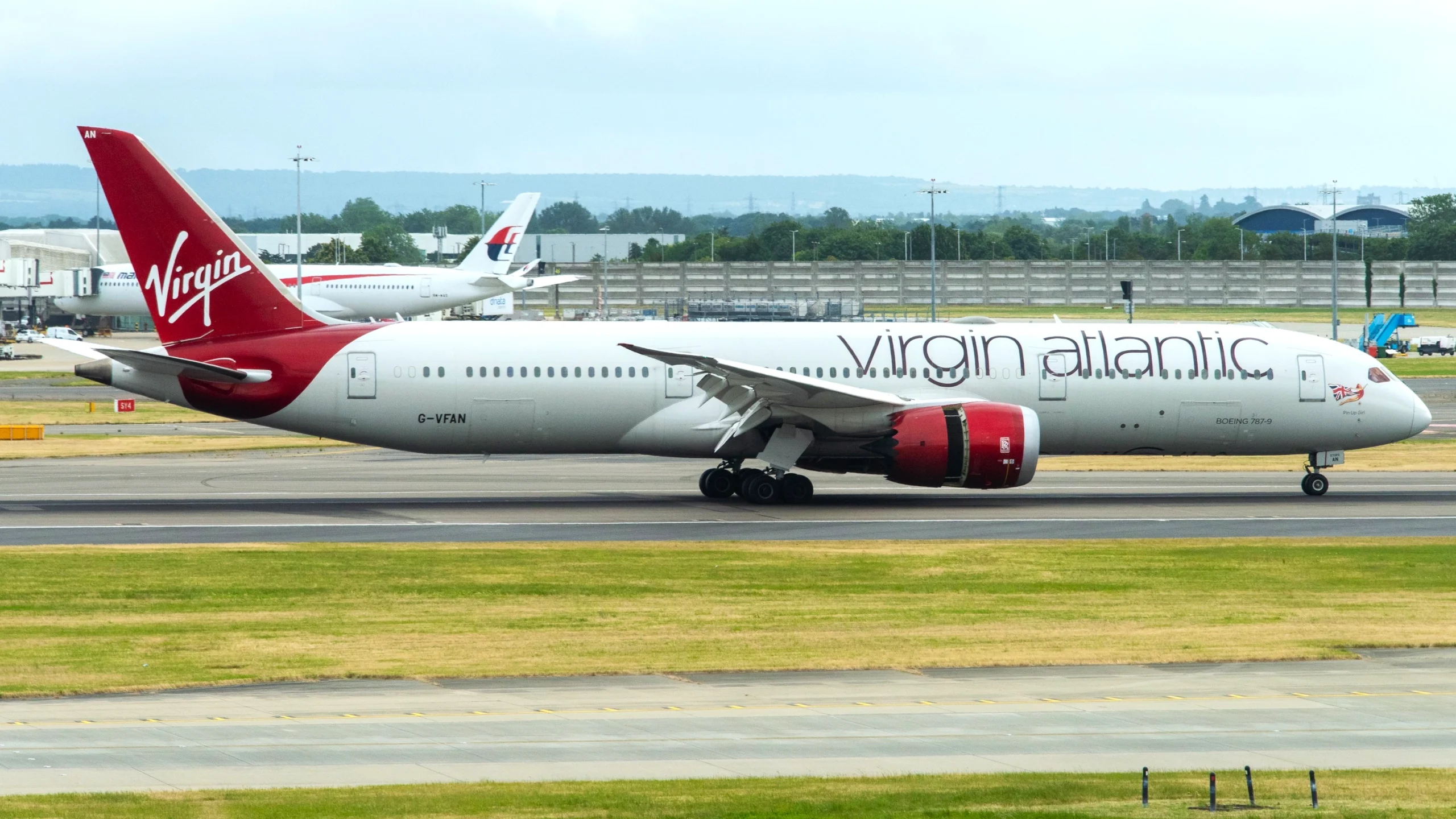
CRAWLEY- Virgin Atlantic (VS) will transfer 2 Boeing 787-9 Dreamliners to LOT Polish Airlines (LO) in 2027, reducing its 787-9 fleet while strengthening LOT’s long-haul capacity. The aircraft will join LOT’s existing Boeing 787 fleet at Warsaw Chopin Airport (WAW).
The transfer supports Virgin Atlantic’s shift toward Airbus A330-900neos and A350-1000s, while LOT uses additional used Dreamliners to expand long-haul capacity without waiting for new-build aircraft. London Heathrow Airport (LHR) remains central to Virgin Atlantic’s long-haul network and premium strategy.
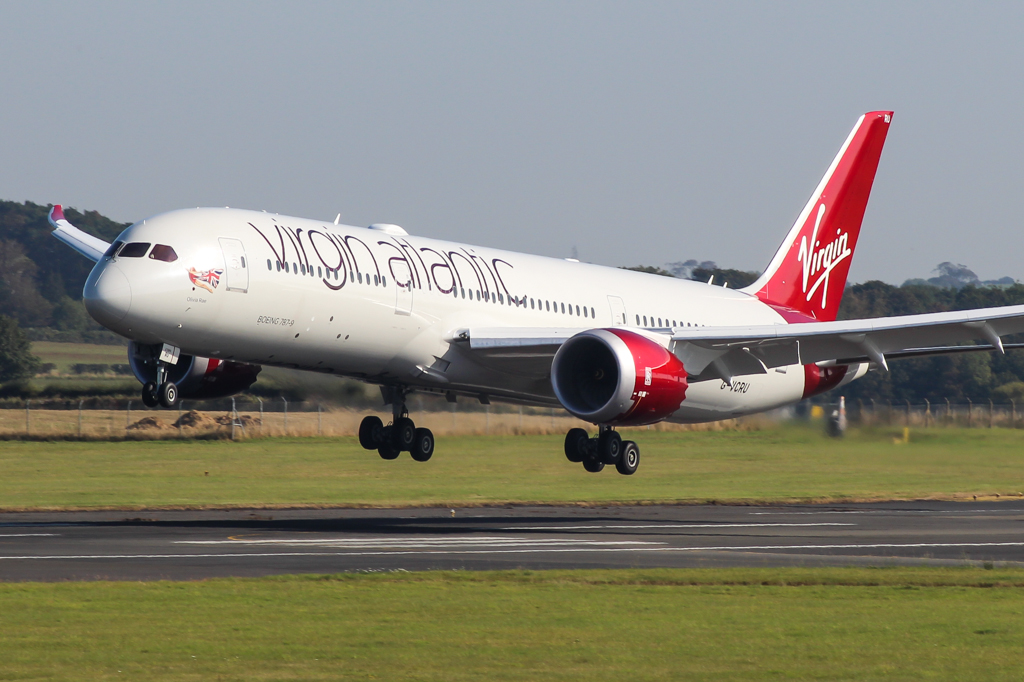
Virgin Atlantic Transfers 787-9 to LOT
The planned transfer is part of Virgin Atlantic’s wider fleet reshuffle. The airline is reducing its Boeing 787-9 fleet from 17 aircraft to 14 as it places greater emphasis on Airbus A330-900neos and A350-1000s.
Virgin Atlantic previously outlined a 2028 fleet plan consisting of 19 Airbus A330-900s, 12 Airbus A350-1000s and 14 Boeing 787-9s. The airline describes the planned fleet as 45 next-generation aircraft with an average age of less than seven years.
The 787 fleet reduction does not mean the aircraft type is being phased out. Virgin Atlantic plans to retain 14 787-9s and redesign their cabins from 2028, with the refurbishment program scheduled to continue through 2030.
Seven of the continuing Dreamliners were also planned for long-term lease extensions as part of the fleet strategy.
The broader transition gives Airbus a larger share of Virgin Atlantic’s widebody fleet. The A330neo and A350-1000 are becoming increasingly important as the airline combines fleet renewal with a stronger focus on premium long-haul demand.
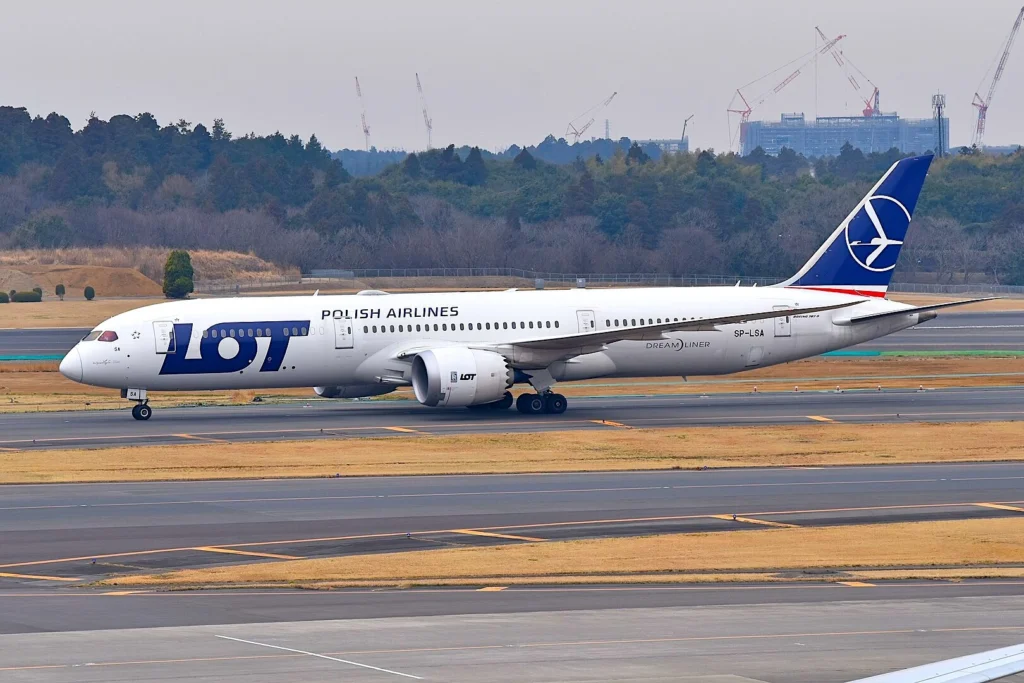
LOT Adds 2 More Dreamliners From Virgin Atlantic
LOT will receive 2 used Boeing 787-9s from Virgin Atlantic in 2027. LOT Chief Executive Michał Fijoł confirmed that the additional Dreamliners are expected during the first half of the year.
Recent reporting also states that LOT expects its widebody fleet to reach 19 aircraft at the peak of the following season.
LOT already operates eight Boeing 787-8s and seven Boeing 787-9s. The two Virgin Atlantic aircraft will therefore expand an established Dreamliner fleet rather than introduce a new aircraft family.
The exact airframes have not yet been identified publicly by either airline. As a result, their registrations, individual aircraft histories and final delivery sequence remain undisclosed.
The aircraft are expected to receive refreshed interiors rather than a complete cabin reconfiguration.
That distinction is important because a limited refurbishment should require less engineering and certification work than a major change to the aircraft’s operating configuration. LOT can therefore use aircraft that already have a cabin layout and long-haul role that are relatively close to its intended operation.
According to reporting covered by Simple Flying, the transaction forms part of the wider movement of used Dreamliners between airlines as carriers adjust their fleets and delivery schedules.
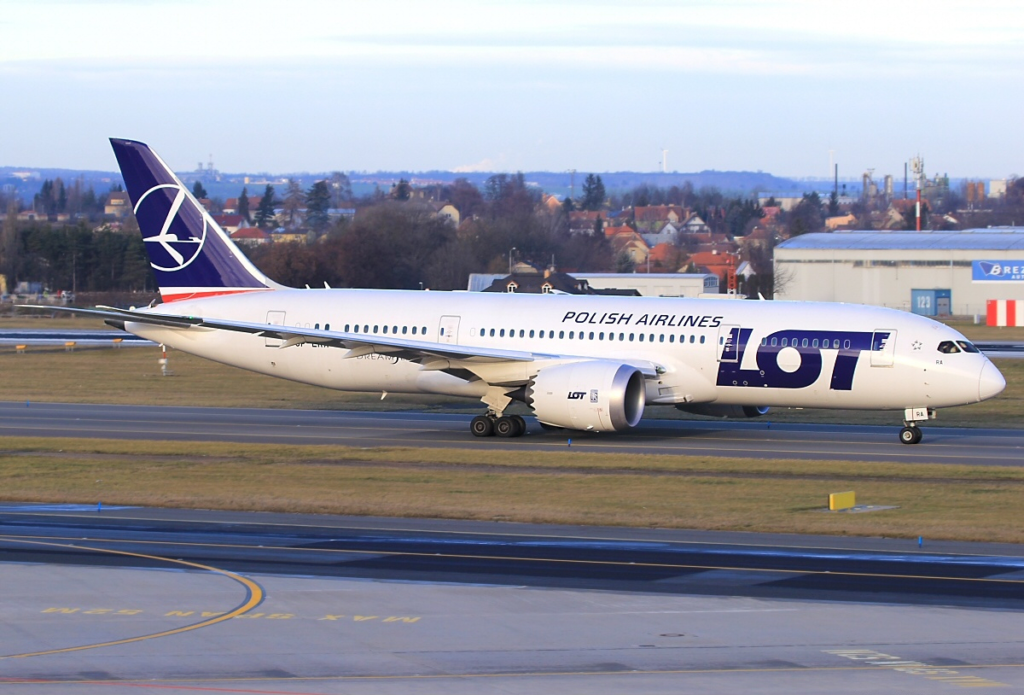
Used 787-9s Give LOT a Faster Capacity Option
LOT’s strategy is based partly on acquiring midlife widebody aircraft rather than relying exclusively on new aircraft deliveries. Used 787-9s can provide additional long-haul capacity more quickly and at a lower acquisition cost than new aircraft.
This approach is particularly relevant while manufacturers face persistent delivery constraints. Instead of waiting for new aircraft to arrive, LOT can add established Dreamliners and use the type across its existing long-haul network.
LOT’s wider fleet expansion also includes two Boeing 787 aircraft from Thai Airways. Together with the two former Virgin Atlantic aircraft, those additions are intended to support further growth in the carrier’s long-haul operation.
Recent reporting also indicates that LOT plans to operate two Boeing 777s on a temporary wet-lease basis during the peak winter period. Those aircraft are intended to provide seasonal capacity rather than become permanent additions to the fleet.
The scale of the expansion is significant for LOT because the airline has a much smaller widebody fleet than its overall aircraft count.
The supplied fleet data put LOT at 94 aircraft, with only 15 widebody aircraft at the time referenced in the source material. The additional 787s therefore represent a meaningful increase in long-haul capacity.
Virgin Atlantic Places Greater Emphasis on A330neo
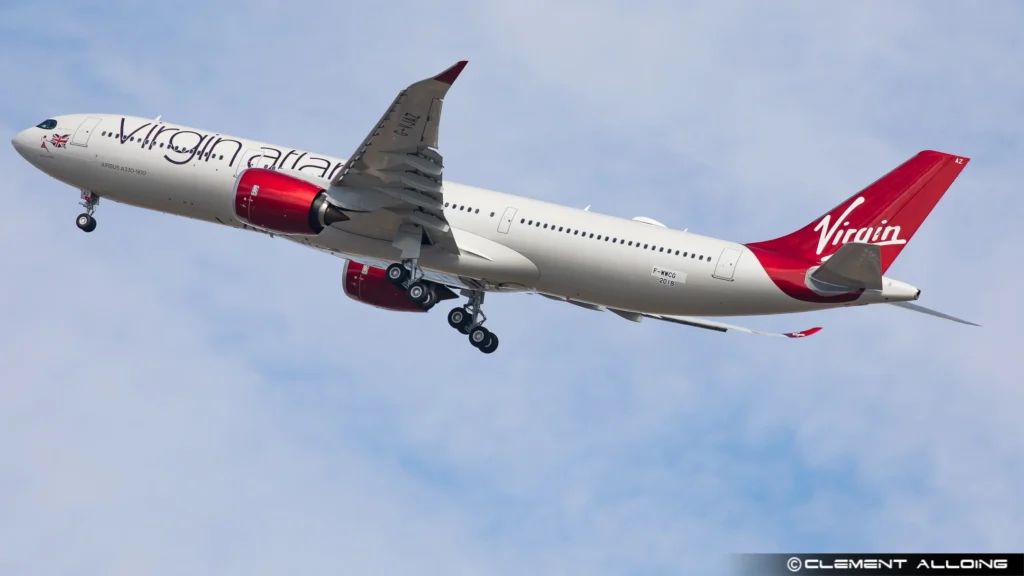
Virgin Atlantic’s move away from some 787-9 capacity is closely linked to the growing role of the Airbus A330-900neo.
The airline has positioned the A330neo as an important aircraft for premium-heavy long-haul operations, particularly on markets where premium demand is strong. New York City is one example of the type of high-yield transatlantic market where the airline’s premium strategy is relevant.
Virgin Atlantic’s current A330neo plans include two different premium cabin configurations. Ten A330neos scheduled for delivery from the third quarter of 2026 are planned with 48 Upper Class seats, 56 Premium seats and 128 Economy seats.
The redesigned Boeing 787-9 will use a different premium-heavy layout. Virgin Atlantic says the refreshed 787-9 will feature 44 Upper Class seats and 56 Premium seats, compared with 31 Upper Class and 35 Premium seats in the existing configuration.
The aircraft will also receive the Retreat Suite for the first time, with eight Retreat Suite seats within each Upper Class cabin.
This distinction explains the different seat counts associated with the two aircraft programs. The 44 Upper Class and 56 Premium figures apply to the redesigned 787-9, while the newer premium-heavy A330neo configuration uses 48 Upper Class and 56 Premium seats.
Retreat Suite
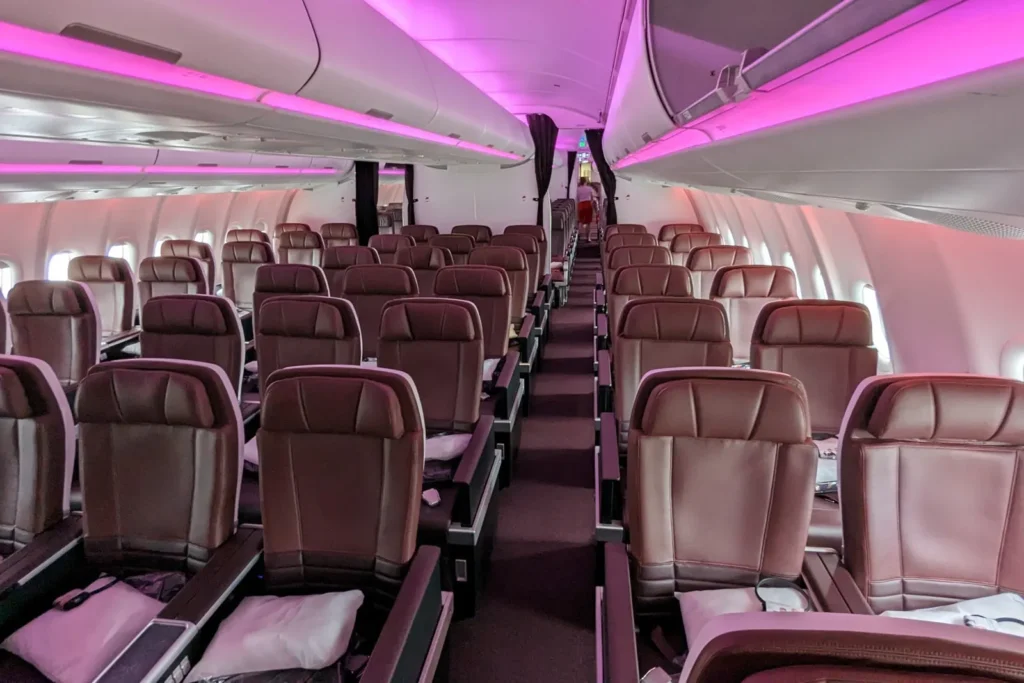
The A330neo has helped Virgin Atlantic develop a distinctive premium proposition through its Retreat Suite and Upper Class social space.
The Retreat Suite is designed as a larger private space within the Upper Class cabin. Virgin Atlantic describes it as including a 6-foot-7-inch direct seat that converts into a fully flat bed, a 27-inch touchscreen, wireless charging and Bluetooth connectivity. An ottoman doubles as an additional seat, allowing up to four people to dine, work or spend time together in the suite.
Virgin Atlantic also says additional Retreat Suites will be introduced on the premium-heavy A330neo aircraft. Its latest plan calls for six Retreat Suites per aircraft, compared with the two-suite arrangement used when the A330neo product was originally introduced.
The A330neo also features an Upper Class social space. The cabin concept is designed to give passengers a dedicated area to interact outside their seats, supporting Virgin Atlantic’s focus on an experience that extends beyond the individual seat.
Virgin Atlantic’s Fleet Data Shows the Transition Clearly
The fleet figures in the original source show how much younger Airbus aircraft have become within Virgin Atlantic’s fleet.
| Aircraft type | In service | Parked | Total | Average age |
|---|---|---|---|---|
| Airbus A330 | 14 | 0 | 14 | 4 years |
| Airbus A350 | 12 | 0 | 12 | 5.7 years |
| Boeing 787-9 | 15 | 2 | 17 | 10.5 years |
| Total | 41 | 2 | 43 | 8.4 years |
The figures show a clear age gap between Virgin Atlantic’s Airbus widebody aircraft and its Boeing 787 fleet.
The 787-9s have an average age of 10.5 years in the supplied data, compared with 4 years for the A330 fleet and 5.7 years for the A350 fleet.
This helps explain why Virgin Atlantic is reallocating some of its older 787 capacity while adding more A330neos and maintaining its newer A350-1000 fleet.
Transfer for Both Airlines
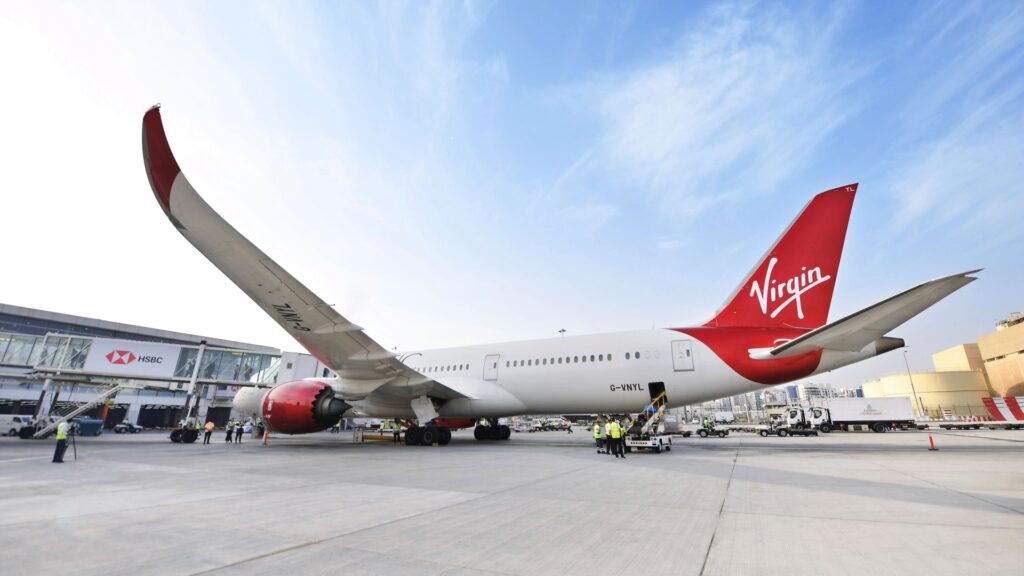
For Virgin Atlantic, the two-aircraft transfer is a relatively small fleet change with a clear strategic purpose. It moves the airline toward its planned 14-aircraft 787-9 fleet and supports greater reliance on the A330neo and A350-1000.
For LOT, the same transaction has the opposite effect. The airline gains two additional long-haul aircraft and expands its Dreamliner fleet without waiting for a new production aircraft to be built and delivered.
The two strategies therefore complement each other. Virgin Atlantic is concentrating its future fleet around newer Airbus widebodies and premium-focused configurations, while LOT is using available used Boeing 787-9s to accelerate long-haul growth.
2027 Transfer Has Several Open Details
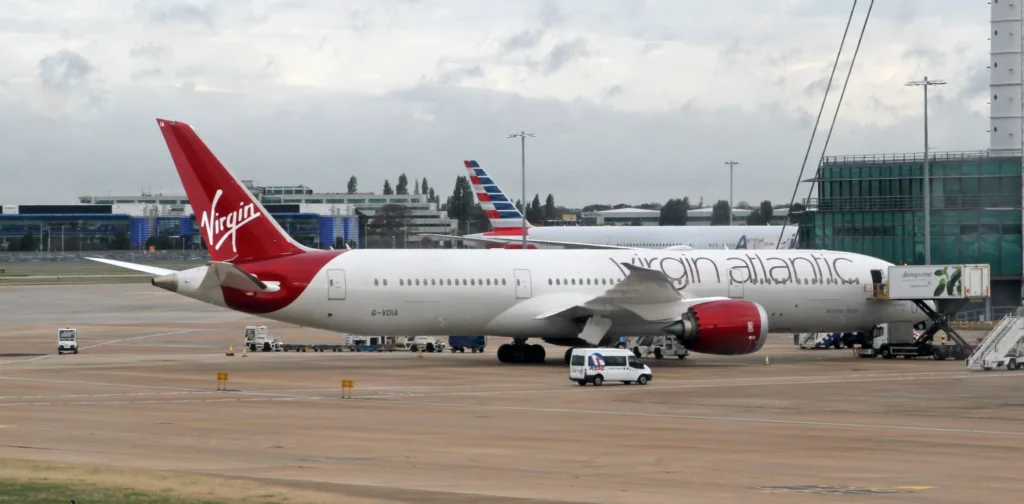
The transaction is planned for 2027, but several operational details remain unconfirmed. The airlines have not publicly identified the exact Boeing 787-9 registrations involved, and the final delivery sequence has not been disclosed.
LOT’s cabin refresh plan is clearer. The aircraft are expected to receive interior updates without a full reconfiguration, which should help shorten the process required to place them into service.
Further announcements are expected to clarify the individual aircraft involved and their eventual deployment within LOT’s long-haul network.
Stay tuned with us. Further, follow us on social media for the latest updates.
Join us on Telegram Group for the Latest Aviation Updates. Subsequently, follow us on Google News
