

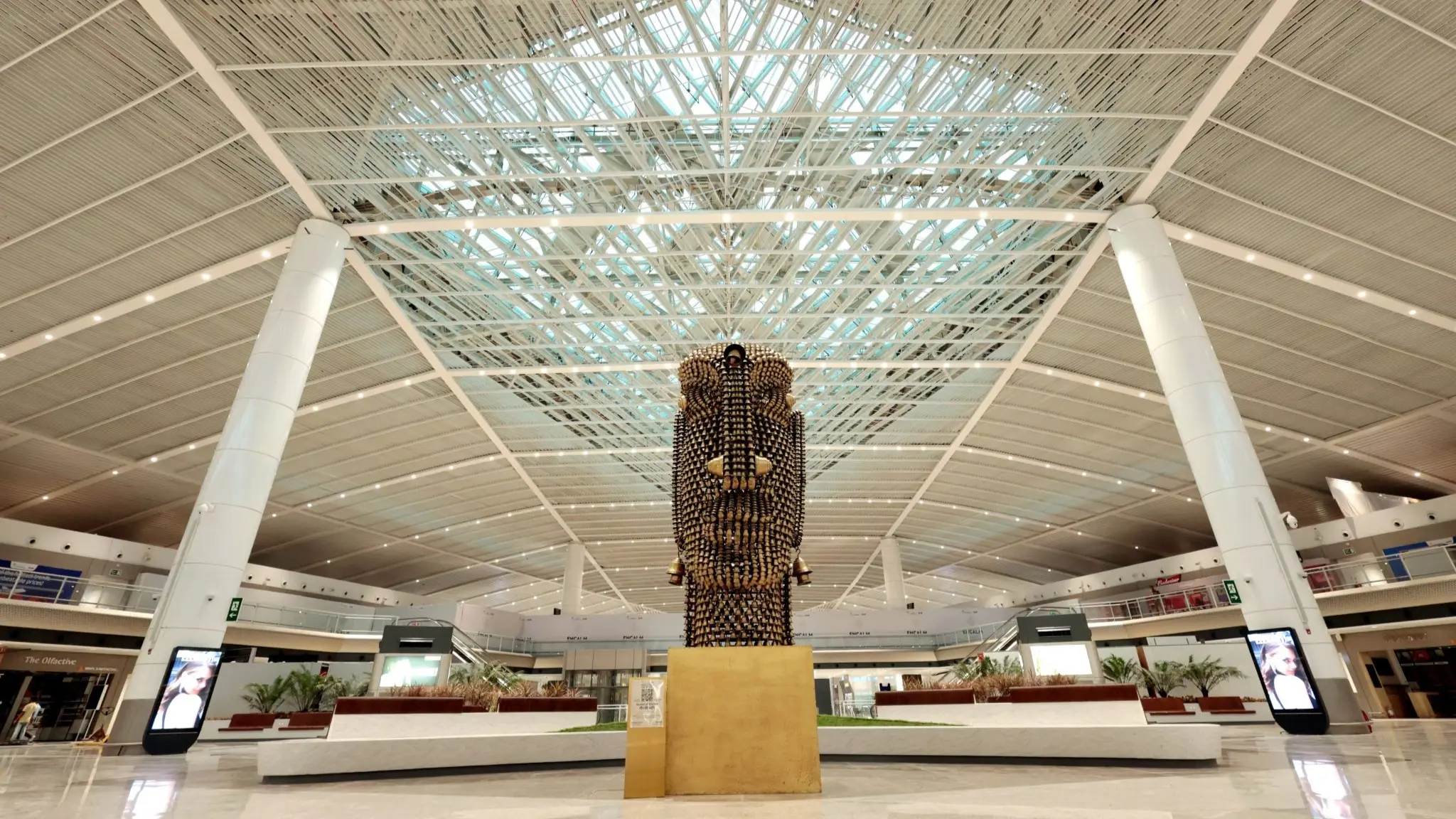
NEW DELHI— GMR Airports is preparing to invest up to ₹19,400 crore ($2 billion) over the next five to seven years to expand and modernize its facilities at New Delhi and Hyderabad.
The airport operator expects the projects to strengthen capacity as passenger demand rises across India, where IndiGo (6E) and Air India (AI) are among the dominant carriers.
The planned investment will focus on Indira Gandhi International Airport, New Delhi (DEL), and Rajiv Gandhi International Airport, Hyderabad (HYD).
GMR Airports executive director for finance and strategy Saurabh Chawla said the projects reflect the company’s confidence in India’s long-term aviation growth and its decision to concentrate on airport infrastructure rather than entering the airline business.
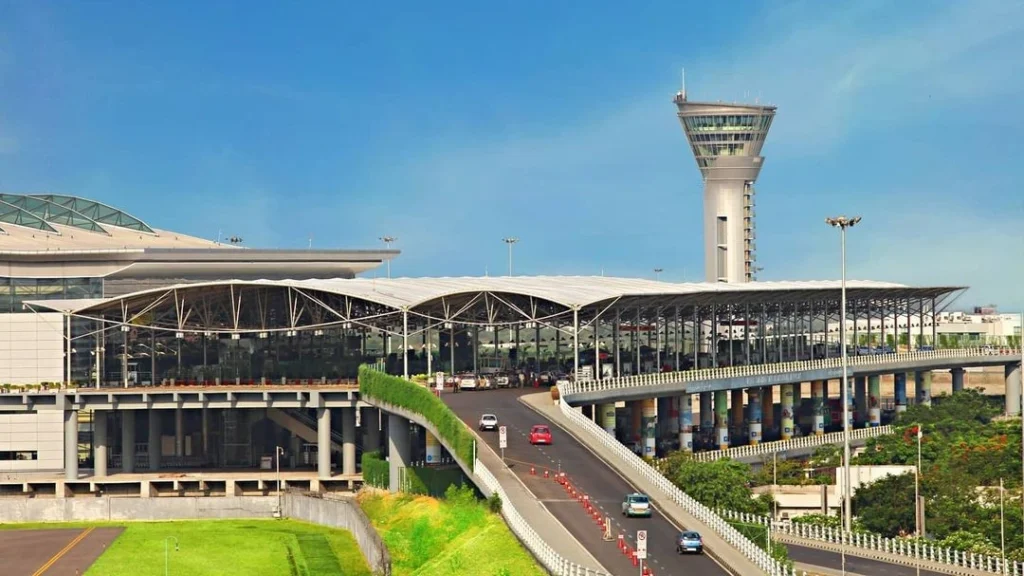
Delhi Hyderabad Airport Expansion Plan
GMR Airports has allocated about ₹13,800 crore for Hyderabad and up to ₹5,600 crore for New Delhi. The investments will be funded through a combination of debt and equity raised by the respective airport ventures rather than directly by GMR Airports, the company’s holding entity.
The Hyderabad project represents the larger share of the planned spending and is designed to support substantial passenger growth.
Once the planned upgrades are completed, the airport is expected to handle around 80 million passengers annually, compared with its current capacity of roughly 34 million.
At New Delhi, GMR is continuing efforts to increase capacity and modernize airport infrastructure as international and domestic traffic expands.
The company has also already converted Pier C at Terminal 3 from domestic to international operations, raising international terminal capacity to about 32 million passengers, Bloomberg reported.
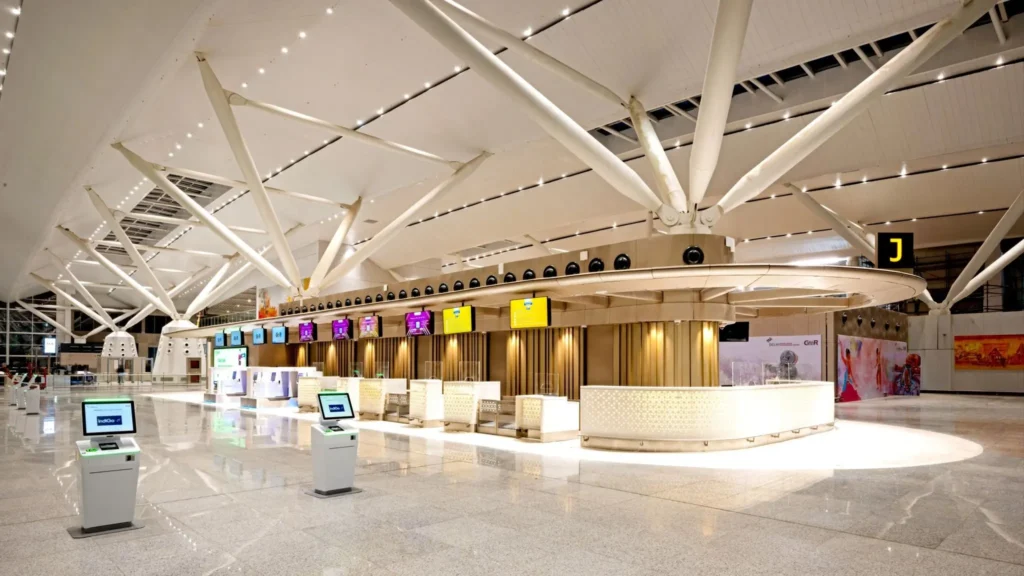
India Aviation Growth Outlook Strengthens Further
GMR’s expansion comes as India prepares for a major increase in air travel.
Government projections have indicated that passenger traffic could rise six-fold to approximately 1.1 billion passengers by 2040, creating significant pressure on airports to expand terminals, runways and supporting infrastructure.
India’s commercial aircraft fleet is also expected to grow substantially over the same period.
Government estimates have projected a requirement for more than 2,350 aircraft by 2040, compared with around 400 aircraft in the earlier baseline used for the long-term aviation outlook.
GMR currently operates a large airport portfolio in India and has also expanded its presence internationally.
The company recently took over operations at Nagpur Airport, where it has separately announced a phased modernization strategy aimed at increasing long-term passenger capacity and developing cargo and aviation-related infrastructure.
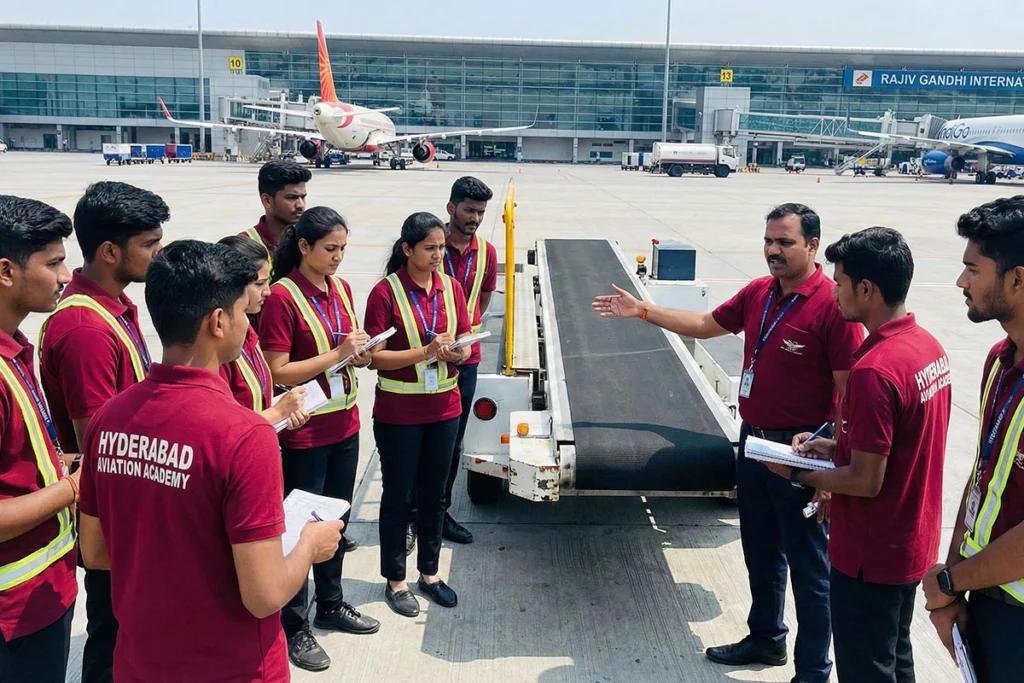
GMR Growth Strategy Takes Shape
The Delhi and Hyderabad projects could form only part of GMR’s broader airport expansion strategy.
Chawla said investment plans for Nagpur are under discussion, while the company also intends to participate in future airport privatization opportunities offered by the Indian government.
GMR Airports has indicated that it does not plan to enter the airline sector, even if India changes regulations to allow airport operators to own or operate airlines.
Instead, the group intends to remain focused on airports and related businesses such as aircraft maintenance, commercial development and real estate around aviation facilities.
The strategy contrasts with the wider ambitions of some major Indian airport groups, including Adani Airports, which has outlined a much larger investment program across its airport network.
For GMR, the priority remains expanding airport capacity and preparing its facilities for the expected rise in Indian air travel.
Stay tuned with us. Further, follow us on social media for the latest updates.
Join us on Telegram Group for the Latest Aviation Updates. Subsequently, follow us on Google News
