

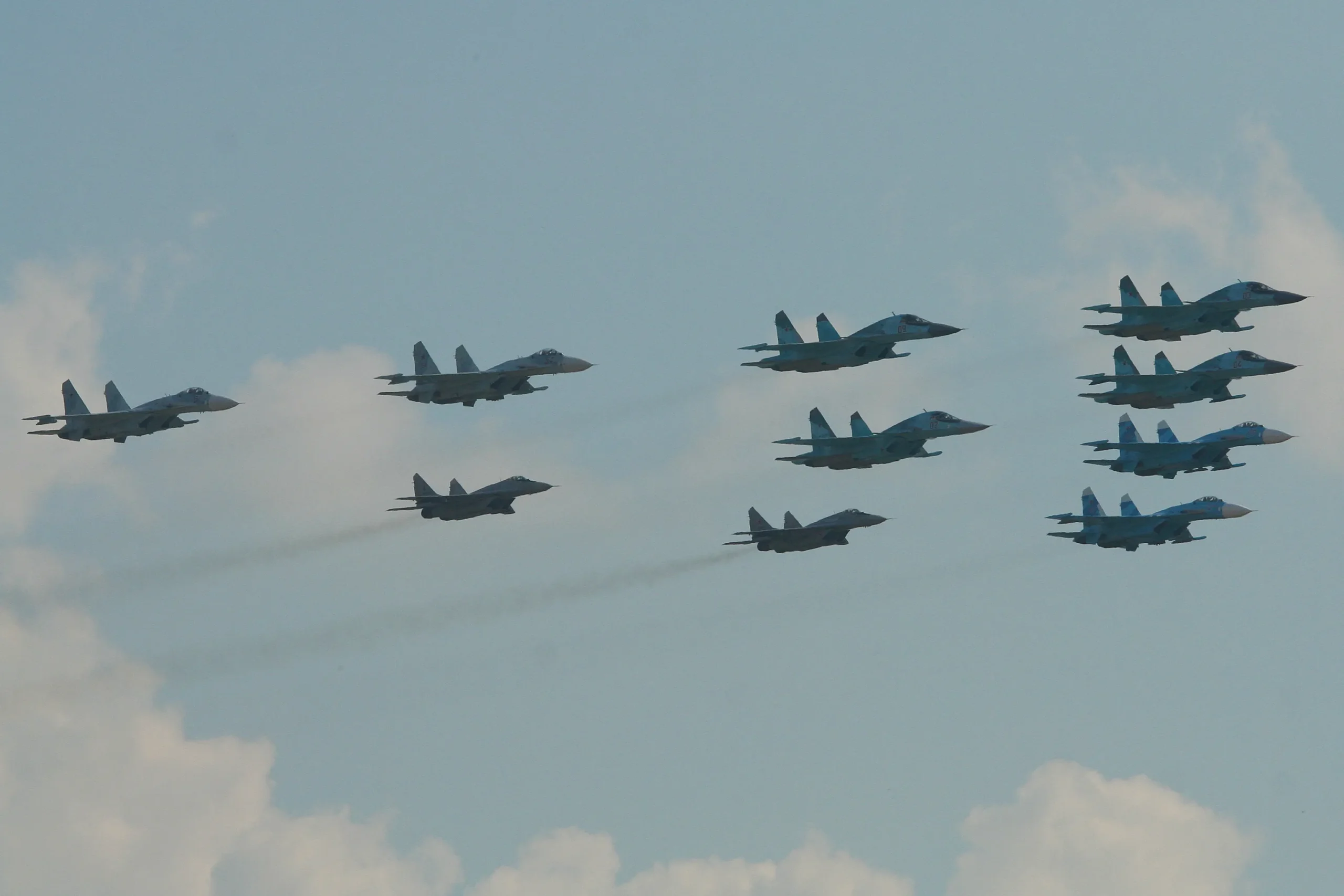
WASHINGTON, D.C.- The United States has paused its air campaign against Iran after nearly 2 weeks of consecutive nightly strikes, with a US source describing military operations as being on a hold.
Diplomatic activity has intensified in parallel, with officials from Tehran (THR) and Muscat (MCT) holding talks on the Strait of Hormuz, while the American naval blockade of Iranian ports remains fully in force.
Why Nightly Bombing Campaign Went Quiet
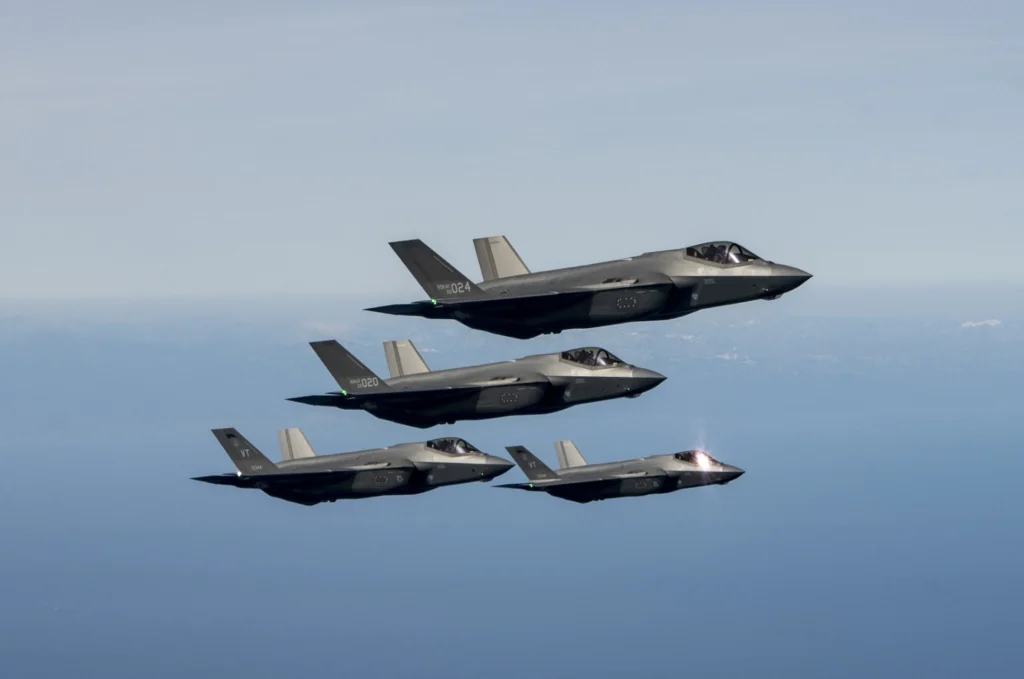
The US military has not announced any new strikes for two consecutive nights, ending a run of almost fourteen days of continuous attacks. Operations are “on a hold,” a Department of Defense source told CNN on Saturday.
Allies of the United States in the region have also not reported fresh attacks by Iranian forces over the same period.
The pause follows a White House meeting on Friday where President Donald Trump and senior officials discussed the possibility of a major escalation in the war. Vice President JD Vance and Chairman of the Joint Chiefs of Staff Gen. Dan Caine both raised concerns about widening the conflict, according to sources.
Caine specifically flagged the level of American munitions required for such a move, along with other potential negative implications.
Mike Waltz, the US ambassador to the United Nations, said on Sunday that the president is deliberately allowing room for negotiations to develop. Speaking on NBC’s “Meet the Press,” Waltz said talks are underway at every level, from the technical aspects through to the highest levels.
In a separate appearance on “Fox News Sunday,” he said diplomatic efforts had ramped up particularly in the past few days.
Waltz also repeated Trump’s warning that the American military remains “locked and loaded” while negotiations play out, adding that the president is keeping all options on the table. He claimed that internal divisions within the Iranian regime have made the negotiations challenging.
Munitions Stockpiles Under Scrutiny
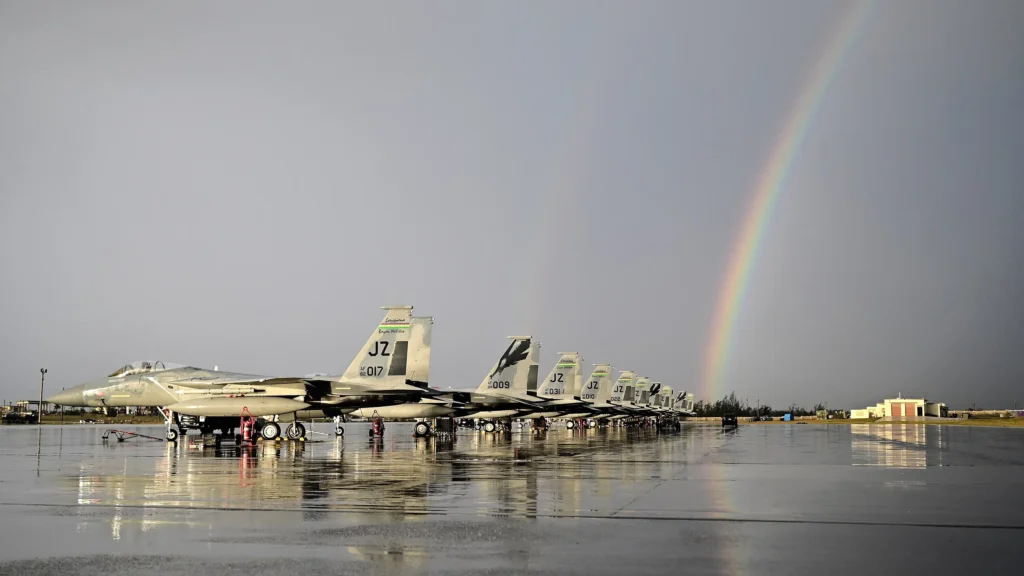
Pressed by host Kristen Welker on whether American weapons reserves are running low, Waltz appeared to concede that “a lot of stockpiles were depleted.”
He cast blame on US provisions to Ukraine and on what he described as the depleted situation the Trump administration inherited from its predecessor.
He nonetheless insisted that the US military has everything that it needs to conduct the campaign as effectively as it needs to be conducted.
Tehran Presents Lull as a Victory
Iranian officials have sought to frame the halt in strikes as a victory rather than a pause. Army spokesman Amir Akraminia told Iranian state television on Sunday that Tehran still cannot identify any clear strategy on the part of the Americans, asserting that the United States is “experiencing strategic decision-making fatigue.”
Akraminia said the campaign has failed to force open the Strait of Hormuz and has not weakened or destroyed Iranian defensive capabilities.
He added that the geography of the war has now extended to Bab al-Mandeb in the Red Sea, where Iran-backed Houthi rebels have declared a blockade of Saudi shipping.
Strikes between Saudi Arabia and the Houthis in the Red Sea have added a further dimension to the wider conflict.
A spokesman for Iran’s Islamic Revolutionary Guard Corps, Brig. Gen. Hossein Mohebi, claimed that Israel is trying to keep the United States in the region by provoking the US president and supplying him with false information.
Earlier this month, Israel was reported to have provided the United States with intelligence on an assassination plot against Trump.
Mohebi also claimed that Iran destroyed a wide variety of American military facilities across the region over the past 2 weeks. The United States has acknowledged damage to some facilities, including in Jordan, where three American soldiers were killed in a single strike.
These statements reflect the official Iranian position and have not been independently verified.
Blockade Enforcement Continues at Sea
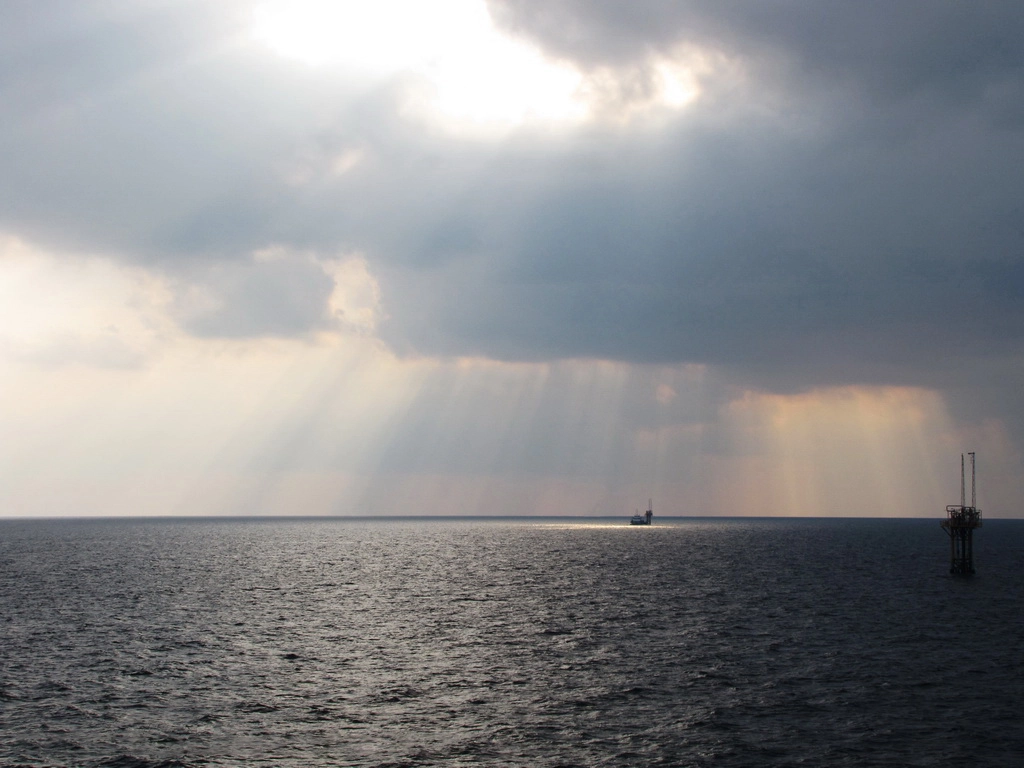
The United States has reinstated its blockade on ships transiting to or from Iranian ports following an escalation in the conflict. It applies to all Iranian ports, both inside and outside the Strait of Hormuz.
A previous version of the blockade lasted roughly two months, between April and June.
Since reimposing the measure earlier this month, the US military has redirected at least twelve commercial vessels and disabled two that did not comply. It has also boarded two ships to ensure total compliance, according to US officials.
One of those cases involved a verification boarding of the Comoros-flagged tanker M/T Charminar in the Arabian Sea, which was permitted to continue its journey afterwards.
The deputy foreign ministers of Iran and Oman held talks in Tehran over two days on the status of the Strait of Hormuz, according to the Iranian Foreign Ministry.
The ministry described the discussions as constructive but confirmed that they produced no change in the status of maritime traffic through the waterway. The strait has been effectively closed by Iran since the United States and Israel began the war in February.
Why the Strait of Hormuz Matters
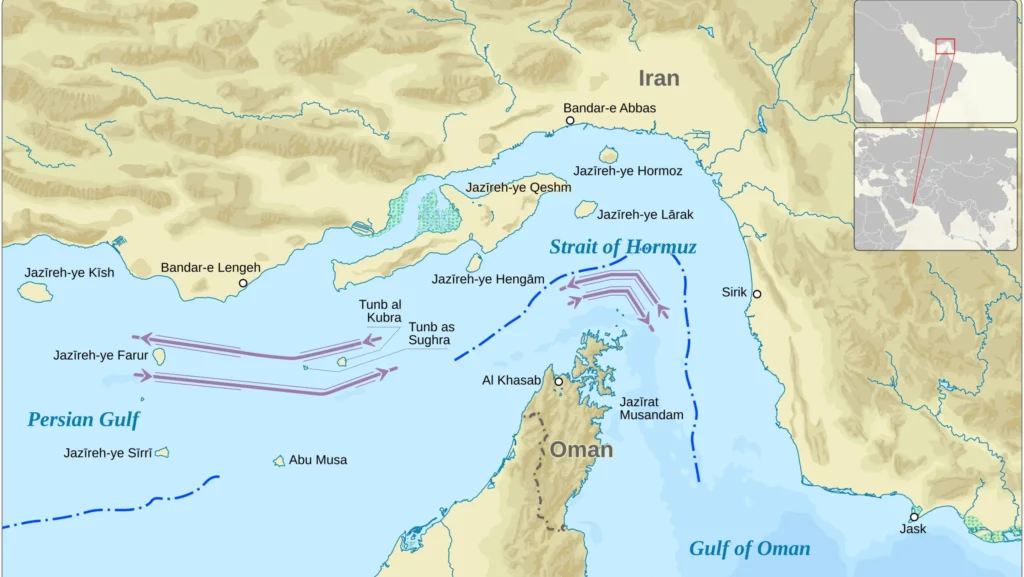
The strait runs between Iran and Oman, with the Exclusive Economic Zones of both countries meeting in the middle.
Its narrowness makes it easier for Iran to attack vessels, because ships lack the space to maneuver or the warning time to escape threats. The waterway remains the main route for shipping crude oil from producers such as Saudi Arabia and Kuwait to the rest of the world.
According to the United Nations, a state holds sovereign rights to explore, exploit, conserve and manage the natural resources of the waters within its Exclusive Economic Zone.
Under the United Nations Convention on the Law of the Sea, ships of all states, whether coastal or land-locked, enjoy the right of innocent passage through the territorial sea.
A coastal state should not hamper that passage except in specific outlined scenarios, though it may take the necessary steps in its territorial sea to prevent passage which is not innocent.
Saudi Nuclear Deal Tied to Israel Normalization
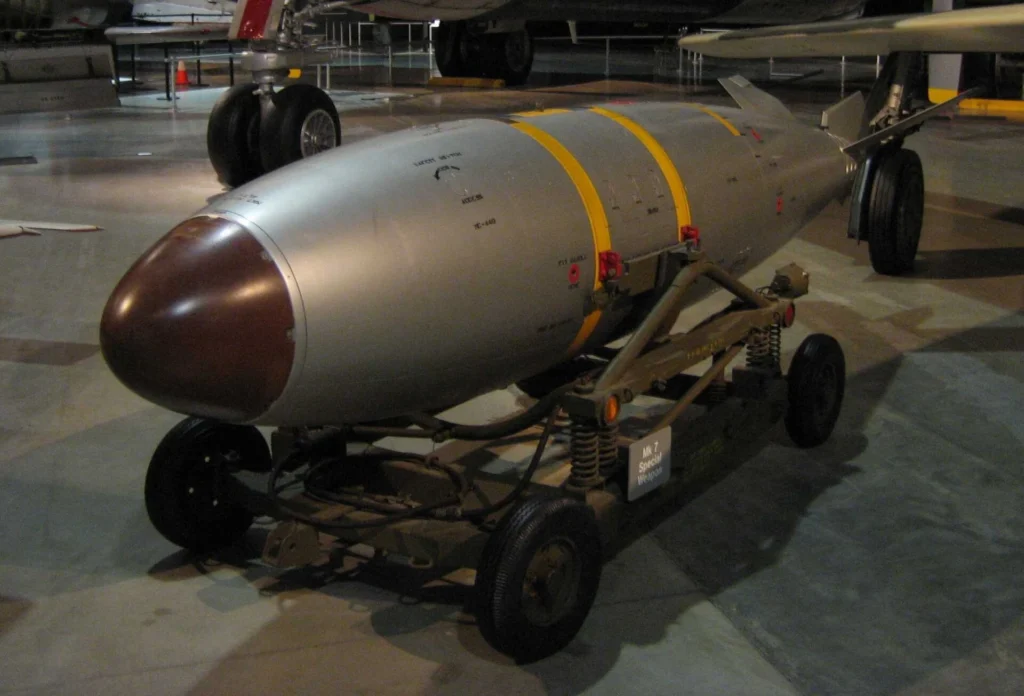
Waltz reaffirmed on Sunday that the deal providing a civilian nuclear program for Saudi Arabia will not take effect until the kingdom normalizes relations with Israel.
The agreement was announced earlier in the week, and one day after US and Saudi officials signed it, Trump attached the new condition.
Trump said Saudi Arabia must first enter the Abraham Accords, the series of agreements aimed at establishing diplomatic ties between Israel and its neighbors in the Middle East. The Saudis have historically been resistant to such efforts.
Questioned on the status of the pact, Waltz said the tenets of the deal are in place while discussions with the Saudis on normalization continue, and he affirmed that full implementation depends on that step.
He suggested the Saudis could have gone to the Russians or the Chinese for nuclear technology but chose the United States instead. He said they are going with American companies and American workers, and that no enrichment is envisioned in the plan.
Separately, Israeli President Isaac Herzog said he spoke by phone with King Hamad bin Isa Al Khalifa of Bahrain, with the Abraham Accords among the topics discussed.
Congress Weighs Its Role in War
Republican Sen. Bill Cassidy of Louisiana said Congress may soon need to vote on authorizing the war.
Speaking to host Dana Bash on “State of the Union” on Sunday, Cassidy said the president has had the opportunity to achieve the initial goals, which the senator said he agreed with, and that this has not happened at this point.
Cassidy said it seems unlikely that Trump will be able to resolve the conflict quickly. If that does not happen, he said, the president needs to come to Congress and the American people, present the facts, and open a conversation.
The Louisiana Republican joined three fellow Republicans in voting for a war powers resolution in late June, following a testy exchange with the president during a closed-door lunch. The Senate took up the measure again the next day, and Cassidy withdrew his support after receiving a briefing from the Trump administration.
He said the president theoretically knows things that lawmakers do not, and it may be that the conflict is on the cusp of a conclusion, while emphasizing that a conversation with the administration needs to happen relatively soon.
Democrats Break With Wartime Precedent
Trump’s operation in Iran has become the most partisan war in modern US history. It marks the first time that one party is willing to fully reject wartime funding requests from the country’s commander-in-chief.
Democrats are, for the first time in at least a century, in lockstep against a war from the start.
They are refusing to support additional funding, voting en masse to demand that Trump pull troops out, and rejecting a broader Pentagon policy measure in protest. That measure includes provisions mostly unrelated to the war, such as one that would raise troop pay.
The position marks a shift from previous years, when Democrats would avoid accusations of not supporting troops during a conflict.
Party lawmakers contend that the American public, including Republican voters, is on their side, and that Republican support for the war will be a dividing line heading into the November election.
The party’s opposition has several sources. Democrats are generally more skeptical of foreign entanglements and less sympathetic to Israel, the key US partner in the conflict with Iran.
The party is also more suspicious of Trump than of the last Republican administration in wartime, and lawmakers are incensed at his handling of nearly every part of the war.
Republican leaders have reacted with anger. Speaker Mike Johnson called it shameful for Democrats to refuse funding for the Pentagon, particularly amid concerns about depleted munitions and as the administration seeks nearly seventy billion dollars in additional emergency cash for military operations in Iran.

Fuel Price Warning Adds Domestic Pressure
Iran’s government has warned that heavily subsidized petrol prices may have to be raised, amid high inflation and widespread damage to infrastructure.
Government spokeswoman Fatemeh Mohajerani said on Saturday, according to Iranian state television, that a change in petrol prices or fuel rationing is certain.
Mohajerani said the country needs strategies for managing gasoline consumption because the government subsidizes the price at which gasoline is sold to the public. She said a solution must be adopted to balance consumption, and that the public will be informed carefully, transparently, clearly and honestly, whether the decision involves changes to the quota or to the price.
The issue carries significant political risk. When the government raised fuel prices by 50 percent in 2019, nationwide protests quickly escalated into broader anti-government unrest and were met with a sweeping security crackdown and an internet blackout.
Petrol is sold in Iran across three price tiers, and last December the government introduced a higher rate for drivers consuming more than 160 liters, or 42 gallons, per month.
Mohammad Sadegh Azimifar, chief executive of the National Iranian Oil Refining and Distribution Company, warned in an interview with Khabaronline on Sunday that if high consumption continues and production and import constraints persist due to damage to facilities, measures may become necessary to maintain fuel supply stability and national energy security.
He said the government will not catch people by surprise over petrol, and that any decision will first be announced publicly, with public opinion taken into account before implementation.
Caspian Sea Attack Draws Iranian Protest
Iran has condemned a Ukrainian attack on an Iranian vessel in the Caspian Sea, the route for much of the country’s trade with Russia.
One seafarer was killed and three crew members were injured, according to regional governor Hadi Hagh-Shenas on Sunday. The ship was carrying a cargo of iron and sailing from Astrakhan to Anzali, which Hagh-Shenas described as a safe and reliable corridor for commercial exchanges between the two ports.
Ukraine launched long-range drone attacks on vessels in the Caspian on Saturday. Ukrainian President Volodymyr Zelensky said in a post on X that the country had achieved very good results from long-range strikes there, specifically against ships involved in transporting military cargo from Iran, as well as a warship.
Iran’s Ministry of Foreign Affairs called the attacks a sign of the continuation of the irrational and hostile approach of the Ukrainian regime toward Iran. The ministry said responsibility for the consequences arising from the adventurism of the head of the Ukrainian regime will rest with that regime and its supporters and instigators.
Ukraine’s Chargé d’Affaires was summoned to the foreign ministry following the attack.
Iranian Foreign Minister Abbas Araghchi said in a post on X on Monday that he raised the incident in calls with European Union foreign policy chief Kaja Kallas and Russian Foreign Minister Sergey Lavrov, warning that the action cannot go unanswered.
Iranian officials have said the United States has also recently attacked facilities on the Caspian Sea. The Gilan governorate announced an airstrike on an Islamic Revolutionary Guard Corps naval base in the Zibakenar region early on Friday, as the United States broadened its targets inside Iran.
Stay tuned with us. Further, follow us on social media for the latest updates.
Join us on Telegram Group for the Latest Aviation Updates. Subsequently, follow us on Google News
