

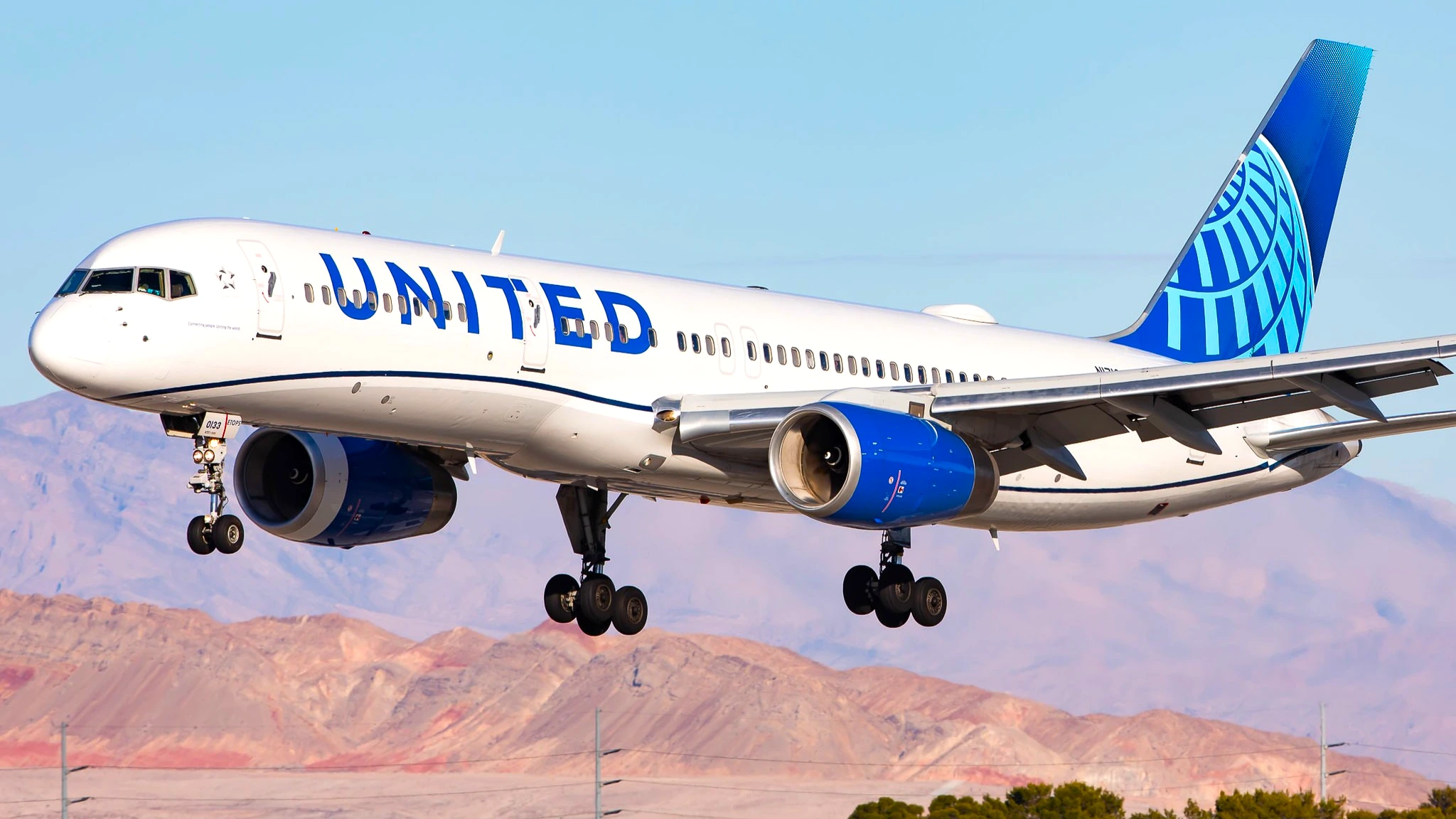
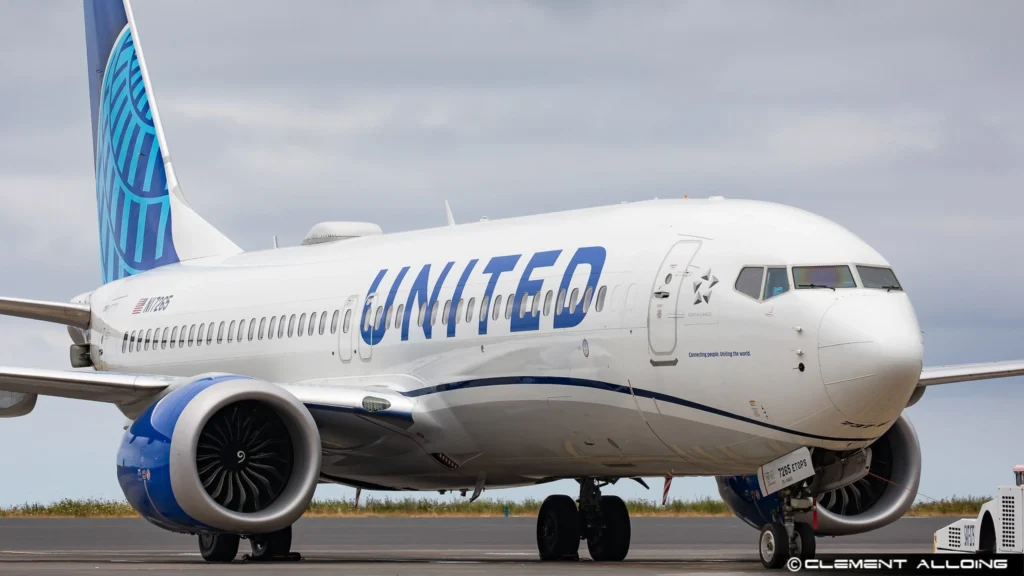
CHICAGO- United Airlines (UA) has removed 11 planned routes from its Chicago O’Hare International Airport (ORD) schedule after the FAA extended a cap on daily flights at the hub through October 30, 2027.
Ten of the delayed launches served regional airports, while the eleventh was a planned service to Guadalajara International Airport (GDL) in Mexico. United said it will provide refunds to travelers who had already booked flights to those destinations.
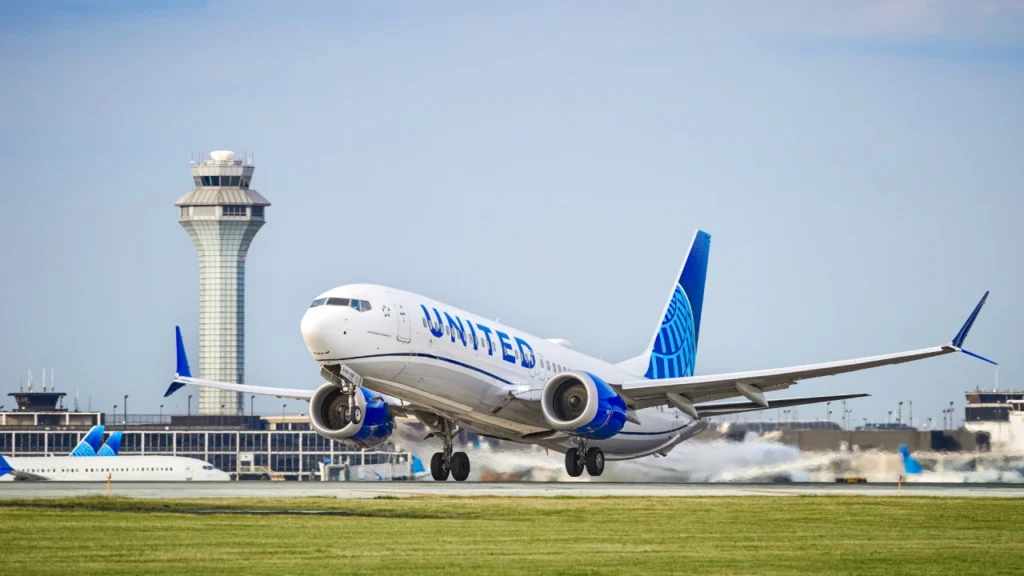
FAA Extends O’Hare Scheduling Order by 1 Full Year
The FAA issued the original order on April 20, 2026, and it was set to expire on October 24 of that year. The directive cut flights at O’Hare by 10% and took effect in May, limiting the airport to 2,708 flights per day, more than 300 fewer than the 3,080 the airport had originally planned.
The trigger was a scheduling contest between the airport’s two hub carriers. The limit was recommended after American Airlines (AA) and United expanded their O’Hare flights for the summer 2026 season, in part to retain or gain gates at the airport, in a plan that would have delivered a 14.9% peak day increase over the summer 2025 schedule.
The FAA also cited concerns over air traffic control staffing, ongoing construction, and congestion.
The agency announced the extension on Friday, July 10. The replacement order takes effect on October 25, 2026, and carries the same 2,708 daily limit forward.
Following the extension of FAA’s Chicago O’Hare’s flight schedule cap through October 2027, we are delaying the start of ten new routes announced earlier this year and removing them from our schedule. We’re working with impacted customers to find alternative travel options or provide refunds. We remain committed to providing important connectivity to these cities and hope to start service from Chicago once the FAA order expires.
United Airlines spokesperson
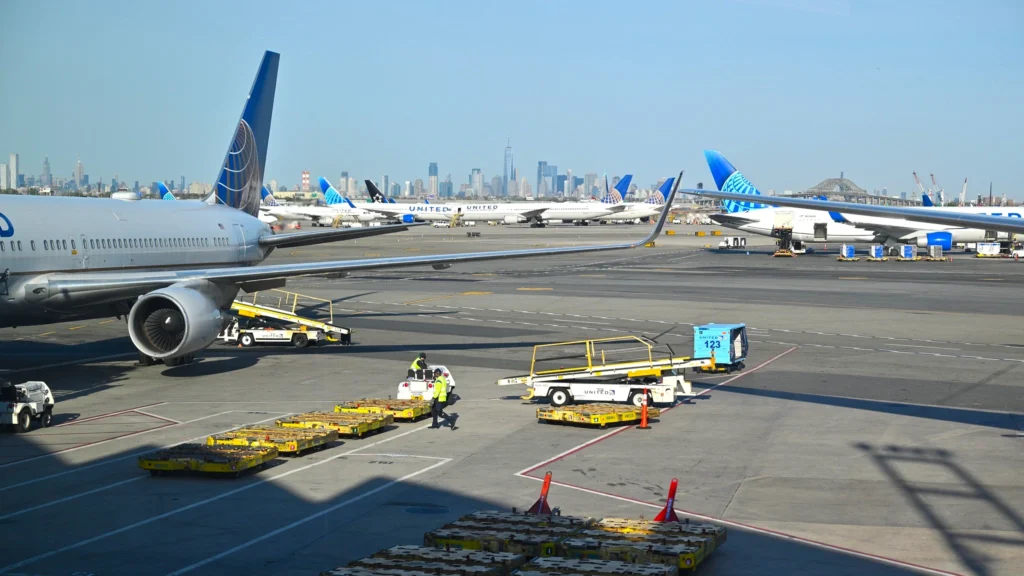
Airfield Construction Drives Restriction
The FAA pointed to construction projects and airfield adjustments scheduled to continue through summer 2027, and concluded that “significant delay and operational disruption” would follow if the order lapsed on its original date.
Construction is expected to wrap up in summer 2027, which is why the order runs to October 30 of that year.
The work covers the airport’s new Global Terminal, the 19-gate Concourse D, renovations to Terminal 3, and numerous taxiway and airfield improvements. The Global Terminal project replaces Terminal 2.
Construction inside the terminal area slows passenger movement, while taxiway closures reduce the paths available to aircraft on the ground. The FAA also referenced ongoing gate allocation discussions between United and American.

11 Airports Removed From United’s Schedule
United is cutting planned service to Champaign and Bloomington in Illinois, Kalamazoo, Lansing and Marquette in Michigan, La Crosse and Wausau in Wisconsin, Tri-Cities Airport in Tennessee, Erie in Pennsylvania, and Rochester in Minnesota. Eight of the ten sit in the Midwest, with Tri-Cities and Erie falling outside the region.
| Airport | Location |
|---|---|
| Guadalajara International Airport (GDL) | Jalisco, Mexico |
| University of Illinois Willard Airport (CMI) | Champaign, Illinois |
| Central Illinois Regional Airport (BMI) | Bloomington, Illinois |
| Kalamazoo/Battle Creek International Airport (AZO) | Kalamazoo, Michigan |
| Capital Region International Airport (LAN) | Lansing, Michigan |
| Marquette Sawyer Regional Airport (MQT) | Marquette, Michigan |
| La Crosse Regional Airport (LSE) | La Crosse, Wisconsin |
| Central Wisconsin Airport (CWA) | Wausau, Wisconsin |
| Tri-Cities Airport (TRI) | Blountville, Tennessee |
| Erie International Airport (ERI) | Erie, Pennsylvania |
| Rochester International Airport (RST) | Rochester, Minnesota |
Some airports had already completed their preparations. Central Illinois Regional Airport was ready to begin 4 daily flights to and from O’Hare in May, with ground handling arranged, ticketing and staffing complete, and signage installed on the terminal roadway, according to marketing and communications manager Melissa Beaver.
The Mexican route was withdrawn separately. United removed the Chicago O’Hare to Guadalajara schedule listing on July 23, 2026.
The carrier had filed one daily flight from June 7, 2027, operated by a Boeing 737-800. Reports indicate United plans to reinstate the abandoned regional flights as soon as the FAA order expires on October 30, 2027.
United Supports Extension
United’s public position on the extension differs from its reaction to the original order. The airline said it appreciated Secretary Duffy and FAA Administrator Bryan Bedford extending the scheduling order to support O’Hare’s reliability.
United had criticised the FAA’s first order for its “severe prejudice,” arguing that it was based on each carrier’s summer 2025 schedule rather than its planned 2026 schedule.
United remains the largest airline at O’Hare with a market share above 45%, and has gained two gates for the coming winter season compared with last year. American recently regained three O’Hare gates.
American called the extension a “prudent decision” and said its winter schedule already aligns with the order, requiring no adjustments or cancellations.
Capacity at the hub is still growing. United’s summer schedule this year remains 11% larger than last year because the carrier upgauged to larger aircraft on the same routes.
According to NBC 5 Chicago, United expects 13% more passengers this summer despite the cap. Scheduled timing left unused during the remainder of the winter 2026-27 and summer 2027 seasons will not automatically count toward future baselines unless a carrier requests prioritisation.
Small Market Service
Flying a 50-seat regional jet uses up the same valuable slot as flying a 180-seat Boeing 737. To maximise passenger capacity across fewer landing and takeoff slots, airlines substitute larger narrowbodies for smaller single-aisle jets and regional puddle jumpers.
United has increased seat capacity through upgauging, replacing smaller regional jets with larger mainline aircraft on many routes. Although some regional airports have the facilities to accommodate these planes, they do not have the demand to fill them up with customers.
This creates another issue for the FAA, which also seeks to ensure that underserved communities can access reliable air service connecting them with larger hubs.
The matter is important to the citizens of the US, for whom the FAA is ultimately responsible as a federal agency, and to sustaining these small airfields as businesses. Losing service to a large hub cuts regionals off from the hub and spoke network, which can decimate their economic lifeline.

FAA Slot Policy
The FAA implemented these cuts under Secretary Sean Duffy to prevent crushing delays and safeguard safety. The agency may have to course-correct if the negative impact snowballs, potentially setting aside a block of daily O’Hare flights reserved strictly for regional jets arriving from underserved, small-market communities. That scenario remains purely speculative.
Under Administrator Bedford, the agency has increasingly prioritised airspace efficiency over sheer flight volume.
After Spirit Airlines ceased operations on May 2, leaving behind LaGuardia slots estimated to be worth $87 million, Bedford said the slots should be taken over by another low-cost carrier, and that they could otherwise be retired to reduce congestion.
LaGuardia is one of only 3 slot-controlled airports in the United States, which the FAA classifies as Level 3 facilities.
That episode has since reached a resolution. JetBlue won Spirit’s LaGuardia slots at a bankruptcy auction, with a hearing to consider the sale scheduled for July 22.
Port Authority Executive Director Kathryn Garcia had recommended that redistribution be based on competition, access, and underserved markets rather than optimising for dominant carriers.
The same logic applies at O’Hare, where the FAA’s goal is to push airlines to optimise schedules around the public interest rather than protect the bottom line of legacy carriers. If the isolation of these eleven regional markets continues, the agency may be forced to step in.
Stay tuned with us. Further, follow us on social media for the latest updates.
Join us on Telegram Group for the Latest Aviation Updates. Subsequently, follow us on Google News
