


NEW YORK- A Delta Air Lines (DL) Airbus A321neo operating from New York John F. Kennedy International Airport (JFK) to San Juan Luis Muñoz Marín International Airport (SJU) declared an emergency shortly after departure after the crew reported a fuel leak.
The aircraft safely returned to New York John F. Kennedy International Airport (JFK), where emergency services inspected the jet after the pilots also reported cockpit fumes and concerns about overheated brakes following an overweight landing.
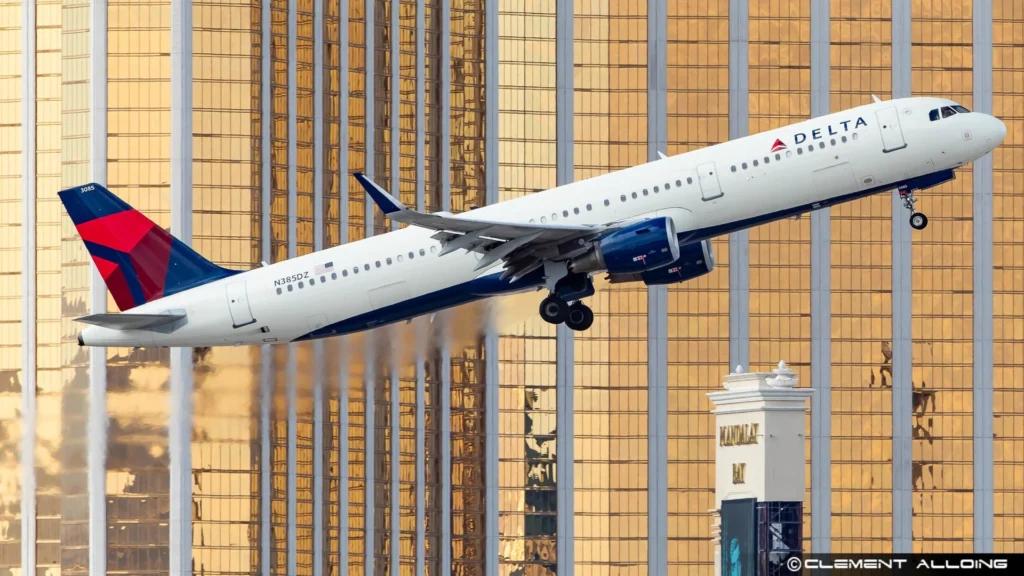
Delta Flight Returns to New York JFK
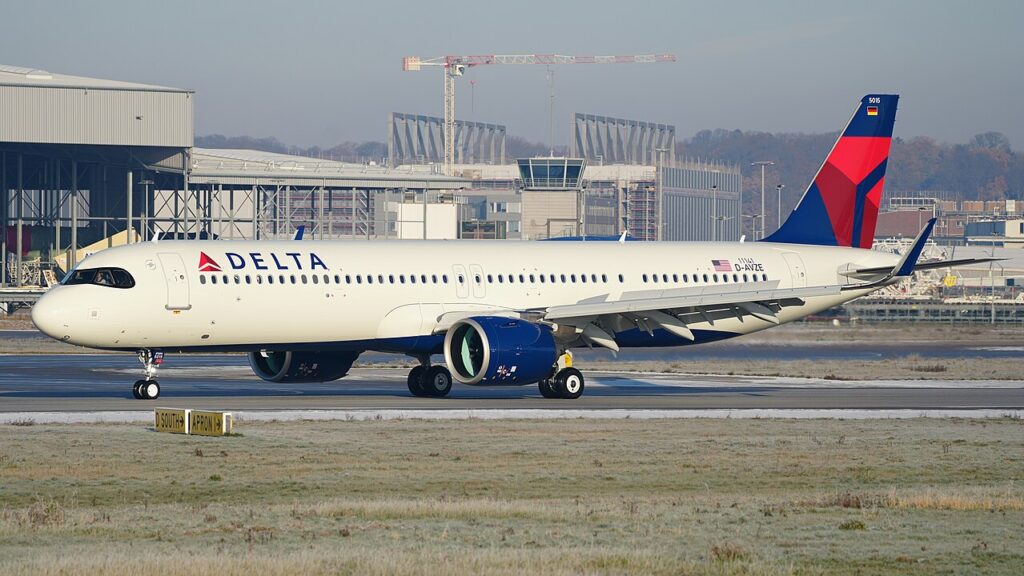
The incident involved Delta Air Lines (DL) Flight DL1859, operated by an Airbus A321neo (A21N) registered N505DZ.
After departing New York John F. Kennedy International Airport (JFK) for San Juan Luis Muñoz Marín International Airport (SJU), the aircraft climbed normally before the flight crew requested to level off at 23,000 feet instead of continuing its planned climb.
Within minutes, the pilots declared an emergency and informed air traffic controllers that the aircraft was experiencing a fuel leak. They immediately requested clearance to return to JFK and asked for Runway 31L for landing.
Air traffic control approved the emergency return and provided direct routing back to Kennedy Airport while coordinating priority handling for the aircraft.
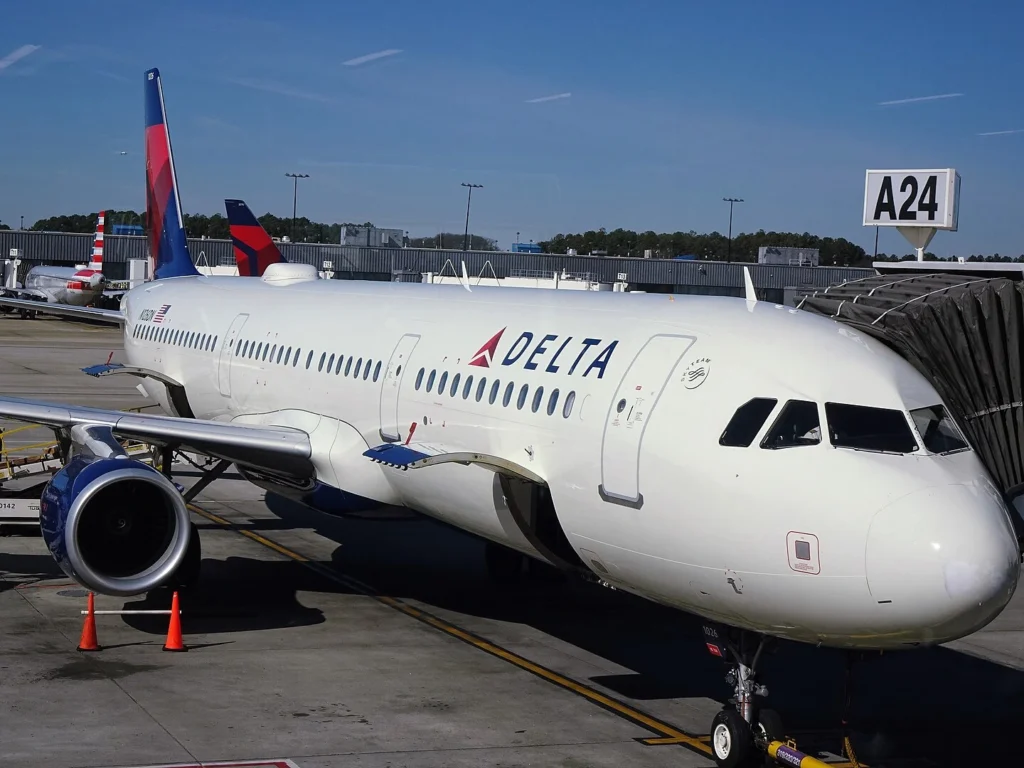
Crew Reported Fuel Leak and Requested Emergency Assistance
During communications with controllers, the crew advised they had 198 people on board and approximately 27,400 pounds of fuel remaining, which they estimated was equivalent to about five hours of endurance.
The pilots also requested that Aircraft Rescue and Fire Fighting (ARFF) units be positioned for the arrival. They explained they expected to stop after landing so emergency personnel could determine the source of the leak because they were unable to identify or isolate it during the flight.
Controllers immediately coordinated with airport emergency services and cleared surrounding traffic to give the Delta aircraft priority handling.
As the aircraft continued its descent, the crew informed approach controllers that the landing would be overweight, meaning the aircraft would land above its normal maximum landing weight due to insufficient time to burn or jettison fuel.
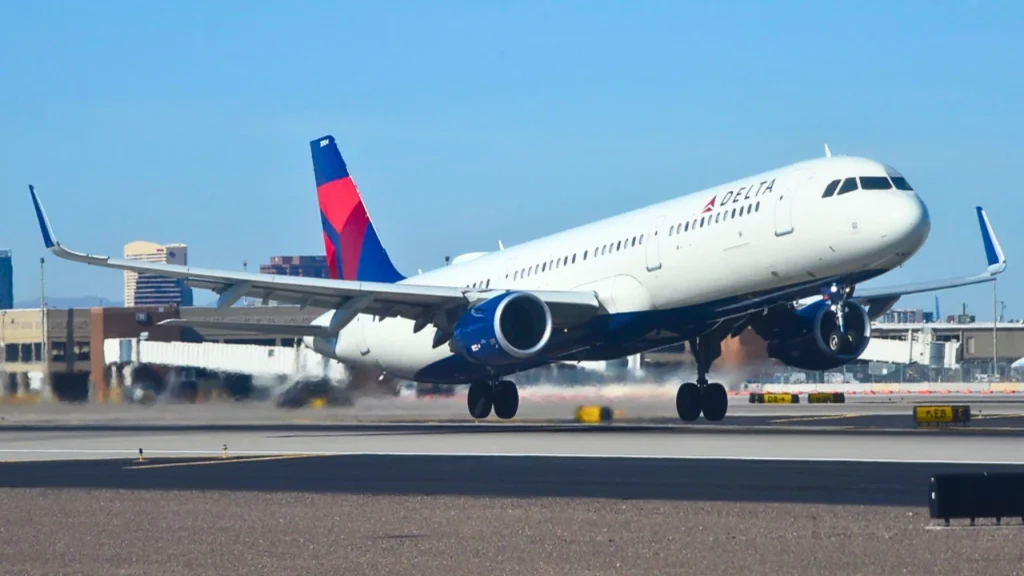
Cockpit Fumes Added to the Emergency
The situation became more serious during the final stages of the approach.
While descending toward JFK, the pilots advised air traffic control that they had donned oxygen masks after detecting fumes in the cockpit. The transmission also mentioned an odor inside the aircraft, although the crew could not immediately determine whether it was directly related to the reported fuel leak.
Recognizing the increased urgency, controllers removed speed restrictions and allowed the crew to manage the aircraft at their own discretion while continuing the approach to Runway 31L.
Emergency vehicles were positioned alongside the runway before the aircraft landed.
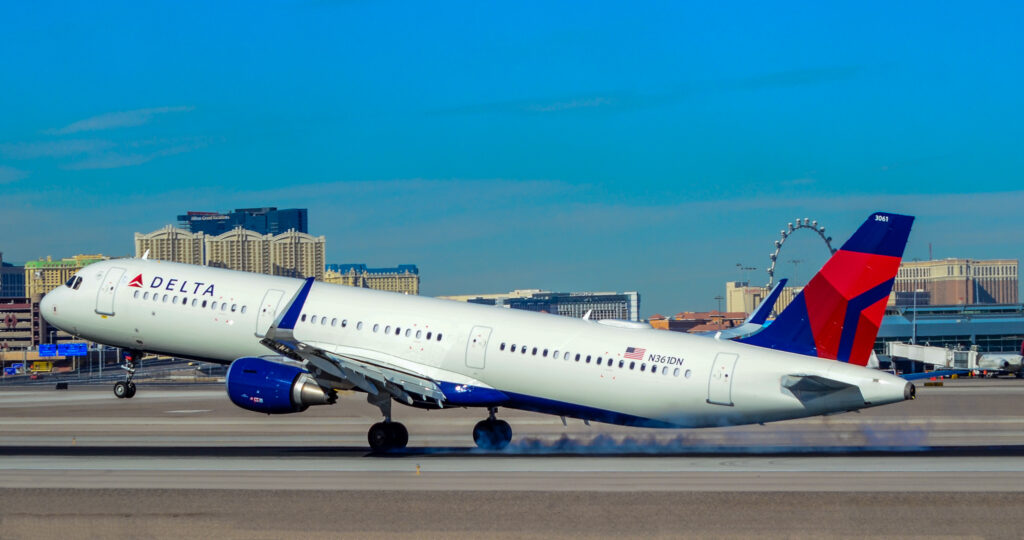
Overweight Landing Required Special Precautions
Before touchdown, the flight crew informed Kennedy Tower that they would be performing an overweight landing and would not use engine thrust reversers because of the reported fuel leak.
Without reverse thrust, the aircraft would rely more heavily on wheel braking, increasing the likelihood of high brake temperatures after landing.
The crew specifically warned controllers that they expected a hot brake condition, allowing emergency responders to prepare for the possibility of overheating or fire.
The Airbus A321neo landed safely on Runway 31L and exited the runway under its own power.
Emergency Crews Inspected Aircraft After Landing
After vacating the runway, the aircraft stopped on a taxiway while emergency responders conducted an external inspection.
The pilots advised controllers that they required assistance because:
- The aircraft still had a reported fuel leak.
- The brakes were likely extremely hot.
- There was an odor inside the aircraft.
- The crew wanted confirmation that no fire had developed.
Air traffic control transferred the flight to the emergency response frequency so firefighters could communicate directly with the crew while inspecting the aircraft.
According to the available communications, the runway remained open after the aircraft cleared it, indicating the emergency response did not require a prolonged runway closure.
No injuries to passengers or crew were reported in the available information. The cause of the reported fuel leak and cockpit fumes has not been publicly identified, and the aircraft will likely undergo a detailed maintenance inspection before returning to service.
What Happens After Such an Event?
Fuel leaks are treated as high-priority emergencies because they can increase the risk of fire, affect aircraft performance, and complicate landing procedures.
When combined with reports of cockpit fumes, flight crews follow established emergency checklists that include using oxygen masks, coordinating with air traffic control, and requesting immediate inspection by airport rescue personnel after landing.
Aircraft manufacturers and airline maintenance teams typically perform comprehensive inspections of the fuel system, engines, braking system, and affected components before an aircraft involved in such an event is cleared to fly again.
ATC and Delta Pilot Conversations
ATC: Delta 1859, can we stop your climb?
Pilot: 230 would be good.
ATC: Delta 1859, maintain Flight Level 230. Let me know if you need anything else.
Pilot: Flight Level 230, Delta 1859.
Pilot: Center, Delta 1859.
ATC: Delta 1859, go ahead.
Pilot: We are declaring an emergency. We have a fuel leak and need to return for landing. Requesting Runway 31L at JFK.
ATC: Delta 1859, roger. Turn right direct Kennedy.
Pilot: Right turn direct Kennedy, Delta 1859.
ATC: Delta 1859, can you accept a descent?
Pilot: Yes, we can take a descent.
ATC: Descend and maintain Flight Level 190. When able, advise souls on board and fuel remaining.
Pilot: Descending to Flight Level 190. We’ll get you that information shortly.
Pilot: We have 198 souls on board and approximately 27,400 pounds of fuel remaining, about five hours.
ATC: Roger, thank you.
ATC: I’m assuming you want emergency assistance at the airport?
Pilot: Yes. We’d like ARFF standing by. We’ll likely stop after landing to verify where the fuel leak is coming from because we can’t locate or isolate it.
ATC: Roger.
Pilot: New York Approach, Delta 1859 passing 11,700 feet for 11,000, direct CAMRN.
ATC: Delta 1859, fly heading 040. Expect ILS Runway 31R unless you need 31L.
Pilot: We’d like Runway 31L. Heading 040.
ATC: Heading 040.
Pilot: Just a heads up, we’re making an overweight landing because of the fuel leak.
ATC: Affirmative. Maintain 2,000 feet.
Pilot: Maintain 2,000.
ATC: Expect ILS Runway 31L.
Pilot: Runway 31L.
ATC: Contact Approach on 125.7.
Pilot: 125.7, Delta 1859.
Pilot: Approach, Delta 1859. Passing 9,000 feet, descending to 2,000, heading 040.
ATC: Delta 1859, thanks.
ATC: Confirm you’re maintaining 2,000.
ATC: Delta 1859, reduce speed to 210 knots.
Pilot: We’re on oxygen now. We have fumes in the cockpit.
ATC: Understood. Fly heading 020. Speed at your discretion.
Pilot: Heading 020.
ATC: Kennedy altimeter 29.90. Speed at your discretion.
Pilot: Altimeter 29.90. Speed our discretion.
ATC: Cross MEELS at 2,000 feet. Cleared ILS Runway 31L.
Pilot: Confirm altitude?
ATC: 2,000 feet. Cleared ILS Runway 31L.
Pilot: 2,000 feet, cleared ILS 31L.
ATC: Contact Kennedy Tower 123.9.
Pilot: Kennedy Tower, Delta 1859, emergency aircraft inbound.
ATC: Delta 1859, Kennedy Tower. Wind 360 at 8 knots. A few departures ahead of you. Runway 31L cleared to land. Emergency equipment is responding.
Pilot: Thank you.
ATC: Confirmed, Runway 31L cleared to land. Caution, departing Boeing 777.
Pilot: Cleared to land, Delta 1859.
Pilot: Just so ARFF knows, we’re overweight and unable to use thrust reversers because of the fuel leak. We’re expecting hot brakes.
ATC: Roger. I’ll relay that to emergency vehicles.
Pilot: Are they in position?
ATC: They’re setting up now. I can see them deploying across the field.
Pilot: Thanks.
ATC: Delta 1859, are you able to taxi off the runway?
Pilot: Yes, we’ll clear the runway.
ATC: Right on Mike Charlie, then right on Papa, hold short of Bravo.
Pilot: Right Mike Charlie, right Papa, hold short Bravo.
ATC: Delta 1859, do you require any further assistance?
Pilot: Yes. We still have a fuel leak, our brakes are probably extremely hot, we have an odor in the cockpit, and we need to make sure we’re not on fire.
ATC: Roger. Switch to 121.65 to communicate directly with the emergency vehicles.
Pilot: Switching to 121.65.
Stay tuned with us. Further, follow us on social media for the latest updates.
Join us on Telegram Group for the Latest Aviation Updates. Subsequently, follow us on Google News
