


FARNBOROUGH— Germany could eventually strengthen the Global Combat Air Programme (GCAP), according to the chief executive of Italian aerospace and defense company Leonardo, who described future German participation as beneficial despite no formal discussions taking place.
The comments came during the Farnborough International Airshow near London, where defense cooperation and next-generation fighter development remain major topics.
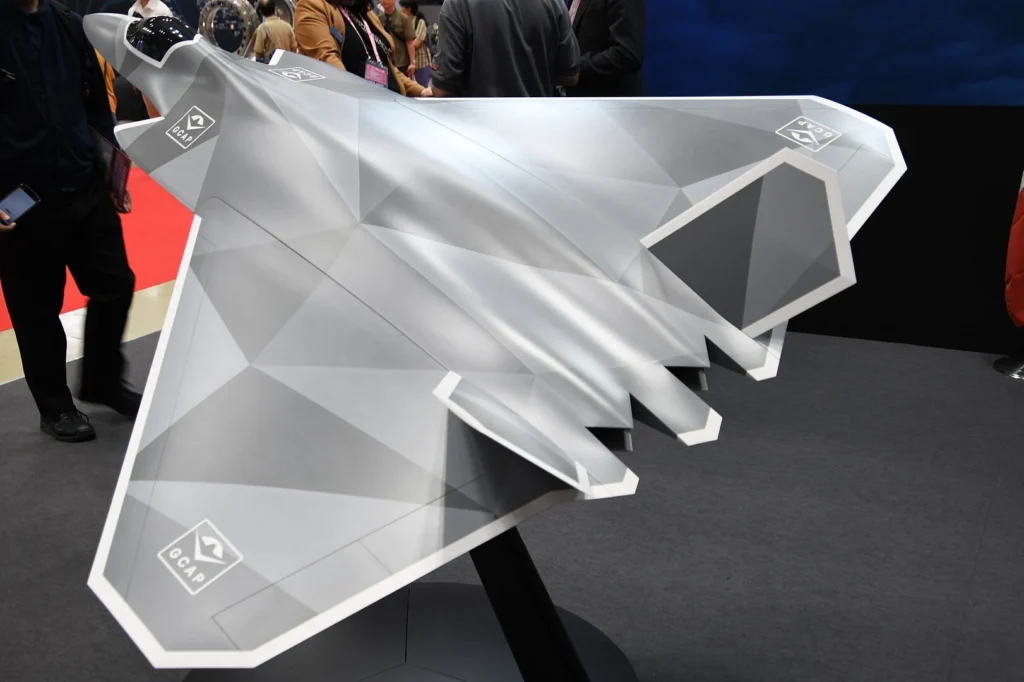
The GCAP initiative, launched in 2022 by the United Kingdom, Italy, and Japan, aims to deliver a sixth-generation stealth fighter by 2035 to replace aircraft such as the Eurofighter Typhoon.
The program recently gained momentum after partner nations approved a £4.6 billion development contract, while Canada joined as its first observer nation earlier this week.

Germany and GCAP Partnership Prospects
Leonardo Chief Executive Lorenzo Mariani said Germany is not currently considering membership in the multinational fighter program.
However, he emphasized that German participation could provide valuable industrial expertise and strengthen the project’s long-term capabilities.
Mariani highlighted Germany’s advanced aerospace sector, strong government funding capacity, and decades of experience working on European combat aircraft programs. He noted that these strengths could benefit GCAP if Germany were to join at an appropriate stage.
At the same time, he acknowledged that adding another full partner would require careful planning. According to Mariani, the primary concern would be balancing industrial workshare and avoiding delays to the program’s ambitious 2035 service-entry target.
Although there have been no official discussions between Leonardo and the German government, Mariani said informal conversations among defense companies continue as the European aerospace industry evaluates future collaboration opportunities.

European Fighter Development Plans
Interest in Germany joining GCAP has increased following the collapse of the long-running Franco-German Future Combat Air System partnership
. The breakdown of that project has reshaped discussions about Europe’s next-generation fighter landscape and raised questions about possible new alliances.
Airbus Defence and Space has indicated it remains open to participating in a future combat aircraft program if it receives a significant leadership role and meaningful industrial responsibility.
The company has not confirmed whether it intends to pursue involvement in GCAP.
The British, Italian, and Japanese partners have repeatedly stated that the program remains on schedule despite growing international interest.
Program leaders continue to target operational service by 2035 while maintaining flexibility for future cooperation with trusted partner nations.
Canada Expands GCAP Partnership
Canada officially became the first observer nation in GCAP during the Farnborough Airshow, marking another milestone for the multinational project.
Observer status gives Canada access to selected program activities while opening the possibility of deeper participation in the future.
Mariani described Canada’s involvement as an important step that could encourage additional countries to pursue similar relationships with the program.
Recent reports also suggest that any nation seeking full participation would ideally need to join before the end of 2026 to avoid disrupting development schedules.
Separately, Leonardo is advancing its proposed satellite joint venture, known as Bromo, with Airbus and Thales, Japan Today reported.
The companies are preparing to seek regulatory approval for the project, which aims to strengthen Europe’s satellite industry and improve its ability to compete with SpaceX’s Starlink network.
Mariani expressed confidence that the regulatory process would conclude successfully while benefiting customers and the broader European aerospace supply chain.
Stay tuned with us. Further, follow us on social media for the latest updates.
Join us on Telegram Group for the Latest Aviation Updates. Subsequently, follow us on Google News
