

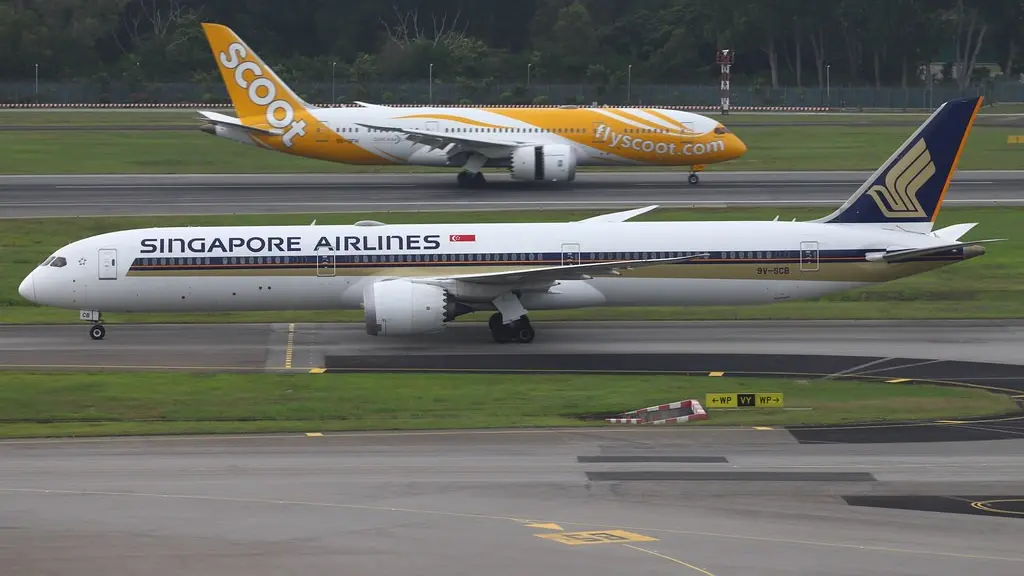
SINGAPORE— Final investigation reports released by Singapore’s Transport Safety Investigation Bureau (TSIB) have revealed that two separate turbulence incidents involving Singapore Airlines (SQ) and Scoot (TR) flights in June 2025 left eight cabin crew members injured, including two who sustained serious injuries.
The findings were published nearly a year after the events and outline how rapidly changing weather conditions and the timing of cockpit decisions contributed to both incidents.
The more serious event occurred on a Singapore Airlines flight descending toward Shanghai Pudong International Airport (PVG), while the second involved a Scoot service from Singapore Changi Airport (SIN) to Guangzhou Baiyun International Airport (CAN) that encountered turbulence over Vietnamese airspace.
Both investigations have prompted operational changes aimed at improving crew safety during adverse weather.
Singapore Investigation Into Turbulence
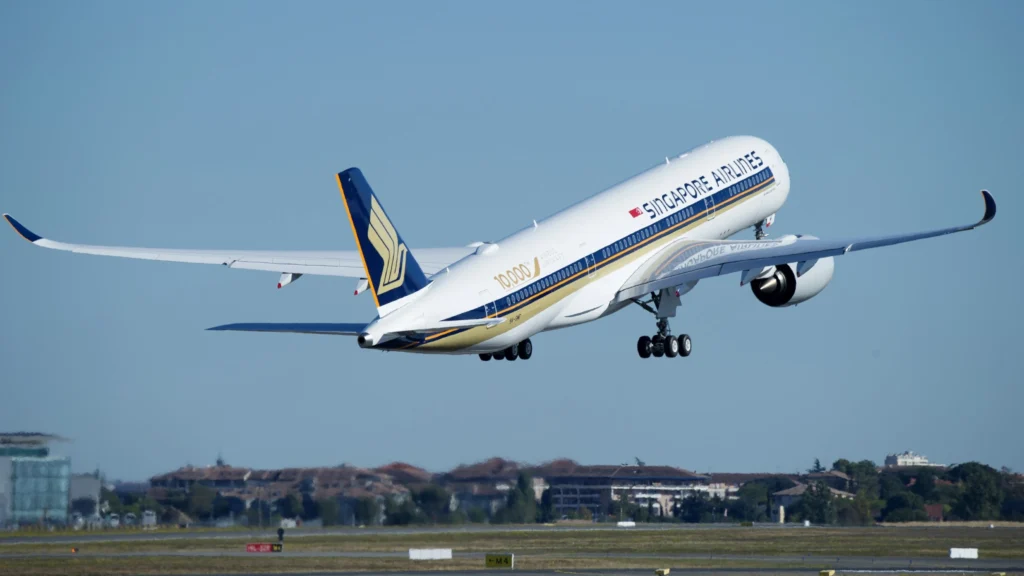
The Singapore Airlines incident took place on June 27, 2025, as an Airbus A350-900 approached Shanghai after more than four hours in the air.
During the descent, pilots detected areas of intense weather but identified what appeared to be a narrow gap between two storm cells.
Investigators said the flight crew elected to continue through the corridor even though it reduced the aircraft’s separation from hazardous weather below the distance recommended in the airline’s operating guidance.
As the aircraft later emerged from cloud cover, the pilots noticed a towering cumulonimbus cloud much closer than expected and immediately began maneuvering away from it.
Seconds later, the aircraft encountered severe turbulence while descending through 27,500 feet. Six cabin crew members were injured after several were briefly lifted off the cabin floor.
One crew member suffered a fractured ankle and required further medical treatment, while the remaining injured crew received outpatient care after landing safely in Shanghai.
The TSIB concluded that cabin crew could have been instructed to secure themselves earlier once the flight path between the storm cells had been selected.
Following the investigation, Singapore Airlines updated its turbulence management procedures and introduced new weather assessment tools to help pilots identify rapidly developing convective clouds more effectively.
Scoot Findings From Investigation
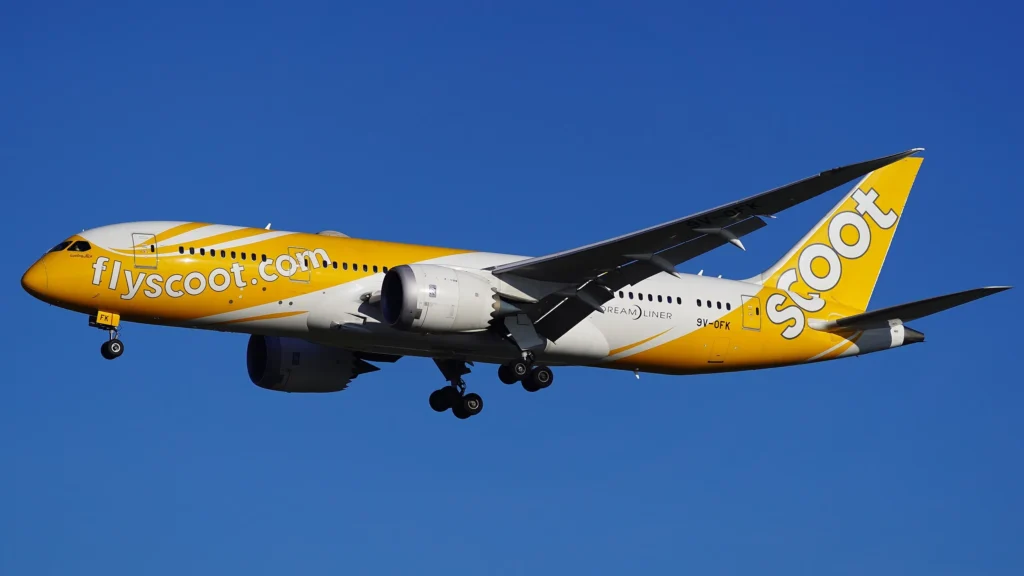
A separate investigation examined a June 10, 2025, Scoot Boeing 787-8 flight operating to Guangzhou.
While cruising at 39,000 feet over Vietnam’s Ho Chi Minh Flight Information Region, the pilots noticed possible turbulence and considered deviating around developing weather.
Heavy radio traffic delayed communication with air traffic control, while the captain believed the aircraft could safely pass through an area showing light weather returns on the radar.
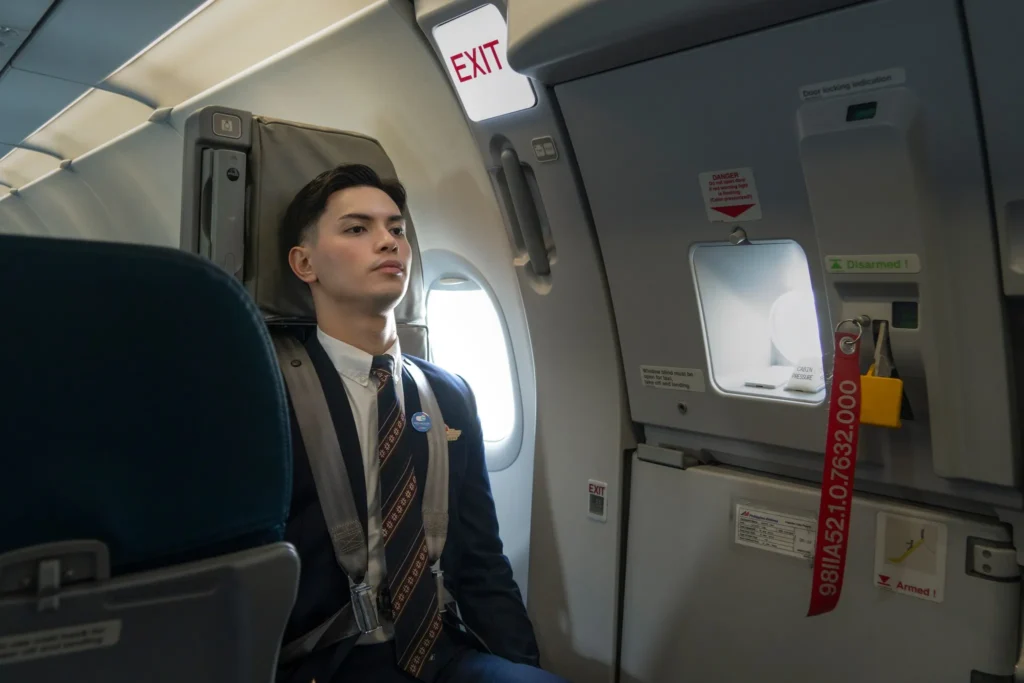
Although the fasten seat belt sign was activated, turbulence struck before an announcement directing cabin crew to take their seats.
The aircraft experienced about 32 seconds of turbulence, temporarily deviating about 200 feet from its assigned altitude. Two cabin crew members were injured, including one seriously, after being thrown from their positions.
Investigators said activating emergency cabin alerts earlier or repeatedly using the seat belt switch could have provided additional warning to cabin crew.
Scoot has since reminded pilots to use multiple cabin alerts during imminent turbulence, seek alternative radio frequencies when communications are congested, and deviate from their assigned route when necessary to avoid dangerous weather.
Safety Changes Following Turbulence
The investigations reinforce the growing importance of proactive turbulence management as airlines increasingly encounter convective weather.
The TSIB emphasized that early cabin preparation remains one of the most effective ways to reduce injuries when turbulence develops unexpectedly.
The reports also follow the bureau’s earlier investigation into Singapore Airlines Flight SQ321, which highlighted the challenges of detecting severe weather and reinforced industry efforts to strengthen turbulence procedures.
According to TSIB records, at least 10 turbulence-related incidents involving Singapore-registered aircraft were investigated between 2004 and 2025, The Straits Times reported.
Stay tuned with us. Further, follow us on social media for the latest updates.
Join us on Telegram Group for the Latest Aviation Updates. Subsequently, follow us on Google News
