

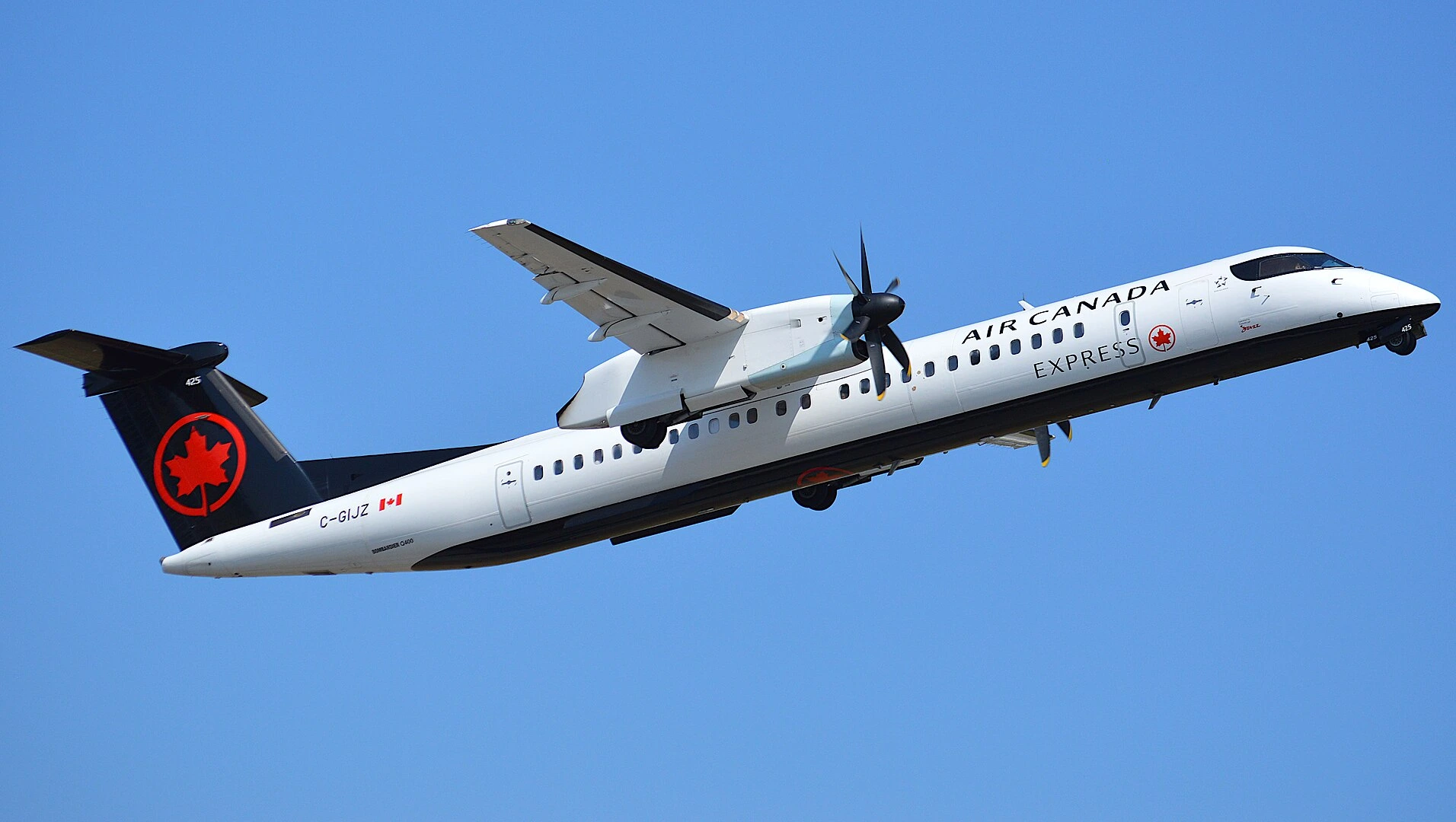
NEWARK— An Air Canada (AC) regional flight operating from Newark Liberty International Airport (EWR) to Halifax Stanfield International Airport (YHZ) made an emergency diversion to Boston on Wednesday after the aircraft captain suffered a serious medical episode during the journey.
The incident occurred aboard Air Canada Flight AC7664, operated by regional partner PAL Airlines.
The flight was carrying 61 passengers when the captain became incapacitated, forcing the first officer to assume full control of the aircraft and conduct a precautionary diversion to Boston Logan International Airport (BOS).
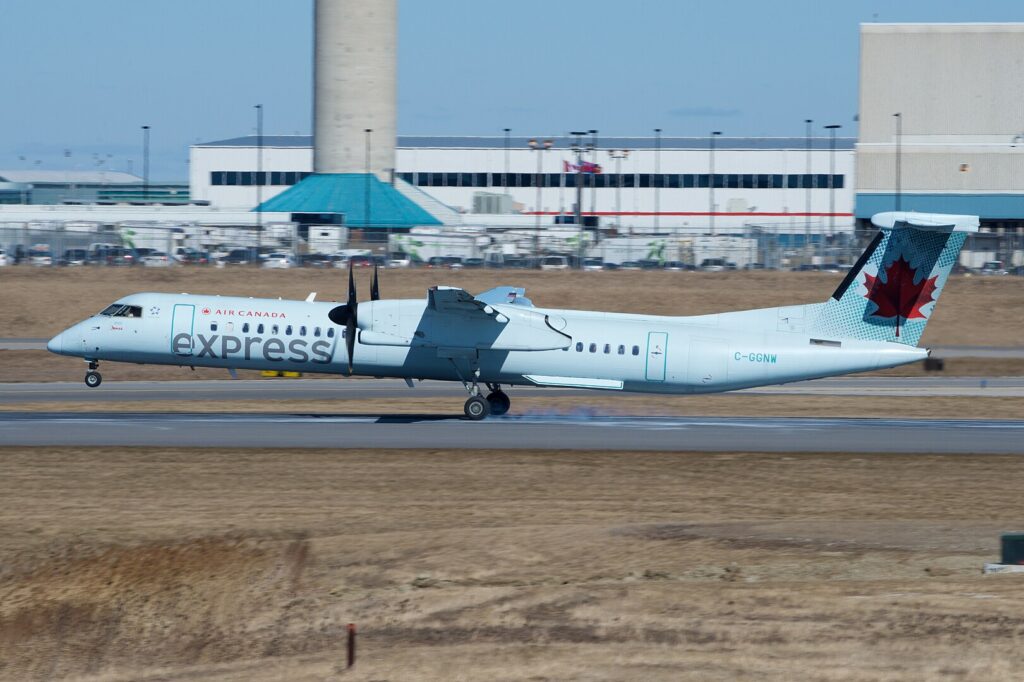
Air Canada Pilot Incapacitated
According to airline and passenger accounts, the situation unfolded unexpectedly while the De Havilland Canada Dash 8-400 (Q400) was en route to Halifax. Witnesses reported unusual aircraft movements before cabin crew rushed toward the flight deck to assist, ABC7NY reported.
Passengers later described a chaotic scene as flight attendants removed the captain from the cockpit following the medical event. Several travelers volunteered to help crew members manage the situation while the remaining pilot focused on flying the aircraft.
One passenger said the captain appeared disoriented and unresponsive during much of the incident. The individual reportedly remained under supervision until the aircraft landed safely in Boston.
Despite the emergency, the first officer maintained control of the flight and executed a safe diversion, demonstrating the extensive training airline pilots receive to handle in-flight emergencies independently when required.

Safe Landing in Boston Successfully
The aircraft landed safely at Boston Logan International Airport without further complications. Emergency personnel met the flight upon arrival and boarded the aircraft shortly after it reached the gate.
Video recorded by passengers showed first responders carefully assisting the captain off the aircraft before transporting him to a nearby medical facility. Authorities confirmed that the pilot was taken to Massachusetts General Hospital for evaluation and treatment.
Passengers expressed relief following the landing, noting that the professionalism of the crew helped maintain order throughout the event. While the circumstances were unsettling, no injuries among passengers or cabin crew were reported.
The successful diversion highlighted the aviation industry’s emphasis on redundancy and safety procedures. Commercial airline operations are designed to ensure flights can continue safely even if one pilot becomes incapacitated.

Passenger Travel Impact and Recovery
Following the emergency landing, Air Canada began arranging alternative travel plans for affected customers so they could continue their journeys to Halifax as quickly as possible.
The airline worked with operational teams to minimize disruptions while ensuring passengers received support after the unexpected diversion.
Such incidents remain relatively rare, but airlines maintain established procedures to manage medical emergencies involving crew members.
Industry regulations require pilots to undergo regular medical examinations, and airlines continuously train flight crews to respond to a wide range of operational scenarios.
In this case, those procedures enabled the flight to conclude safely despite the serious in-flight medical event.
The captain’s condition has not been publicly disclosed beyond confirmation that he was receiving medical care. Authorities and airline officials continue to monitor the situation while passengers praise the crew’s response and the first officer’s handling of the emergency.
Stay tuned with us. Further, follow us on social media for the latest updates.
Join us on Telegram Group for the Latest Aviation Updates. Subsequently, follow us on Google News
