


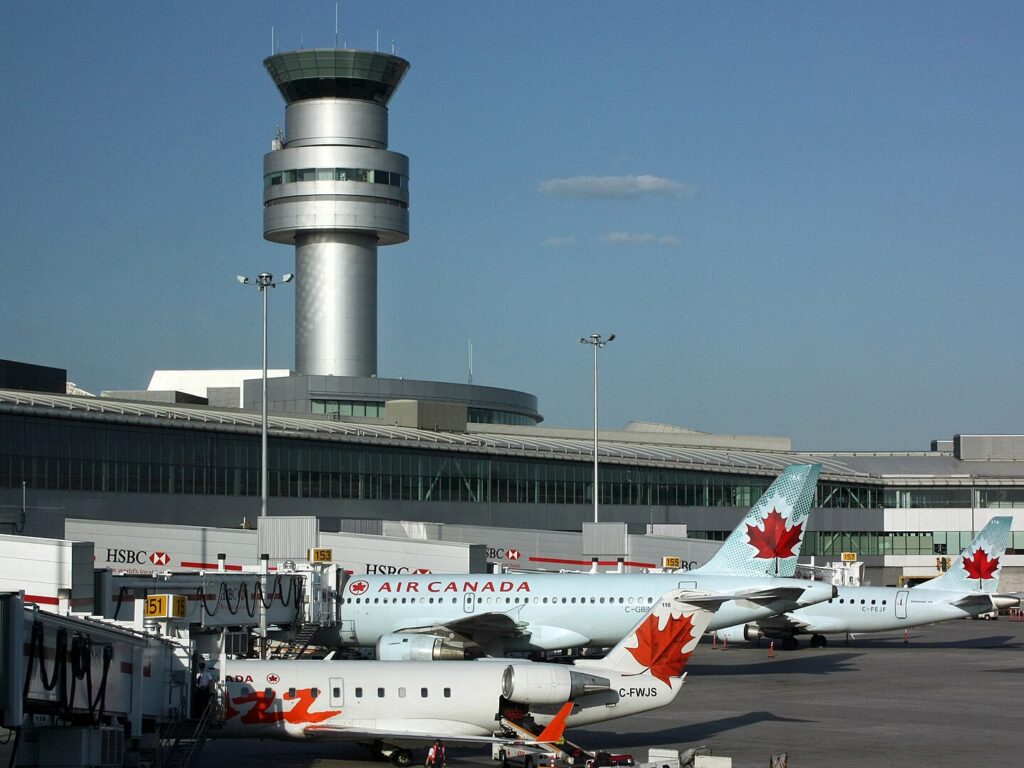
TORONTO— A growing luggage-tag switching scheme at Toronto Pearson International Airport (YYZ) has exposed innocent airline passengers to serious criminal allegations in multiple countries, including destinations where drug smuggling offenses can carry severe penalties, including capital punishment.
A year-long investigation has identified at least 17 cases in which travelers departing from Canada were falsely linked to suitcases filled with narcotics after baggage tags were allegedly transferred from their legitimate luggage to drug-filled bags.
The incidents have raised fresh concerns about airport security vulnerabilities and organized criminal activity within baggage handling operations.

Toronto Airport Security Threat
Investigators found that affected passengers traveled on flights from Canada to destinations including the Dominican Republic, Germany, France, Morocco, Bermuda, the Philippines, and South Korea.
In each case, authorities initially connected the travelers to illegal drugs because their names appeared on baggage tags attached to the seized suitcases.
The scheme relies on a simple but effective method. A corrupt airport employee removes a baggage tag from a legitimate suitcase and attaches it to another bag carrying narcotics.
If airport screening fails to detect the drugs, criminal networks can retrieve the luggage upon arrival while the unsuspecting passenger remains unaware.
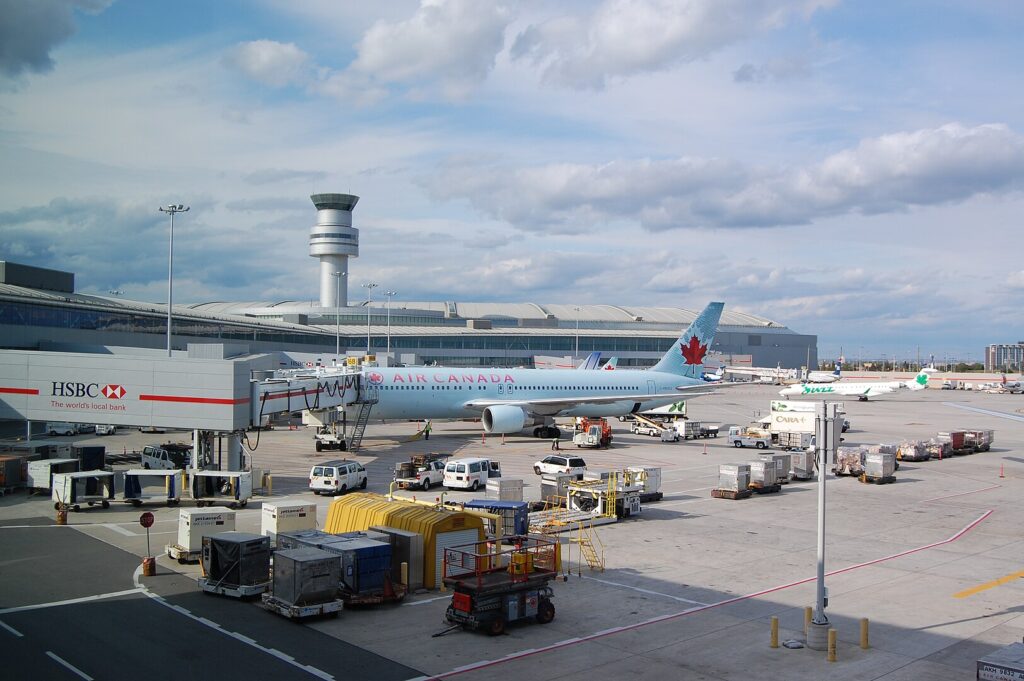
Authorities believe the operation exploits restricted airport areas where surveillance coverage may be limited.
At Toronto Pearson Airport, thousands of security cameras monitor operations, yet investigators continue to identify vulnerabilities that can be exploited in baggage handling zones.
Innocent Travelers Targeted
One of the most striking cases involved a Toronto woman traveling with her family to Auckland via Vancouver.
Shortly before departure from Vancouver International Airport (YVR), border officers removed her from the aircraft after identifying two suitcases allegedly linked to her baggage records.
Authorities discovered more than 20 kilograms of suspected methamphetamine inside the luggage. Although her name appeared on the baggage tags, the traveler maintained that the suitcases did not belong to her.
She was detained and placed in a holding cell before being released several hours later, CTV News exclusively reported.
Upon arriving in New Zealand, she discovered her actual luggage in the airport’s unclaimed baggage area with replacement handling tags attached, reinforcing suspicions that her original baggage tags had been removed and reused.
Several victims have also reported discovering tracking devices hidden inside the drug-filled bags, suggesting criminal organizations closely monitor the movement of illicit shipments throughout international airports.
Criminal Network Concerns
Law enforcement agencies have intensified investigations into baggage-tag switching operations.
Over the past year, the Royal Canadian Mounted Police has arrested six baggage and ramp workers connected to separate alleged tag-switching incidents at Toronto Pearson Airport.
The consequences for victims can be severe. In one case, three Canadian travelers were jailed in the Dominican Republic after authorities linked them to suitcases containing dozens of packages of marijuana.
Although investigators later determined the bags did not belong to them, the travelers remained stranded abroad for months.
Stay tuned with us. Further, follow us on social media for the latest updates.
Join us on Telegram Group for the Latest Aviation Updates. Subsequently, follow us on Google News
