


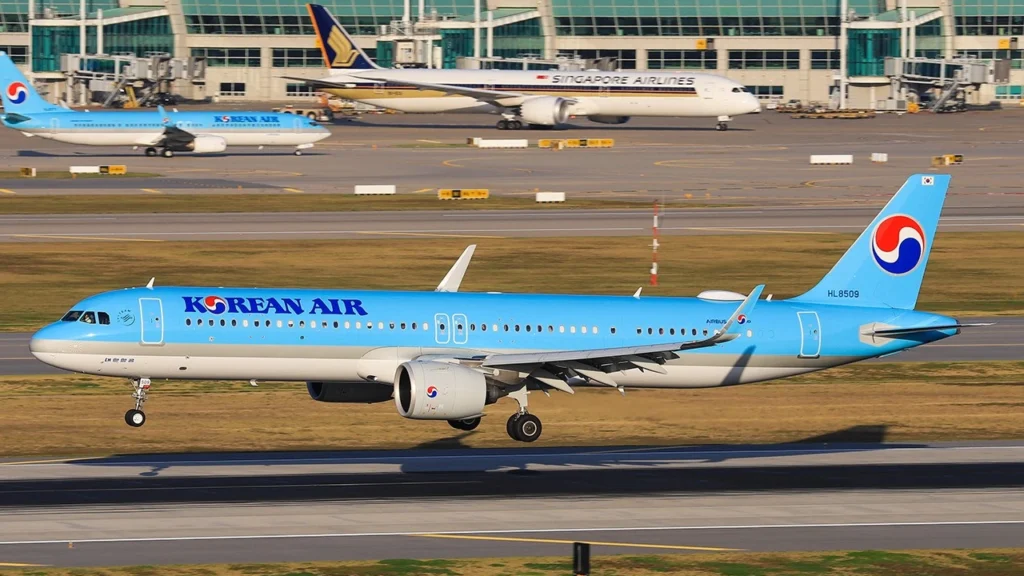
Korean Air (KE) is the flag carrier of South Korea and one of Asia’s most recognised full-service airlines, operating an extensive network across Asia, Europe, North America, and Oceania. Headquartered in Seoul, the airline is known for its long-haul operations, premium cabins, and strong service culture rooted in Korean hospitality.
Cabin crew at Korean Air play a central role in delivering both safety and service across a wide range of international routes. With a mix of short-haul regional flights and ultra-long-haul sectors, their salary structure includes both base pay and variable, flight-related income.

Korean Air Cabin Crew Salary
Korean Air cabin crew salaries in 2026 are built around a base salary combined with hourly flying pay and international allowances. As with most full-service Asian carriers, total earnings depend heavily on flying hours, route type, and seniority.
Entry-level cabin crew typically begin with a base monthly salary of around ₩2,700,000 to ₩3,200,000 (USD 2,000 to USD 2,400). Once flying pay and layover allowances are included, total monthly earnings usually increase to approximately ₩3,500,000 to ₩4,200,000 per month (USD 2,600 to USD 3,100 per month).
On an annual basis, this places new cabin crew in the region of ₩42,000,000 to ₩50,000,000 per year (USD 31,000 to USD 37,000 per year), which aligns closely with broader South Korean cabin crew salary averages.
With experience and more frequent long-haul flying, mid-career cabin crew typically earn between ₩50,000,000 and ₩65,000,000 per year (USD 37,000 to USD 48,000 per year) depending on roster intensity and duty patterns.
Senior cabin crew, such as pursers or inflight supervisors, can earn around ₩65,000,000 to ₩80,000,000 per year (USD 48,000 to USD 59,000 per year) or more, particularly when operating long-haul international routes with extended layovers.
Overall, Korean Air’s salary structure is moderately competitive across Asia, with earnings increasing steadily with seniority and long-haul flying rather than relying on high base pay alone.
Benefits of Working as a Korean Air Cabin Crew
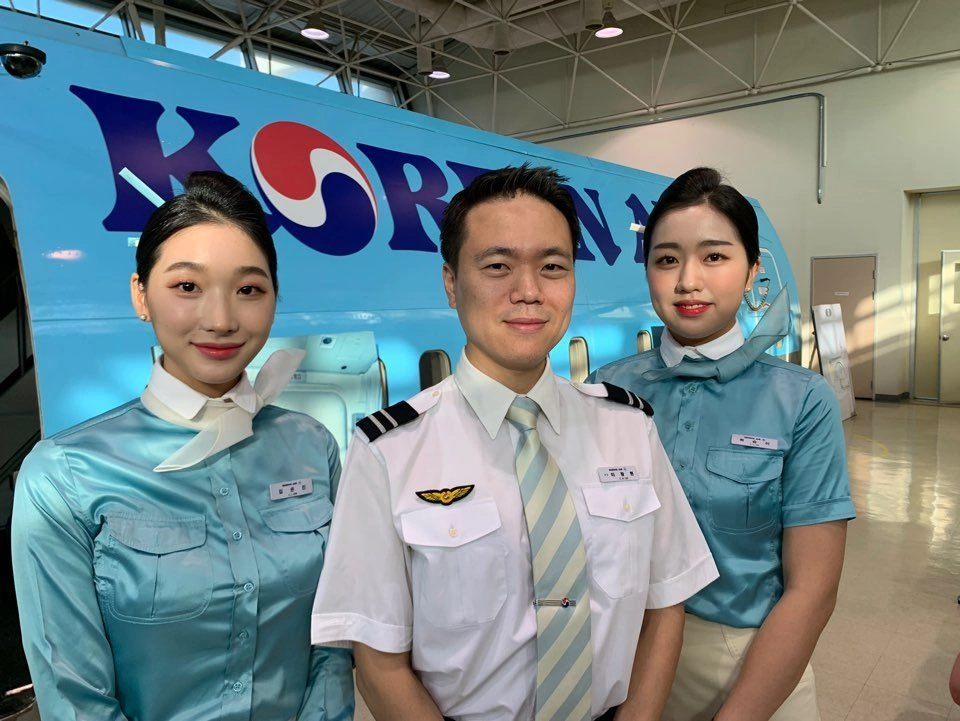
Korean Air offers its cabin crew the following range of industry-leading perks.
- Flying hour pay – Cabin crew receive additional income based on hours flown, which forms a significant portion of their total salary.
- International layover allowances – Crew are provided daily allowances during overseas stays to cover meals and incidental expenses.
- Hotel accommodation during layovers – Korean Air arranges hotel accommodation for crew during international stopovers to ensure proper rest.
- Staff travel privileges – Cabin crew enjoy discounted or standby travel on Korean Air and partner airlines, often extended to eligible family members.
- Medical and insurance coverage – Employees are provided with healthcare and insurance benefits for financial protection during employment.
- Paid training programmes – New recruits undergo structured and fully supported training in safety procedures, emergency response, and inflight service.
- Career progression opportunities – Cabin crew can advance to senior roles such as purser, instructor, or inflight supervisor over time.
- Annual leave and rest periods – Paid leave and regulated rest schedules are provided to maintain well-being and comply with aviation safety standards.
Requirements to Become Cabin Crew at Korean Air
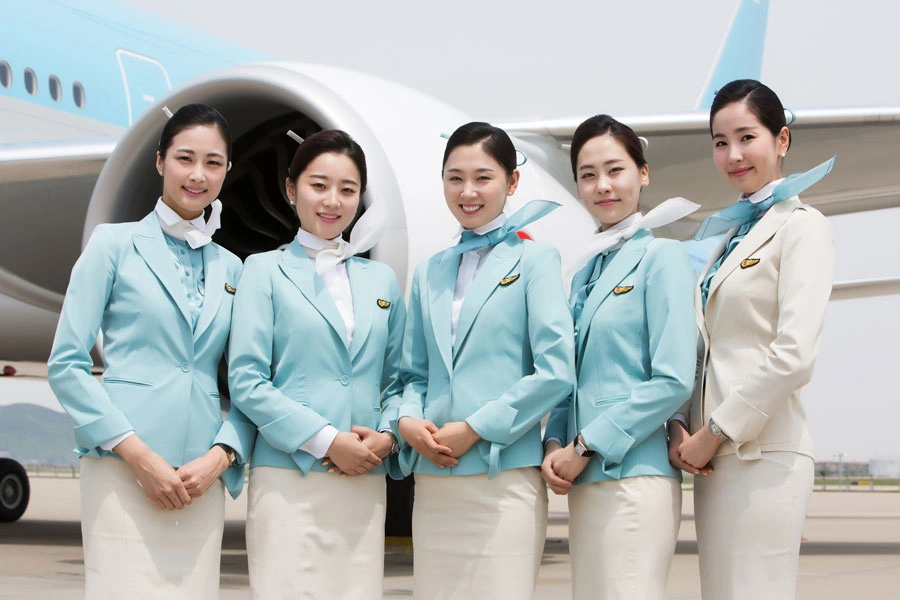
Korean Air’s cabin crew are required to meet the following criteria at the time of hiring.
- Must be at least 18 years old
- Must hold a valid passport with unrestricted international travel eligibility
- Must have completed secondary education or higher
- Must be fluent in English, with Korean language proficiency highly preferred
- Must meet height and reach requirements for safety equipment access
- Must maintain a professional appearance with no visible tattoos
- Must be physically fit and able to pass aviation medical examinations
- Must demonstrate strong communication, teamwork, and customer service skills
- Must be willing to work irregular schedules, including long-haul international flights
Recruitment Process for Cabin Crew
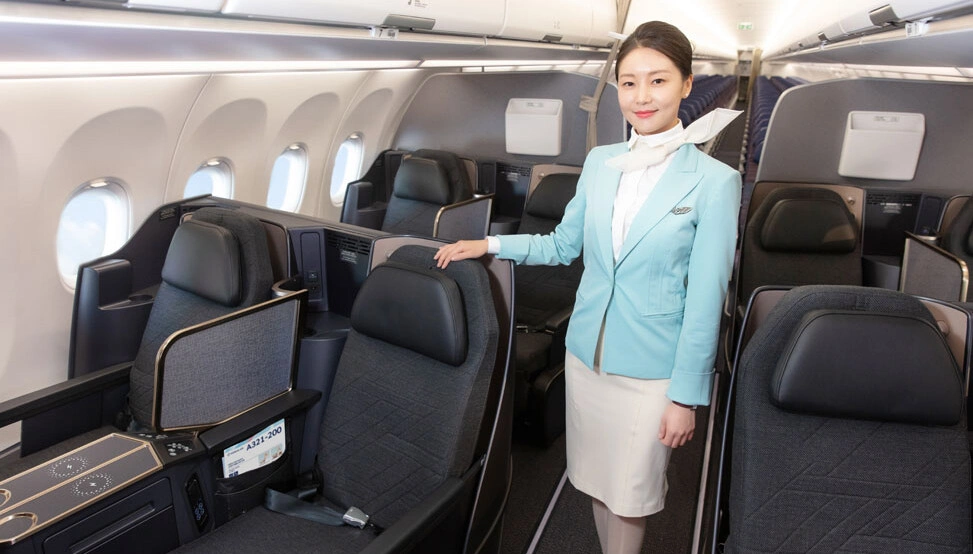
Korean Air’s cabin crew are subjected to the following steps in the airline’s recruitment.
- Online application – Candidates submit applications through Korean Air’s official recruitment portal.
- Initial screening – Applications are reviewed to ensure candidates meet eligibility requirements, including education and language ability.
- Assessment stage – Shortlisted candidates participate in group discussions, communication exercises, and personality assessments.
- Personal interview – Candidates attend interviews to evaluate professionalism, service mindset, and cultural fit.
- Medical and background checks – Selected applicants must pass aviation medical examinations and verification checks.
- Training programme – Successful candidates complete a structured training programme covering safety procedures, emergency handling, and in-flight service standards.
Bottom Line
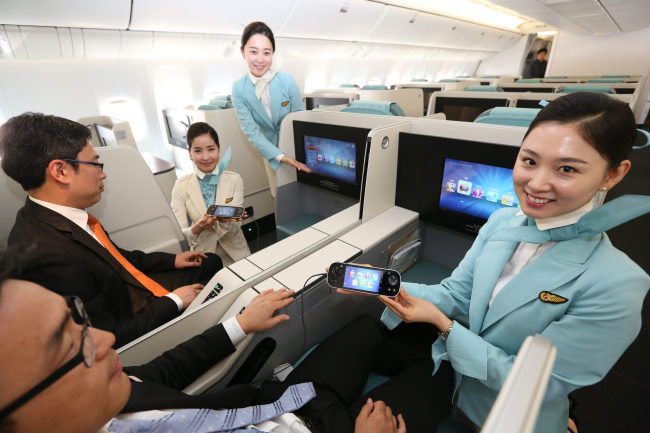
A cabin crew role at Korean Air in 2026 offers steady, experience-based earnings with strong long-haul exposure. While the base salary is moderate compared to some premium airlines, additional income from flying hours and international layovers significantly improves total pay.
With global route opportunities, structured career progression, and solid travel benefits, Korean Air remains a strong option for those looking to build a long-term career in aviation, particularly within the Asian full-service airline market.
Korean Air Cabin Crew Salary FAQs
Korean Air cabin crew typically earn between ₩3,500,000 and ₩4,200,000 per month (USD 2,600 to USD 3,100 per month) early in their careers, with higher earnings as experience increases.
Yes. Cabin crew receive flying-hour pay, international layover allowances, and other duty-related payments that increase total income beyond base salary.
Most Korean Air cabin crew are based in Seoul, particularly around Incheon International Airport, the airline’s primary hub.
Stay tuned with us. Further, follow us on social media for the latest updates.
Join us on Telegram Group for the Latest Aviation Updates. Subsequently, follow us on Google News
