

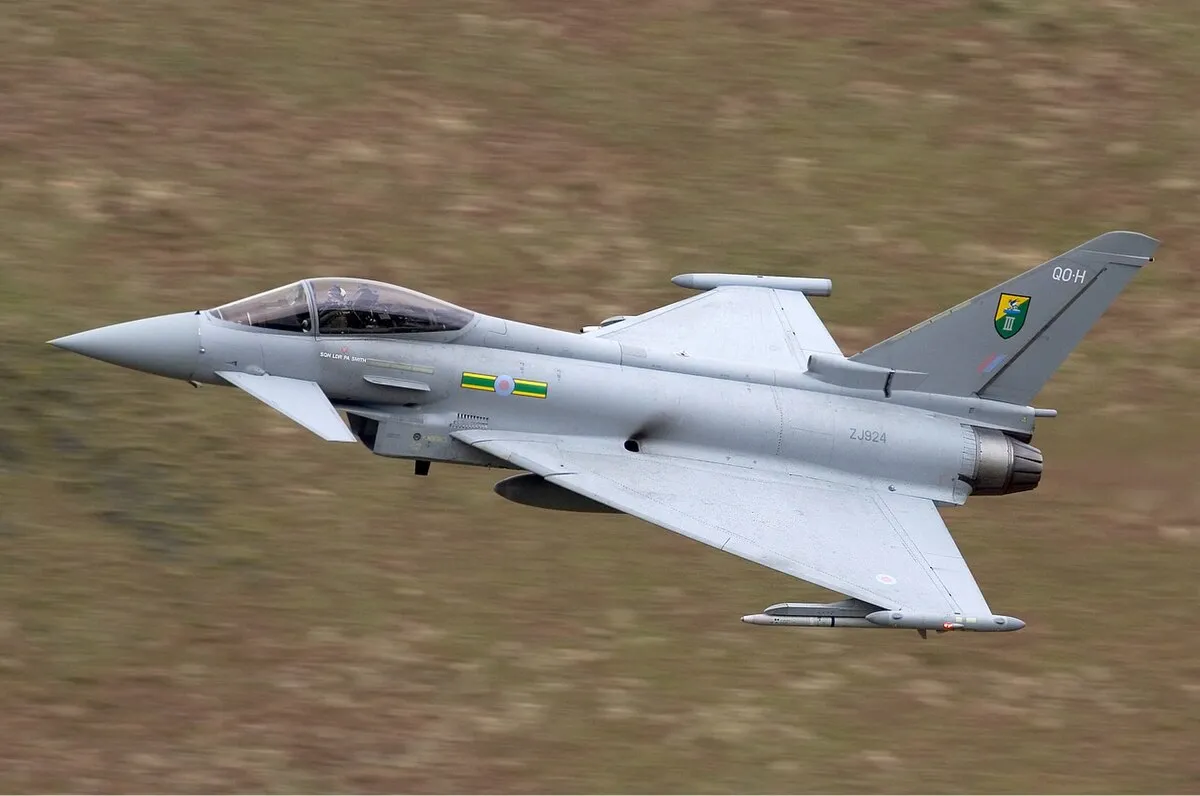
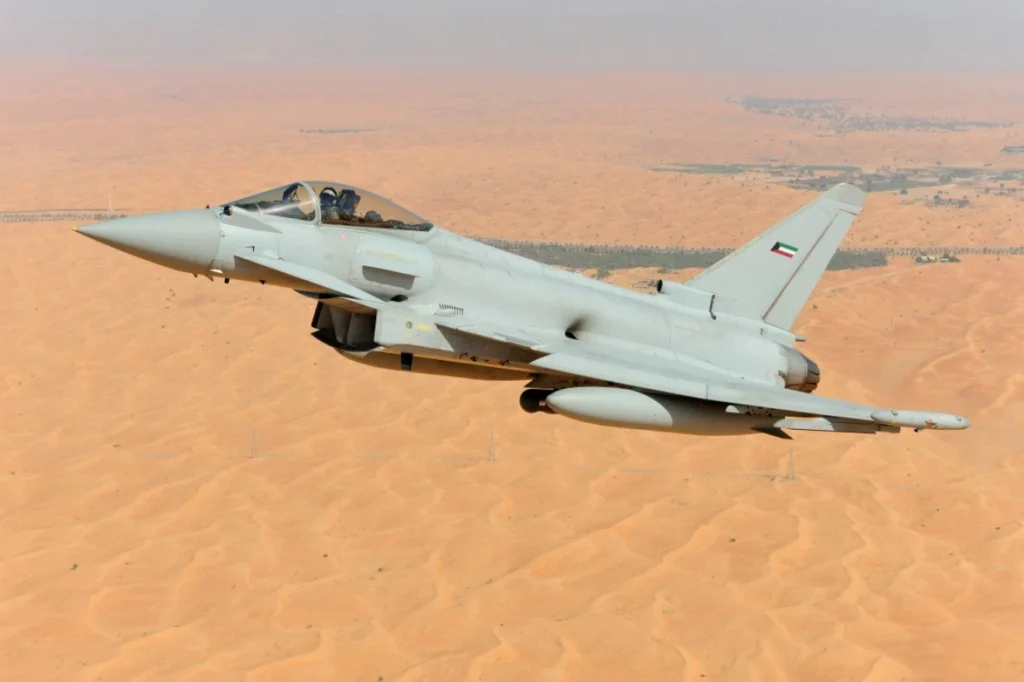
MUNICH— Airbus Defense and Space has publicly unveiled the first German Tranche 4 Eurofighter at its Manching production site near Munich (MUC), Germany. The single-seat jet, carrying production number GS0115 and service registration 34+03, was presented during the Airbus Defense Summit and marks a major milestone for the Luftwaffe.
The aircraft strengthens Germany’s air combat capability at a time when the Future Combat Air System (FCAS) program faces uncertainty between Berlin and Paris (CDG). Flight testing of the new variant is expected to begin within the coming weeks, with several airframes already completed at Manching.
Airbus Unveils Germany’s First Tranche 4 Eurofighter
The Tranche 4 Eurofighter represents a significant technological leap over earlier Tranche 1, 2, and 3 versions currently flown by the Luftwaffe.
While the airframe looks visually similar to previous variants, the internal systems have been substantially upgraded to meet modern combat requirements.
Germany ordered 38 Tranche 4-standard aircraft under Project Quadriga in November 2020. The order includes 31 single-seat and seven twin-seat configurations, with deliveries originally scheduled between 2025 and 2030. The contract also covers replacements for two Eurofighters previously lost in accidents.
Berlin has further expanded its Eurofighter commitment by ordering 55 additional jets to partially replace the aging Tornado fleet. Late last year, Germany also signed a contract for 20 Tranche 5 Eurofighters, bringing the total new-build commitment to 113 aircraft. The Luftwaffe currently operates around 138 Eurofighters across earlier variants.
ECRS Mk 1 AESA Radar Integration
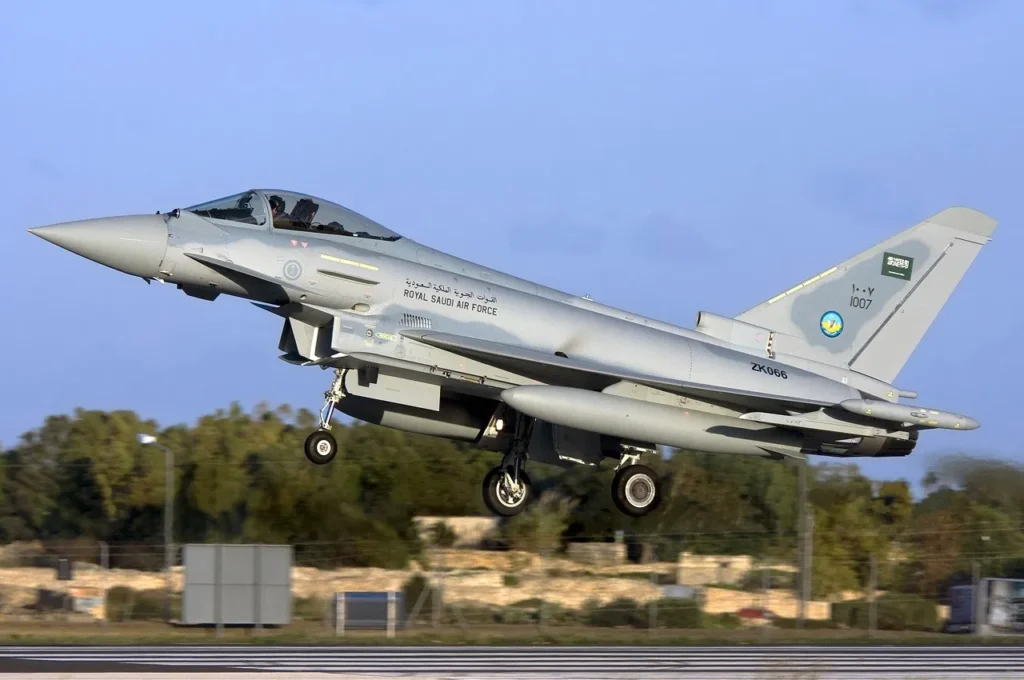
The most important upgrade on the Tranche 4 jet is the integration of the ECRS Mk 1 active electronically scanned array (AESA) radar, developed by Hensoldt. The new sensor has already been tested on a dedicated Eurofighter test aircraft and on a modified Airbus A320 testbed known as the Advanced Technology Research Aircraft, operated by the German Aerospace Center (DLR).
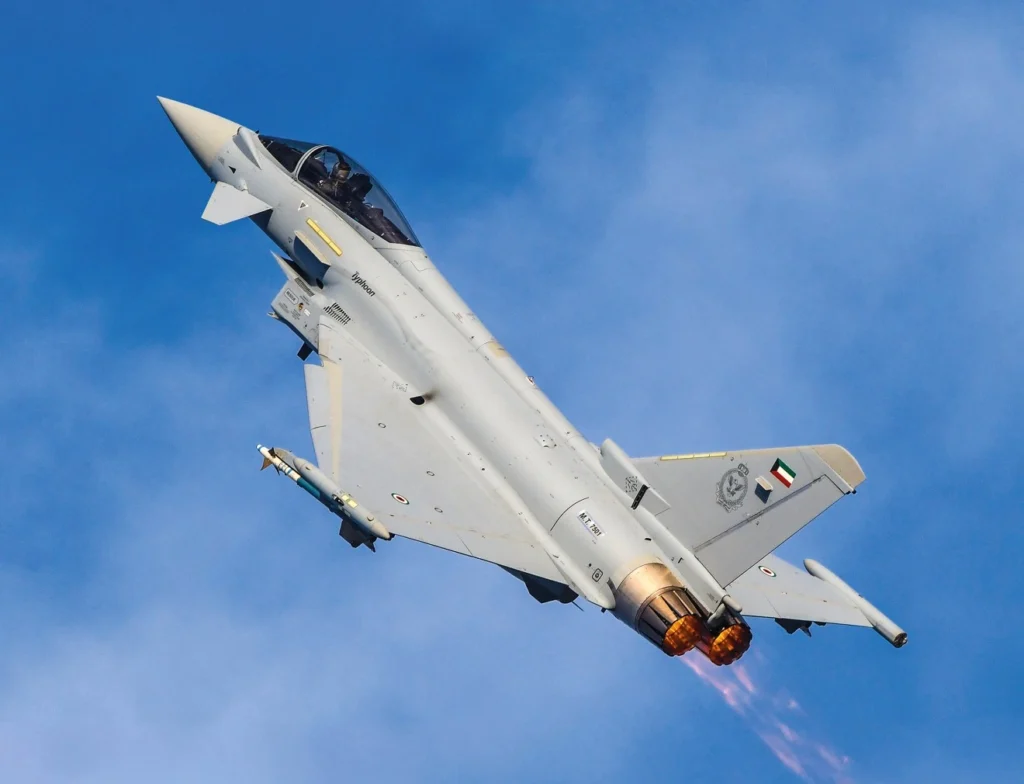
The European Common Radar System program has produced three distinct AESA radar variants based on customer requirements. The ECRS Mk 0 is fitted to aircraft for Kuwait (KWI) and Qatar (DOH), while the Mk 1 is the definitive German and Spanish standard. The United Kingdom (LHR) is receiving the more advanced ECRS Mk 2 variant.
German Tranche 4 jets will initially receive the ECRS Mk 1 Step 0 configuration, essentially a Mk 0 fitted with a new antenna. A second development phase will install the ECRS Mk 1 Step 1 in the Quadriga aircraft starting in mid-2027, TWZ reported.
Advantages of AESA Technology
AESA radars provide several operational benefits compared to mechanically scanned arrays. They detect and track targets at greater range, with higher accuracy and faster response times. They also handle low-signature threats such as drones and cruise missiles more effectively.
Modern AESA sensors offer improved target discrimination, multi-target tracking, and resilience against electronic jamming.
With fewer moving parts, they are also more reliable in service. The longer detection range is particularly valuable when employing beyond-visual-range missiles such as the Meteor used by the Eurofighter.
Long-Term Evolution and Cockpit Upgrades
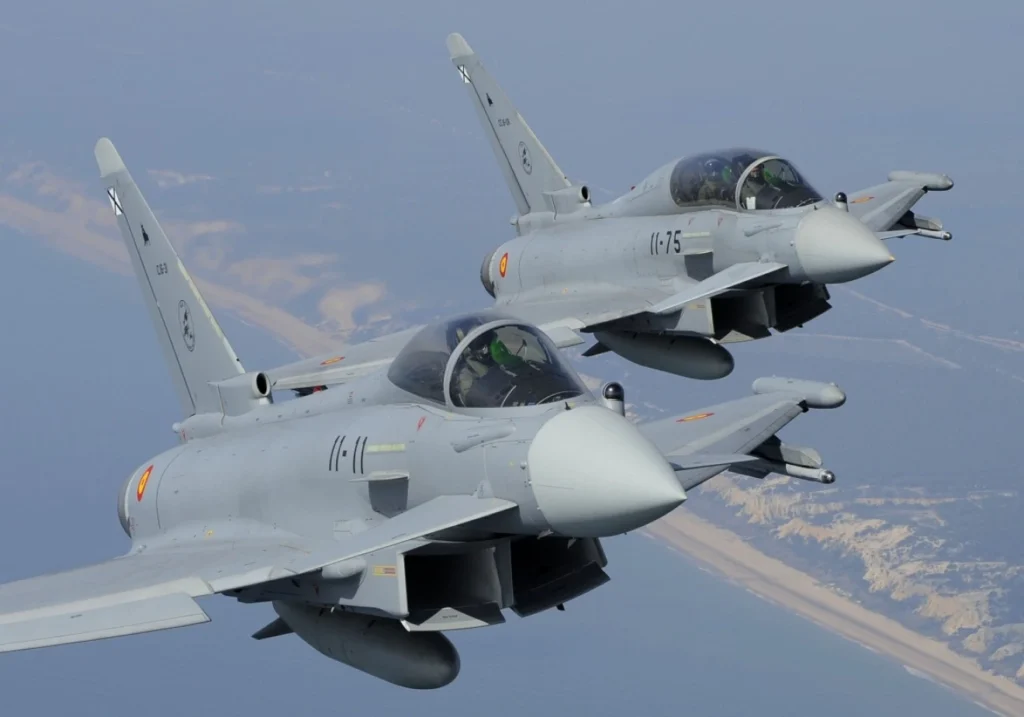
Further enhancements for the Tranche 4 fleet are planned under the Long-Term Evolution (LTE) program. This effort focuses on avionics architecture, including new mission computers, flight-control systems, communications equipment, and armament control. A new Large Area Display measuring 12 by 22 inches will replace the three existing 6 by 6-inch multifunction head-down displays.
The new display will help pilots manage the increased data flow from the AESA radar and support future crewed-uncrewed teaming missions. However, Berlin has not confirmed which specific LTE upgrades it will adopt. The Tranche 4 aircraft unveiled at Manching also lacks the PIRATE infrared search and track sensor, originally omitted on budget grounds.
Typhoon EK Electronic Warfare Conversion
Outside the scope of Project Quadriga, the Luftwaffe plans to convert 15 existing Eurofighters into electronic warfare aircraft. The resulting Typhoon EK variant will carry the Arexis electronic warfare suite from Saab and will employ AGM-88E Advanced Anti-radiation Guided Missiles for suppression of enemy air defense missions.
These aircraft will replace the Tornado ECR jets that have served in the electronic warfare role since the 1990s, providing a significant capability boost for German air operations.
Nuclear Strike and F-35A Procurement
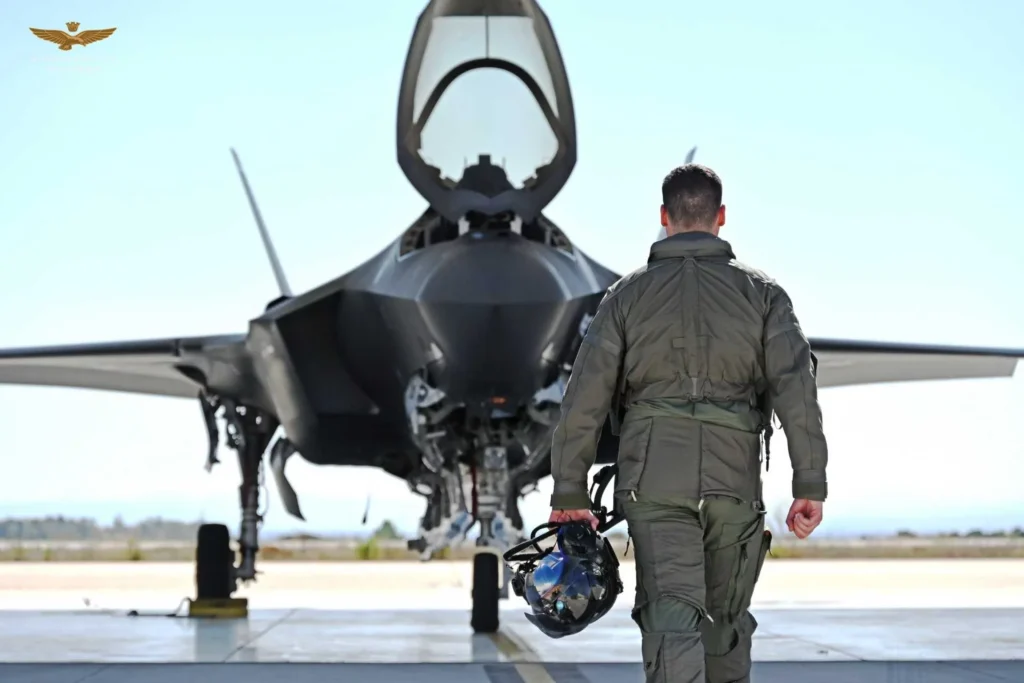
Germany is also acquiring 35 Lockheed Martin F-35A fighters to replace the Tornado aircraft assigned to the nuclear strike mission. These jets will be cleared to carry B61-12 free-fall nuclear bombs as part of NATO’s nuclear sharing arrangement.
The F-35A will additionally support Germany’s conventional long-range strike capability, including the use of the Joint Strike Missile (JSM) cruise missile.
Uncertainty Around FCAS and NGF Programs
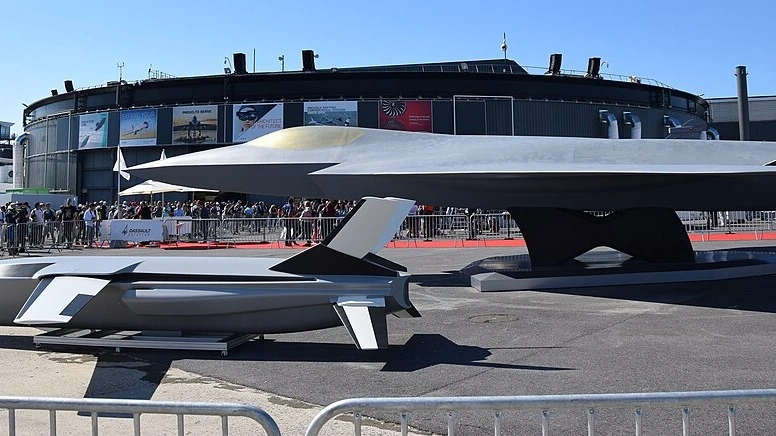
The Eurofighter was previously expected to give way to the Future Combat Air System after 2040, with the New Generation Fighter (NGF) at the core of the system. However, the program has faced repeated disagreements between France and Germany, with Berlin reportedly unhappy about French demands for a larger share of the work.
German defense officials are now exploring alternative options, including possible separation from France in the program. As a result, the Eurofighter is expected to remain central to Luftwaffe operations for a longer period than previously planned.
Loyal Wingman Drone Programs
Germany is also evaluating loyal wingman drones to operate alongside the Eurofighter from around 2030. Airbus and Kratos are pitching the stealthy XQ-58A Valkyrie, while Airbus is developing its own concept called Wingman.
Boeing Australia has partnered with German manufacturer Rheinmetall to offer the MQ-28 Ghost Bat. German defense startup Helsing has also entered the market with its CA-1 Europa autonomous combat aircraft concept.
Strategic Shift in German Defense Posture
The expanded Eurofighter investment reflects a wider transformation of the German military following Russia’s 2022 invasion of Ukraine. Berlin is reshaping its armed forces from a low-readiness expeditionary structure into a high-readiness territorial force focused on NATO’s eastern flank.
Long-range strike capabilities, largely neglected since the Cold War, have returned as a priority. The unveiling of the Tranche 4 Eurofighter in Bavaria represents a visible demonstration of this strategic shift.
Stay tuned with us. Further, follow us on social media for the latest updates.
Join us on Telegram Group for the Latest Aviation Updates. Subsequently, follow us on Google News
