

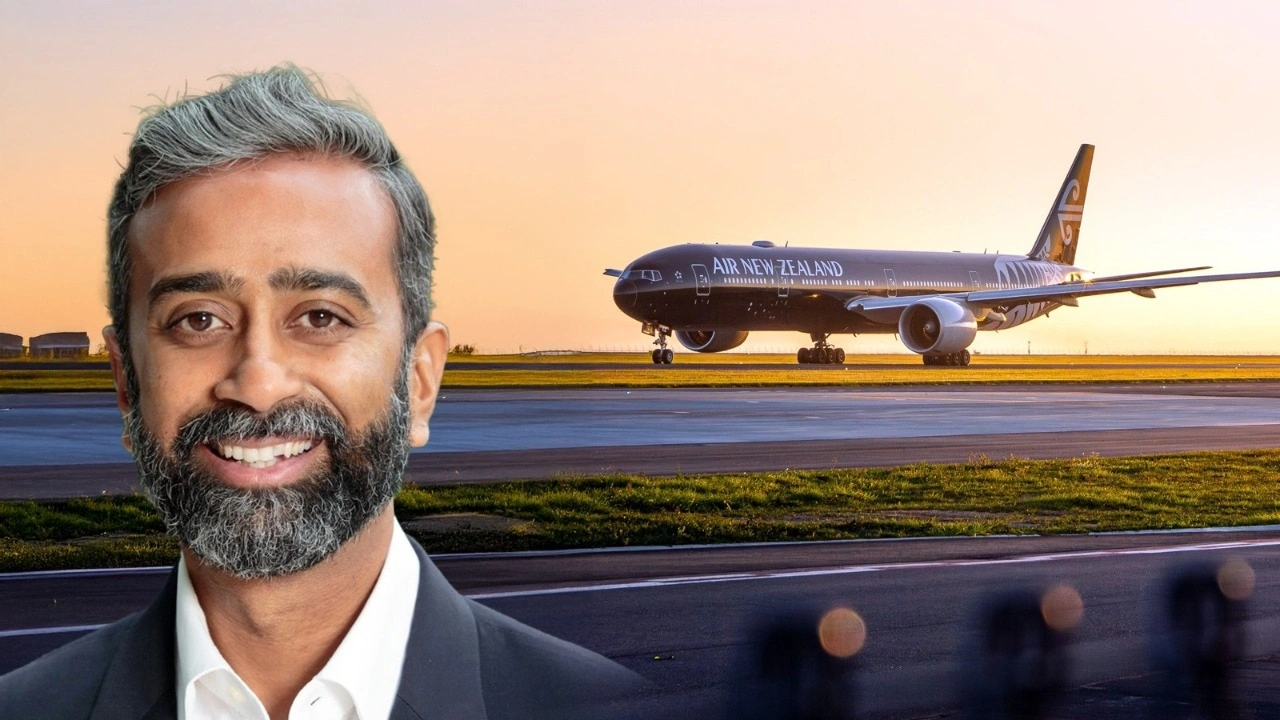
Air New Zealand (NZ) is the country’s national airline and one of the most respected full-service carriers in the Oceania region. Operating from its hub in Auckland, the airline runs a strong domestic network alongside long-haul international routes across Asia, North America, and the Pacific.
Following a steady post-pandemic recovery, Air New Zealand has focused on restoring profitability, improving operational reliability, and modernising its fleet. Leadership plays a critical role in maintaining this balance, particularly in a geographically isolated market.
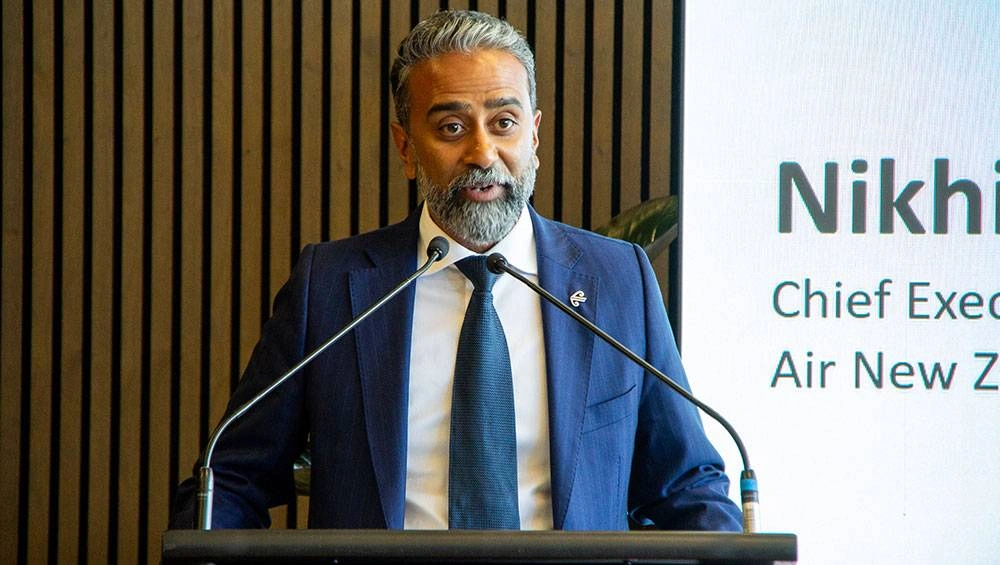
In 2026, the airline is led by CEO Nikhil Ravishankar, whose compensation reflects both company performance and regional executive pay standards.
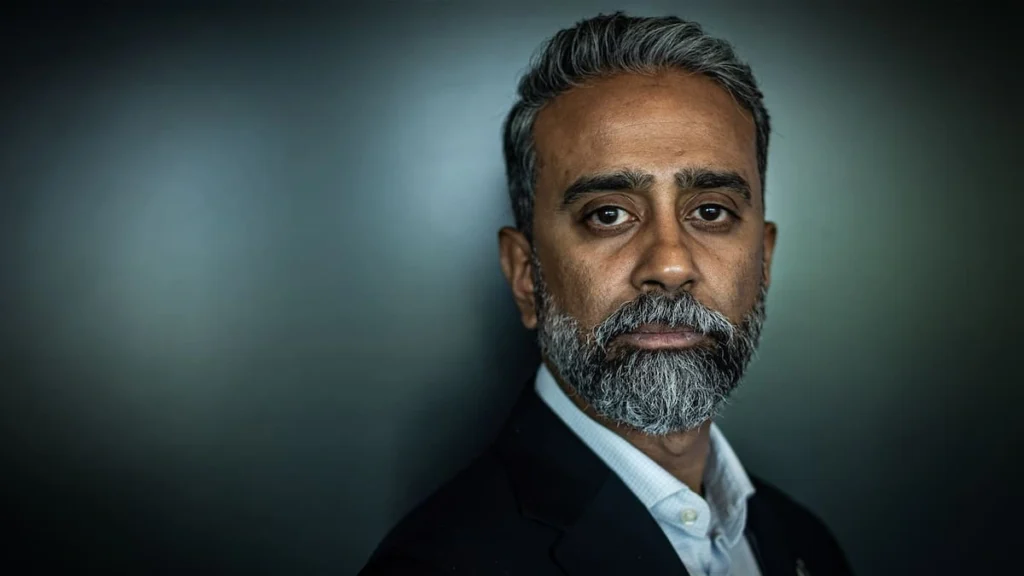
Who is Air New Zealand CEO, Nikhil Ravishankar?
Nikhil Ravishankar became Chief Executive Officer of Air New Zealand in 2024, marking a new phase of leadership for the airline. Unlike many traditional airline CEOs, Ravishankar comes from a strong technology and digital background.
Before taking on the CEO role, he served as Chief Digital Officer at Air New Zealand, where he led major digital transformation initiatives, including customer experience platforms, data systems, and operational technology upgrades. Before joining the airline, he held senior roles in telecommunications and consulting.
His leadership style is often described as modern and data-driven, with a strong emphasis on innovation, efficiency, and customer-centric operations.
Since becoming CEO, he has focused on strengthening operational performance, improving reliability, and leveraging technology to enhance both customer experience and internal processes.
ALSO READ: British Airways CEO Salary in 2026

Air New Zealand CEO Salary in 2026
Air New Zealand follows a performance-linked executive pay structure, balancing fixed salary with incentives tied to financial and operational outcomes.
For 2026, Ravishankar’s estimated compensation is as follows:
- Base salary: approximately NZD 1.6–1.8 million
- Annual performance bonus: around NZD 2.0–2.5 million
- Long-term incentives/share-based awards: roughly NZD 2.5–3.0 million
- Other benefits and allowances: about NZD 0.4–0.6 million
This results in a total estimated compensation of NZD 6.5–7.9 million, equivalent to roughly US$4.0–4.9 million in 2026.
A significant portion of this package is performance-driven, meaning actual payouts depend on profitability, operational performance, and strategic execution.
Peer Comparison
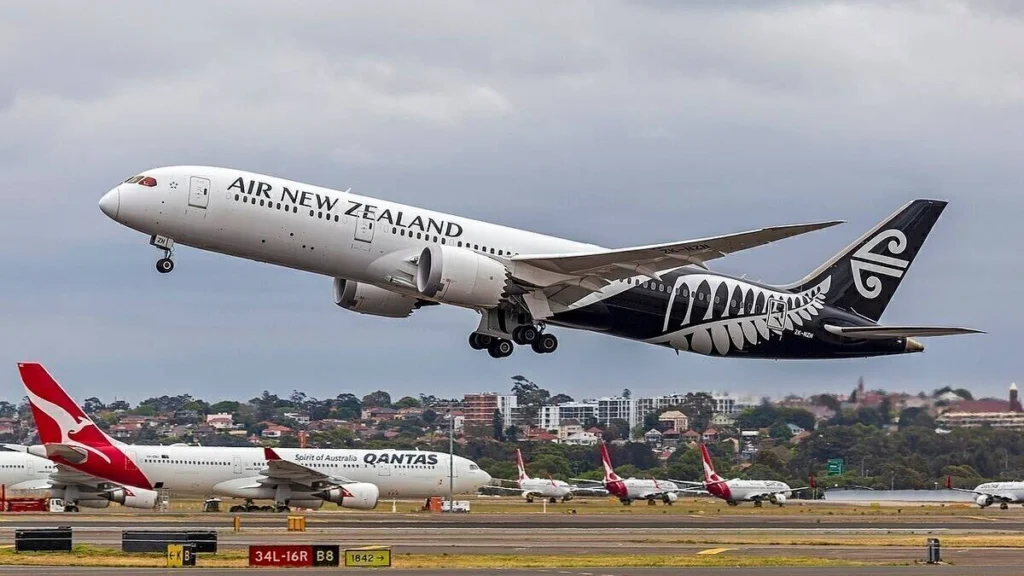
To better understand Ravishankar’s estimated NZD 6.5–7.9 million (US$4.0–4.9 million) compensation, it is useful to compare it with that of other airline leaders in the Oceania region.
At Qantas, CEO Vanessa Hudson leads a significantly larger aviation group, including both full-service and low-cost operations.
Her total compensation in 2026 is estimated at AUD 11–13 million (US$7.5–8.8 million), reflecting Qantas’s scale, international reach, and diversified business model.
Meanwhile, at Fiji Airways, CEO Andre Viljoen oversees a smaller regional airline focused primarily on Pacific and Australia routes. His estimated compensation is around FJD 2.8–3.2 million (US$1.3–1.5 million) in 2026.
Positioned between these two, Ravishankar’s compensation reflects Air New Zealand’s mid-sized scale, larger and more complex than Fiji Airways, but smaller than Qantas.
His pay sits firmly in the middle of the Oceania airline CEO spectrum, aligned with the airline’s operational scope and financial performance.
ALSO READ: Japan Airlines CEO Salary in 2026
Air New Zealand’s Strategic Focus for 2026
Air New Zealand’s strategy in 2026 centres on balancing growth with operational efficiency.
A key priority is fleet modernisation, with new-generation aircraft being introduced to improve fuel efficiency and reduce operating costs. This also supports the airline’s broader sustainability commitments.
The airline is also focused on operational reliability, aiming to improve punctuality and reduce disruptions across both domestic and international networks.
Another major area is digital transformation, leveraging technology to enhance customer experience, streamline operations, and improve decision-making.
Additionally, Air New Zealand continues to refine its international network, focusing on profitable long-haul routes while maintaining strong domestic connectivity.

Bottom Line
Nikhil Ravishankar’s estimated NZD 6.5–7.9 million (US$4.0–4.9 million) compensation in 2026 reflects the scale and complexity of leading Air New Zealand.
While lower than Qantas due to differences in size and global reach, his pay remains significantly higher than that of smaller regional carriers like Fiji Airways.
Ultimately, his compensation is heavily performance-linked, ensuring that rewards are aligned with financial results, operational improvements, and long-term strategic success.
Air New Zealand CEO Salary FAQs
His estimated total compensation is around NZD 6.5–7.9 million annually.
Yes, a significant portion depends on financial and operational performance.
Yes, particularly if Air New Zealand continues improving profitability and expanding its network.
Stay tuned with us. Further, follow us on social media for the latest updates.
Join us on Telegram Group for the Latest Aviation Updates. Subsequently, follow us on Google News
