


WHITEMAN AIR FORCE BASE- The Northrop Grumman B-2 Spirit has entered the expanding air campaign against Iran, striking hardened underground missile cave complexes.
Operating from Whiteman Air Force Base (SZL), the stealth bombers executed long-range global power missions into contested airspace.
According to TWZ, the B-2’s arrival signals a decisive operational shift toward disabling Iran’s missile infrastructure at its source.
The strikes focused on sealing and degrading fortified cave systems rather than attempting total structural destruction.
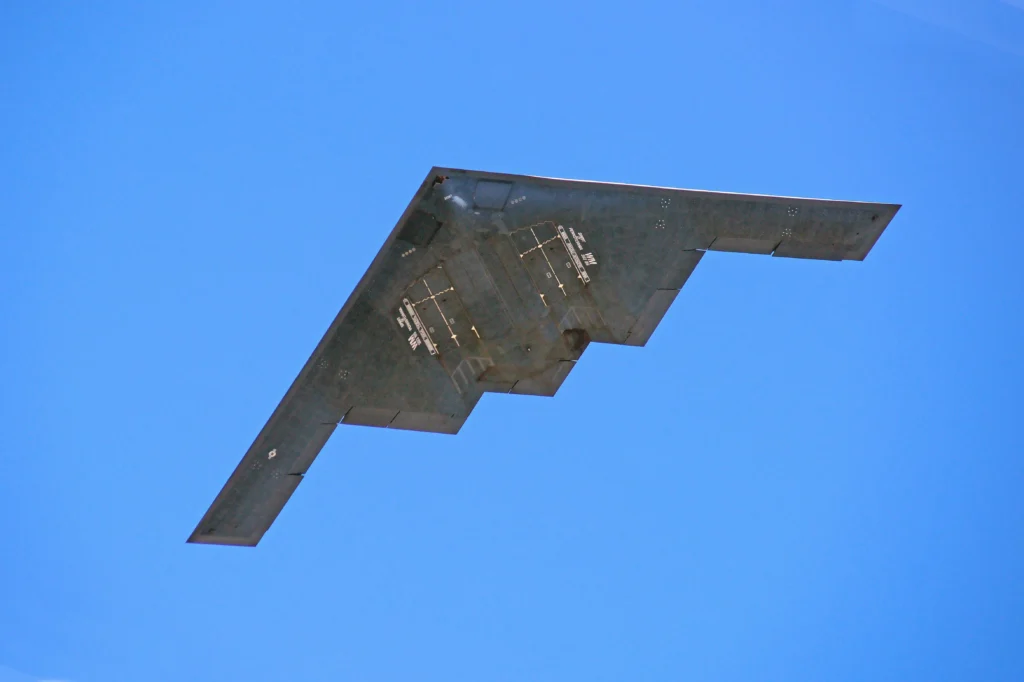
B-2 Bombers Target Iran’s Underground Missile Architecture
Pre-strike indicators suggested B-2 involvement. Tanker sorties departing the Azores operated without visible receivers, signaling preparation for long-range stealth operations.
Degraded Iranian air defenses and disrupted command and control networks created conditions favorable for deep-penetration bomber strikes.
Iran’s missile cave complexes are built deep inside mountainous terrain and divided into segmented chambers that can be sealed from one another.
Many are primarily storage facilities, but some incorporate launch apertures in their ceilings that allow ballistic missiles to fire directly from within protected caverns. Certain sites reportedly feature automated rapid-loading systems designed to enable quick successive launches.
Iran has publicly showcased these facilities in state media, displaying systems such as the Paveh cruise missile, the Ghadr-380 cruise missile, and the Kheibar Shekan surface-to-surface missile.
These complexes store engines, mobile launchers, and advanced standoff weapons intended to sustain prolonged missile operations.
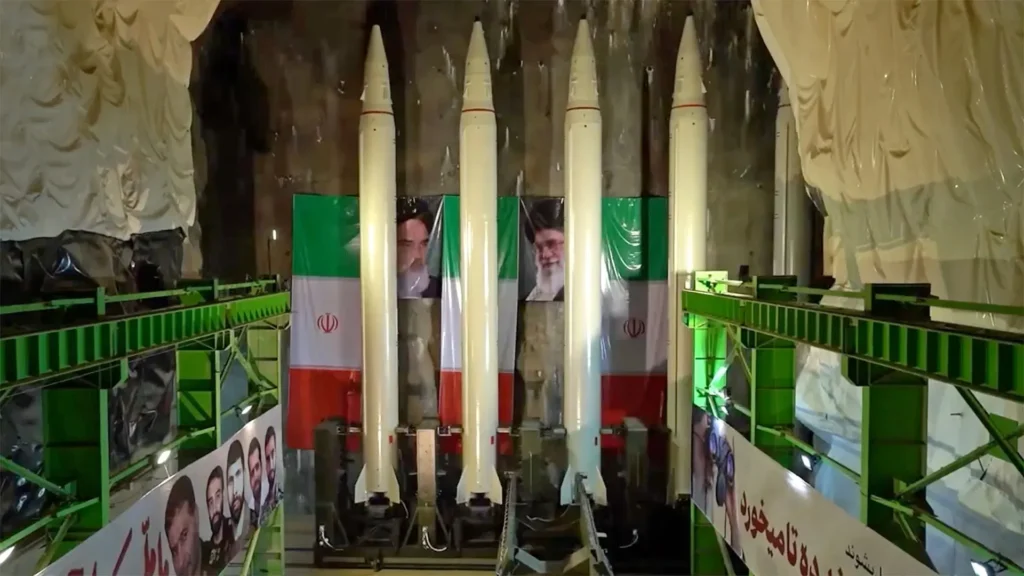
Tactical Logic Behind Sealing the Caves
Complete structural destruction of these facilities is difficult due to layered rock overburden and compartmentalized internal design.
However, operational objectives do not require total annihilation. Collapsing entrances and destroying launch apertures can render the missiles and launchers inside unusable during active conflict.
Striking near reinforced entrances can bottle up entire arsenals. Remote sensing and satellite monitoring enable high-confidence assessments of reopening attempts, allowing follow-on strikes if excavation begins.
Some cave entrances are positioned beneath gradually rising rock formations, permitting penetrator munitions to burrow deeper toward tunnel networks instead of only collapsing surface openings.
Commercial satellite imagery collected after the strikes reportedly shows cave entrances collapsed overnight, indicating a focus on operational denial.
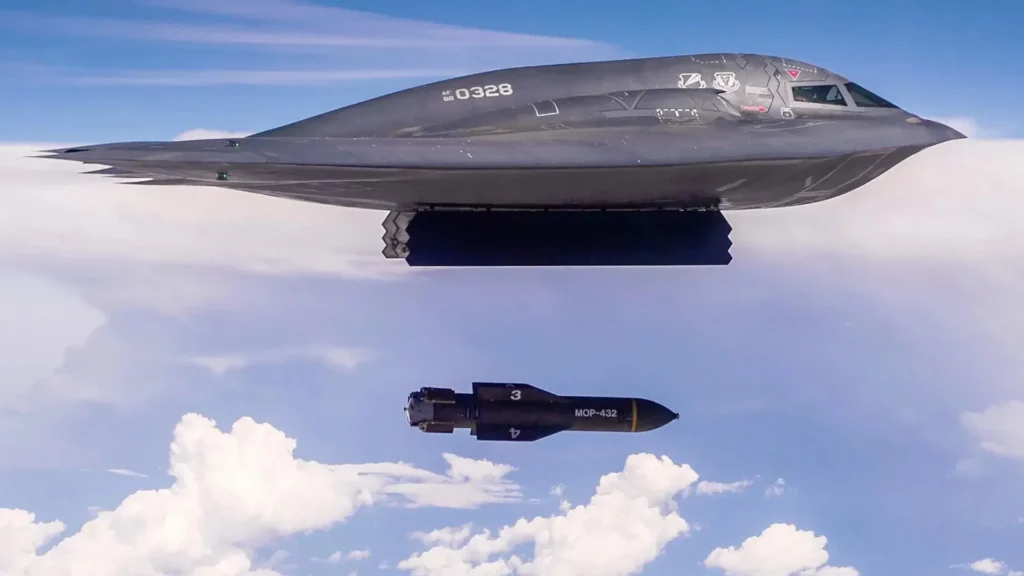
Weapons Loadouts and Precision Effects
The Pentagon confirmed the use of 2,000-pound-class bunker busters equipped with BLU-109 warheads in GBU-31 Joint Direct Attack Munitions.
These penetrators breach reinforced concrete and rock before detonation, making them suitable for collapsing tunnel entrances and destroying hardened overhead launch doors.
A single B-2 can carry up to 16 BLU-109-equipped JDAMs in a bunker-busting configuration. The aircraft also has the capacity to deploy up to 80 500-pound JDAMs in one sortie, enabling it to destroy extensive non-hardened infrastructure such as entire airfields in a single pass.
The arsenal may include the GBU-72 5,000-pound-class bunker buster, developed to bridge the capability gap between the BLU-109 and the Massive Ordnance Penetrator.
The 30,000-pound Massive Ordnance Penetrator remains the most powerful non-nuclear bunker-busting weapon available, but each B-2 can carry only two, and its limited inventory constrains routine use against compartmentalized cave systems.
A tailored mix of penetrators allows planners to distribute effects across entrances, launch apertures, and internal structural nodes.
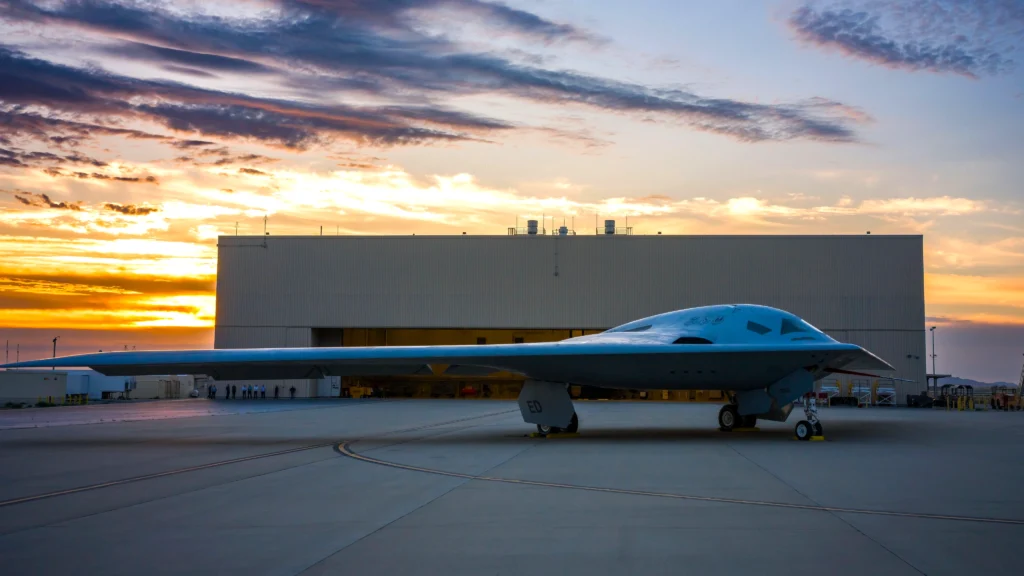
Strategic Rationale for Using the B-2
Alternative bombers such as the B-52 or B-1 offer significant payload capacity but lack low-observable characteristics.
Iranian airspace remains contested, with road-mobile air defense systems capable of relocating quickly. Novel threats and residual missile batteries continue to pose a risk.
The B-2’s stealth profile reduces radar exposure and increases survivability. Missions integrate electronic warfare, cyber support, and real-time counter-air escorts capable of neutralizing emerging threats.
B-2 crews train specifically for deep-penetration strikes against hardened, defended targets, reinforcing platform selection.
By disabling cave complexes, planners remove large quantities of missiles and launchers from the battlefield.
This reduces the burden on interceptor inventories, which remain under strain. Every missile prevented from launch conserves one or more defensive interceptors and mitigates escalation pressure.
Basing Constraints and Operational Reach
Initial strikes launched directly from Whiteman Air Force Base due to basing restrictions. The United Kingdom had not authorized operations from RAF Fairford or Diego Garcia, both capable of sustaining bomber sorties.
These constraints required intercontinental missions from the continental United States.
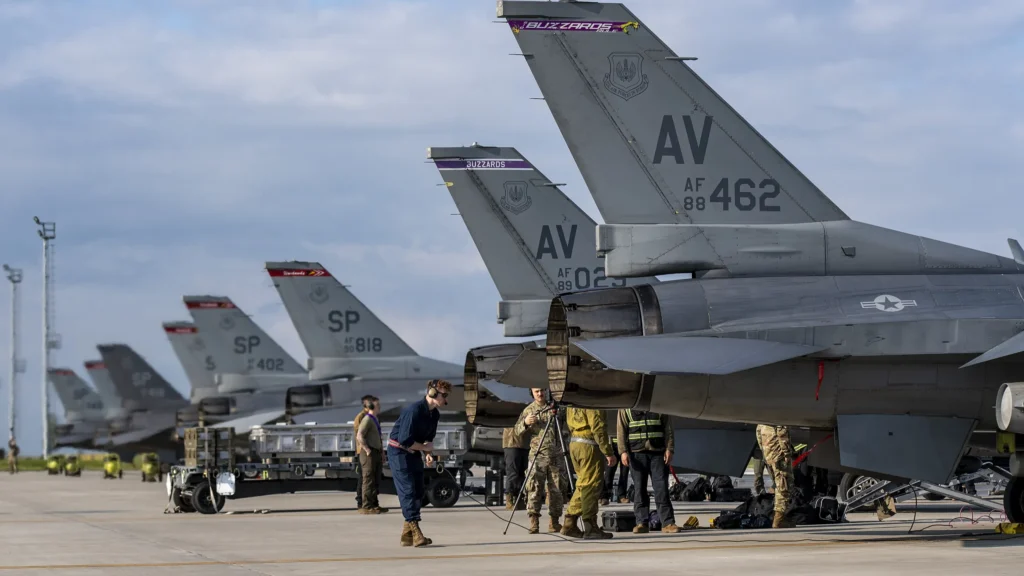
The United States had previously reinforced Diego Garcia with F-16 Fighting Falcons to enhance regional posture.
In a subsequent policy shift, British Prime Minister Keir Starmer announced approval for limited use of UK bases for strikes targeting Iranian missile sites. This decision may enable shorter sortie cycles if operations continue.
The campaign, referred to as Operation Epic Fury, has an uncertain duration. If limited to a brief window, US-based bomber sorties may remain operationally viable without forward deployment.
Following mission completion, four B-2 aircraft operating under call signs PETRO41, PETRO42, PETRO43, and PETRO44 diverted to Dyess Air Force Base in Texas due to adverse weather at Whiteman. Such diversions are standard contingency procedures for long-duration global strike missions.

Operational Impact and Future Outlook
The B-2’s entry into the theater marks a transition from countering immediate missile launches to systematically degrading Iran’s missile production, storage, and deployment infrastructure.
Sealing and destroying cave access points constrains Iran’s ability to sustain missile operations during extended conflict.
If the campaign expands toward broader nuclear and military-industrial targets, the B-2 is positioned to remain central to direct bomber operations requiring precision penetration in defended airspace.
Stay tuned with us. Further, follow us on social media for the latest updates.
Join us on Telegram Group for the Latest Aviation Updates. Subsequently, follow us on Google News
