

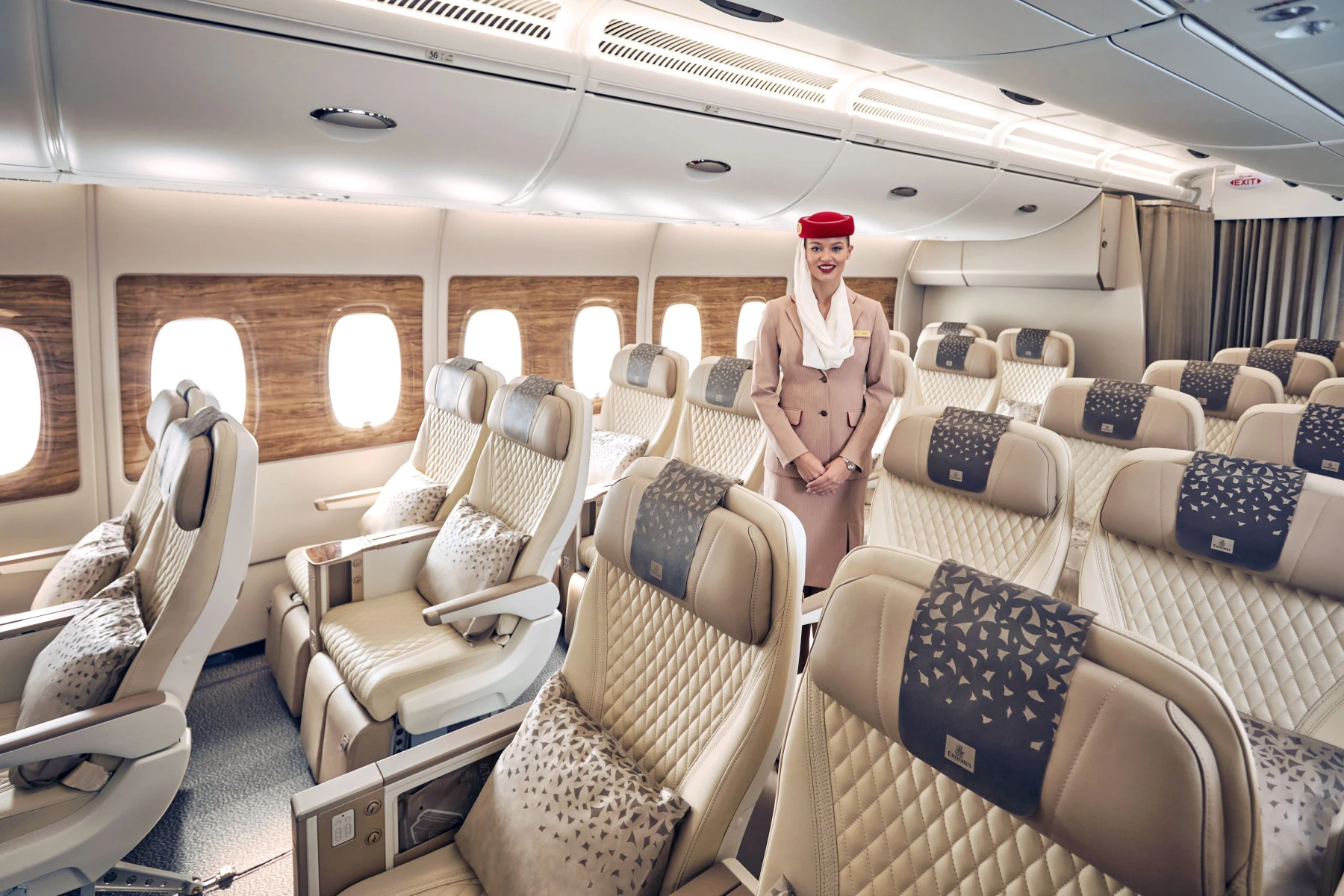
Emirates Airline (EK) has steadily expanded its premium economy product as travelers seek comfort without paying business class fares. The cabin now plays a strategic role in long-haul travel, especially on medium-duration routes where lie-flat beds are not essential.
Emirates positions premium economy as a step above standard economy while maintaining a clear distinction from its flagship business class. In a recent piece by CN Traveler, the publication shared the values of premium economy, letting passengers know if it is worth the upgrade.
Emirates Premium Economy Benefits
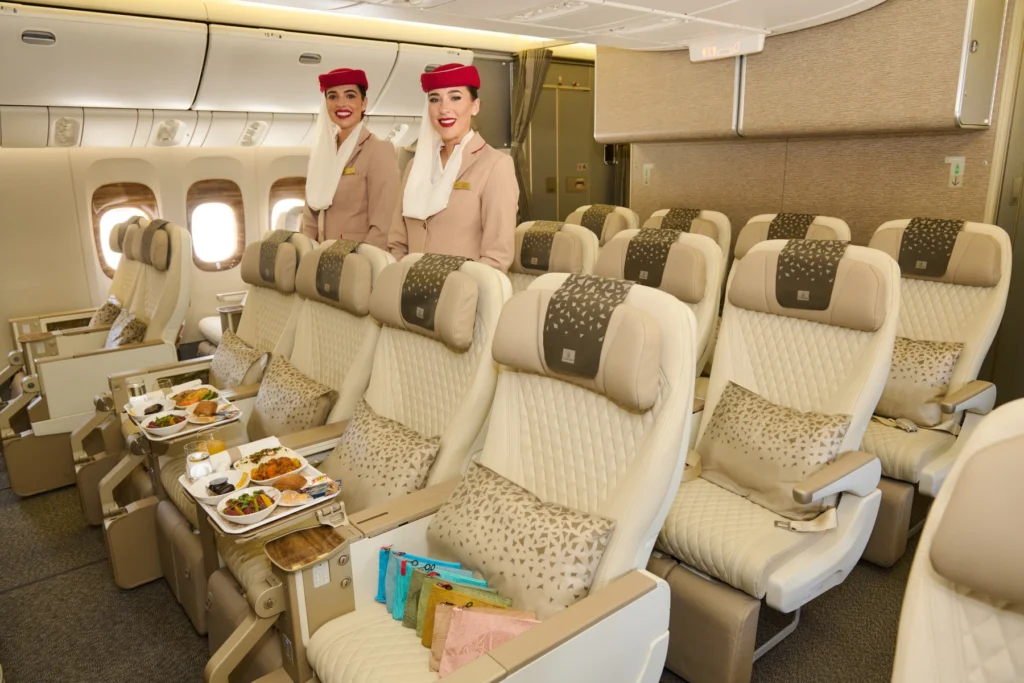
Emirates introduced premium economy in 2021, initially on select Airbus A380 aircraft. Since then, the airline has expanded the cabin to newer aircraft types, including the Airbus A350, and added multiple routes as part of its 2026 network growth.
Premium economy sits between business and economy cabins, offering a quieter and more spacious environment.
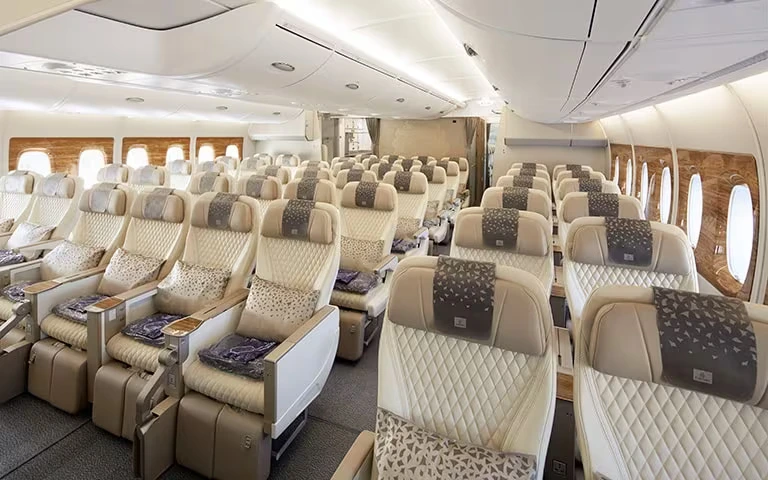
The cabin layout on the A350 follows a 2-3-2 configuration, which reduces crowding and improves aisle access for most passengers.
Seats measure approximately 19.5 inches in width, which is wider than economy by up to 2.5 inches. With a pitch of up to 40 inches and an eight-inch recline, the seating focuses on comfort for daytime and medium-haul flights.
Ground Experience Benefits
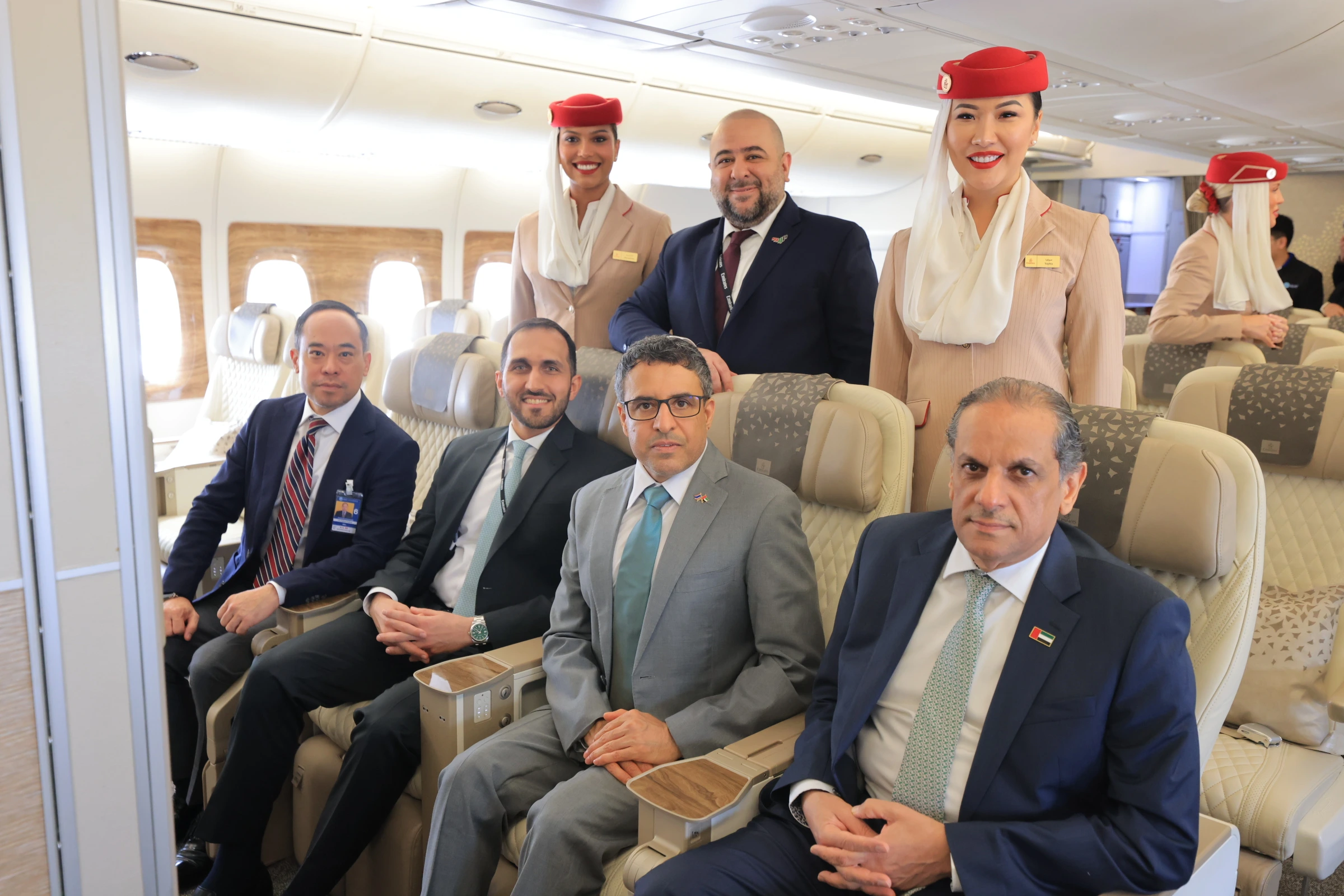
At Dubai International Airport, premium economy passengers benefit from dedicated check-in counters.
This significantly reduces waiting times compared to the economy, especially during peak travel hours.
The baggage allowance also stands out, with Emirates offering up to 70.5 pounds for premium economy travelers. This provides flexibility for long trips and reduces concerns about excess baggage charges.
Boarding priority further improves the experience. Premium economy passengers board shortly after first and business class, avoiding congestion at the gate and ensuring early access to overhead bin space.
Onboard Comfort Value
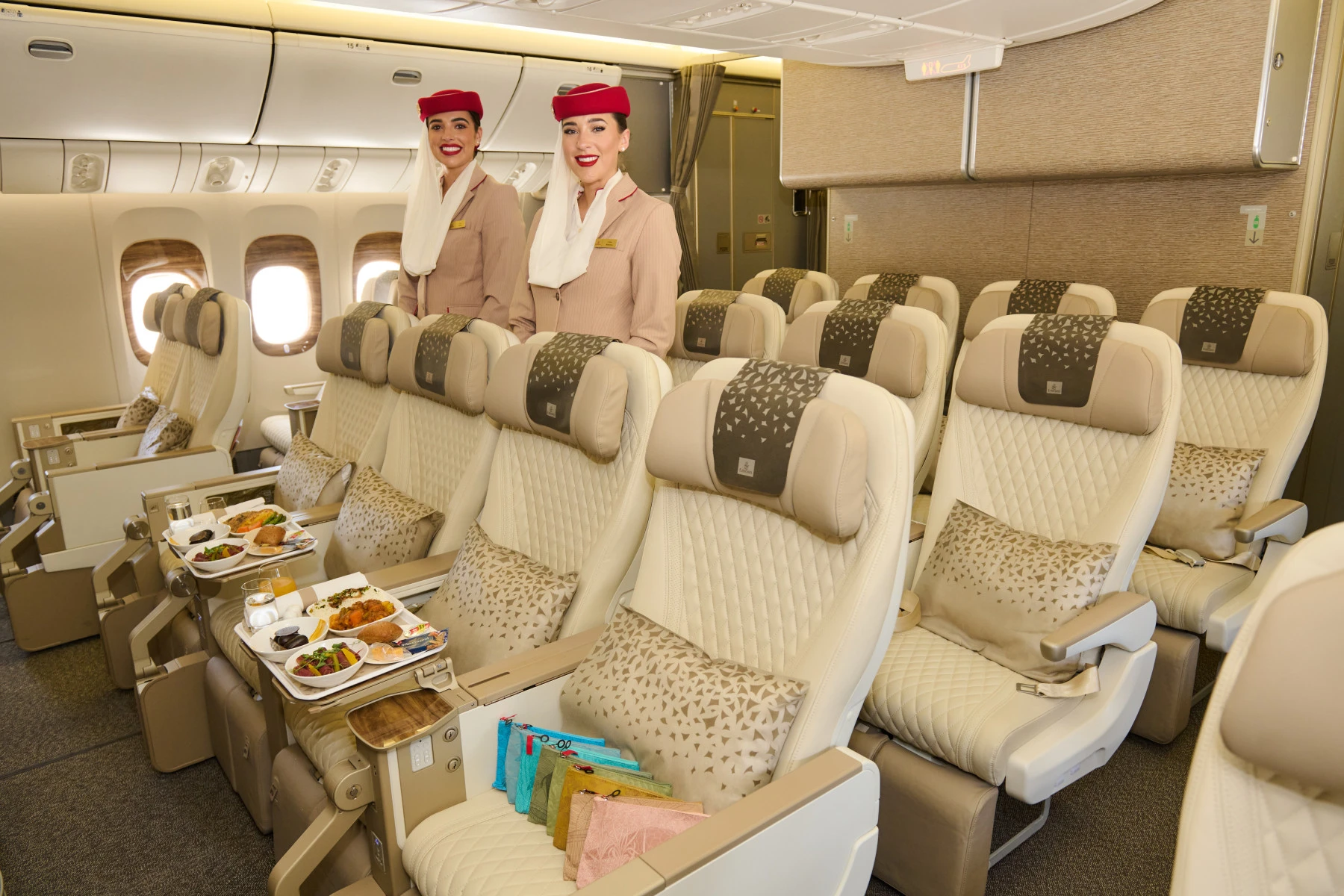
Onboard service reflects a clear upgrade from economy while stopping short of business class luxury. Passengers receive welcome drinks, printed menus, and multi-course meals served on porcelain tableware.
Meal options typically include a choice of starters and main courses, along with a curated wine selection. While the service lacks some business class extras, the overall dining experience remains refined and well-paced.
Entertainment is delivered through 13.3-inch HD screens, paired with Emirates’ extensive media library.
Disembarkation is also faster, with premium economy passengers exiting soon after business class, and checked baggage arriving early at the carousel.
Is The Upgrade Worth?
The gap between premium economy and business class remains significant, particularly in seating and lounge access. However, the price difference is often far smaller than the comfort gap between economy and premium economy.
For travelers on flights lasting three to six hours, premium economy offers tangible value.
The combination of space, service, and ground benefits makes it a practical upgrade for comfort-focused passengers without business-class budgets.
On routes like Dubai to Mumbai, Emirates premium economy delivers a balanced experience. It provides meaningful comfort improvements while maintaining a cost structure that appeals to frequent and leisure travelers alike.
Stay tuned with us. Further, follow us on social media for the latest updates.
Join us on Telegram Group for the Latest Aviation Updates. Subsequently, follow us on Google News
