

Flight turbulence may be invisible, but on certain routes across North America, it is a defining feature of the journey. New data released by turbulence-tracking platform turbli.com reveals that routes crisscrossing the U.S. Mountain West once again dominate the list of the continent’s most turbulence-prone air corridors in 2025.
The rankings are based on eddy dissipation rate (EDR) values, an aviation-standard metric used by pilots, dispatchers, and airlines to quantify atmospheric instability.
The data is drawn from the same sources used in professional flight planning, including the National Oceanic and Atmospheric Administration (NOAA) and the UK Met Office, as reported by The Independent.
Unsurprisingly, routes connecting Colorado, Wyoming, Utah, Montana, New Mexico, and Nevada account for all ten positions, highlighting the outsized role of mountainous terrain, high elevation, and complex wind patterns in shaping turbulence exposure.
How Turbulence Is Measured on Flight Routes
EDR measures how rapidly turbulent energy dissipates in the atmosphere. While passengers often associate turbulence with storms, many of the roughest routes experience clear-air turbulence, driven by jet streams, mountain waves, and thermal activity rather than visible weather.
Turbli categorizes EDR values as follows:
- 0–20: Light turbulence (mostly smooth flight)
- 20–40: Moderate turbulence (difficulty walking, service disruption)
- 40–60: Strong turbulence (seatbelt strain)
- 60–80: Severe turbulence
- 80–100: Extreme turbulence
All of the routes on this year’s list fall into the upper end of the “light” range, but their consistency and frequency place them well above the North American average.
https://commons.wikimedia.org/wiki/File:Delta_Airlines_Airbus_A330neo_-_N403DX.jpg
North America’s 10 Most Turbulent Flight Routes (2025)
1. Denver — Jackson
Average EDR: 18.18
Topping the list is the route between Denver International Airport and Jackson Hole. The combination of the Rocky Mountains and the Teton Range creates ideal conditions for mountain wave turbulence, particularly during descent into Jackson’s valley-based airport.
2. Albuquerque — Denver
Average EDR: 18.18
Tied for first place, this route spans high desert terrain and rising elevation, frequently exposing aircraft to thermal instability and wind shear, especially during warmer months.
3. Jackson — Salt Lake City
Average EDR: 17.67
Flights between Jackson Hole and Salt Lake City traverse rugged terrain with rapidly shifting airflow, making turbulence a common feature even in otherwise clear conditions.
4. Denver — Salt Lake City
Average EDR: 17.53
One of the busiest mountain-region routes in the U.S., this corridor routinely intersects jet stream activity and mountain-induced turbulence on both climb and descent.
5. Bozeman — Denver
Average EDR: 17.22
Linking Montana’s Gallatin Valley with Colorado’s Front Range, this route reflects the cumulative effect of multiple mountain systems on airflow stability.
6. Boise — Bozeman
Average EDR: 16.51
Though shorter in distance, this route is heavily influenced by regional topography, particularly during seasonal weather transitions.
7. Bozeman — Salt Lake City
Average EDR: 16.48
Aircraft on this route often encounter layered turbulence caused by intersecting wind flows over the northern Rockies.
8. Albuquerque — Salt Lake City
Average EDR: 16.17
Spanning desert, plateau, and mountain terrain, this route experiences turbulence driven by both thermal lift and upper-level winds.
9. Denver — Las Vegas
Average EDR: 16.12
Despite serving two major hubs, this route crosses terrain prone to strong vertical air movement, particularly over the Great Basin.
10. Las Vegas — Salt Lake City
Average EDR: 16.10
Rounding out the list, this route highlights how even heavily trafficked corridors can remain turbulence hotspots due to geography alone.
Why Mountain Routes Dominate Turbulence Rankings
The overwhelming presence of Mountain West routes in the top ten is no coincidence. Mountain wave turbulence occurs when strong winds flow over elevated terrain, creating oscillating air patterns that can extend for hundreds of miles downwind.
Unlike storm-related turbulence, these conditions often develop in clear skies, making them difficult for passengers to anticipate—and sometimes more unsettling as a result.
Is Turbulence on These Routes Dangerous?
Despite how it may feel in the cabin, turbulence remains extremely unlikely to cause serious harm.
According to Federal Aviation Administration (FAA) data, there were just 184 serious turbulence-related injuries in the United States between 2009 and 2023. Only 37 involved passengers, with the majority affecting crew members who were not seated.
Modern commercial aircraft are engineered to withstand turbulence levels far exceeding anything encountered on scheduled passenger flights.
Tools for Tracking Turbulence Before You Fly
For travelers interested in what to expect, Turbli offers a public forecasting tool that allows users to input their departure and arrival airports or flight numbers.
The tool generates hour-by-hour turbulence forecasts displayed as a graph, helping nervous flyers contextualize bumps before boarding.
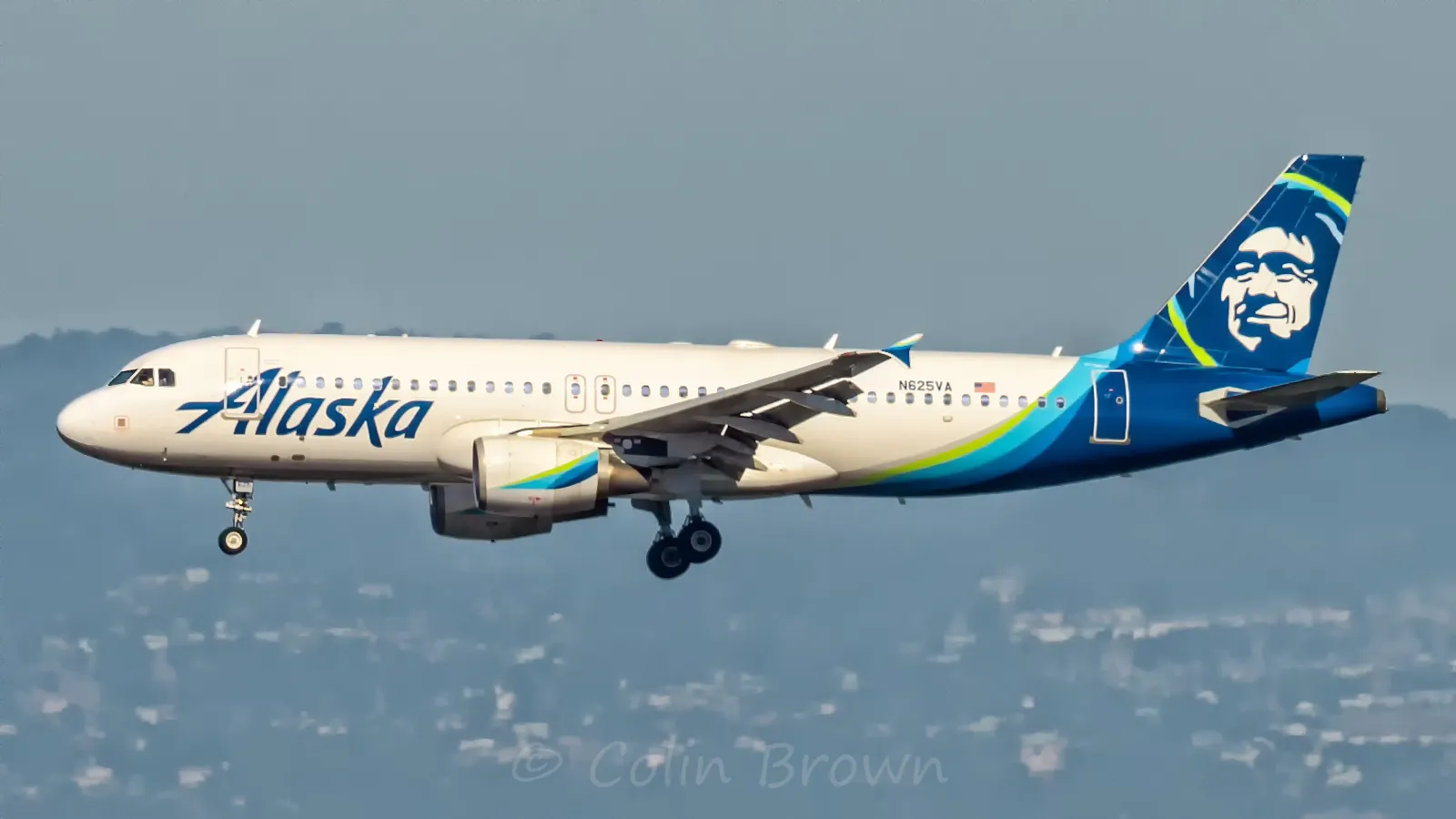
https://commons.wikimedia.org/wiki/File:N625VA_-_Airbus_A320-214_-_Alaska_Airlines.jpg
Bottom line
Turbulence is an inherent part of flying—particularly across North America’s mountainous interior—but it is well understood, closely monitored, and built into every aspect of modern flight planning.
Stay tuned with us. Further, follow us on social media for the latest updates.
Join us on Telegram Group for the Latest Aviation Updates. Subsequently, follow us on Google News
