

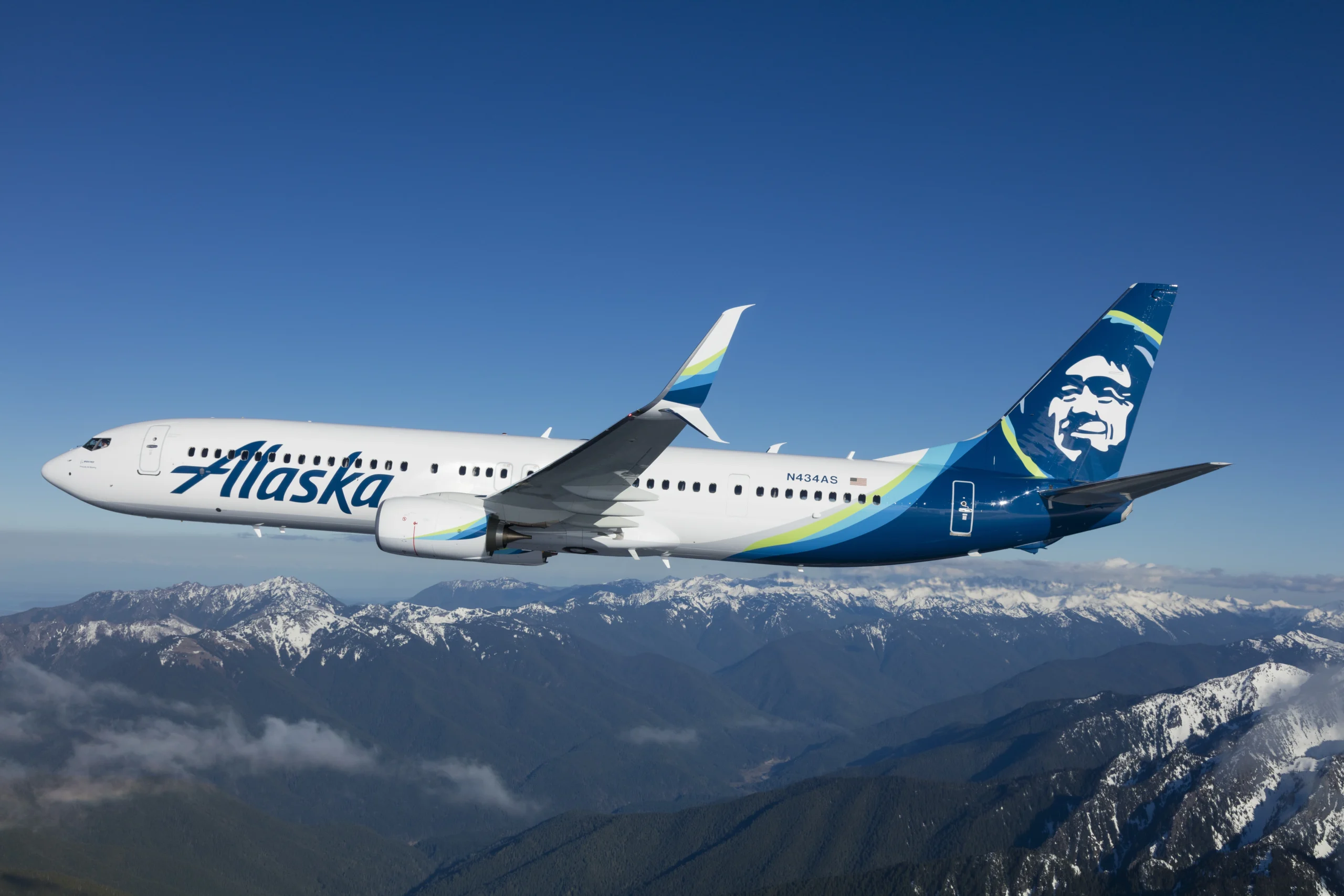
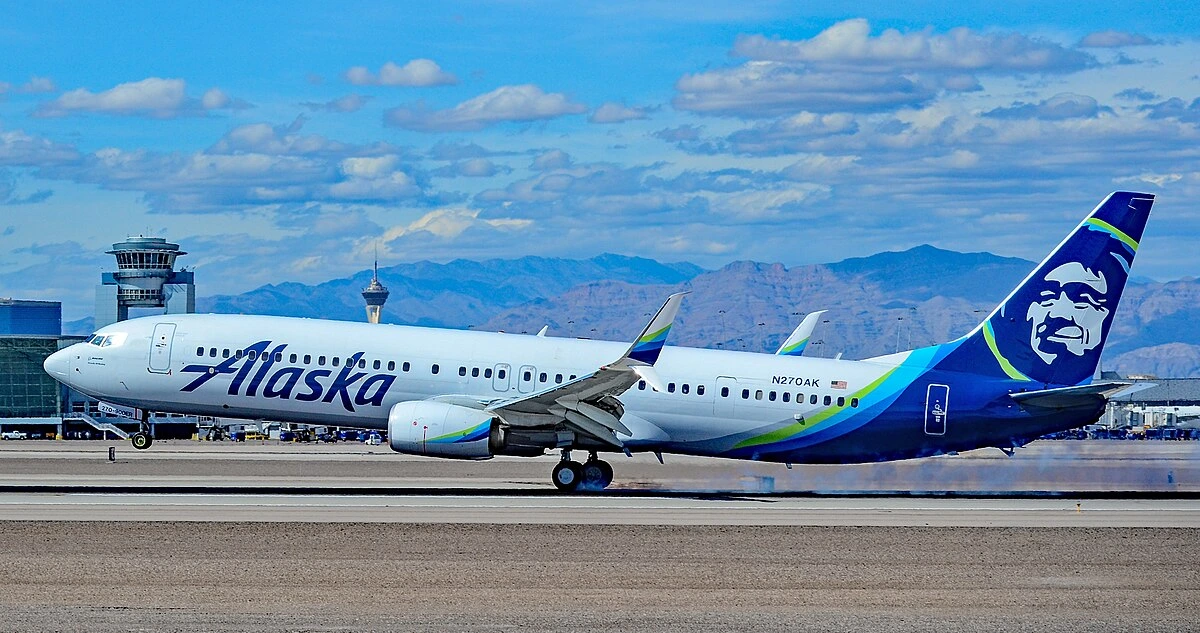
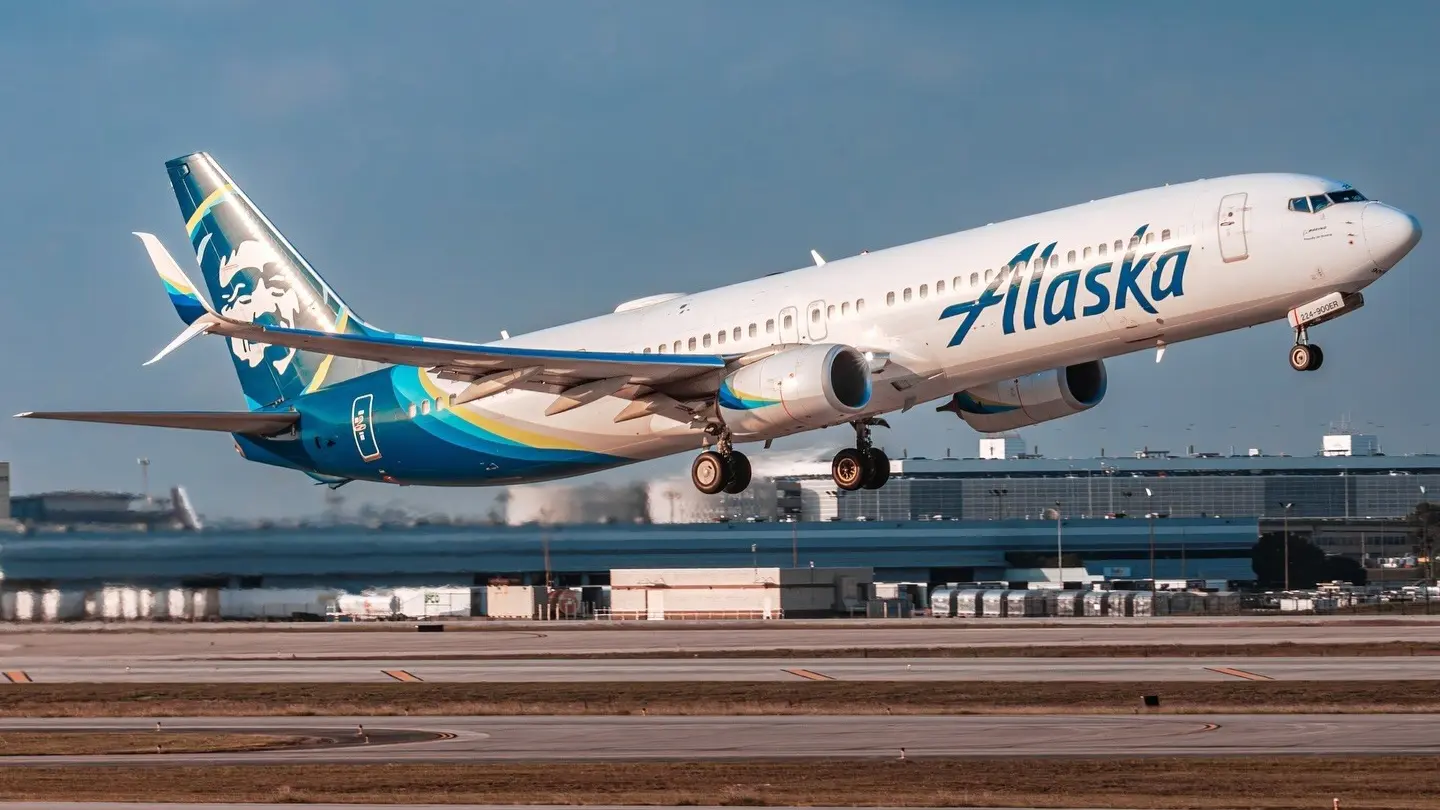
ALASKA- The US witnessed a serious in-flight security incident last Wednesday (December 10, 2025) when chaos broke out aboard an Alaska Airlines (AS) Boeing 737 operating Flight AS87 from Deadhorse, Prudhoe Bay (SCC) to Anchorage, Ted Stevens International Airport (ANC). At cruising altitude of around 39,000 feet, a passenger attempted to open an emergency exit.
The incident unfolded shortly after departure when cabin crew and passengers noticed unusual behavior from a man later identified as Kassian William Fredericks. What initially appeared to be a medical issue escalated into a major safety concern, forcing passengers to intervene as the aircraft continued its flight toward Anchorage.
Alaska Airlines Passenger Tries to Open Door
According to court documents filed in Alaska, Fredericks began acting erratically soon after takeoff.
Passengers seated near the rear of the aircraft reported that he was talking to himself, fidgeting continuously, and appearing visibly distressed.
Some travelers chose to move seats because they feared his behavior could become aggressive.
As the cabin crew conducted beverage service, Fredericks reportedly shouted alarming statements, claiming the aircraft wings had disappeared and warning that everyone was going to die.
He later told a flight attendant that toxic substances were entering the cabin through the air vents, further heightening concern among those nearby.
Believing the situation could worsen, flight attendants asked surrounding passengers to monitor Fredericks while service continued discreetly.
Despite these precautions, he managed to leave his seat and move toward the rear of the aircraft without immediate notice, PYOK reported.
Mid-Air Confrontation
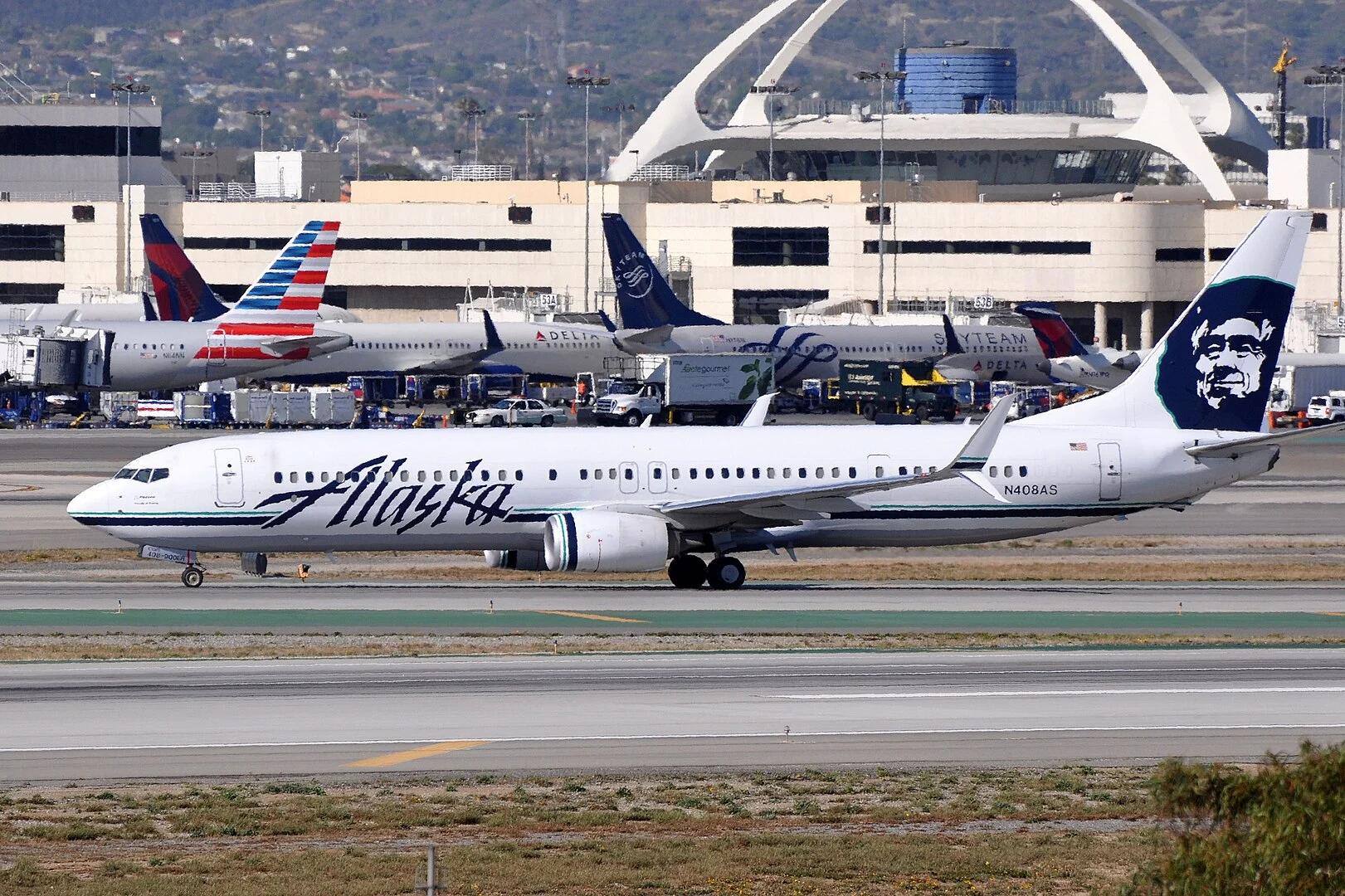
The situation escalated when Fredericks allegedly attempted to pull the handle of a rear emergency exit door while the aircraft was still in the air.
A passenger exiting the nearby restroom noticed the attempt and shouted for help, drawing immediate attention from others in the cabin.
Multiple passengers rushed to the scene, and it took three adult men to restrain Fredericks and pull him away from the door.
Witnesses said he was shouting that he needed fresh air, creating panic in the confined space. Although the aircraft’s pressurization system prevented the door from opening fully, the handle was reportedly forced from its locked position.
Flight attendants considered restraining Fredericks with zip ties, but ultimately decided against it to avoid further escalation.
Instead, passengers voluntarily remained seated around him for the rest of the flight to ensure he could not move freely again.
Charges Filed
Upon arrival in Anchorage, law enforcement met the aircraft, and Fredericks was transported to a hospital for medical evaluation.
While there, he reportedly told medical staff that he had been drinking heavily for several days, was experiencing hallucinations, and was taking antidepressant medication.
Federal authorities later charged Fredericks with interference with flight crew members, a serious offense under U.S. law.
If convicted, he could face up to 20 years in federal prison and fines reaching $250,000. Investigators noted that while opening the door mid-flight was physically impossible, the crew feared his actions could have triggered the emergency slide inside the cabin.
Bottom Line
The Alaska Airlines incident highlights the ongoing challenge airlines face in managing severe in-flight disruptions linked to mental health and substance abuse.
While no one was injured and the aircraft landed safely, the event underscores how quickly a single passenger can create a high-risk situation at cruising altitude.
The case now moves to federal court, where prosecutors will determine the appropriate legal outcome.
Stay tuned with us. Further, follow us on social media for the latest updates.
Join us on Telegram Group for the Latest Aviation Updates. Subsequently, follow us on Google News
