

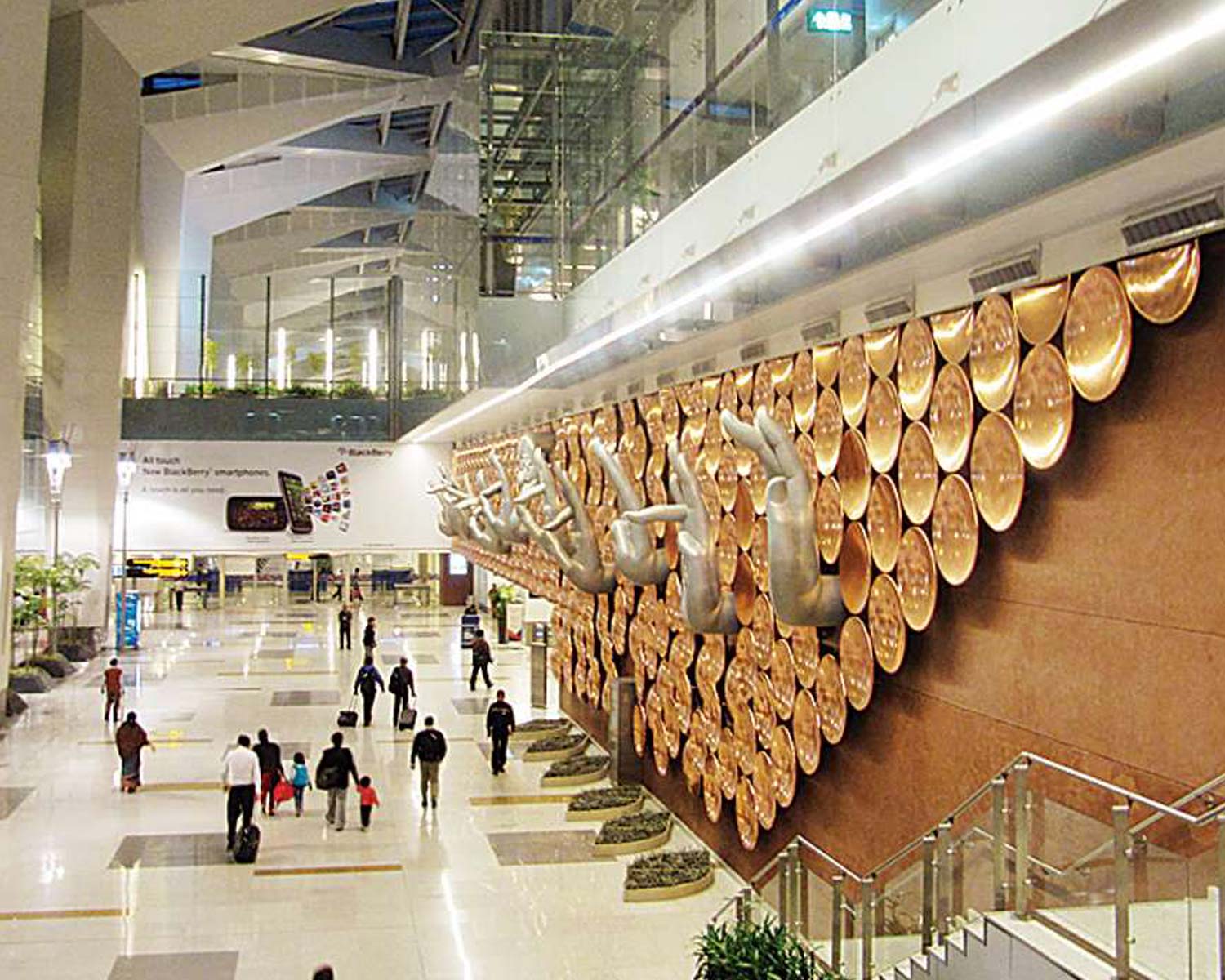
NEW DELHI- Indira Gandhi International Airport, Delhi (DEL), managed by Delhi International Airport Ltd (DIAL), is on track to expand its flight network to 159 destinations by 2026, strengthening its ambition to become India’s premier global aviation hub.
Videh Kumar Jaipuriar, CEO of DIAL, confirmed in an interview with businessline that the airport will add 7 new international and 3 new domestic routes, operated by a combination of Indian and international carriers, including Japan Airlines (JL), IndiGo (6E), and Aegean Airlines (A3).
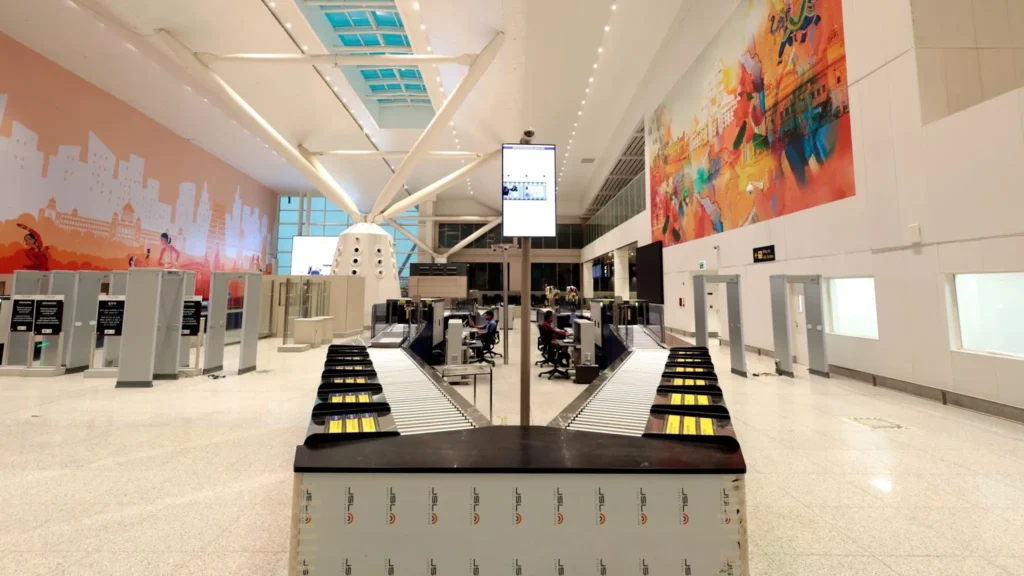
Delhi Airport Destination Expansion
The new network expansion connects Delhi to key international hubs such as Manila (MNL), Krabi (KBV), Shanghai (PVG), Guangzhou (CAN), Manchester (MAN), Athens (ATH), and Tokyo Narita (NRT).
On the domestic front, DIAL will add Jamnagar (JGA), Jabalpur (JLR), and Pune (PNQ), reinforcing regional connectivity within India.
This route enhancement aims to consolidate Delhi’s position as the key transfer gateway between eastern and western air corridors.
Transfer passengers currently account for 29% of the airport’s total throughput, up from 22% two years ago, a 34% year-on-year rise.
By FY26, DIAL expects this figure to exceed 30%, reflecting its growing significance in global transit operations.
Infrastructure Expansion and Modernization
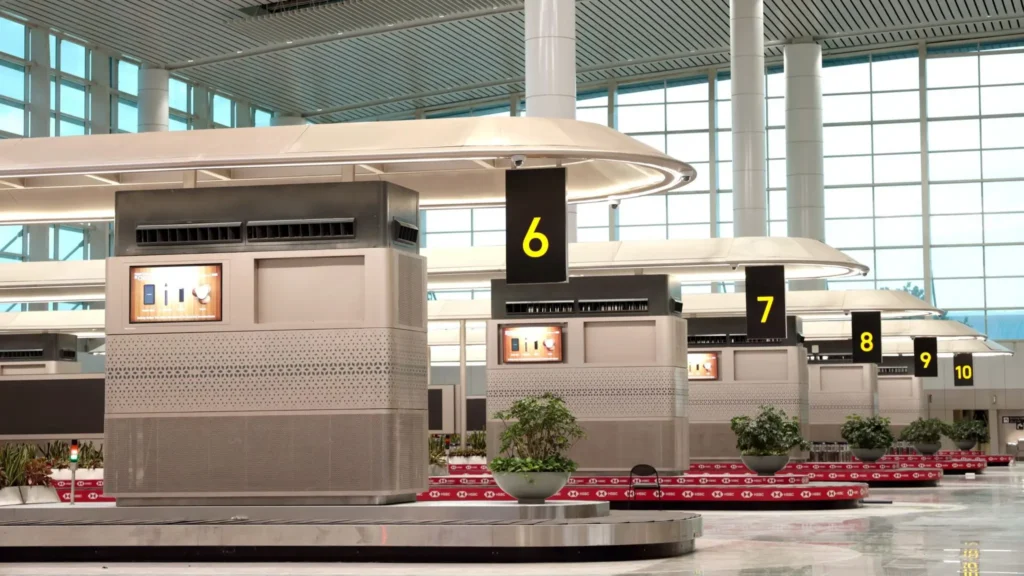
To support increased traffic, DIAL has completed its Phase 3A expansion, which tripled the International-to-International (I2I) transfer area capacity. This ensures readiness for higher passenger volumes from new long-haul routes.
Simultaneously, DIAL is redeveloping Pier C of Terminal 3 (T3), transitioning it from domestic to international operations.
The project, set for completion by mid-January 2026, will boost international capacity by nearly 50%, a crucial milestone for accommodating new routes and transfer passengers.
In partnership with the Indian government, DIAL will also participate in the Domestic-to-International (D2I) pilot project, starting with the Varanasi (VNS)–Delhi (DEL)–London (LHR) model.
Under this scheme, passengers will clear immigration at their origin airport, arriving at T3 as international travelers for seamless onward connections.

Enhanced Passenger Experience and Connectivity
To improve efficiency, DIAL is launching a new airside baggage transfer system linking Terminals 1, 2, and 3, enabling automatic baggage movement and removing the need for manual transfers.
Additionally, shuttle bus frequencies have been optimized to every 10–12 minutes, enhancing inter-terminal connectivity.
The upcoming Delhi Metro Gold Line will provide direct terminal access, further simplifying passenger movement across the airport.
During the first month of the current winter schedule, passenger traffic surged 45% year-on-year, reflecting strong recovery and sustained demand in both domestic and international sectors.
In FY25, Delhi Airport handled 79 million passengers, up from 77 million in FY24, demonstrating consistent growth momentum.
Future Expansion
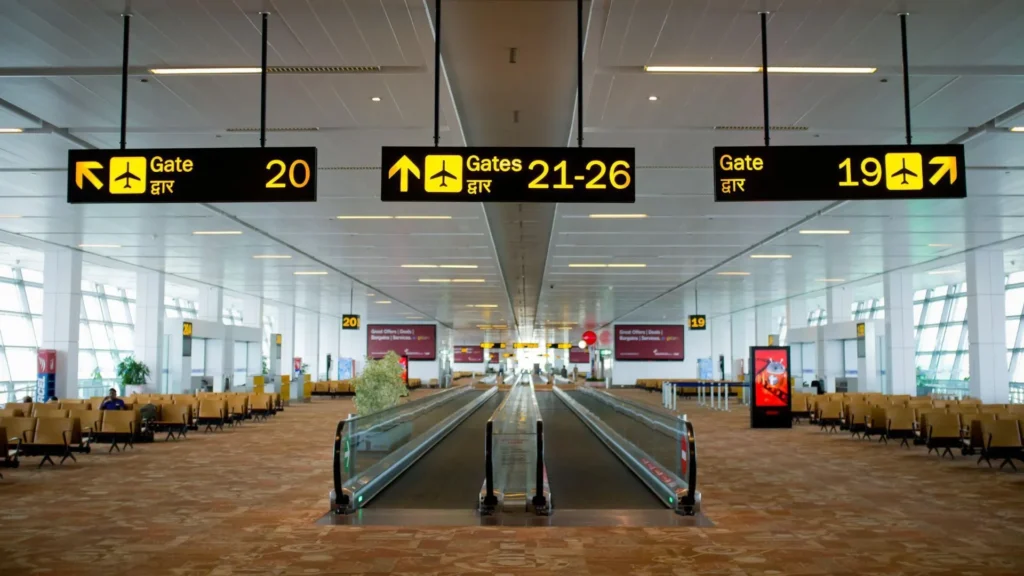
With a current handling capacity of 105 million passengers annually, IGI Airport can expand to 110–112 million through operational improvements.
DIAL’s next master plan, now in its final stage, will be activated once traffic consistently exceeds the 100 million threshold, triggering the next expansion cycle.
Delhi-NCR’s overall air traffic is projected to maintain 8–9% annual growth, supported by the city’s strategic location, robust infrastructure, and high connectivity potential.
In cargo operations, IGI Airport manages approximately one million tonnes annually, with volumes rising after the reopening of China and stronger Indian exports under the Make in India initiative.
DIAL has submitted a proposal to establish a Special Economic Zone (SEZ) at the airport. The planned integrated logistics and cargo hub will streamline export-import processes, enhance operational efficiency, and position Delhi as a major regional air freight center in South Asia.
Stay tuned with us. Further, follow us on social media for the latest updates.
Join us on Telegram Group for the Latest Aviation Updates. Subsequently, follow us on Google News
