

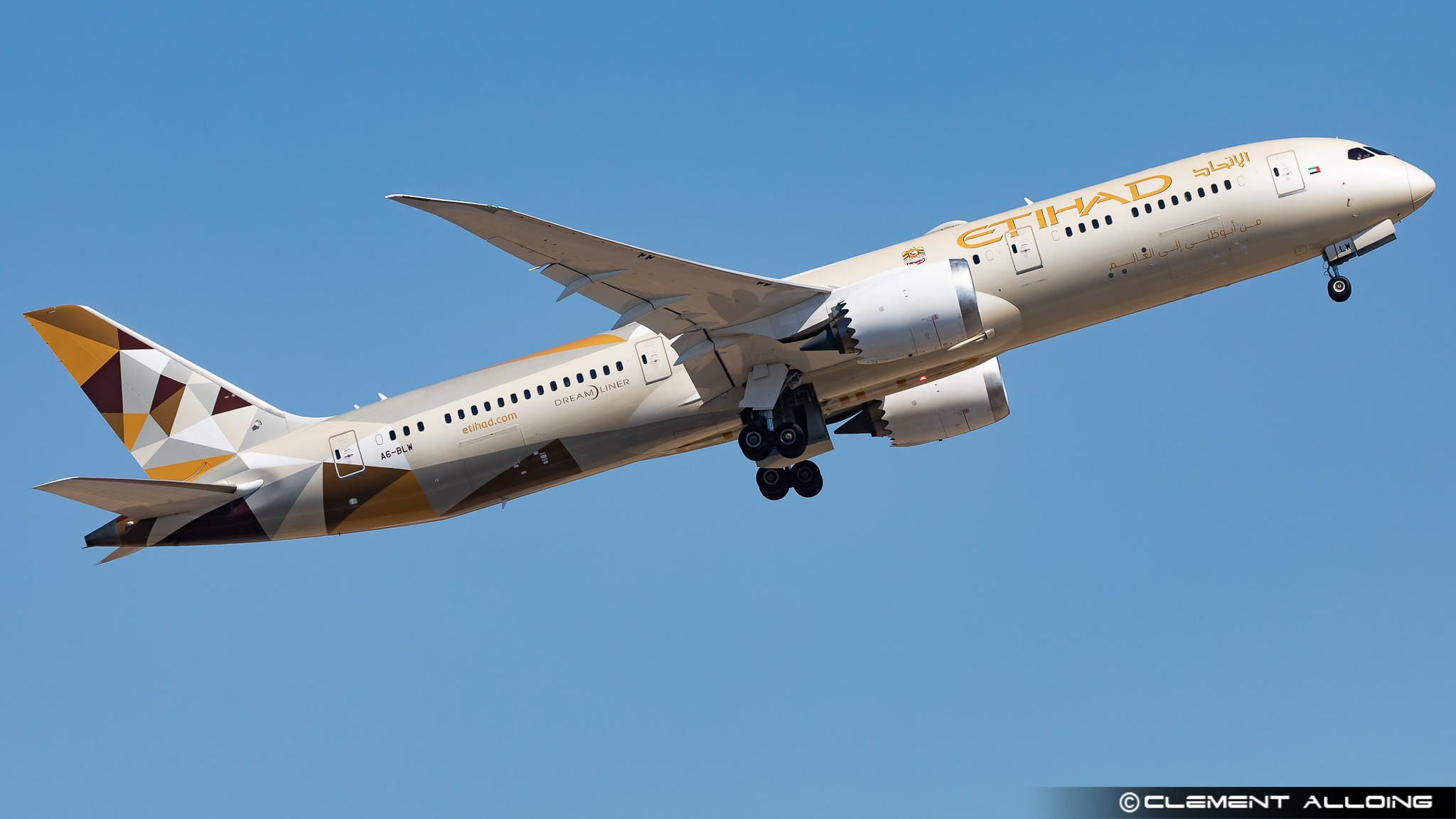
ABU DHABI- Etihad Airways (EY) has resumed flights to Hong Kong (HKG) after a brief pause, strengthening air connectivity between the UAE capital and one of Asia’s most significant financial and tourism hubs.
The inaugural service, operated by a Boeing 787-9 Dreamliner, marked the airline’s official return to the Hong Kong Special Administrative Region, reflecting strong travel demand and Etihad’s continued network growth across Asia.
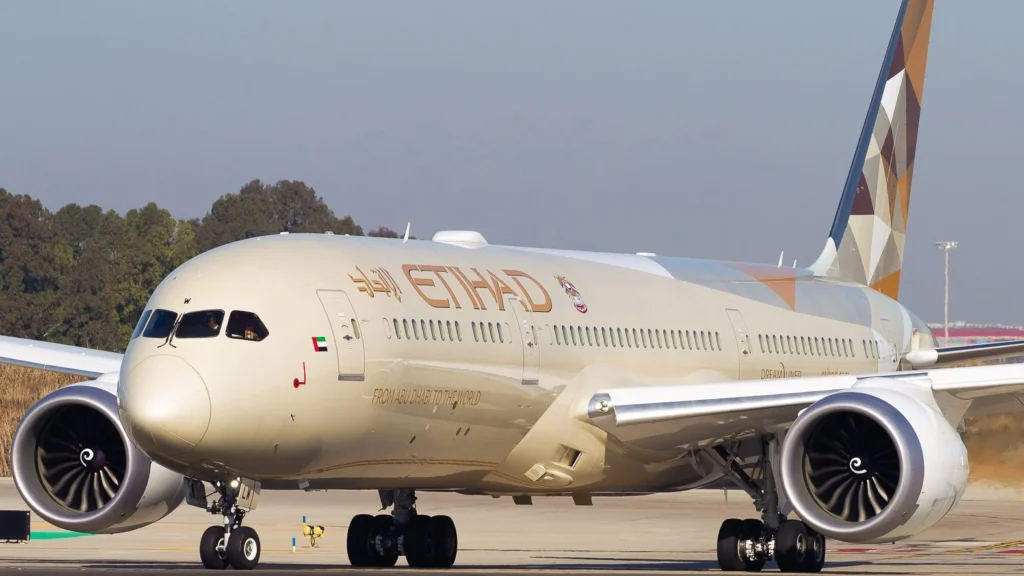
Etihad Resumes Hong Kong Flights
Etihad Airways last served Hong Kong before the COVID-19 pandemic disrupted global operations. Its relaunch represents a major step in rebuilding air routes between the Middle East and East Asia.
The carrier will operate five weekly flights between Abu Dhabi International Airport (AUH) and Hong Kong International Airport (HKG), with plans to scale up to daily operations based on demand.
Each Boeing 787-9 Dreamliner on the route offers 28 Business Class and 262 Economy Class seats, ensuring ample capacity for both business and leisure travelers.
Javier Alija, Etihad’s Vice President of Global Sales and Distribution, confirmed with Gulf News that the return is part of the airline’s broader expansion strategy in Asia’s recovering aviation market.
“Hong Kong and its surrounding areas, including Macau and the Greater Bay Area, are key to our network,” Alija noted, adding that the route supports Etihad’s vision of connecting Abu Dhabi with major Asian gateways that offer both commercial and tourism opportunities.
Etihad’s first return flight was fully booked, highlighting the strong demand for travel between the UAE and Asia. Bookings for the coming weeks also indicate high load factors, particularly among both business travelers and tourists seeking direct access to Hong Kong and southern China.
The airline expects steady point-to-point traffic, complemented by connecting passengers from Europe, the Middle East, and the GCC via Abu Dhabi’s growing hub. According to Alija, this mix of direct and transit traffic is central to Etihad’s long-term route development plans.
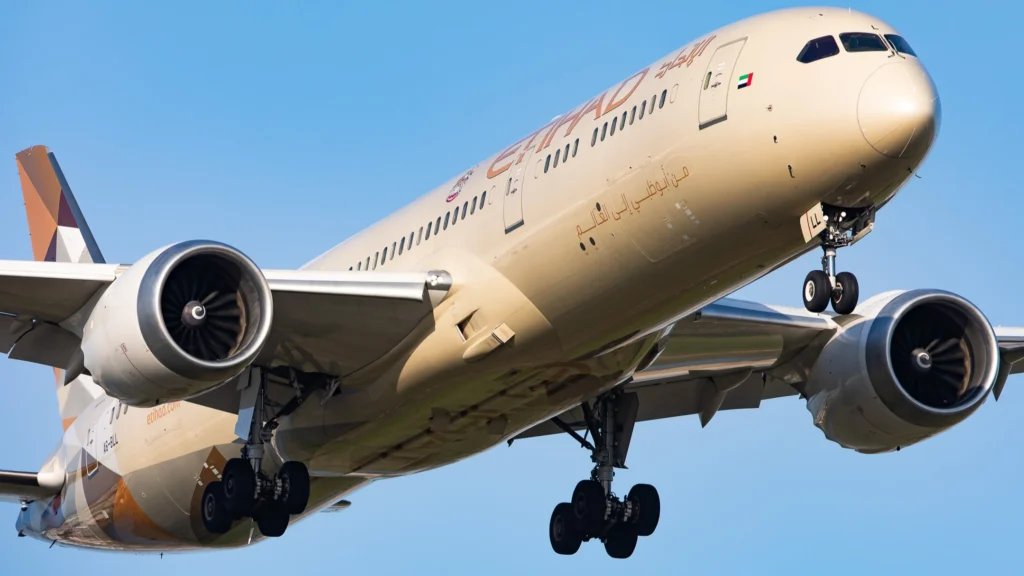
Strategic Growth in Asia
Etihad’s return to Hong Kong underlines the airline’s commitment to expanding its footprint in Asia’s fast-recovering travel sector.
With additional frequencies under consideration, the carrier aims to strengthen its regional presence alongside other key destinations such as Tokyo (NRT), Seoul (ICN), and Bangkok (BKK).
The relaunch also supports Abu Dhabi’s broader goal of positioning itself as a global aviation hub, connecting East and West through efficient transit links and high-quality service offerings.
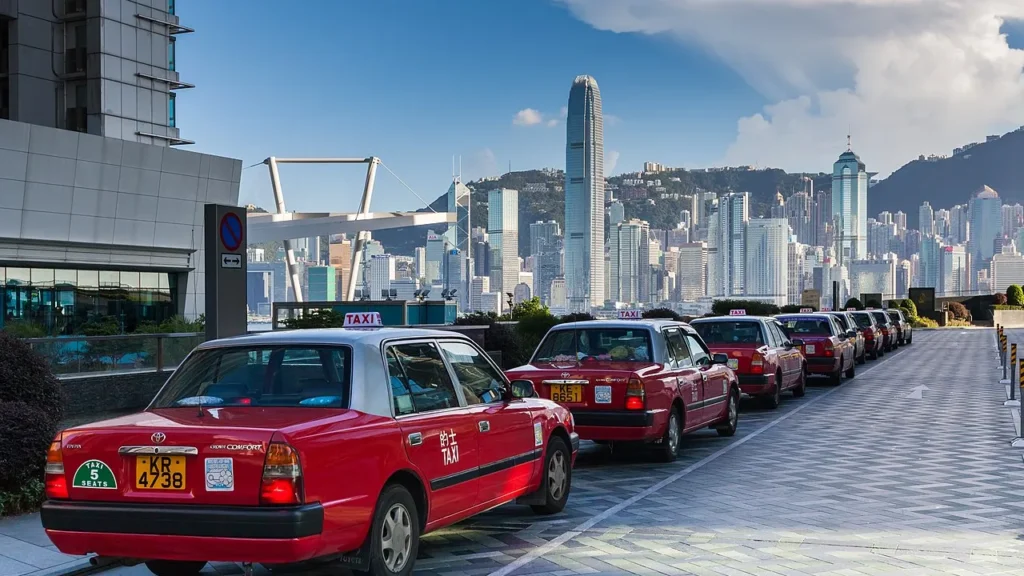
Hong Kong Travel Guide
One of the world’s most dynamic urban centers, Hong Kong blends ancient culture with modern innovation. From the iconic skyline to bustling food markets and tranquil temples, the city offers an unmatched mix of tradition and energy.
This detailed travel guide covers what to see and do, where to stay, how to get around, and how to manage your budget efficiently—ensuring travelers make the most of their trip to this vibrant destination
Exploring the Heart of Hong Kong
Hong Kong is divided into three main areas—Hong Kong Island, Kowloon, and the New Territories—plus over 260 surrounding islands. Despite its compact size, it’s home to over seven million residents and more than 12,000 restaurants.
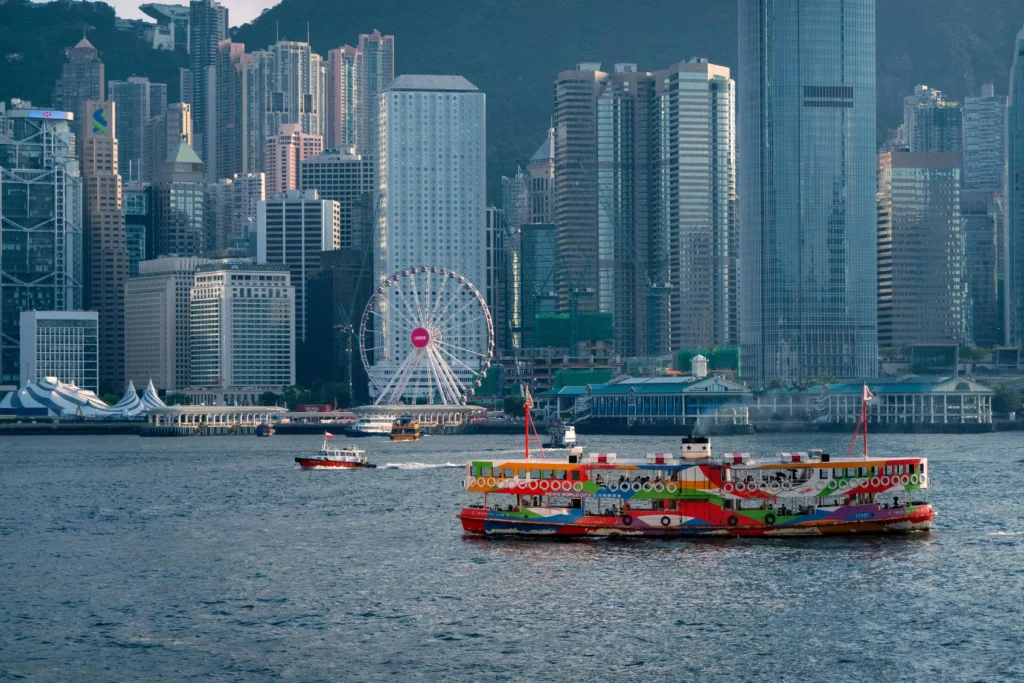
Whether crossing Victoria Harbour by Star Ferry (HKG) or hiking the Dragon’s Back trail, every corner of the city offers something unique.
Top things to do include:
- Temples and Heritage Sites: Visit Man Mo Temple, Ten Thousand Buddhas Monastery, and Po Lin Monastery on Lantau Island. These sacred spaces showcase the city’s deep spiritual roots.
- Star Ferry Ride: For just 5 HKD, cross between Kowloon (HKG) and Hong Kong Island at sunset for unmatched skyline views.
- Ngong Ping 360 Cable Car: Spanning 5.7 km from Tung Chung to Lantau Island, this ride offers panoramic views of the city, harbor, and Tian Tan Buddha.
- The Peak Tram: Since 1888, it’s been carrying visitors to Victoria Peak for 180-degree views of Hong Kong’s skyscrapers and harbor.
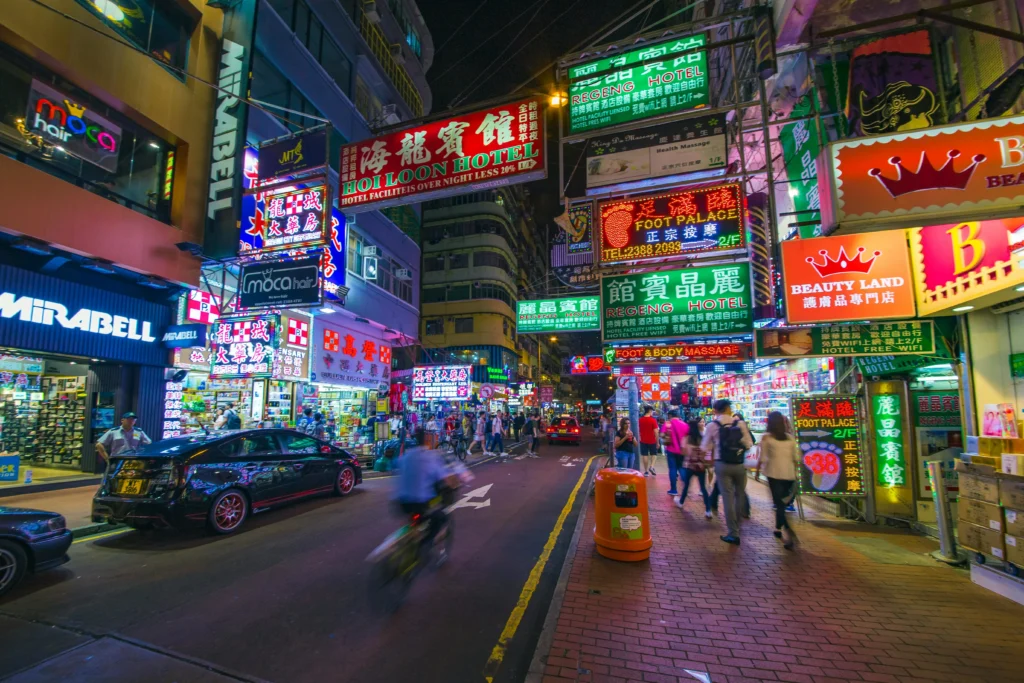
- Street Markets: Explore Temple Street Night Market, Stanley Market, and Ladies Market for authentic street food and souvenirs.
Beyond the City: Culture, Nature, and Adventure
Beyond the urban buzz, Hong Kong offers surprising access to nature and tradition. The Sheung Wan District reflects old Hong Kong charm with its traditional stores and wet markets. Nature lovers can explore Sai Kung’s geo-parks or the Mai Po Nature Reserve, home to over 430 bird species.
For family-friendly fun, Hong Kong Disneyland (HKG) provides world-class attractions and entertainment. At night, Lan Kwai Fong transforms into a lively hub for dining and nightlife, while Tsim Sha Tsui Waterfront offers the best skyline views and access to cultural landmarks like the Hong Kong Museum of Art and Avenue of Stars.

Accommodation and Costs
Travelers can find everything from boutique hostels to luxury hotels across the city. Budget stays average 110–150 HKD per night in dorms, while mid-range hotels start around 325 HKD. Food costs vary from 25 HKD dim sum dishes to 100 HKD sit-down meals.
Suggested daily budgets:
- Backpackers: 315–475 HKD
- Mid-range travelers: 785–1,215 HKD
- Luxury travelers: 2,650 HKD+
For affordable local eats, try Mak’s Noodles, Din Tai Fung, or Lan Fong Yuen.
Money-Saving Tips for Travelers
- Eat at local buffets or markets for meals under 110 HKD.
- Stay in Kowloon for cheaper accommodation than Hong Kong Island.
- Use the Octopus Card for convenient cashless payments across transport and stores.
- Get a transit day pass (65 HKD) for unlimited MTR, bus, and tram rides.
- Avoid taxis—public transit is faster and cheaper.
- Consider Couchsurfing or Chungking Mansions for ultra-budget stays.
Getting Around the City
Hong Kong’s MTR system is efficient, clean, and runs late into the night. Fares range from 7–23 HKD, with the Airport Express connecting to Hong Kong International Airport (HKG) in just 25 minutes. The Star Ferry costs only 5 HKD, making it a must-try experience.
Taxis start at 25 HKD, while Uber is similarly priced. For intercity travel, trains and buses connect Hong Kong to Shenzhen (SZX), with fares between 109–170 HKD.
Best Time to Visit Hong Kong
The ideal travel season is November to March, when temperatures are cooler and humidity is low. Summer (June–August) brings heat, heavy rain, and typhoons. Travelers visiting during the Chinese New Year or major festivals should book accommodations early, as prices rise sharply.
Safety and Local Etiquette
Hong Kong is considered very safe for travelers, including solo visitors. Petty theft is rare but possible in crowded areas. Avoid political discussions and be cautious around protest sites. Travel insurance is strongly recommended for any trip.
Stay tuned with us. Further, follow us on social media for the latest updates.
Join us on Telegram Group for the Latest Aviation Updates. Subsequently, follow us on Google News
