

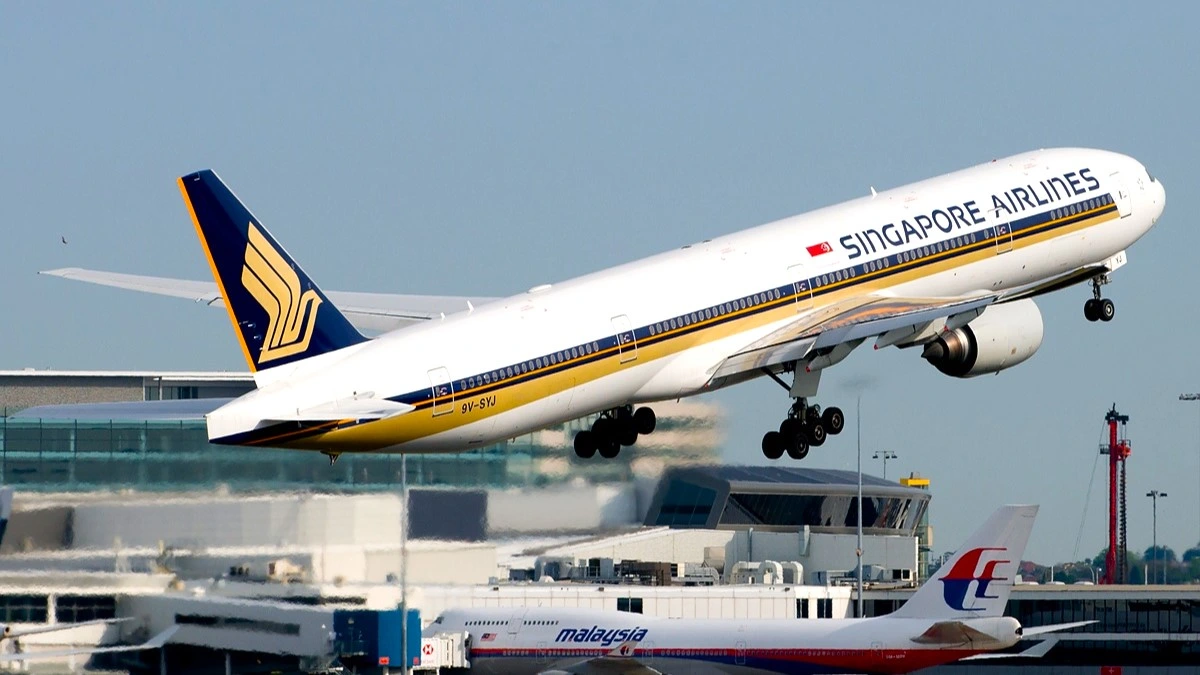
MELBOURNE- A Singapore Airlines (SQ) or SIA flight en route from Melbourne (MEL) to Singapore (SIN) was forced to return to Melbourne Airport on October 29 after experiencing a technical issue shortly after takeoff.
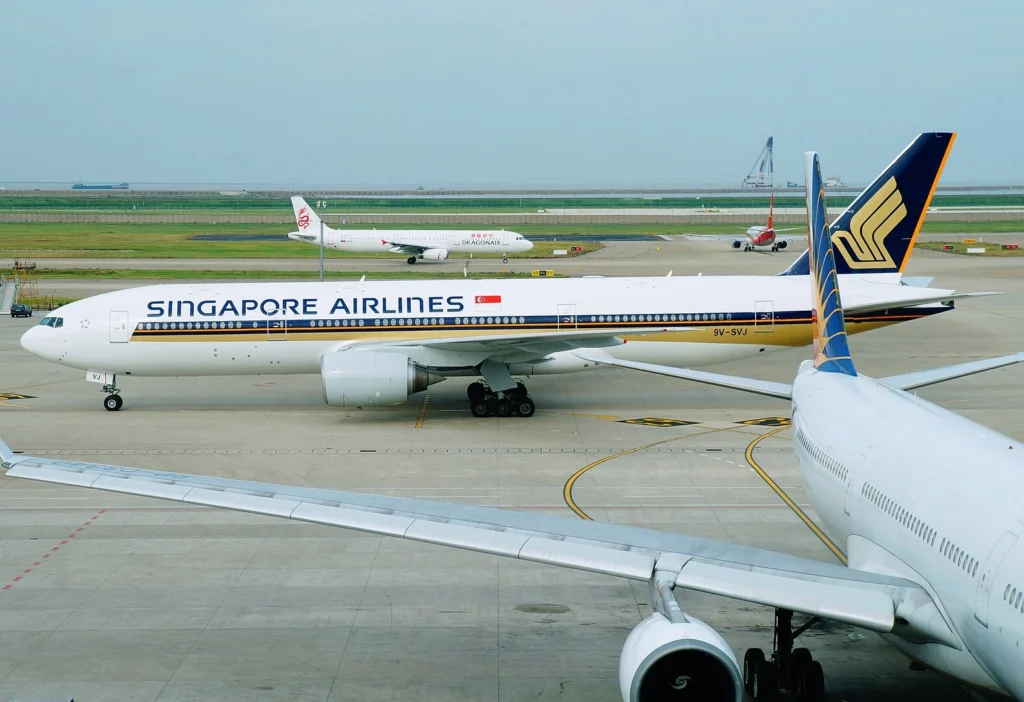
The Boeing 777, registered as 9V-SNB, operating flight SQ228 circled north of the Australian city before landing safely about an hour later, according to flight tracking data from AirNav Radar.
Singapore Airlines Flight U-Turn to Melbourne
Pilots of Singapore Airlines flight SQ228 decided to return shortly after departure at 4:52 p.m. local time, following reports of a technical issue. The flight had taken off from Melbourne Airport (MEL) at approximately 4:50 p.m. and landed safely back at 5:47 p.m.
According to 7News, a Melbourne Airport spokesperson confirmed that “shortly after take-off, the flight decided to return to Melbourne Airport due to a technical issue.”
The plane landed under normal conditions and taxied safely to the gate. No emergency was declared during the incident.
Video shared with 7News showed the aircraft releasing fuel roughly two kilometers above residential areas in Melbourne’s outer suburbs—an altitude that allows for safe evaporation, as noted by 7News aviation editor Blake Johnson.
Witness Accounts and Observations
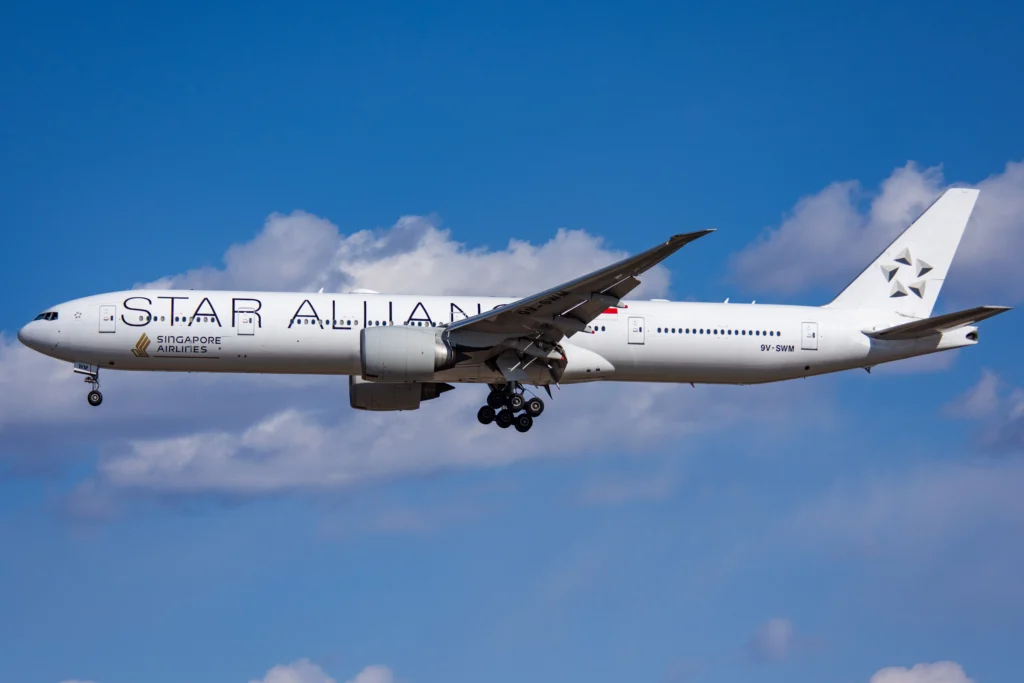
Residents reported seeing the plane flying unusually low over eastern Melbourne. Callers to Melbourne radio station 3AW described the scene as alarming, with one witness saying they could see the aircraft’s landing gear lowered while it circled above.
“It just flew over our house a few minutes ago. It was so low, you could see wheels down, and I just waved at all the passengers,” said a caller identified as Sam. Another caller, Gordon, noted that the plane appeared to be dumping fuel while turning back toward the airport.
Several videos shared on social media captured the 10-year-old Boeing 777 leaving two white trails behind its wings, consistent with fuel release procedures. One user speculated that the issue could have been related to the landing gear, noting that “half of the landing gear has failed to retract.”
Despite the mid-air issue, the aircraft landed safely without injuries reported. Fuel dumping is a standard procedure to reduce landing weight during unscheduled returns, especially for long-haul aircraft like the Boeing 777 operating on routes such as Melbourne to Singapore, which normally takes around 7 hours and 45 minutes.
Singapore Airlines has not released further technical details about the incident. The airline is expected to conduct a thorough inspection of the aircraft before it resumes service.
Similar Incident
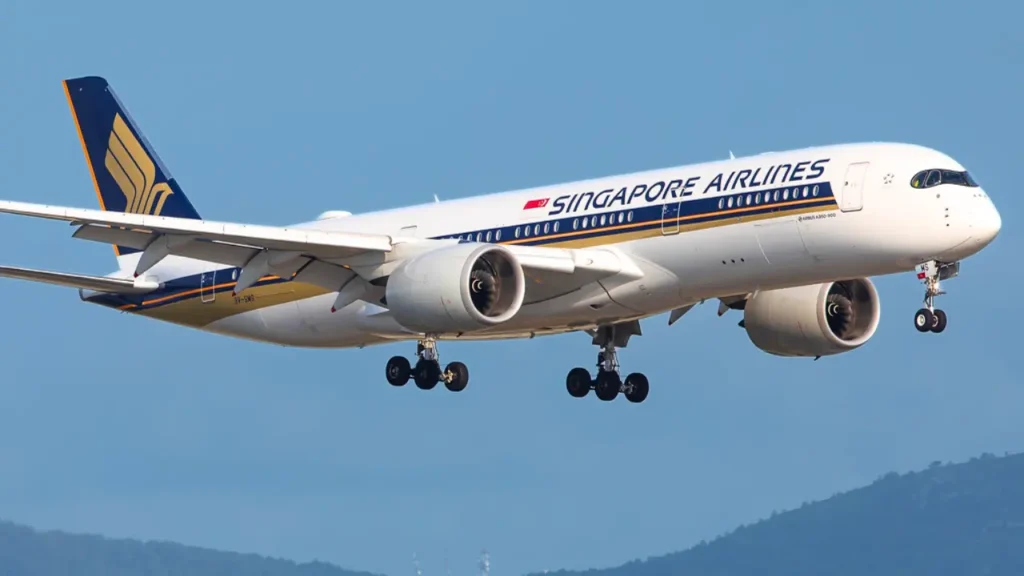
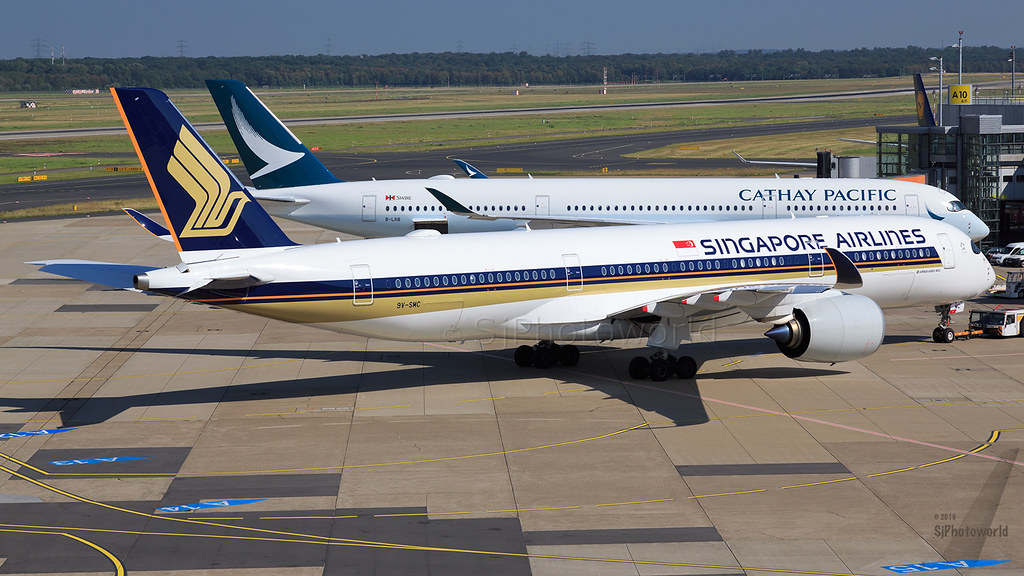
A Singapore Airlines (SQ) flight from Brisbane (BNE) to Singapore (SIN) made an emergency landing in Perth (PER) after a mid-flight engine alert on July 7, 2025. The Airbus A350’s crew shut down one engine as a precaution and diverted safely.
The airline confirmed that all passengers and crew were unharmed. Engineers later inspected the aircraft, while a replacement jet was sent from Singapore to continue the journey.
Crew Diverts to Perth After Engine Alert
Singapore Airlines Flight SQ256, operated by a 5.5-year-old Airbus A350-900 (registration 9V-SHM), was cruising from Brisbane (BNE) to Singapore (SIN) when the flight crew detected a low-pressure alert on engine 1.
Following standard procedures, the pilots shut the engine down and evaluated nearby diversion options.
Although the aircraft was closer to Broome (BME), Darwin (DRW), and Denpasar (DPS), the crew decided to divert to Perth (PER), located roughly 1,040 miles away at the time. Perth was chosen for its strong maintenance infrastructure and the availability of engineering support suitable for an A350.
This decision ensured minimal disruption for passengers and allowed Singapore Airlines to manage technical checks efficiently. The controlled landing took place without further incident, and emergency services were on standby as a precaution.
Engineering Response and Passenger Support
Singapore Airlines immediately dispatched a replacement Airbus A350 (registration 9V-SHP) to Perth as flight SQ9225.
The aircraft later departed as flight SQ9224 at 4:40 p.m. local time on July 8, bound for Singapore, with arrival expected around 9:40 p.m.
While waiting in Perth, passengers received food, beverages, and updates from ground staff. The airline arranged onward flight rebookings and hotel accommodations in Singapore when needed. In a statement, Singapore Airlines apologized for the inconvenience and emphasized that passenger safety remained its top priority.
Why Perth Was the Logical Choice
Perth (PER) is a key maintenance base capable of handling widebody aircraft, including the Airbus A350. Its engineering capacity and established logistical network made it the most suitable option for an unplanned diversion compared to smaller regional airports.
Although Denpasar (DPS) regularly receives A350 flights, the route over northern Australia offers limited diversion points with comparable infrastructure.
Perth’s facilities ensured a faster technical response and smoother continuation of the journey for passengers.
Stay tuned with us. Further, follow us on social media for the latest updates.
Join us on Telegram Group for the Latest Aviation Updates. Subsequently, follow us on Google News
