

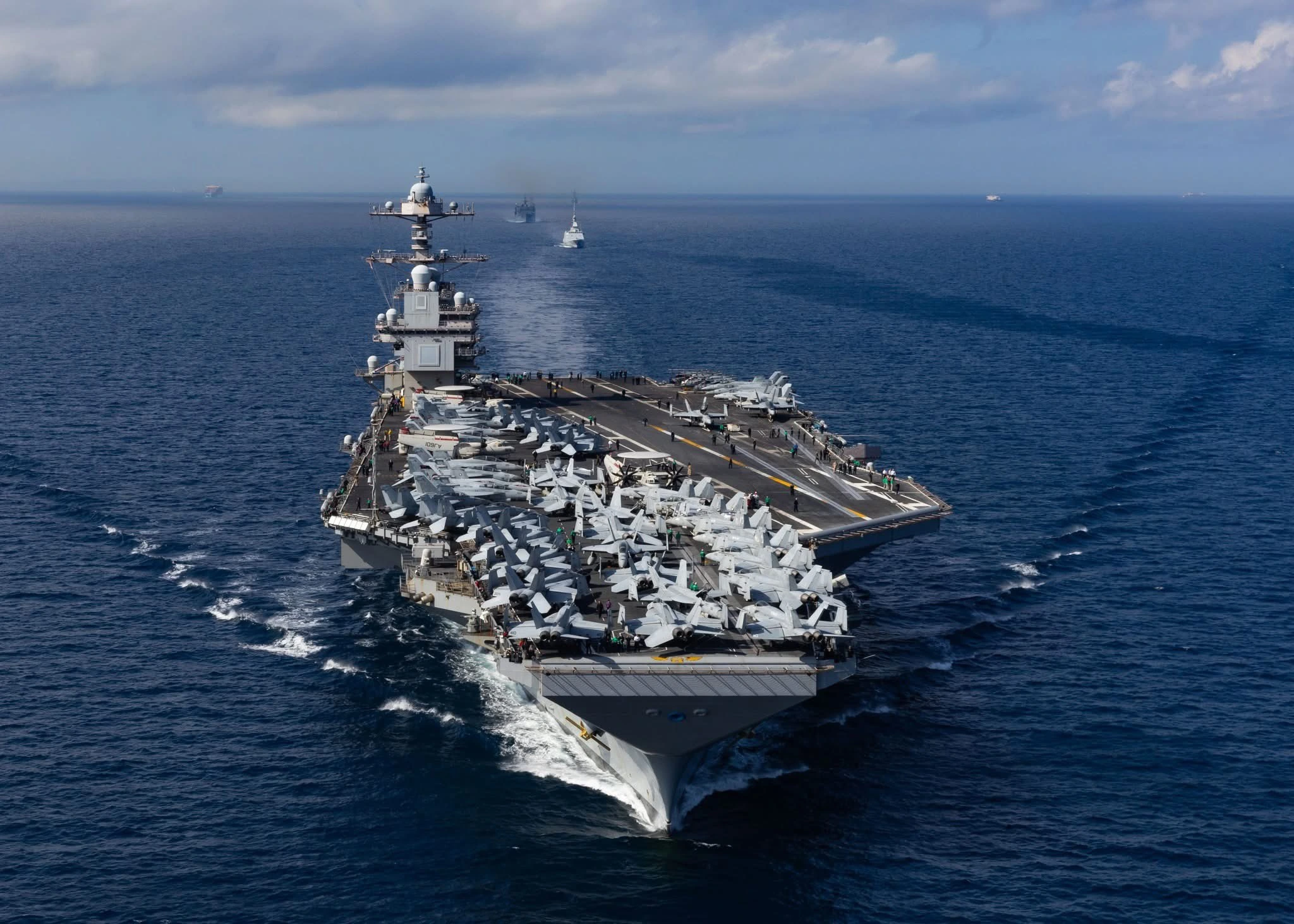
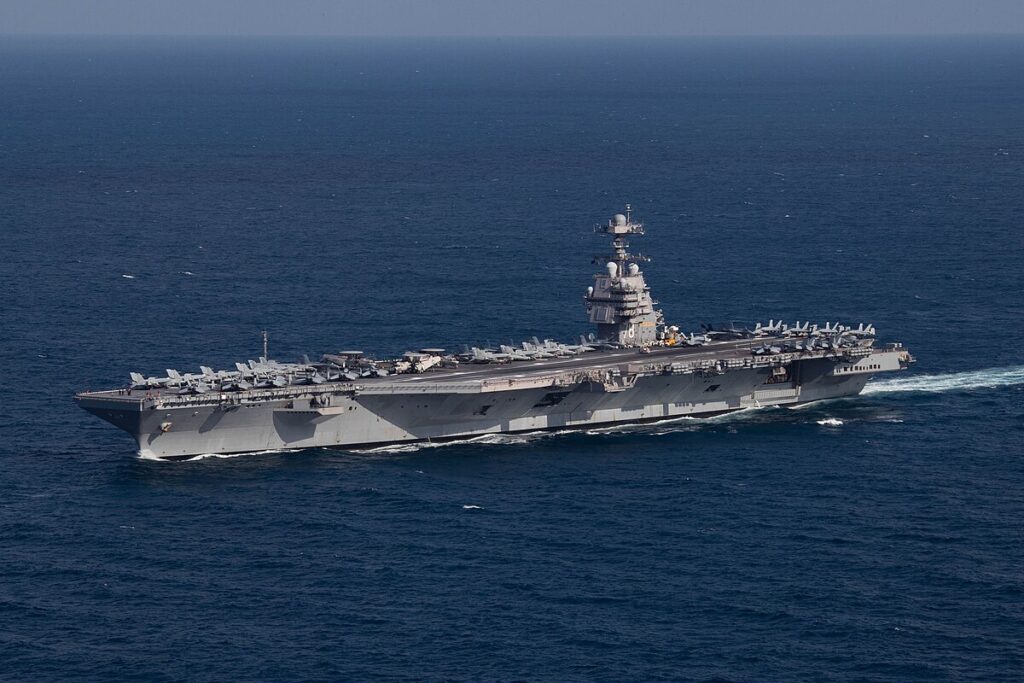
The Pentagon has ordered the deployment of the USS Gerald R. Ford (CVN-78) Carrier Strike Group to the U.S. Southern Command (USSOUTHCOM) area near Venezuela, aiming to dismantle drug-trafficking cartels and strengthen U.S. operations against Transnational Criminal Organizations (TCOs).
Pentagon spokesperson Sean Parnell confirmed that the strike group will operate from bases linked to U.S. Southern Command (MIA) as part of a directive to intensify counter-narcotics missions in Latin America. The move marks a significant expansion of U.S. naval presence in the region, heightening tensions with Venezuela and drawing regional concern.
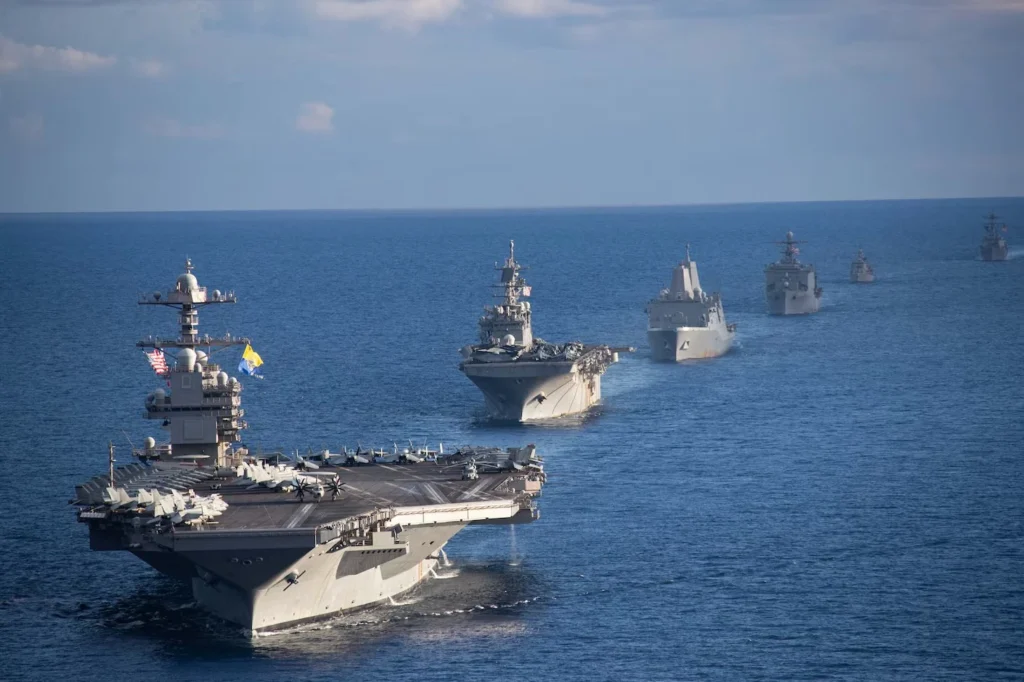
US Deploys Gerald R Ford to the Caribbean
The USS Gerald R. Ford (CVN-78), the world’s largest and most advanced aircraft carrier, will now serve in a counter-narcotics capacity in the Western Hemisphere.
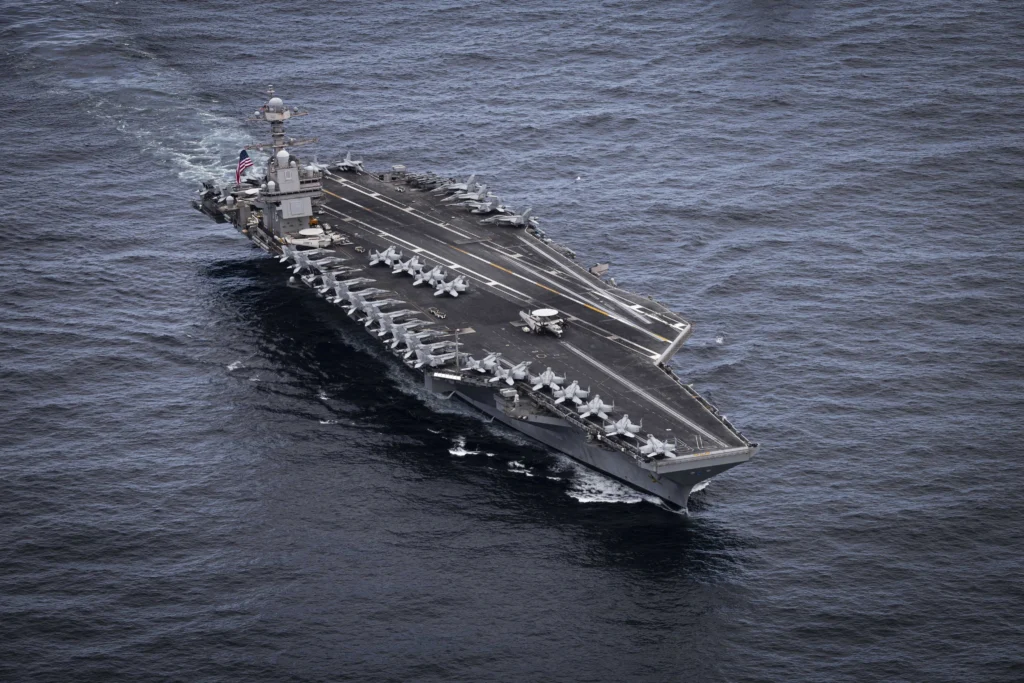
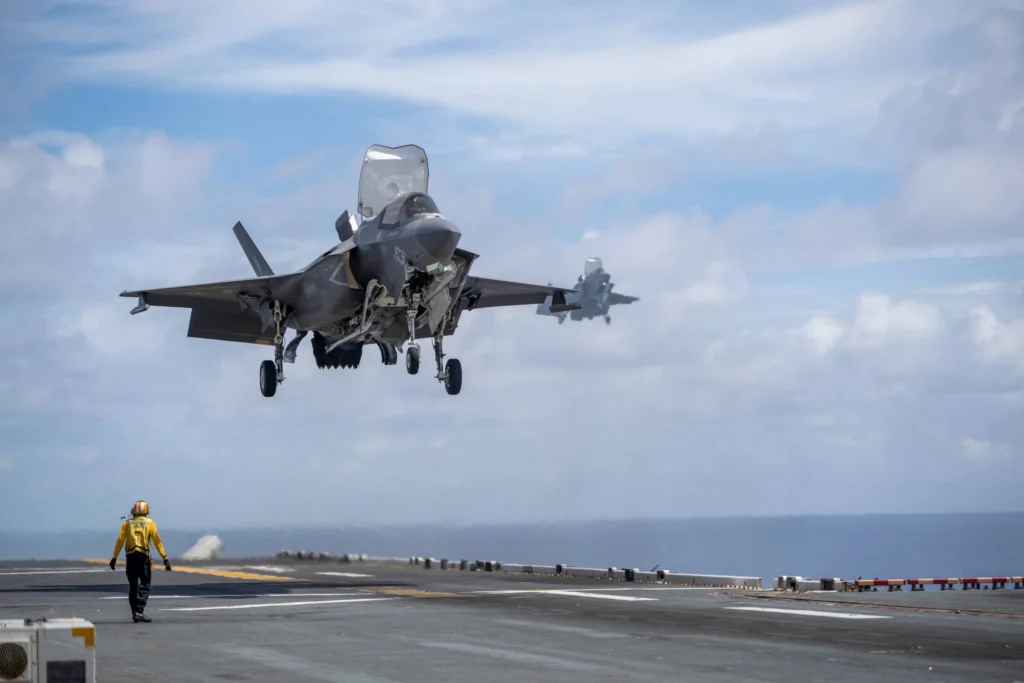
Built by Huntington Ingalls Industries in Newport News, Virginia, the carrier measures 1,092 feet, displaces about 100,000 tons, and supports a wide range of aircraft, including F-35C Lightning II fighters, F/A-18 Super Hornets, EA-18G Growlers, E-2D Hawkeyes, C-2A Greyhounds, and MH-60R/S Seahawks.
Powered by two A1B nuclear reactors, the carrier generates 25 percent more power than earlier U.S. carriers, providing future capacity for advanced weapons systems, including directed-energy technology.
With a cost exceeding $13 billion, the Gerald R. Ford is central to U.S. naval strategy, symbolizing both deterrence and projection of power.
According to Pentagon officials, the deployment is part of a broader campaign to detect, monitor, and dismantle criminal networks responsible for narcotics trafficking throughout Latin America. The forces assigned to USSOUTHCOM will augment existing air and maritime surveillance operations to track and interdict smuggling routes.
Escalation and Regional Tensions
President Donald Trump authorized the mission earlier this year, signaling a renewed focus on countering narco-terrorism.
Recent U.S. operations destroyed at least ten vessels allegedly used by drug smugglers, resulting in multiple casualties, according to Defense Secretary Pete Hegseth. He stated that the United States would pursue traffickers “day or night” across the region.
However, the escalation has raised political alarms. Venezuelan President Nicolás Maduro accused Washington of preparing “a new eternal war,” claiming the operation’s real intent is to destabilize his government.
Caracas also announced that Venezuela possesses 5,000 Russian-made man-portable air defense systems to deter any potential attack.
Regional powers, including Brazil, have voiced concern that a U.S. military buildup could trigger instability across South America. Celso Amorim, foreign policy advisor to Brazilian President Luiz Inácio Lula da Silva, warned that any intervention “would inflame the continent and radicalize politics.”
Strategic and Economic Undercurrents
Beyond the immediate military implications, the operation coincides with ongoing U.S.–Brazil negotiations over rare earth minerals—resources crucial to the production of electric vehicles, jet engines, and defense technologies.
Brazil holds the world’s second-largest reserves, positioning it as a potential strategic partner or rival amid tensions between Washington and Beijing.
China’s dominance in rare earth extraction and refining continues to shape global supply chains. U.S. officials see Brazil’s reserves as a potential counterbalance to China’s near-monopoly. Yet,
Brazilian experts suggest closer ties with China could yield better long-term industrial benefits, further complicating Washington’s geopolitical calculus.
Bottom Line
The deployment of the USS Gerald R. Ford (CVN-78) near Venezuelan waters underscores Washington’s intent to project power against drug networks while safeguarding its strategic influence in Latin America.
But with tensions escalating between the U.S., Venezuela, and regional actors, the operation risks widening into a broader geopolitical confrontation that blends security, economics, and diplomacy.
Stay tuned with us. Further, follow us on social media for the latest updates.
Join us on Telegram Group for the Latest Aviation Updates. Subsequently, follow us on Google News
