

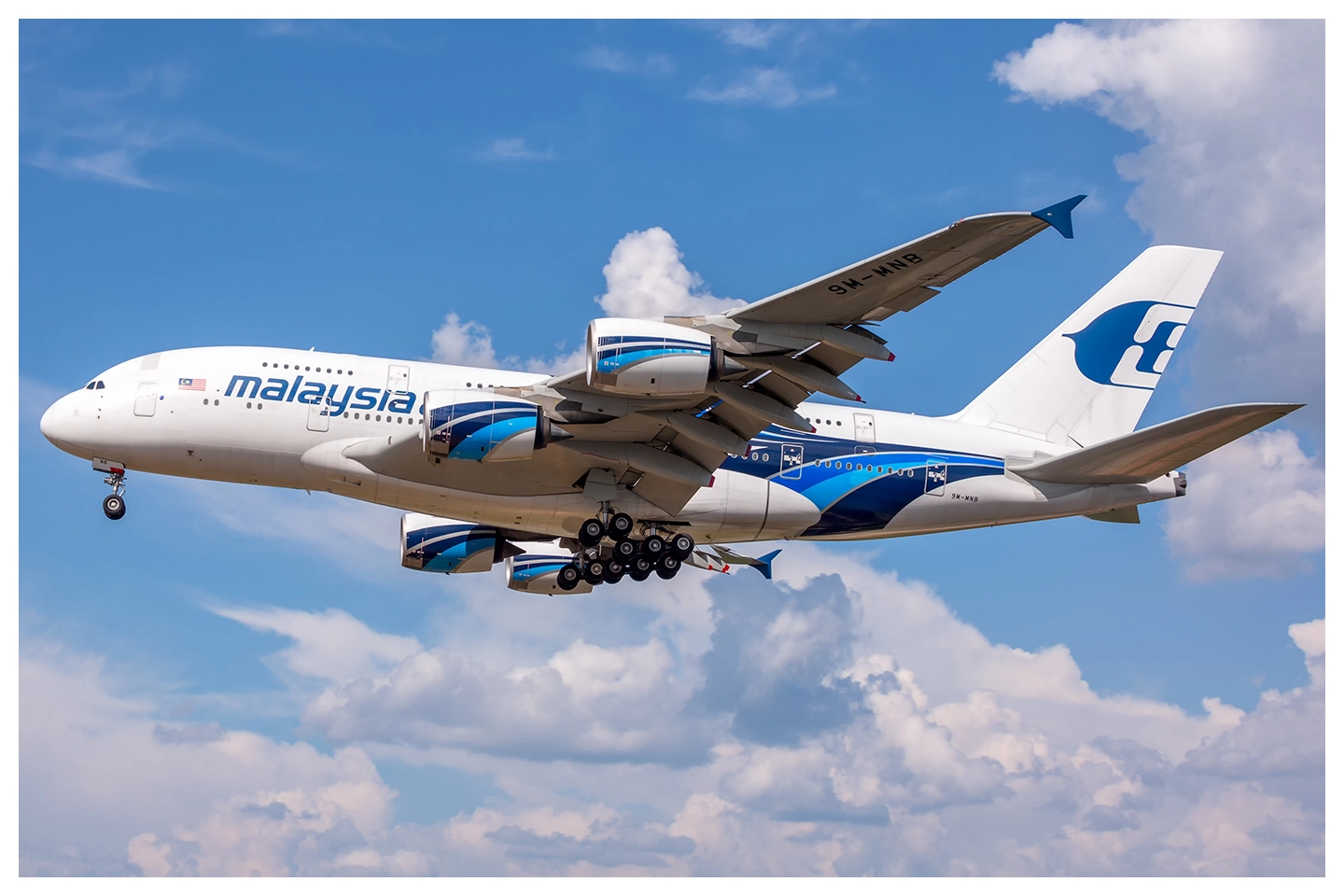
ABU DHABI- A former Malaysia Airlines (MH) Airbus A380, the largest passenger aircraft in the world, has taken to the skies again after nearly three years in storage. The 12-year-old superjumbo flew from Tarbes, France (LDE) to Abu Dhabi, UAE (AUH) on October 1, 2025, sparking curiosity across the aviation community.
The aircraft, once registered as 9M-MNF, is now owned by Airbus Financial Services and will undergo heavy maintenance at Etihad Engineering before being converted into a test aircraft. Despite speculation, it won’t be returning to passenger service.
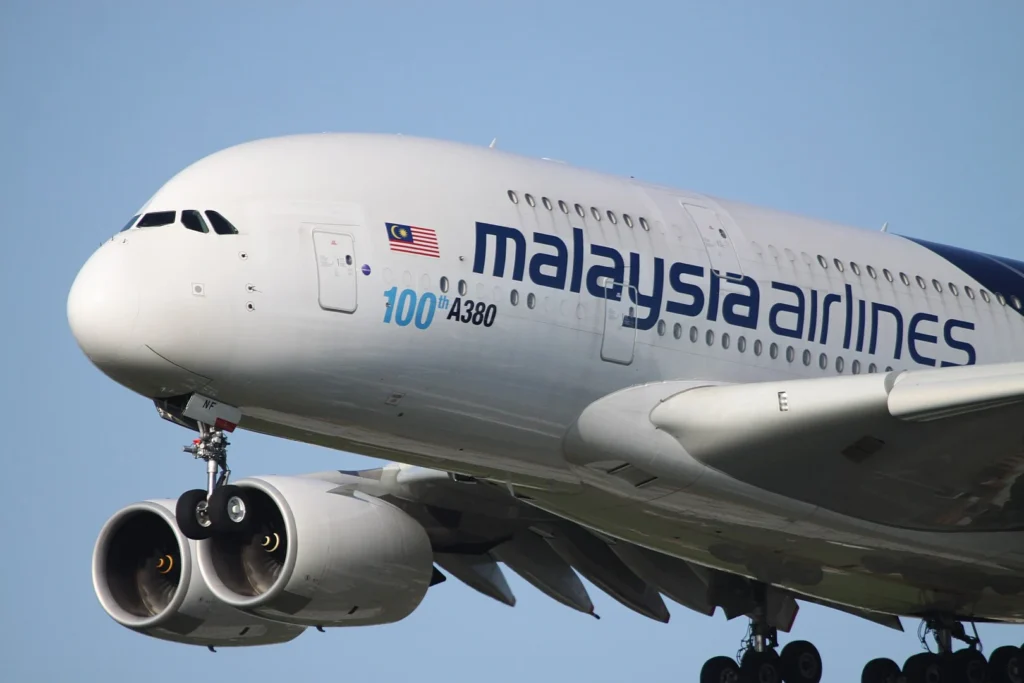
Ex-Malaysia Airlines A380 Returns to Skies
The A380, now registered as 2-JAYN, departed Tarbes (LDE) after a two-hour test flight over France on September 26, 2025, signaling preparation for reactivation. It then completed a 6-hour 35-minute flight to Abu Dhabi (AUH), where it taxied to Etihad Engineering facilities.
Malaysia Airlines originally received this aircraft in March 2013 as the 100th A380 ever produced.
During its service, the jet accumulated fewer than 24,000 flight hours across under 2,300 flights — a modest total for a widebody of its class. The airline struggled to integrate the superjumbo effectively into its fleet and eventually retired all six units in 2022.
Following years of storage and ownership transfers, the aircraft was re-registered twice — first as EI-HKF in March 2023, and later as 2-JAYN in March 2024 — both under Airbus ownership, OMAAT flagged.

Purpose Behind the Reactivation
While the A380’s return initially fueled rumors of a possible airline comeback, the reality is more technical. Airbus intends to use the aircraft as a test platform for new technologies, likely related to sustainability or next-generation systems rather than passenger service.
Etihad Engineering’s role is strictly maintenance and preparation; the aircraft isn’t being integrated into Etihad Airways (EY) operations. Despite Etihad’s recent reactivation of its own A380 fleet, the airline isn’t expanding beyond those already in service.
This isn’t the only A380 to be revived recently — another ex-Singapore Airlines (SQ) unit was also reactivated for undisclosed reasons — but the two cases appear unrelated. Airbus’s involvement indicates the Malaysia Airlines aircraft will serve internal development and testing needs, not commercial operations.
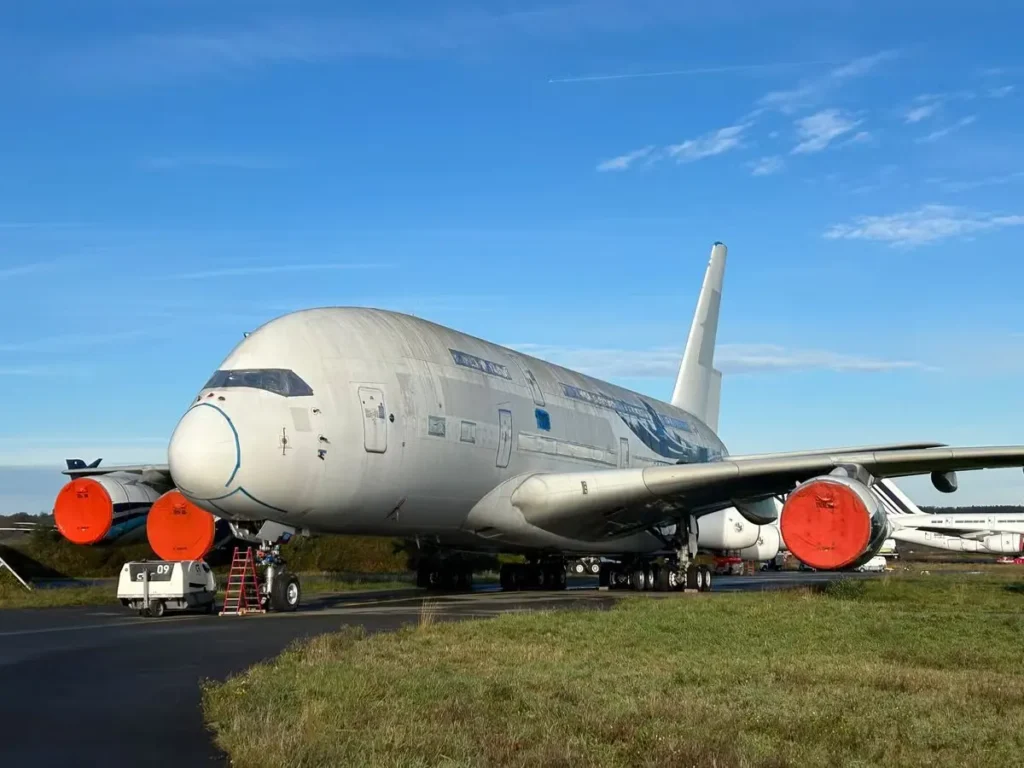
End of Passenger Service, Start of a New Role
The move marks a quiet but meaningful chapter in the A380’s legacy.
Rather than being scrapped, this particular aircraft will continue contributing to aviation progress through research and innovation.
Its reactivation highlights Airbus’s ongoing interest in leveraging the A380 platform for engineering tests and new technology validation.
Stay tuned with us. Further, follow us on social media for the latest updates.
Join us on Telegram Group for the Latest Aviation Updates. Subsequently, follow us on Google News
