

SEATTLE- Alaska Airlines (AS) Flight 1306 was boarding at Seattle-Tacoma International Airport (SEA) for Los Angeles International Airport (LAX) on November 21 when U.S. Immigration and Customs Enforcement (ICE) agents arrested two passengers on the jet bridge.
The Association of Flight Attendants (AFA) has warned that such operations could compromise aviation security, arguing that unclear identification of federal agents could allow individuals impersonating law enforcement officers to exploit airport security procedures.

AFA Raises Concerns Over ICE Operations at Airports
The Association of Flight Attendants (AFA), which represents approximately 55,000 flight attendants across 20 airlines, has raised serious concerns about the growing presence of immigration enforcement officers in airport environments.
In a new memo shared with its members, the union argued that flight attendants must be able to distinguish authorized law enforcement officers from individuals attempting to impersonate them.
The union warned that uncertainty surrounding the identification of federal agents could create security vulnerabilities, particularly in restricted airport locations such as jet bridges, aircraft cabins and airport ramps.
“We cannot properly do our jobs if we cannot distinguish an authorized law enforcement officer from someone impersonating one to use aviation as a means of harm,” the AFA said.
According to PYOK, the union’s internal memo specifically criticized the operation conducted during Alaska Airlines Flight 1306, describing the incident as inconsistent with established aviation security protocols.
The memo also questioned the use of masked officers wearing plain clothes without visible badges or warrants.
The AFA argued that such operations create difficulties for flight attendants who are expected to challenge individuals without proper identification in secure airport areas.
Flight attendants play an important role in maintaining aviation security. Their responsibilities extend beyond passenger service and include identifying potential security threats, reporting suspicious activity, and following established safety procedures.
The union believes that these responsibilities become difficult to perform when crew members cannot independently establish whether individuals entering restricted areas have legitimate law enforcement authority.
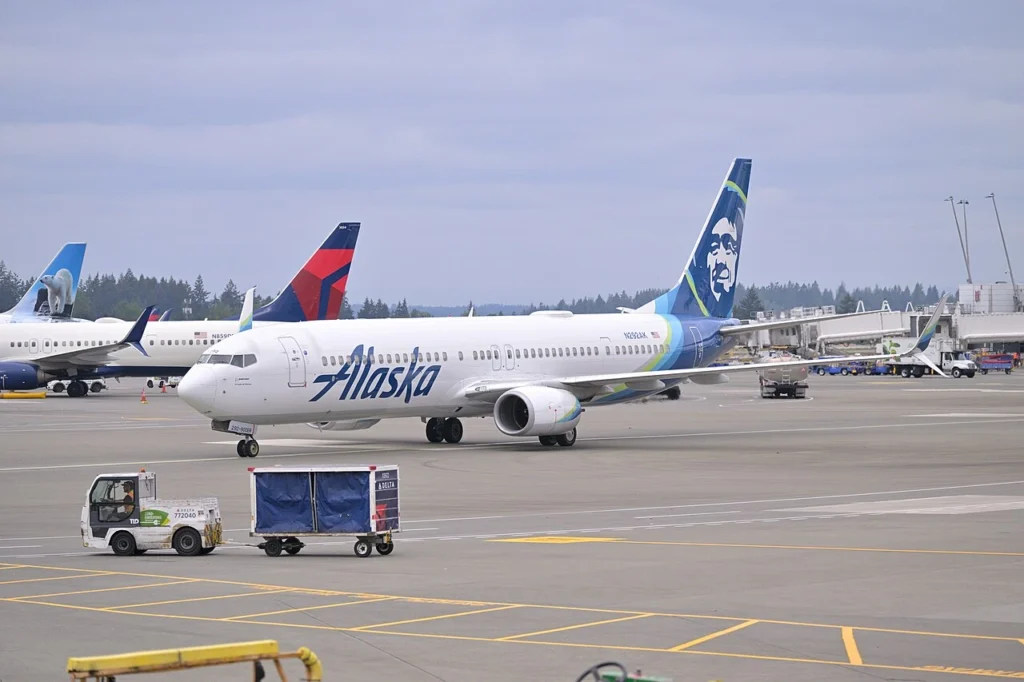
ICE Arrests Two Passengers During Alaska Airlines Flight Boarding
The AFA’s warning follows an immigration enforcement operation at Seattle-Tacoma International Airport on November 21.
The incident occurred around 8 a.m. local time while passengers were boarding Alaska Airlines Flight 1306, which was scheduled to operate to Los Angeles.
ICE officers entered the jet bridge and arrested two passengers during the boarding process.
According to information released by ICE, the operation targeted Ricardo Larrondo Mendoza, whom the agency alleged had overstayed his visa.
Officers also arrested Sofia Hernandez Mejia. ICE alleged that she threw hot coffee at officers during the confrontation and said she had also overstayed her visa. The agency stated that she would face a charge of assaulting a federal officer.
Videos of the incident circulated on social media, showing officers removing a passenger from the jet bridge while other travelers reacted to the arrests.
The operation created considerable disruption during boarding and raised concerns among passengers, airline employees and airport workers.
Alaska Airlines confirmed that it had not received advance notice of the enforcement action.
The airline said it did not direct or coordinate the immigration operation and was working with the relevant authorities to understand what happened, including whether established procedures were followed.
Many passengers were subsequently rebooked onto other flights, while the originally scheduled Alaska Airlines service departed at approximately 11 a.m. local time.

Port of Seattle Questions ICE Enforcement Practices
The Port of Seattle, which operates Seattle-Tacoma International Airport, also expressed serious concerns about the operation.
In a November 24 letter to Washington’s congressional delegation, the Port described the incident as an example of how current ICE enforcement practices can disrupt airport operations and create safety concerns.
However, the Port also clarified an important legal distinction.
It stated that Seattle-Tacoma International Airport is required under federal regulations to provide federal law enforcement authorities with access to conduct their duties.
The Port argued that changes to existing enforcement practices would require congressional intervention.
It specifically voiced support for the proposed S.5753, the Travel Without Fear Act, introduced by Senator Jacky Rosen.
The proposed legislation would introduce several restrictions on immigration enforcement at or near airports.
Its provisions include:
- Restricting civil immigration enforcement operations at or near airports without a judicial warrant related to a felony criminal conviction.
- Prohibiting information sharing between ICE and the Transportation Security Administration (TSA) for civil immigration enforcement without a judicial warrant for a specific target.
- Requiring ICE to obtain a warrant before accessing passenger information.
- Requiring advance notification to airports and airlines before immigration enforcement operations.
The proposed legislation also includes requirements for maintaining an online database of detainees and updating custody information for families and legal representatives.
The Port said it remains concerned about the operational disruption caused by immigration enforcement activities and their potential impact on passenger confidence. portseattle.org+1

Alaska Airlines Seeks Changes to Future ICE Operations
Alaska Airlines has also approached the industry over concerns about how federal law enforcement activities affect passengers and employees.
On November 24, the airline confirmed that it was engaging with government authorities, the Port of Seattle and Airlines for America, its industry trade association.
The discussions aim to emphasize the importance of minimizing disruption to passengers, employees, and airline operations during future law enforcement activities.
Alaska Airlines also reiterated that its employees follow established company procedures when interacting with federal agencies.
The airline said decisions regarding the timing, location and manner of federal law enforcement operations remain the responsibility of the relevant government agencies.
It added that the safety, well-being and dignity of passengers and employees remain its highest priority. news.alaskaair.com+1
AFA International President Sara Nelson has also strongly criticized immigration enforcement operations at airports, calling on ICE to leave airport facilities.
The union continues to argue that aviation security procedures must apply consistently, including when federal officers enter restricted areas.

American Airlines Flight Attendants Also Seek ICE Guidance
Concerns about immigration enforcement are not limited to Alaska Airlines.
The Association of Professional Flight Attendants (APFA), which represents cabin crew members at American Airlines (AA), has separately raised concerns about the lack of clear instructions for handling encounters with ICE officers.
The union said flight attendants have experienced increasingly difficult situations involving federal law enforcement at airports and onboard aircraft.
In an internal communication, APFA emphasized that American Airlines management is responsible for establishing policies governing interactions with law enforcement officers.
The union has repeatedly asked the airline to provide clear and consistent guidance so flight attendants understand their responsibilities during such encounters.
APFA also emphasized that crew members should follow established company procedures, cooperate with government officials, and report incidents through the appropriate internal reporting channels.
The concerns raised by both unions highlight a growing challenge for the U.S. aviation industry as immigration enforcement activities increasingly intersect with airport security procedures.
For flight attendants, the central issue is ensuring that authorized law enforcement officers can be properly identified and that established aviation security protocols remain effective during enforcement operations.
Stay tuned with us. Further, follow us on social media for the latest updates.
Join us on Telegram Group for the Latest Aviation Updates. Subsequently, follow us on Google News
