

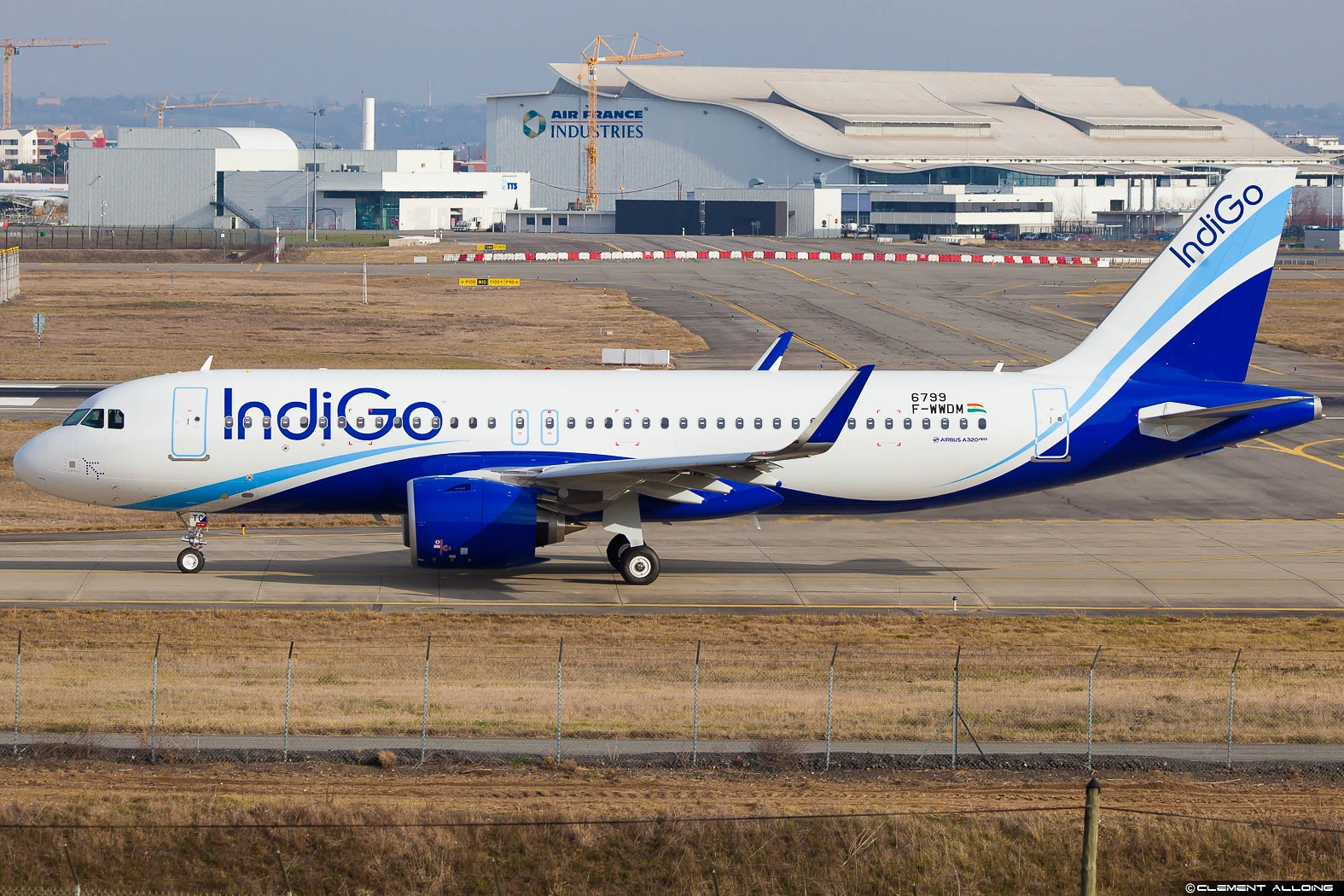
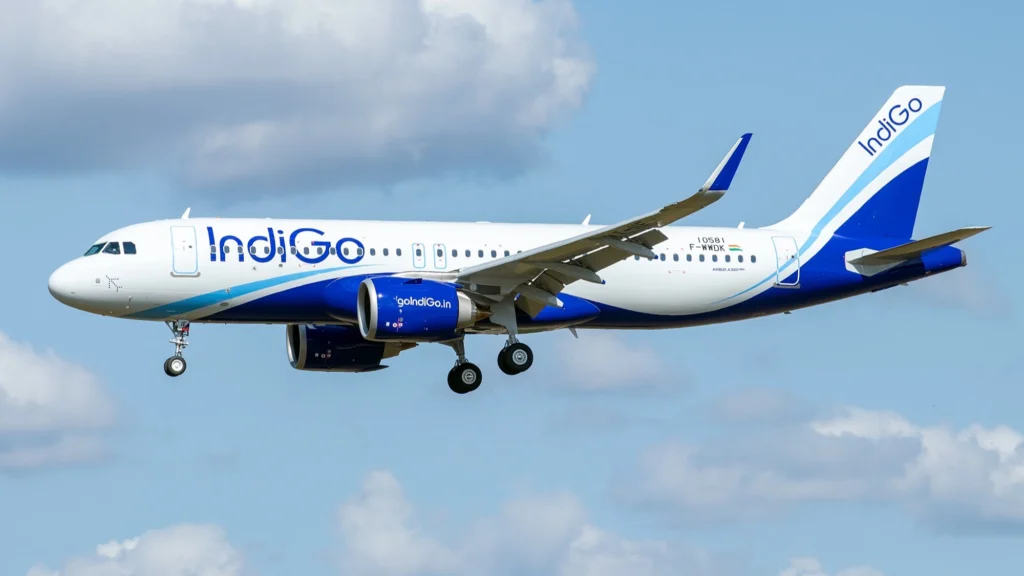
GURUGRAM- An IndiGo (6E) flight operating from Mangaluru International Airport (IXE) to Navi Mumbai International Airport (NMI) suffered a bird strike on arrival on Tuesday, November 17, 2026.
The bird struck the aircraft’s right-side fuselage, prompting the airline to ground the aircraft for inspection. IndiGo confirmed that the aircraft would resume operations only after completing the necessary checks.
Bird Strike Grounds IndiGo Flight 6E 865 at Navi Mumbai
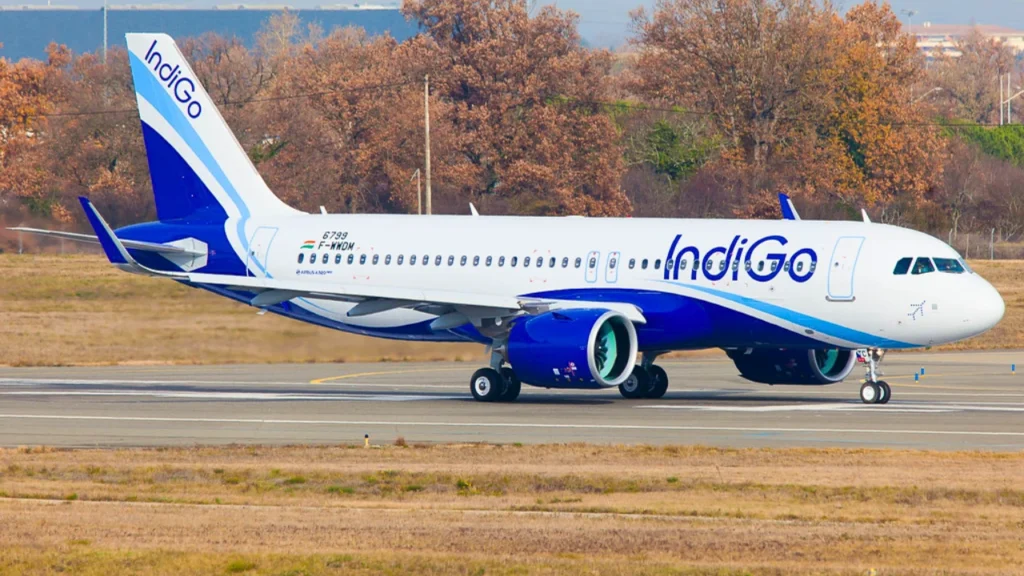
IndiGo flight 6E 865 arrived at Navi Mumbai International Airport from Mangaluru on Tuesday when the aircraft reported a bird strike. According to an airport source, the bird hit the right side of the aircraft’s fuselage during arrival.
Following the incident, the aircraft was grounded for a detailed inspection to assess the impact of the strike and determine whether it was safe to return to service.
The number of passengers and crew members travelling on the flight was not immediately available.
IndiGo confirmed the bird strike and stated that the aircraft had been taken out of service.
“The aircraft is grounded and will resume operations after necessary checks,” the airline said.
However, IndiGo did not issue a separate detailed statement about the incident. The airline also did not disclose the extent of the damage or provide a timeline for the aircraft’s return to commercial operations.
The aircraft will remain grounded until the required inspections and maintenance checks are completed.
Another IndiGo Flight Aborts Take-Off at Mangaluru Airport
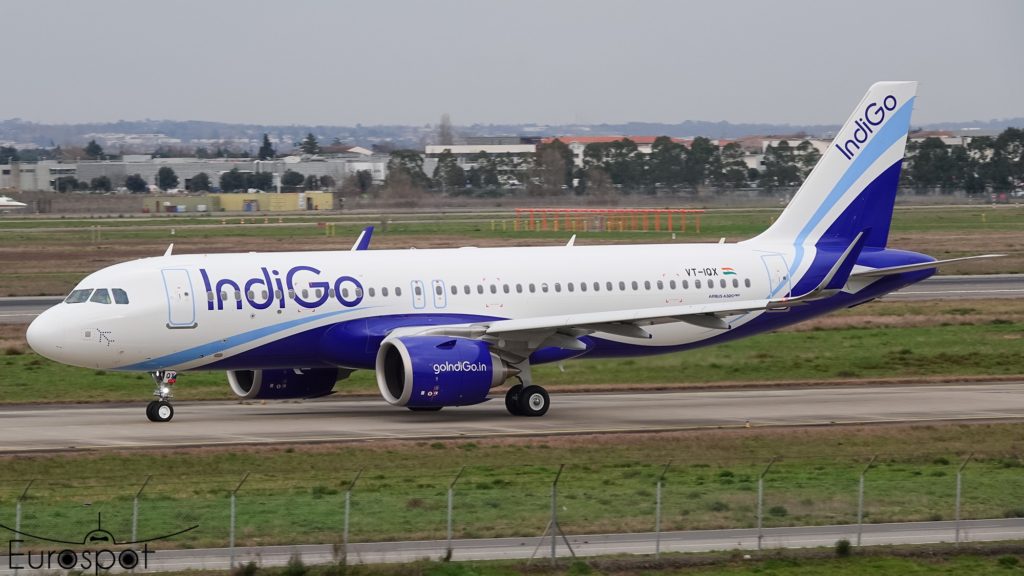
The bird strike came after another IndiGo aircraft experienced a technical issue at Mangaluru International Airport a day earlier.
On Monday, November 16, a Bengaluru-bound IndiGo flight 6E 388 aborted its take-off at approximately 6:05 pm after a technical issue was detected shortly before departure.
The aircraft returned to the parking bay following the aborted take-off and underwent an inspection by the airline’s engineering team. It was subsequently declared Aircraft on Ground (AOG), meaning it would remain out of service until the necessary maintenance and clearances were completed.
The aircraft was carrying 229 passengers and seven crew members. All 236 people onboard were safely deplaned, and no injuries were reported.
IndiGo arranged a replacement aircraft for the affected passengers. However, only 34 of the original 229 passengers opted to travel on the replacement flight, which departed Mangaluru at 12:10 am on Tuesday.
The airline also offered affected passengers alternative connections, hotel accommodation, meals and refreshments, and refunds where applicable.
The technical issue involving flight 6E 388 remains separate from the bird strike reported on flight 6E 865.
IndiGo Flight Returns to Pune After Landing Gear Problem
The latest incidents also follow another technical problem involving an IndiGo aircraft at Pune Airport (PNQ) on November 15.
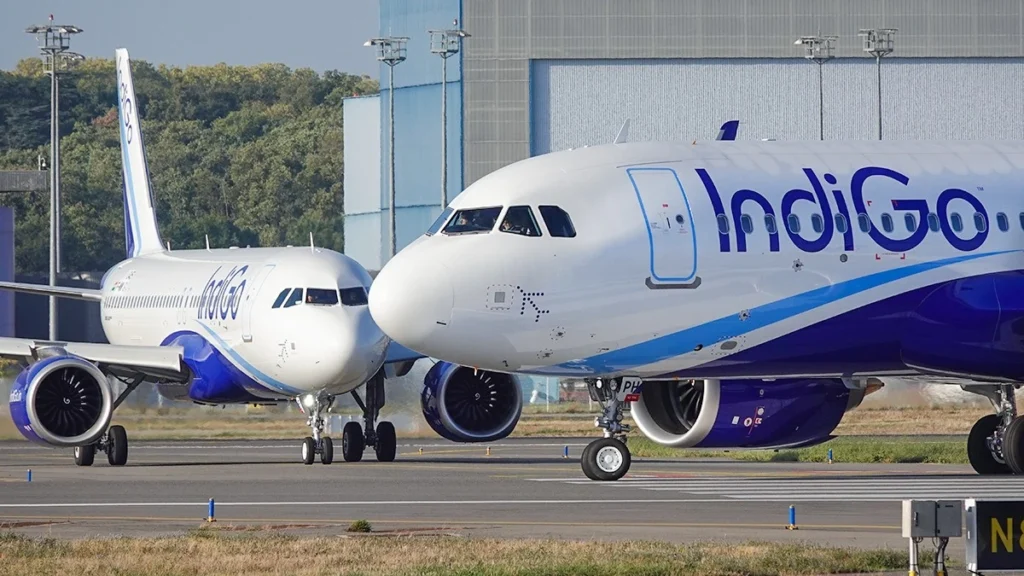
A Guwahati-bound IndiGo flight 6E 623, registered as VT-IZE, returned to Pune shortly after take-off after its landing gear failed to retract.
The aircraft was carrying 192 passengers and crew members when the pilot informed Air Traffic Control (ATC) about the problem.
Following the alert, airport authorities and the Indian Air Force (IAF) declared a full emergency and placed firefighting vehicles, ambulances and medical response teams on standby.
The aircraft subsequently performed a low pass over the runway to allow ground personnel to visually inspect the landing gear.
It landed safely at Pune Airport at 9:04 am. Emergency responders escorted the aircraft to Bay No. 7, and all 192 people onboard were safely deplaned. No injuries were reported.
The airport authorities withdrew the full emergency at 9:10 am after confirming that the aircraft was in a safe condition.
IndiGo said the aircraft would undergo maintenance checks and return to service after securing the necessary clearances. The airline also arranged an alternative aircraft for the affected passengers travelling to Guwahati.
FAA Conducts Aviation Safety Audit of India
The series of reported IndiGo incidents comes as the US Federal Aviation Administration (FAA) conducts a five-day assessment of India’s aviation safety oversight system.
The audit began on November 16 and is scheduled to continue until November 20, 2026. An official said the assessment would primarily examine the Directorate General of Civil Aviation’s (DGCA) oversight of aircraft operations, airworthiness and personnel licensing.
The review is being conducted under the FAA’s International Aviation Safety Assessment (IASA) programme.
Under the programme, the FAA evaluates whether a country’s civil aviation authority effectively supervises its airlines and complies with international aviation safety standards established by the International Civil Aviation Organization (ICAO).
The assessment covers three major areas: personnel licensing, aircraft operations and aircraft airworthiness.
India currently holds Category 1 status under the FAA’s aviation safety assessment programme. This rating indicates that the country’s civil aviation authority meets ICAO standards for aviation safety oversight.
The status is particularly important for Indian airlines operating or seeking to operate flights to the United States, as well as carriers entering codeshare arrangements with US airlines.
India previously lost its Category 1 status in January 2014 when the FAA downgraded the country to Category 2. Following corrective measures by the DGCA, India regained Category 1 status in 2015.
India’s Previous FAA Aviation Safety Assessment
The FAA’s previous major assessment of India’s aviation safety oversight included an audit of the DGCA conducted from October 25 to 29, 2021.
The assessment examined aircraft operations, airworthiness and personnel licensing. Further consultations took place on April 25 and 26, 2022, followed by additional FAA reviews in July and September 2022.
The final outcome of that assessment was announced in April 2023, when India retained its Category 1 status.
The November 2026 assessment will provide another review of the DGCA’s ability to oversee the country’s rapidly expanding aviation sector.
However, the IASA programme evaluates the safety oversight capabilities of a country’s aviation regulator rather than investigating individual airline incidents. Therefore, the recent IndiGo incidents should not be interpreted as findings of the ongoing FAA audit.
The outcome of the latest assessment will determine whether India continues to meet the FAA’s requirements for Category 1 status.
Stay tuned with us. Further, follow us on social media for the latest updates.
Join us on Telegram Group for the Latest Aviation Updates. Subsequently, follow us on Google News
