

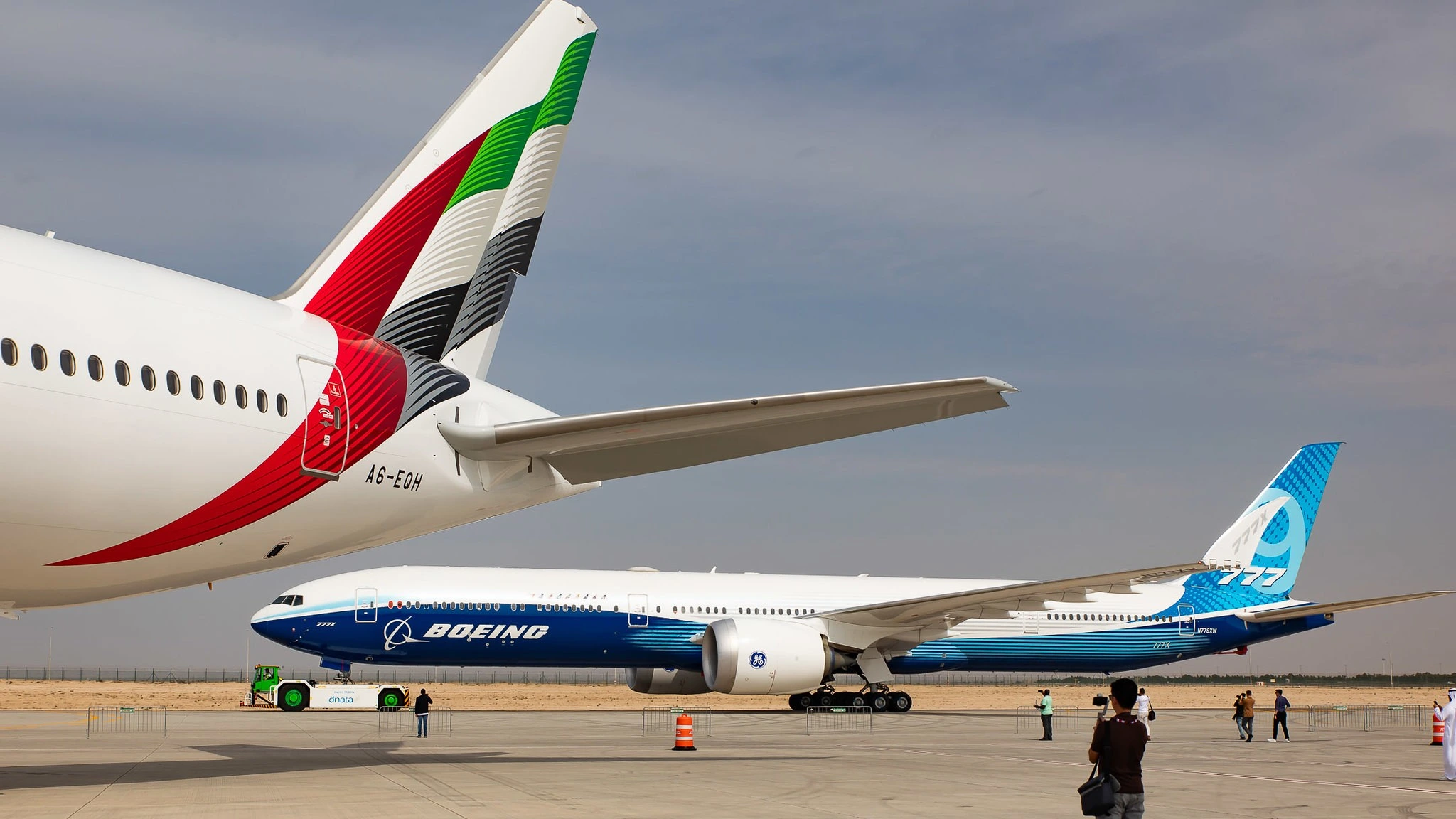
DUBAI, UAE- Emirates (EK) expects to receive only three to five Boeing 777-9 widebody aircraft towards the end of 2027, extending the wait for its delayed next-generation fleet.
The airline’s President, Sir Tim Clark, said the initial deliveries remain uncertain as Boeing continues to face certification and production challenges. The aircraft will support Emirates’ capacity expansion from its hub at Dubai International Airport (DXB).
Emirates Faces Further Delays in Boeing 777-9 Deliveries
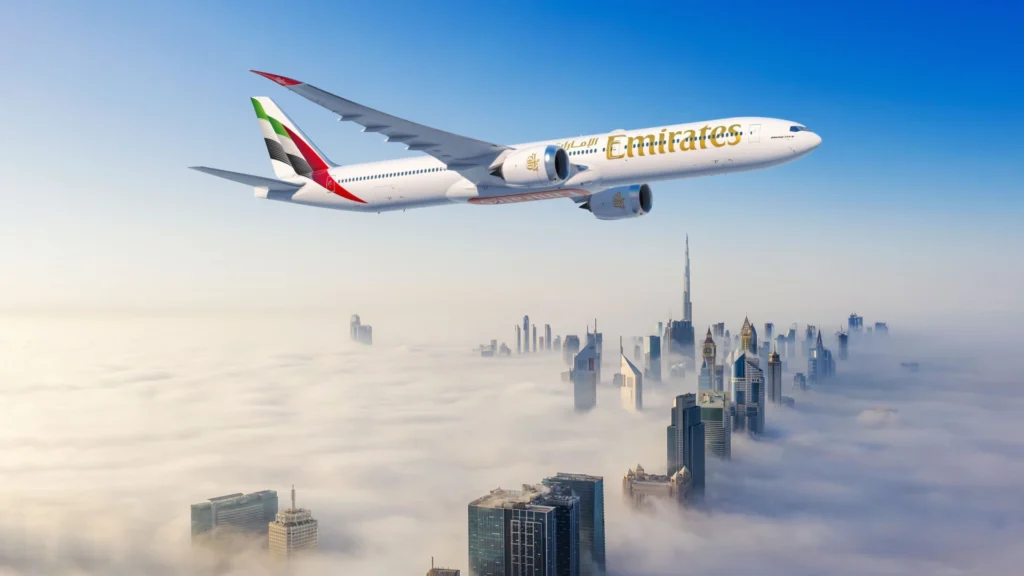
According to Bloomberg, Clark confirmed that Emirates is discussing its initial delivery allocation with Boeing. The airline expects to receive between three and five Boeing 777-9 aircraft towards the end of 2027.
Clark also indicated that deliveries could increase to approximately 10 aircraft in 2028. However, he expressed uncertainty about Boeing’s ability to meet the proposed schedule.
The latest outlook represents another setback for Emirates, which has been waiting several years for its largest aircraft order to enter service.
The airline had previously expected its first Boeing 777-9 deliveries from the second quarter of 2027, according to its 2025-2026 annual report. The latest delivery estimate from Clark points towards the end of the year instead.
Boeing originally planned to certify the 777-9 and begin deliveries in 2020. The programme has therefore fallen more than seven years behind its original delivery schedule.
Boeing 777X Certification Remains a Major Challenge
Boeing’s certification programme continues to determine when airlines can begin receiving the 777-9.
The manufacturer is conducting certification flight testing with the US Federal Aviation Administration (FAA). In its third-quarter 2026 financial filing, Boeing said it expected approval for the remaining phases of flight testing by the end of 2026.
The company also continues working with the FAA and its engine supplier to address an engine durability issue identified in 2025.
Boeing maintained its expectation of delivering the first 777-9 in 2027. However, the final certification timeline remains subject to regulatory approval.
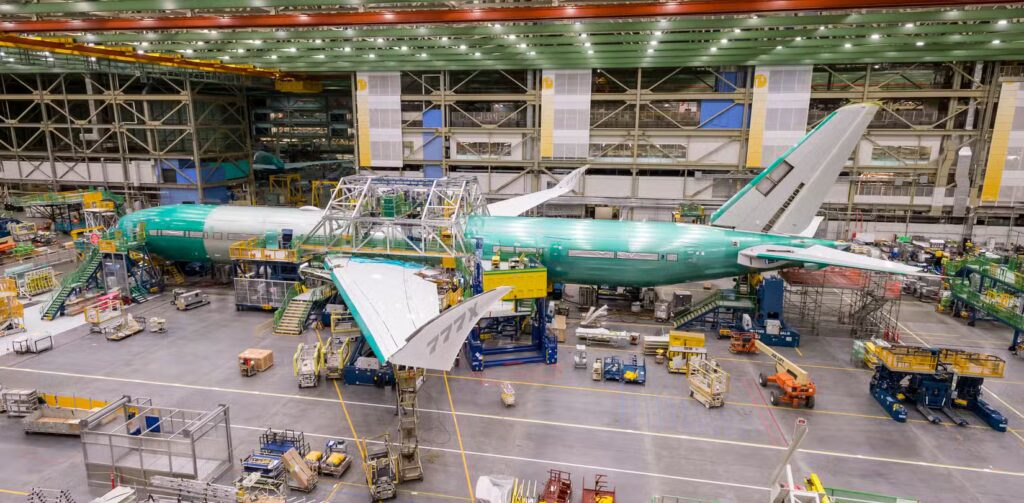
Production capacity presents another challenge. Boeing disclosed parts shortages involving a key 777 supplier during the third quarter of 2026. The disruption was expected to affect factory operations through the first half of 2027.
During its October 2026 earnings call, Boeing also indicated that it was producing 777X aircraft at approximately one aircraft per month. The company expected to maintain that production level for most of 2027.
These constraints make it difficult for Boeing to accelerate deliveries immediately after certification.
Emirates Holds 270 Boeing 777X Aircraft on Order
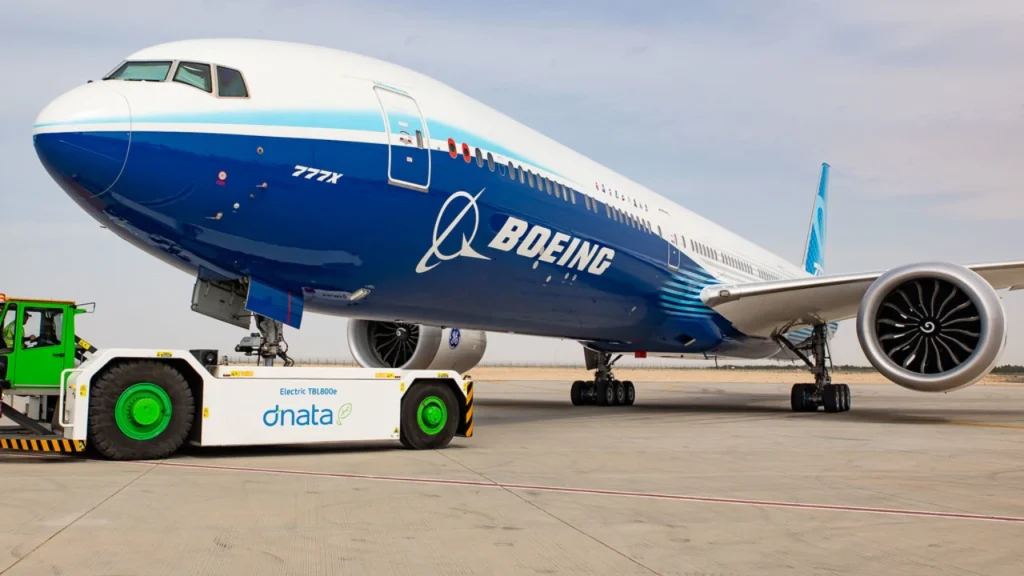
Emirates is the largest customer for the Boeing 777X programme, with 270 aircraft on order.
The Boeing 777-9 is the first passenger variant of the 777X family. It is designed to provide higher passenger capacity and improved operating efficiency compared with earlier generations of the Boeing 777.
The airline’s order represents a major part of its long-term fleet expansion strategy. Emirates carefully planned the deliveries to support increasing passenger demand and replace ageing aircraft.
The airline also has flexibility to convert certain orders into the smaller, longer-range Boeing 777-8 or the proposed Boeing 777-10.
Emirates has supported Boeing’s feasibility study for the 777-10, a stretched version designed to offer additional passenger capacity. However, Boeing has not yet committed to developing the proposed aircraft.
The airline has consistently prioritised larger-capacity widebody aircraft to support its hub operations and long-haul network.
Lufthansa and Other Airlines Also Await the 777-9
Emirates is not the only major airline affected by the programme’s delays.
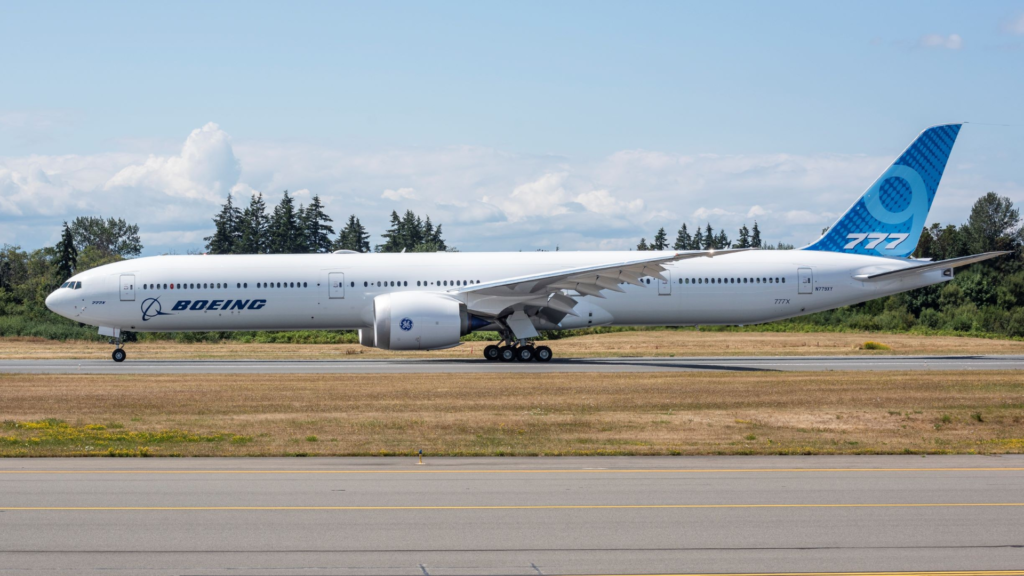
Lufthansa (LH) is among the Boeing 777X launch customers and is preparing to introduce the 777-9 into its long-haul fleet.
Other major customers include Singapore Airlines (SQ), Qatar Airways (QR) and Emirates.
Boeing’s first production 777-9 aircraft for Lufthansa completed its first flight in May 2026 with the airline’s passenger cabin installed. The aircraft subsequently entered further testing as part of the programme’s preparation for certification and delivery.
The delays have affected airline fleet planning because carriers placed their orders based on earlier delivery schedules. Continued uncertainty makes it harder to coordinate aircraft retirements, capacity additions and network expansion.
Emirates Plans to Use the 777-9 for Fleet Expansion and Replacement
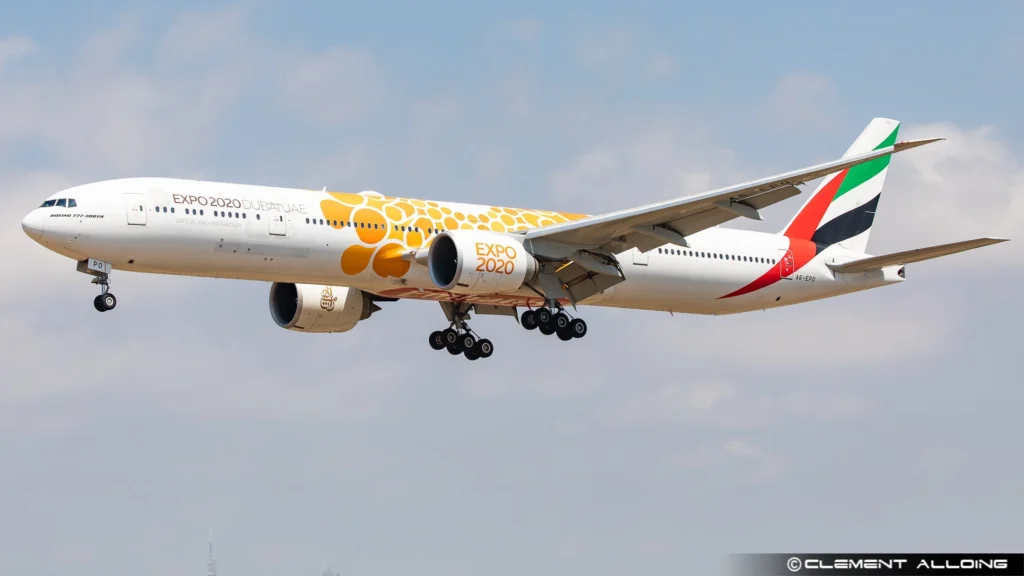
Emirates has traditionally operated one of the industry’s largest widebody fleets, built primarily around the Airbus A380 and Boeing 777-300ER.
The arrival of the Boeing 777-9 will introduce another major aircraft type into this fleet structure.
Initially, Emirates is expected to use the new aircraft to add capacity across its international network. The airline has faced limitations on planned expansion because several aircraft have not arrived according to the original schedules.
Over time, the 777-9 will also help replace older Boeing 777-300 aircraft and eventually support the gradual retirement of the Airbus A380 fleet.
However, the A380 will remain an important part of Emirates’ operations for several more years.
The airline has already introduced the Airbus A350-900 into its fleet, adding another aircraft type to its long-haul operations. Emirates has also maintained reservations about the Rolls-Royce engine performance on the larger A350-1000, limiting its willingness to move forward with that aircraft.
The proposed Boeing 777-10 could eventually provide another option for Emirates because the airline requires aircraft with very high passenger capacity.
Boeing 787 Order Could Provide Emirates With Another Option
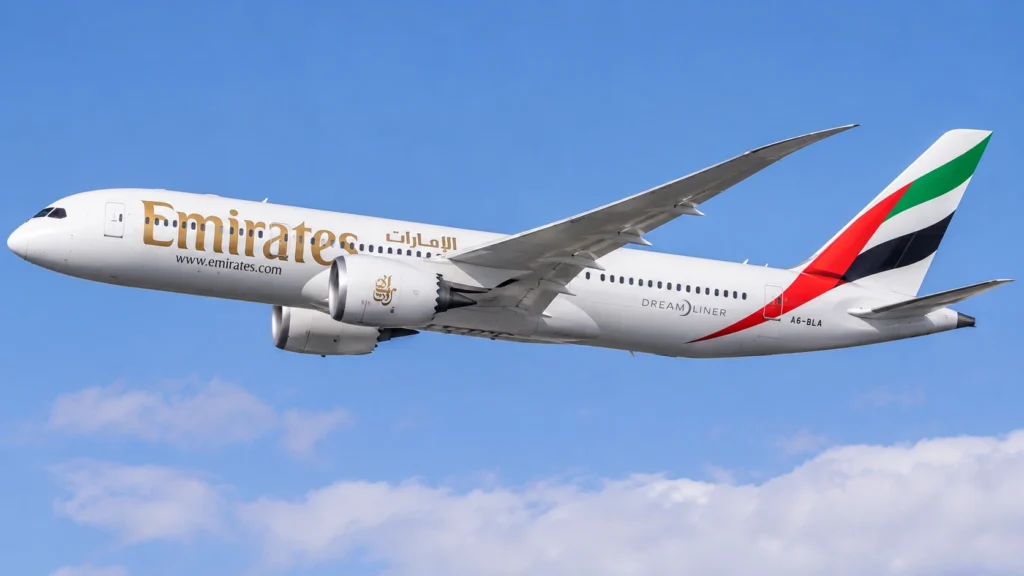
Emirates also has 35 Boeing 787 Dreamliner aircraft on order, which could provide an alternative fleet option if the 777X programme experiences further delays.
Clark indicated that Emirates could decide how to proceed with the 787 order once Boeing provides greater clarity about its 777X production plans.
The airline could potentially place these aircraft with other airlines or lessors instead of operating all of them itself.
This decision will depend on the expected availability of the 777-9 and the airline’s future capacity requirements.
For Emirates, the Boeing 777-9 remains central to its long-term fleet strategy. However, the uncertain delivery schedule means the airline must retain flexibility in its aircraft planning.
The arrival of three to five aircraft towards the end of 2027 would mark an important milestone after years of delays. Nevertheless, Boeing will need to improve certification progress and production capacity before Emirates can receive its much larger order.
Stay tuned with us. Further, follow us on social media for the latest updates.
Join us on Telegram Group for the Latest Aviation Updates. Subsequently, follow us on Google News
