

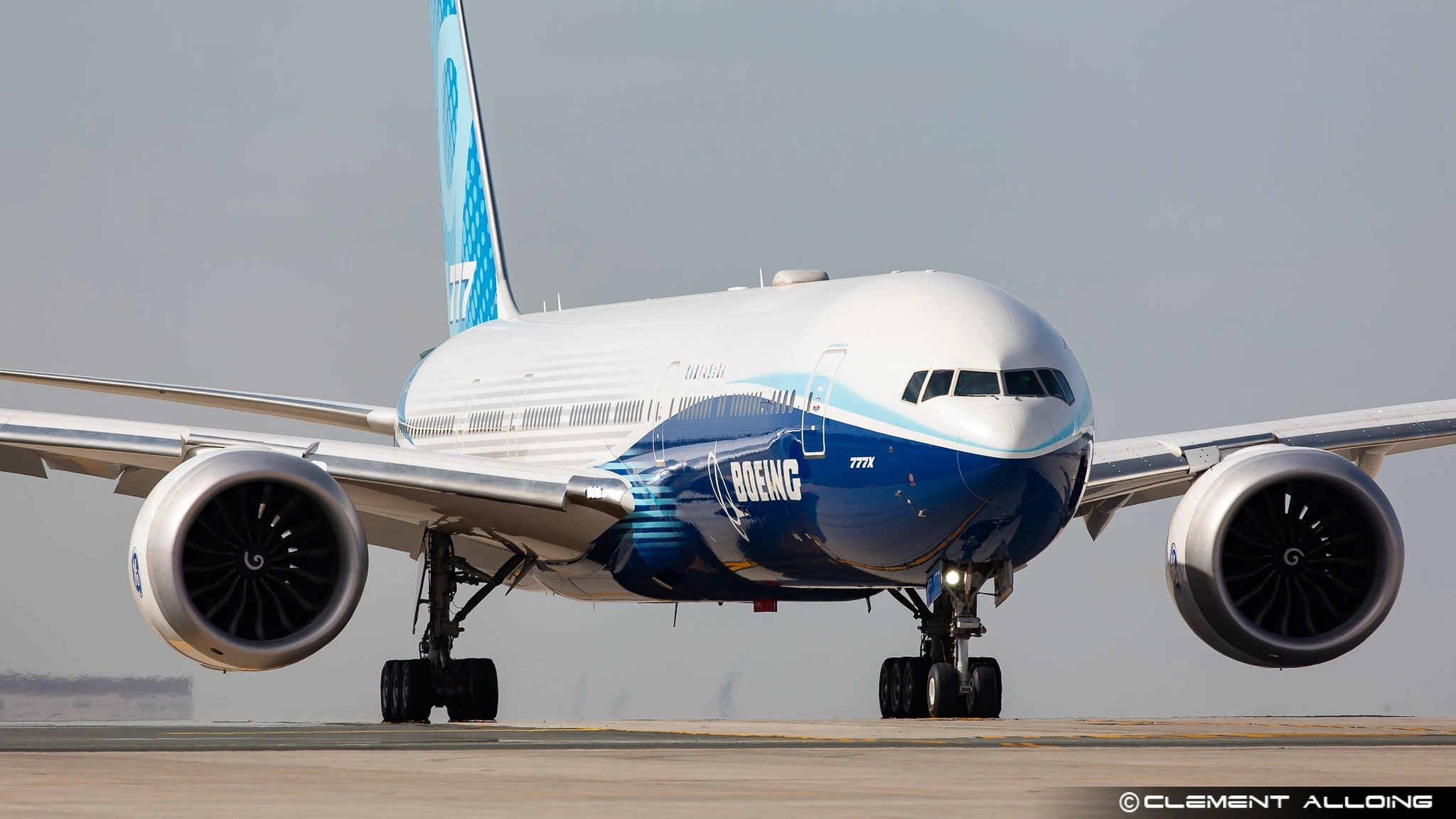
ARLINGTON- Boeing 777X test pilots are estimated to earn between $100,000 and more than $250,000 annually, depending on experience, technical qualifications, and certification responsibilities.
However, Boeing does not publish a dedicated salary range for pilots assigned specifically to the 777X program.
The aircraft’s flight-test campaign operates within Boeing’s wider aerospace development activities, including work around Seattle Paine Field (PAE) in Everett, Washington.
Compensation comparisons with Delta Air Lines (DL), United Airlines (UA), and Emirates (EK) require care because experimental flight testing and commercial airline operations involve different responsibilities and pay structures.

How Much Can Boeing 777X Test Pilots Earn?
Boeing 777X test pilots occupy specialized positions that combine advanced flying skills with aircraft engineering, performance evaluation, and regulatory compliance. Their work helps demonstrate that the aircraft meets safety and performance requirements before it enters commercial service.
The company does not disclose a separate salary scale for 777X test pilots. Their potential earnings must therefore be assessed using broader aircraft test-pilot salary estimates, published Boeing job ranges for comparable specialist positions, and reported compensation figures from the aerospace industry.
Public salary estimates vary because they cover different job titles, experience levels, and compensation arrangements.
Some databases estimate pay for general test pilots, while others focus on experimental aircraft testing or senior specialist positions.
Salary.com reported the following average annual salaries in the United States as of October 1, 2026.
| Job category | Average annual salary | Approximate EUR equivalent |
|---|---|---|
| Flight test pilot | $98,515 | €88,000 |
| Aircraft test pilot | $116,087 | €104,000 |
| Experimental test pilot | $128,107 | €114,000 |
| Senior test pilot | $150,183 | €134,000 |
| Boeing senior T-7A experimental test pilot, published pay range | $205,700 to $278,300 | €184,000 to €249,000 |
The euro equivalents are rounded estimates based on the European Central Bank’s October 23, 2026, reference rate of approximately €0.893 per US dollar.
Actual exchange rates fluctuate. The figures are not adjusted for differences in living costs, taxation, or employee benefits.
The Boeing T-7A salary range is particularly relevant as an example of compensation for a senior experimental test-pilot position. However, the T-7A is a separate aircraft program, so its published range should not be presented as the confirmed salary of a 777X pilot.
Previously Reported Salary Estimates
An earlier report by Simple Flying cited an estimated average Boeing test-pilot salary of approximately $136,000 (€121,000) annually. It also placed the average base pay for flight-test pilots at around $126,000 (€113,000), before bonuses and other additional compensation.
The same reporting cited wider-market estimates of approximately $164,000 (€147,000) annually for experienced aircraft test pilots and around $129,000 (€115,000) for a broader category of aviation testing roles.
Senior experimental pilots and certification specialists were estimated to earn more than $230,000 (€206,000), with some estimates approaching $270,000 (€241,000).
These figures should be treated as separate reported estimates rather than a single, consistent salary survey. Differences in job classifications, survey methods, experience levels, and the distinction between base salary and total compensation can produce substantial variations.
Taken together, the estimates suggest that a highly experienced test pilot working on a major aircraft development program could earn well into six figures. They do not establish a specific salary for an individual assigned to the 777X.
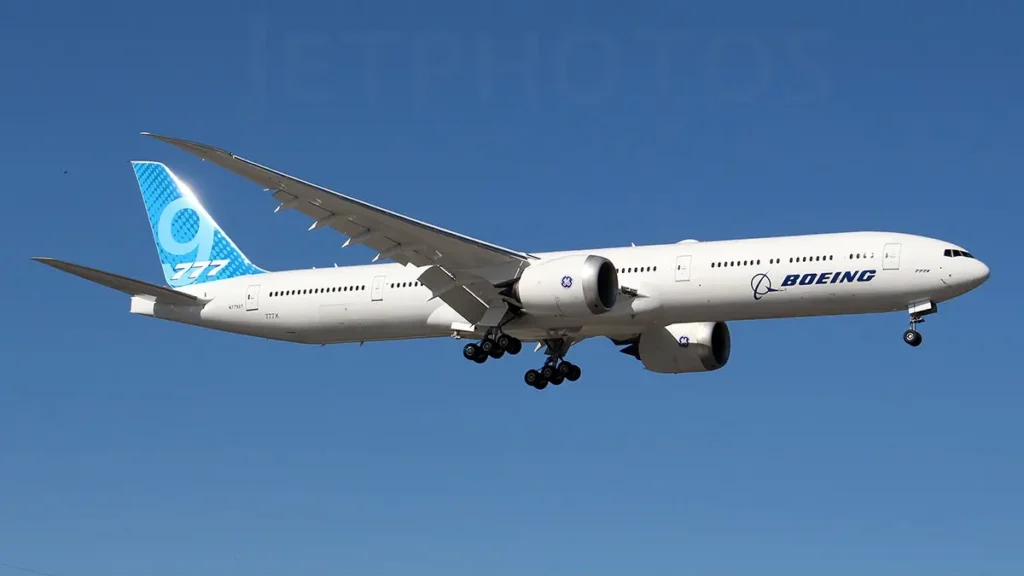
What Influences Boeing Test Pilot’s Pay?
Several factors affect the compensation of aircraft test pilots.
Flight experience and seniority: Experienced pilots with proven records in demanding aircraft operations may qualify for higher-level testing positions. Seniority can also influence responsibilities and overall compensation.
Military experimental aviation: Military pilots with experience evaluating aircraft performance, managing flight risks, and conducting structured test missions may bring valuable qualifications to aerospace manufacturers.
Engineering knowledge: Qualifications in aerospace engineering, systems engineering, aerodynamics, and flight sciences can help pilots interpret technical results and evaluate modern aircraft systems.
Certification responsibilities: Pilots involved in complex regulatory testing may have additional duties related to test planning, operational limitations, risk assessment, technical reporting, and coordination with engineering teams.
Total compensation: Base salary does not necessarily represent total earnings. Eligible employees may also receive variable compensation, retirement contributions, insurance, and other benefits, depending on their employment arrangements.
These factors make it difficult to assign one salary figure to every pilot working on the Boeing 777X program.
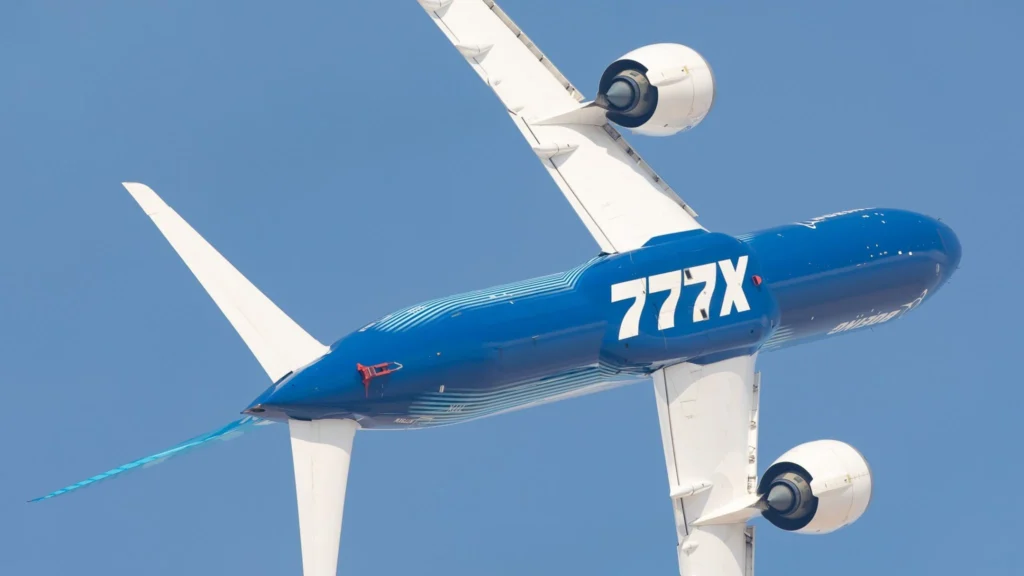
Boeing 777X Certification Program
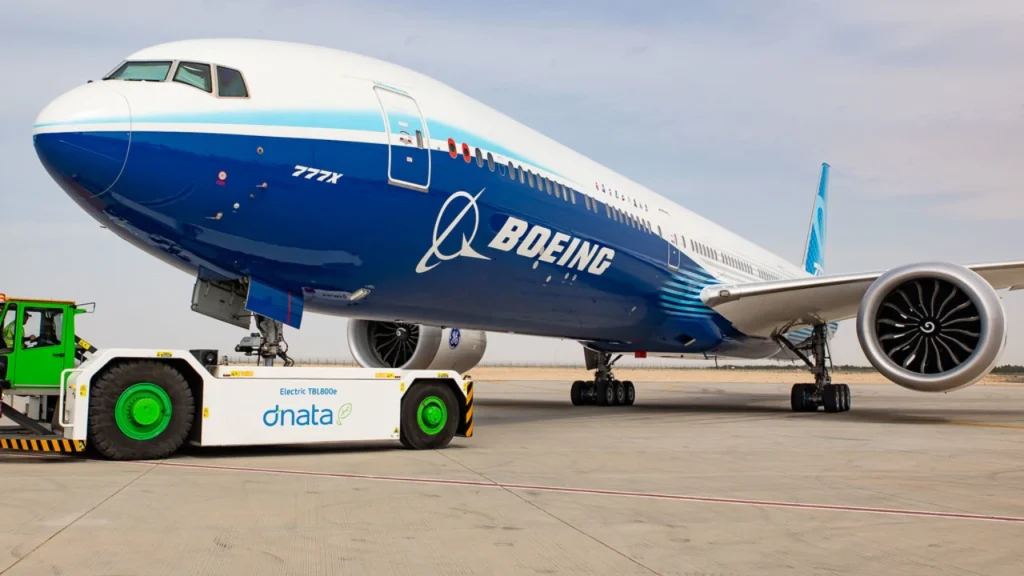
The Boeing 777X is a next-generation widebody aircraft designed for long-haul commercial operations.
Its development has faced substantial delays, technical challenges, and increased costs, placing significant pressure on the company to complete certification safely and efficiently.
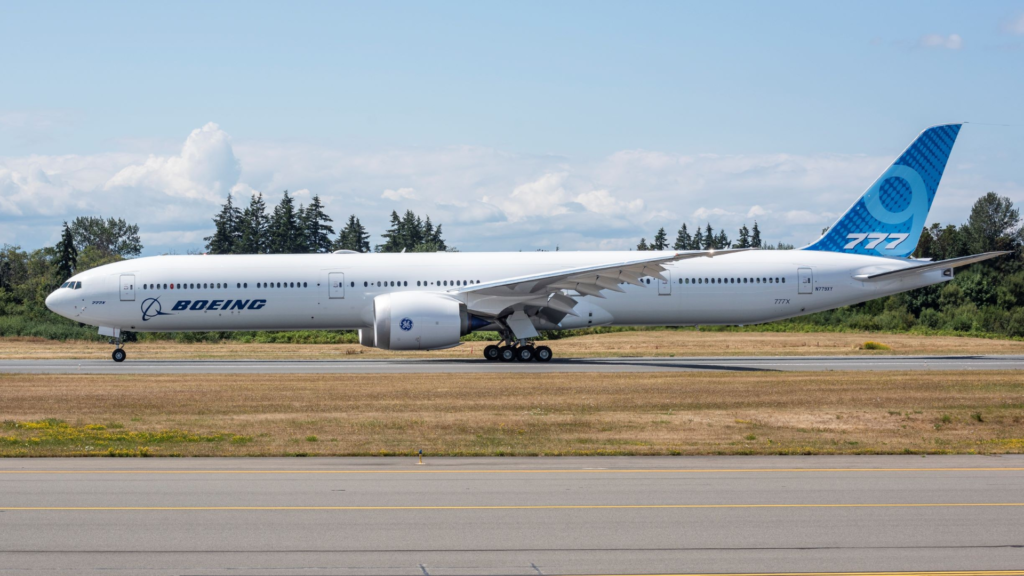
The 777X family includes the 777-8 and 777-9, powered by GE Aerospace’s GE9X engines. The 777-9 is the first model expected to enter commercial service, with Boeing targeting its first delivery in 2027.
Certification Progress in 2026
On March 18, 2026, Boeing’s 777-9 program advanced into the Type Inspection Authorization 4A phase of certification flight testing after receiving the necessary FAA approval. This milestone allowed the certification campaign to proceed into another defined phase of testing, but it did not mean that the aircraft had received final certification.
Boeing’s first-quarter 2026 results confirmed approval to begin this phase. The FAA must still review the required testing and technical evidence before the aircraft can receive the approvals needed for commercial operation.
By July 16, 2026, Boeing reported that its 777-9 test fleet had accumulated more than 4,800 flight hours and approximately 1,700 flights. About 50% of planned certification testing had been completed, according to the company’s certification progress update.
Boeing also reported that two of its four flight-test aircraft had completed their final layups in preparation for remaining flight-test activities. Major tasks still included obtaining additional Type Inspection Authorizations, completing certification deliverables, and securing approval for extended operations testing.
These figures demonstrate the scale of the program and the amount of work required before the aircraft can enter service.
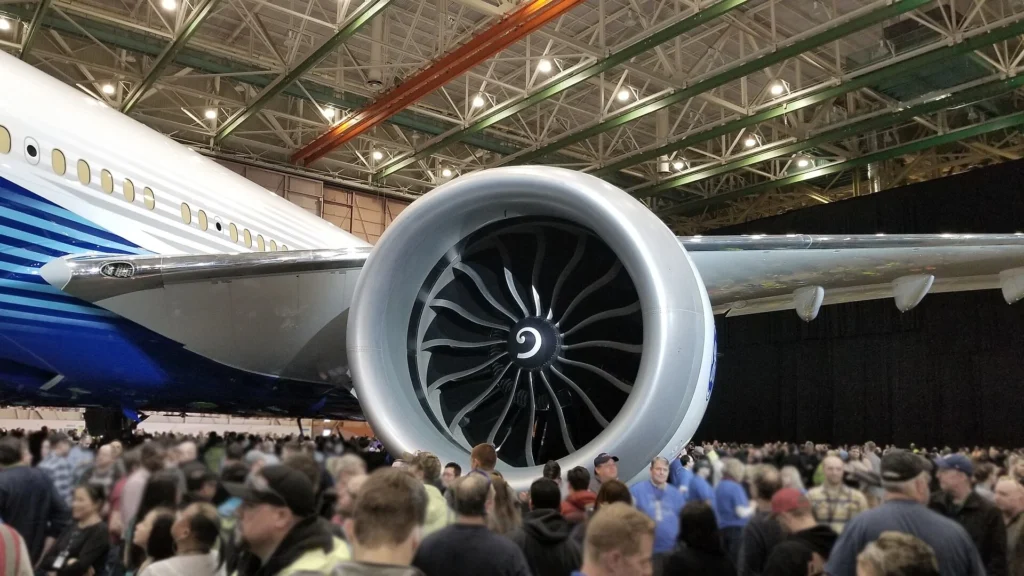
GE9X Engine Challenge
Engine reliability remains an important part of the 777X certification process. In February 2026, GE Aerospace disclosed a durability issue involving the GE9X engine’s mid-seal, a component connecting sections of the engine.
By September 2026, GE had identified the cause, redesigned the component, and begun shipping engines incorporating the updated seal to Boeing. GE also reported that the redesigned part was undergoing a separate FAA certification process.
According to Reuters’ September 17 report, GE expected the issue not to delay the planned 2027 entry into service. That was the company’s assessment at the time, not a guarantee of the aircraft’s certification schedule.
For flight-test teams, developments like these can require additional testing, documentation, and coordination between aircraft manufacturers, engine suppliers, and regulators. Test pilots help evaluate aircraft behavior during approved test procedures and provide technical feedback that supports the certification process.
What Test Pilots Do During Certification Flights
Flight-test pilots perform a broader technical role than conventional airline pilots. They help evaluate whether an aircraft performs as expected and whether its systems meet applicable requirements.
Their responsibilities may include:
- Flight-control evaluation: Testing control responses and assessing the behavior of aircraft handling systems.
- Engine and performance testing: Measuring aircraft performance across approved operating conditions and evaluating engine-system behavior.
- System reliability checks: Helping assess cockpit equipment, automation, and redundant systems.
- Abnormal-condition testing: Evaluating aircraft responses to controlled test scenarios designed to examine safety and handling characteristics.
- Technical data review: Working with engineers to interpret recorded flight data and identify discrepancies.
- Regulatory documentation: Providing detailed test reports and supporting the evidence required by the FAA.
Before each mission, teams develop test plans, identify potential risks, and establish the conditions under which the test can proceed. After each flight, pilots and engineers review the data and determine whether additional testing or engineering changes are necessary.
This process requires a combination of technical knowledge, disciplined decision-making, and extensive aircraft experience. It helps explain why senior experimental pilots can command compensation above many general aviation salary benchmarks.
Boeing 777-8 and 777-9: Key Specifications
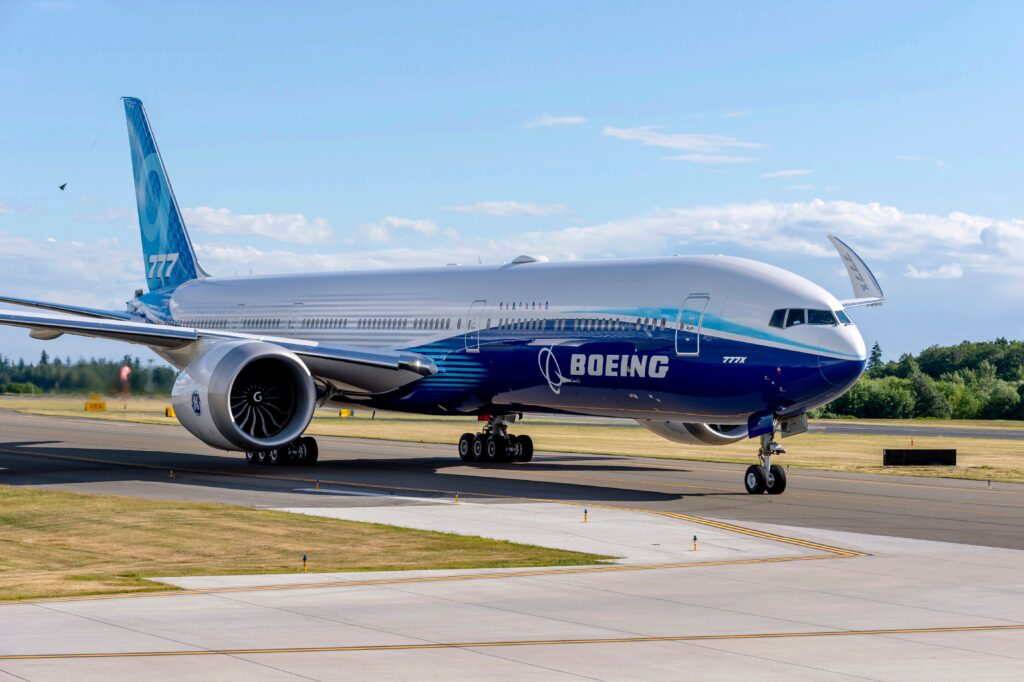
The technical differences between the two 777X passenger models help explain the program’s engineering demands. Both aircraft share the GE9X engine family and a folding-wingtip design, but they differ in size, capacity, and range.
Boeing’s current official 777X specifications publish seating and range as capacity ranges and maximum-range figures rather than a single typical configuration.
| Specification | Boeing 777-8 | Boeing 777-9 |
|---|---|---|
| Two-class seating capacity | 350 to 425 | 375 to 450 |
| Maximum published range | Up to 9,500 nmi (17,590 km) | Up to 8,000 nmi (14,820 km) |
| Length | 232 ft 6 in (70.9 m) | 251 ft 9 in (76.7 m) |
| Wingspan, extended | 235 ft 5 in (71.8 m) | 235 ft 5 in (71.8 m) |
| Wingspan, folded on the ground | 212 ft 9 in (64.8 m) | 212 ft 9 in (64.8 m) |
| Height | 64 ft 1 in (19.5 m) | 64 ft 1 in (19.5 m) |
| Engine | GE9X | GE9X |
Earlier published figures also cited typical seating counts of 395 passengers for the 777-8 and 426 for the 777-9, with estimated ranges of 8,745 nmi and 7,285 nmi, respectively.
Those values reflect different configuration or range assumptions and should not be confused with Boeing’s current published maximum-range figures.
Why Folding Wingtips Matter
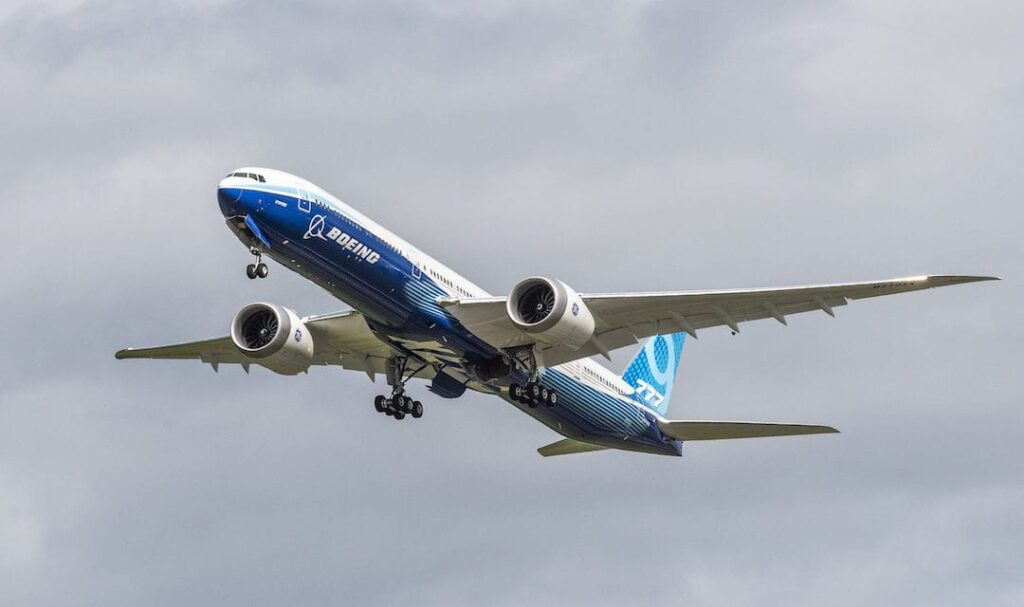
The 777X’s folding wingtips help accommodate airport ground infrastructure. The extended wingspan reaches approximately 71.8 metres, while the folded span is around 64.8 metres.
The design allows the aircraft to benefit from its larger wings in flight while reducing its span on the ground. This feature is important for airport compatibility and ground operations.
Evaluating aircraft behavior and verifying the operation of new systems are part of the broader engineering and test program. Such work requires close coordination between pilots, systems engineers, and other specialists.
Boeing Test Pilot Salaries
Boeing test pilots and commercial airline captains have different responsibilities, working environments, and compensation structures. Test pilots evaluate aircraft during development, while airline captains operate aircraft carrying passengers and cargo on scheduled services.
Their salaries therefore cannot be compared accurately without considering the underlying pay definitions.
Airline Widebody Captain Earnings
Experienced widebody captains at major airlines can earn substantial compensation through salary, flight-hour payments, seniority-based rates, retirement contributions, and other benefits.
Earlier estimates cited annual compensation of approximately $250,000 to $450,000 for experienced captains at major international airlines, with some particularly senior pilots potentially exceeding $500,000 in total compensation.
These figures should be treated as upper-end estimates, not universal salaries across Delta Air Lines, United Airlines, or Emirates.
Publicly reported US airline contract rates illustrate how such earnings can accumulate. A 2026 pay comparison lists a top-scale 12-year widebody captain rate of approximately $483.74 per flight hour at United Airlines.
At 80 paid flight hours per month over 12 months, that rate equates to approximately $464,000 in flight-hour pay before separate benefits and other compensation.
Actual earnings depend on credited hours, contract terms, schedules, and other factors. See the 2026 airline pilot pay comparison.
This example is not a guaranteed annual salary, nor is it directly comparable to the published salary range of a Boeing test-pilot position.
Differences Between the Two Careers
| Factor | Boeing 777X test pilot | Airline widebody captain |
|---|---|---|
| Main responsibility | Aircraft development and testing | Safe passenger and cargo transport |
| Primary working environment | Experimental and certification flights | Scheduled commercial flights |
| Technical focus | Aircraft performance, systems, test data, and certification | Aircraft operation, crew management, and operational safety |
| Career requirements | Advanced flying skills and specialist testing experience | Airline qualifications, type ratings, and operational experience |
| Pay structure | Employer salary and potentially additional compensation | Flight-hour pay, seniority rates, and potentially additional benefits |
Senior airline captains may earn more than many test pilots, particularly when flight-hour pay and retirement contributions are substantial. However, senior experimental pilots can also earn high salaries when they hold specialist responsibilities in complex aerospace programs.
The main distinction is that airline captains focus on safe and efficient transport, while test pilots help demonstrate that an aircraft meets its technical and regulatory requirements.
What It Takes to Become a Boeing Test Pilot
Becoming a test pilot is highly competitive. Candidates need strong flying skills, technical knowledge, analytical ability, and the judgment to conduct demanding test missions safely.
There is no single career route for every test-pilot position. Military aviation remains a common pathway, but employers may also recruit candidates with relevant commercial aviation experience and specialist technical qualifications.
Military Aviation and Test-Pilot Training
Many experimental pilots begin their careers in military aviation before undertaking specialist flight-test training. Programs such as the United States Air Force Test Pilot School and the United States Naval Test Pilot School provide structured training in aircraft evaluation, flight-test planning, performance analysis, and risk management.
The original source material cited more than 1,000 military flight hours as an example of the experience candidates may accumulate before entering advanced testing roles. That figure should not be treated as a universal eligibility requirement. Required experience varies by training program, aircraft type, and position.
Candidates may have experience flying tactical fighters, military transport aircraft, cargo aircraft, or other high-performance platforms. Such experience can help develop the aircraft-handling skills and operational judgment required for experimental testing.
Engineering Qualifications and Technical Skills
Engineering knowledge is increasingly important because modern aircraft combine complex software, automated flight controls, sensors, propulsion systems, and redundant safety features.
Relevant academic disciplines include aerospace engineering, systems engineering, mathematics, and flight sciences. These subjects help pilots understand aircraft performance, system integration, and the engineering principles behind test results.
Boeing’s published Senior T-7A Experimental Test Pilot posting provides a concrete example of the requirements for a specialist role. It listed a bachelor’s degree in a relevant technical discipline, graduation from a recognized test-pilot school, an FAA commercial pilot certificate, and a current FAA Class II medical certificate.
The same posting required 1,500 hours as first pilot in tactical high-performance aircraft, plus more than 100 flight hours as first pilot during experimental, engineering, operational, or acceptance testing. It also specified military flight-test experience.
These are requirements for that particular T-7A position, not universal requirements for every Boeing flight-test role or for the 777X program.
Analytical Skills and Communication
A successful test pilot must communicate technical findings clearly. After a flight, engineers need precise information about aircraft behavior, control responses, system performance, and any unexpected results.
Test pilots must also distinguish between expected aircraft behavior and anomalies that require investigation. Their observations can inform engineering changes, additional testing, and updates to operating procedures.
The combination of advanced flying, technical analysis, and communication skills makes experienced test pilots valuable to aerospace manufacturers.
Why Boeing Continues to Need Experienced Test Pilots
Aircraft certification requires extensive technical evidence. Regulators must be satisfied that the aircraft meets applicable requirements for safety, performance, and system reliability before it can enter commercial service.
The 777X program illustrates this challenge. Boeing’s July 2026 update reported substantial flight-test progress, but it also identified further certification authorizations and deliverables that needed to be completed. The company continued to target first delivery of the 777-9 in 2027.
The remaining work depends on coordinated testing, data analysis, engineering reviews, and regulatory assessment. Experienced test pilots play an important role because they can evaluate aircraft performance, identify unexpected behavior, and provide precise technical feedback to engineering teams.
Demand for such expertise is not driven only by the number of flights. It also reflects the complexity of modern aircraft and the need to demonstrate how integrated systems behave under a wide range of conditions.
The 777X is an important part of Boeing’s long-haul aircraft strategy, alongside the 787 Dreamliner. Its folding wingtips, GE9X engines, and advanced aircraft systems make it a technically complex development program. Completing certification safely remains essential to the aircraft’s eventual commercial introduction.
Final Outlook
Boeing 777X test pilots are estimated to earn around $100,000 to more than $250,000 annually, depending on experience, technical qualifications, and the responsibilities associated with their roles.
Public salary databases provide general industry benchmarks, while Boeing’s published pay range for a senior T-7A experimental test pilot demonstrates the higher compensation available in some specialist positions.
These figures do not establish an official 777X-specific salary scale. The most accurate assessment is that compensation varies considerably by position, seniority, technical expertise, and employment terms.
Boeing’s continued certification work also reinforces the importance of experienced flight-test personnel.
As the 777X moves toward its planned entry into service, test pilots remain central to evaluating aircraft systems, supporting engineering teams, and providing the evidence required for regulatory approval.
For aspiring test pilots, the career combines advanced aviation skills with engineering knowledge and analytical work. Those qualifications can create opportunities in commercial aerospace and experimental aircraft development, where technical precision and safety are essential.
Stay tuned with us. Further, follow us on social media for the latest updates.
Join us on Telegram Group for the Latest Aviation Updates. Subsequently, follow us on Google News
