


BEIJING- China’s Commercial Aircraft Corporation of China (COMAC) is forecast to capture 5% of the global aircraft fleet allocation by 2045, as demand for single-aisle passenger jets and orders from Chinese airlines support its expansion. Aviation analytics firm Cirium expects Airbus to retain the largest share at 47%, followed by Boeing at 39%, while COMAC gradually strengthens its position in a market dominated by the two Western manufacturers.
The forecast comes as COMAC seeks to expand international sales of its C919 narrowbody jet and C909 regional aircraft. Although the C919 entered commercial service in 2023 and has accumulated more than 1,000 orders from Chinese airlines, production has remained below the manufacturer’s targets, while certification and supply chain challenges continue to constrain its growth.
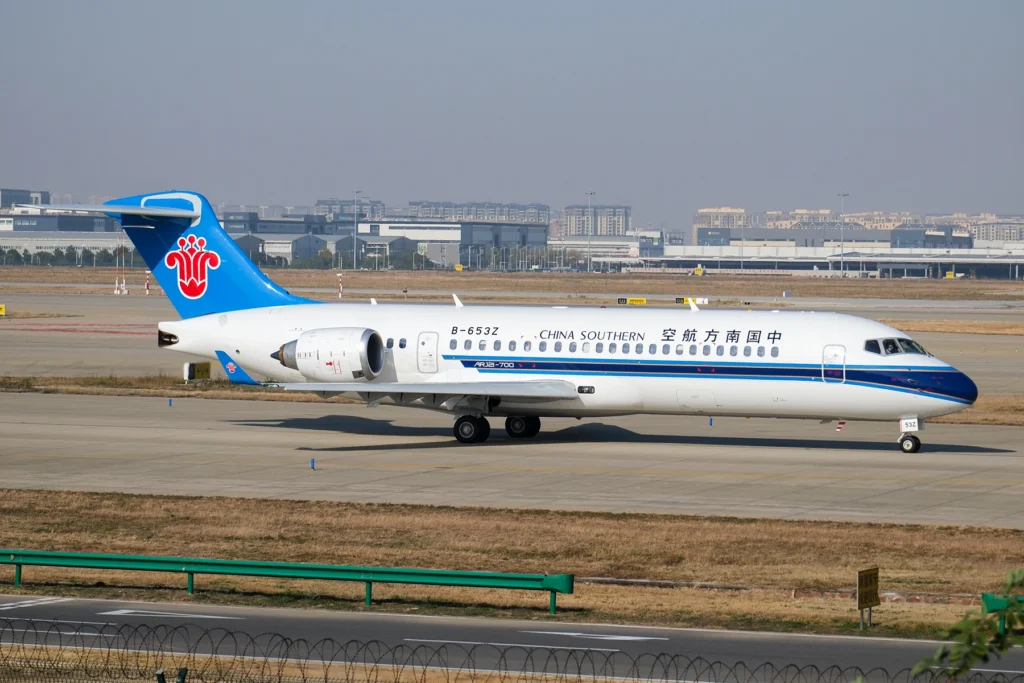
COMAC Market Share Forecast
Cirium’s long-term outlook projects that COMAC will account for 5% of the global aircraft fleet allocation by 2045. Embraer is forecast to hold 3%, while ATR is expected to account for 2%, leaving Airbus and Boeing with a combined 86% share of the projected market.
COMAC’s projected growth would represent a significant increase from its current position. Independent aviation analyst Li Hanming estimated that the Chinese manufacturer accounts for approximately 1% of the global fleet allocation today.
Cirium said its projections reflected the continued dominance of Airbus and Boeing alongside a gradual shift towards emerging aircraft manufacturers.
The forecast also highlights China’s growing importance in the global aviation industry, supported by domestic demand and efforts to develop a commercially competitive aircraft manufacturing sector.
China is expected to account for 18% of the world’s aircraft fleet allocation by 2045. Narrowbody aircraft are forecast to lead demand because of their greater passenger capacity and operating cost efficiency compared with larger aircraft types.
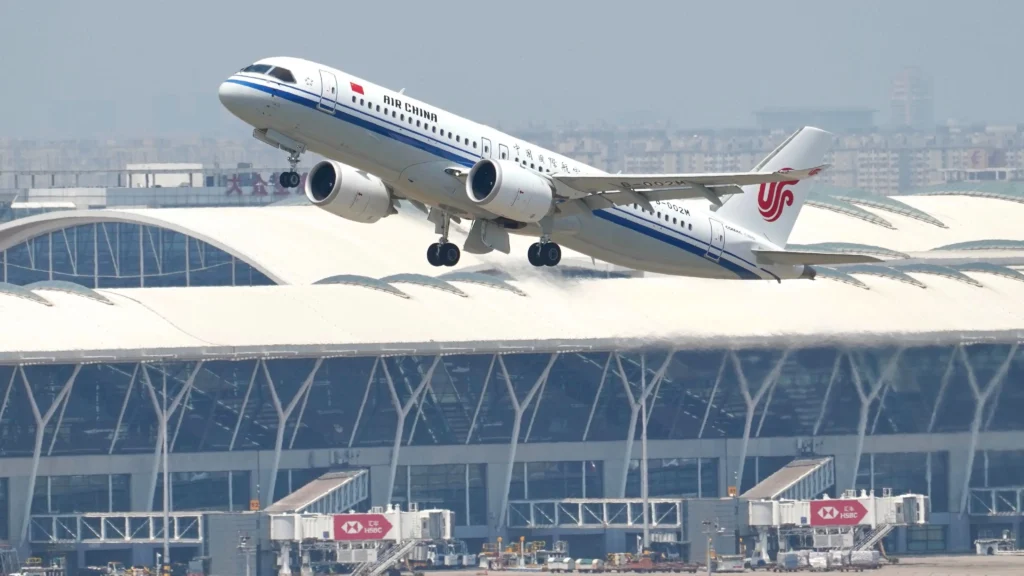
C919 Has Production Challenges Ahead
The C919 is COMAC’s principal narrowbody programme and competes in the same broad market as the Airbus A320 family and Boeing 737 series. The aircraft entered commercial service in 2023, giving Chinese airlines a domestically developed alternative to established Western passenger jets.
However, the manufacturer’s production performance has fallen short of its targets. COMAC delivered 15 C919 aircraft in 2025, compared with a target of 75, and delivered only three during the first quarter of 2026, according to the reported figures.
International expansion also remains a challenge. COMAC is pursuing certification for C919 operations in the European Union, while reported US restrictions affecting shipments of American-made aircraft engines and other components to China have added pressure to its production plans.
These constraints could influence how quickly COMAC converts its order book into delivered aircraft. Its projected 5% global allocation by 2045 will depend on its ability to increase production, meet customer requirements and establish a stronger position beyond its domestic market.
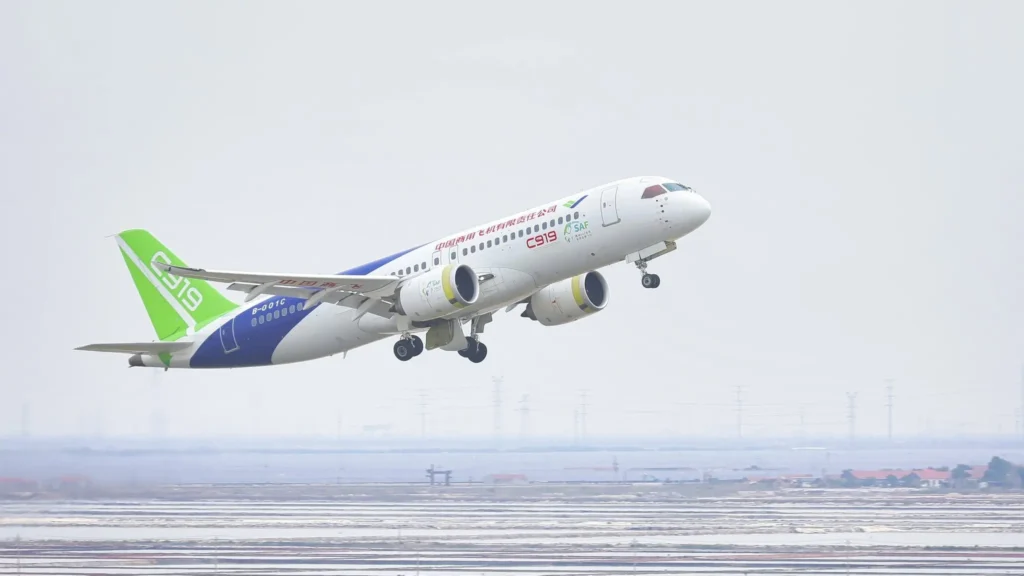
COMAC’s Global Fleet Demand Grows
Cirium forecasts that the global passenger fleet will expand at a compound annual growth rate of 3.2% through 2045. The rate is slightly below the firm’s previous forecast, reflecting persistent supply chain bottlenecks, higher costs, and geopolitical uncertainty affecting the aviation industry.
The analytics firm expects approximately 43,000 new passenger aircraft, freighters and turboprop aircraft to be delivered worldwide between 2026 and 2045.
Their combined estimated value is US$3.2 trillion in today’s dollars, underlining the scale of the long-term aircraft market.
More than 50,000 passenger aircraft are expected to be in service by 2045. Narrowbody jets are projected to account for 76% of the modelled passenger fleet allocation, while regional jets are expected to represent 3%.
This demand provides an opportunity for COMAC to increase its presence, particularly in the single-aisle segment.
However, Airbus and Boeing are expected to remain the dominant manufacturers, with COMAC’s projected share reflecting gradual expansion rather than a rapid shift in the global competitive landscape, SCMP reported.
Stay tuned with us. Further, follow us on social media for the latest updates.
Join us on Telegram Group for the Latest Aviation Updates. Subsequently, follow us on Google News
