

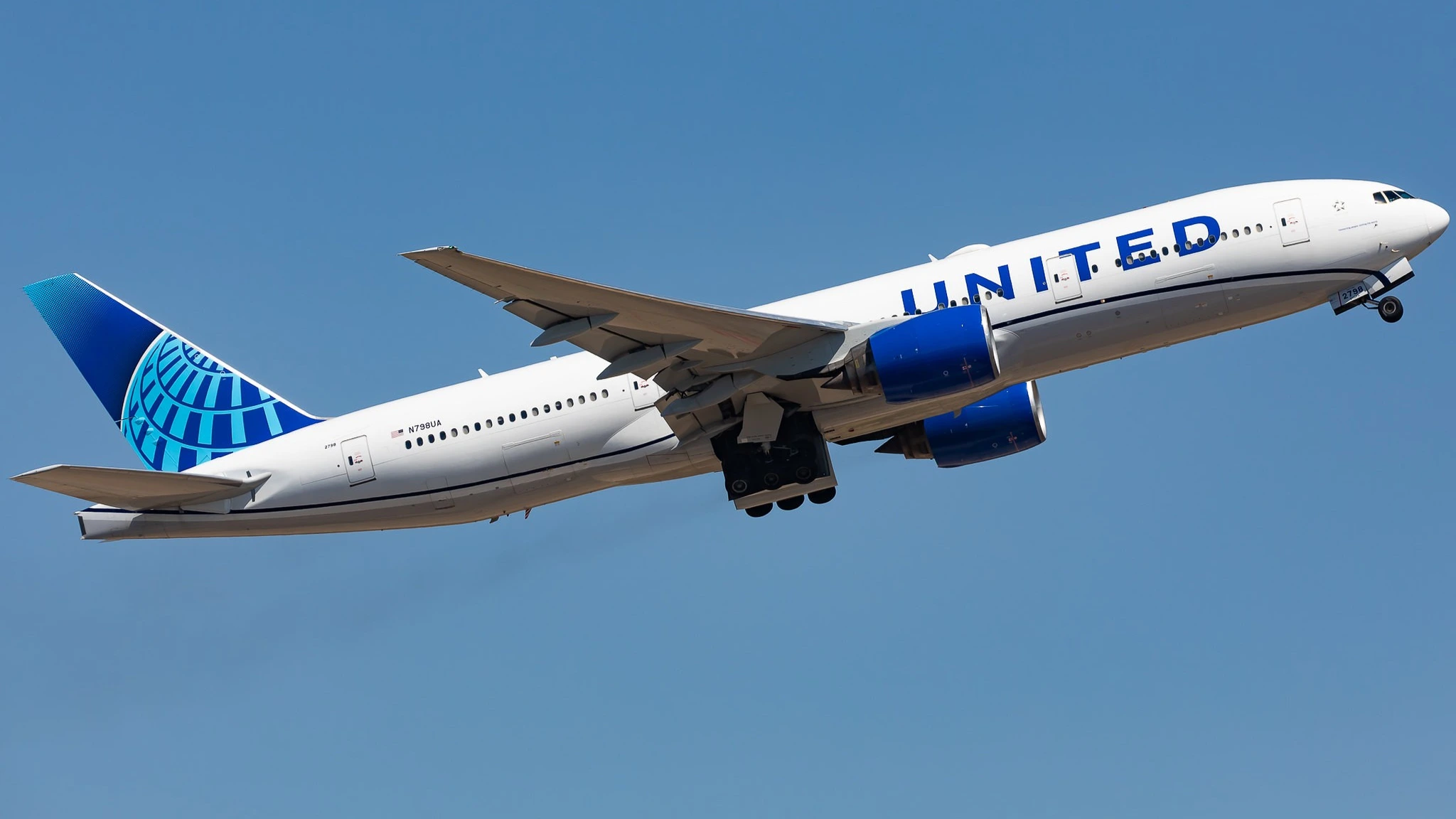
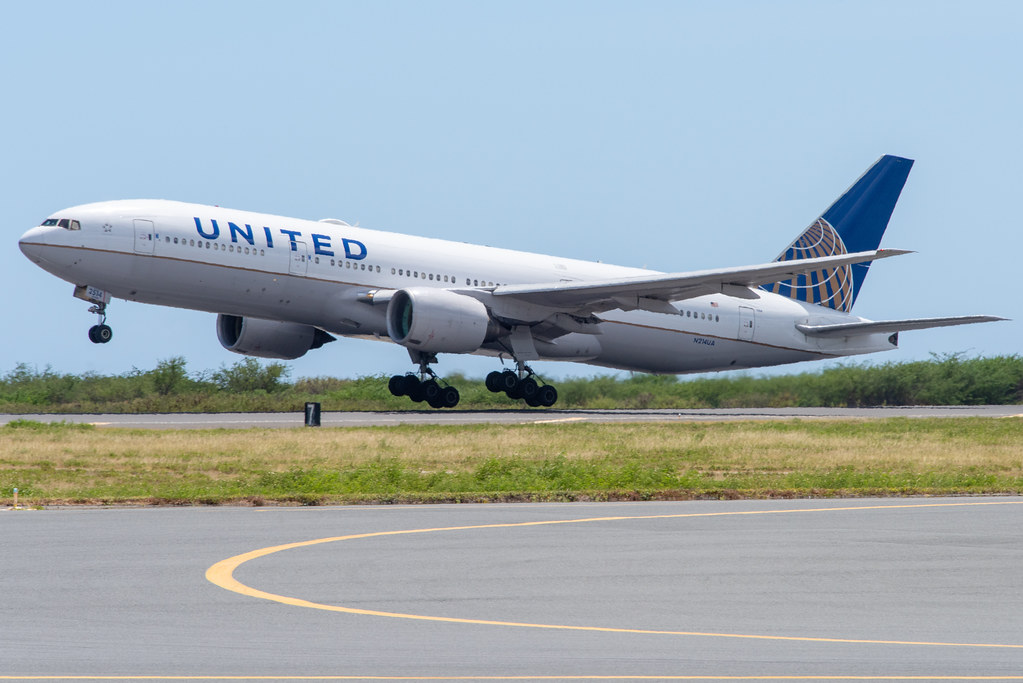
CHICAGO- A United Airlines (UA) Boeing 777-200ER returned to San Francisco International Airport (SFO) on October 6, 2026, after its crew shut down an engine during a scheduled flight to Beijing Capital International Airport (PEK).
The aircraft landed safely about 90 minutes after departure. The incident involved a Pratt & Whitney PW4090 engine, but investigators have not publicly established the cause of the malfunction.
United 777-200ER Shuts Down Engine During Climb
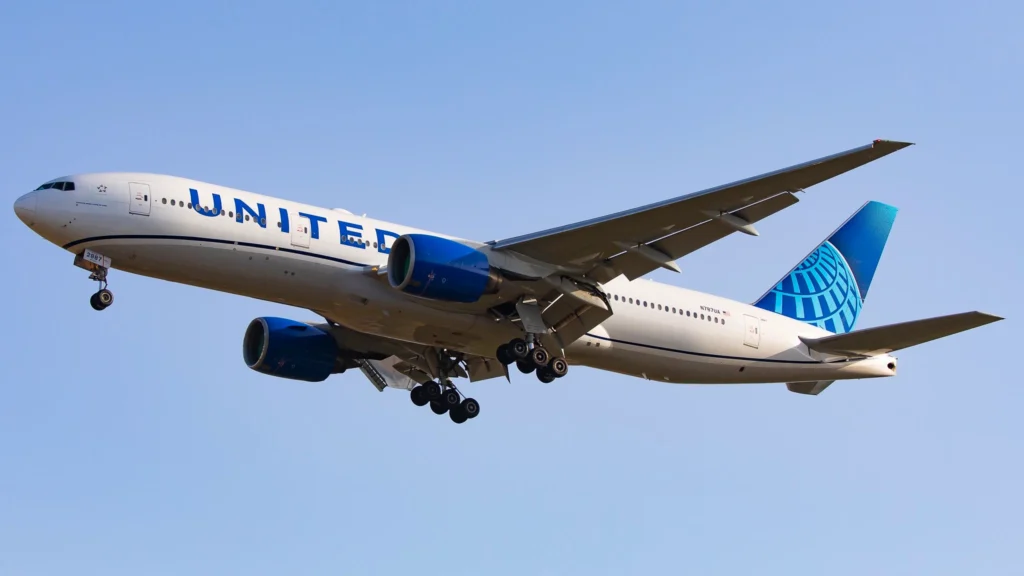
The aircraft, registered N796UA, was operating flight UA888 from San Francisco to Beijing when the crew reported loud noises and severe vibrations from the right-hand engine. According to reports, the problem developed as the aircraft climbed through approximately 28,000 feet.
The flight crew stopped the climb, shut down the affected engine, and returned to San Francisco. The aircraft landed safely on Runway 28R around 90 minutes after departure, according to The Aviation Herald’s report.
Flight-tracking records also show that N796UA returned to SFO on October 6, although United’s scheduled service to Beijing was disrupted. Reports published after the incident indicated that the aircraft remained on the ground following the emergency return.
The PW4090 belongs to Pratt & Whitney’s PW4000-112 engine family, which powers several early Boeing 777 variants. An engine shutdown is a serious operational event, but twin-engine aircraft are designed to continue flying safely on one engine when necessary. Flight crews train for these situations and follow established procedures to manage them.
The crew’s decision to return to San Francisco allowed the aircraft to land without further incident. The available reports have not established whether the malfunction resulted from a component failure, a maintenance issue or another technical problem.
Aircraft N796UA Has a Long History of Service
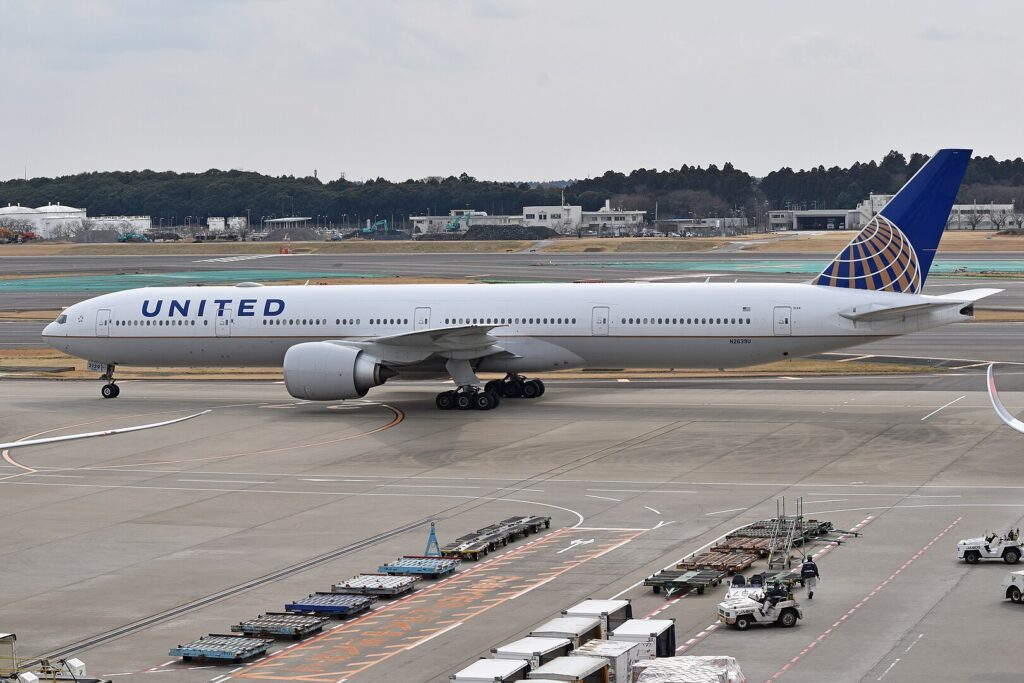
United received N796UA on January 28, 1998, according to aircraft records published by JetPhotos. The Boeing 777-200ER was therefore approximately 28 years and eight months old when the latest incident occurred.
The aircraft has spent nearly its entire operating life with United, apart from periods of storage. It is powered by two Pratt & Whitney PW4090 engines and belongs to an early generation of Boeing 777s that continues to serve major airlines on long-haul routes.
N796UA also experienced an engine-related incident shortly after entering service.
On July 29, 1998, the aircraft was preparing to operate a flight from London Heathrow Airport (LHR) to San Francisco when smoke entered the flight deck and cabin following a loud bang. The crew identified a serious problem involving the left-hand engine, including a rapid loss of oil pressure, and returned safely to Heathrow.
The United Kingdom’s Air Accidents Investigation Branch (AAIB) investigated the incident and identified failed carbon seals that allowed engine oil to escape rapidly. The resulting oil loss caused internal engine damage and significant heating around the engine’s bearing compartment and nacelle.
The 1998 occurrence and the October 2026 event involved the same airframe but different reported circumstances. There is no established evidence that the two incidents share a common technical cause.
United’s Boeing 777 Fleet Has Experienced Other Engine Incidents
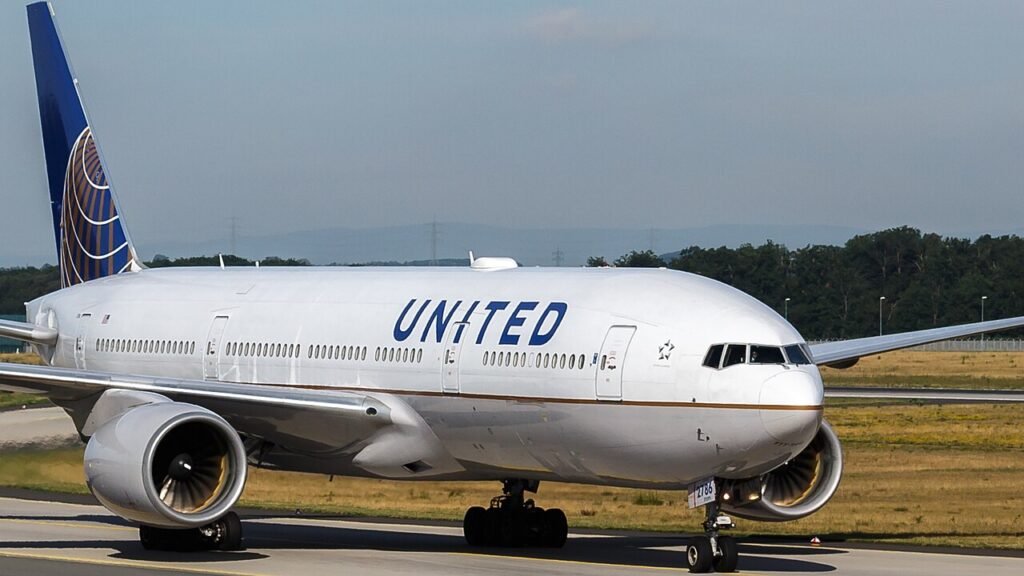
The latest event follows several other engine-related incidents involving United’s Boeing 777-200 fleet. These occurrences have involved both Pratt & Whitney PW4000 engines and General Electric GE90 engines.
One of the closest comparisons occurred on July 9, 2026, when another United Boeing 777-200ER, registered N228UA, was operating flight UA926 from San Francisco to Frankfurt Airport (FRA).
While climbing through approximately 29,000 feet, the aircraft’s right-hand PW4090 engine reportedly emitted a loud bang. The crew stopped the climb, shut down the engine and returned to SFO. The aircraft landed safely on Runway 28R about an hour after departure, according to Airportia’s incident report.
Both the July and October incidents involved PW4090 engines on United 777s departing from San Francisco. However, the similarities do not establish that the engine failures had the same cause.
Notable United Boeing 777 Engine Incidents
| Date | Aircraft | Engine | Reported incident |
|---|---|---|---|
| February 13, 2018 | N773UA | PW4077 | A fan blade separated over the Pacific, damaging the engine inlet and fan cowl. The aircraft landed safely in Honolulu. |
| February 20, 2021 | N772UA | PW4077 | Flight UA328 suffered a fan blade separation and engine fire after departing Denver. The aircraft returned safely. |
| June 19, 2026 | N78009 | GE90 | Flight UA102 returned to Houston after the right-hand engine produced repeated bangs and visible flames during climb. |
| July 9, 2026 | N228UA | PW4090 | The crew shut down the right-hand engine during climb from San Francisco and returned safely. |
| October 6, 2026 | N796UA | PW4090 | Severe vibrations and loud noises prompted the crew to shut down the right-hand engine and return to San Francisco. |
The 2018 incident involving N773UA occurred on flight UA1175 from San Francisco to Honolulu. The aircraft was cruising over the Pacific when a fan blade separated from its right-hand PW4077 engine, damaging the engine inlet and fan cowl. The crew shut down the engine and continued to Honolulu, where the aircraft landed safely.
The National Transportation Safety Board (NTSB) documented the incident and investigated the fan blade failure.
A more widely reported event occurred on February 20, 2021, when United flight UA328 suffered a fan blade separation and engine fire shortly after departing Denver International Airport (DEN) for Honolulu. The damaged engine sent debris into nearby residential areas in Broomfield, Colorado. The aircraft returned safely to Denver, and none of the 239 people on board suffered injuries.
The NTSB determined that fatigue failure of the right-hand engine’s fan blade was the probable cause. The investigation also identified shortcomings in the inspection process. The event prompted regulatory action and operational restrictions affecting Boeing 777s powered by the relevant Pratt & Whitney PW4000 engines.
In a separate incident on June 19, 2026, United flight UA102 was climbing out of George Bush Intercontinental Airport (IAH) in Houston on its way to Munich Airport (MUC). The crew shut down the right-hand GE90 engine after reports of repeated bangs and visible flames. The aircraft returned safely to Houston about 50 minutes after departure, according to the Federal Aviation Administration.
These incidents involved different engines, operating conditions, and failure mechanisms. They demonstrate the range of technical problems that can affect aircraft engines, but they do not establish a single recurring defect across United’s entire 777 fleet.
Airlines Face Decisions Over Aging Boeing 777 Fleets
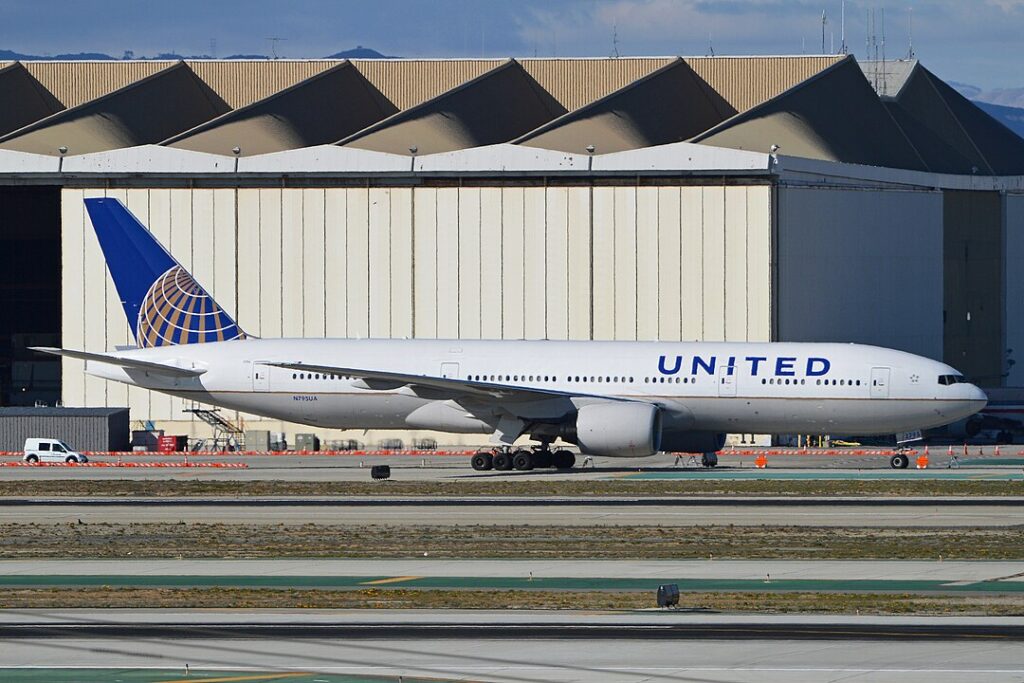
United continues to rely on its Boeing 777 fleet for domestic and international services while expanding its newer widebody aircraft.
Its 2025 annual report listed 19 Boeing 777-200 aircraft with an average age of 28.5 years and 55 Boeing 777-200ERs averaging 25.8 years as of December 31, 2025. Together, those aircraft represented 74 of United’s older 777-200-family jets.
United’s July 2026 fleet plan projected that its combined Boeing 777-200 and 777-300 fleet would remain at 96 aircraft through the end of the year. The plan also projected that its Boeing 787 fleet would reach 100 aircraft by year-end.
These figures indicate that United planned to retain its overall 777 fleet in the near term while expanding its Dreamliner fleet. They do not establish how long the airline intends to operate each individual 777-200 or 777-200ER.
Keeping older aircraft in service allows airlines to preserve available capacity, especially on routes that require widebody jets. Retirement decisions also depend on maintenance costs, reliability, fuel efficiency, cabin investment, replacement aircraft deliveries and demand for available seats.
Other airlines have followed different approaches.
Japan Airlines completed the retirement of its Boeing 777-200 fleet in March 2021 and scheduled the retirement of its remaining 777-200ERs during the first half of fiscal 2023. The airline’s official announcement linked the transition to its wider fleet plans, including the use of Airbus A350-900 aircraft on domestic routes.
British Airways has also outlined a replacement path for its Gatwick-based 777-200 fleet. The airline confirmed in February 2026 that deliveries of new Boeing 787-10s would begin in 2029, starting the replacement process for those aircraft, according to its official announcement.
United, by contrast, has not announced a firm retirement date for its entire 777-200 fleet in the cited fleet plans. The aircraft therefore remain part of its capacity strategy while newer widebodies support fleet renewal and network growth.
What the Latest Engine Shutdown Means
The October 6 incident highlights the operational importance of engine reliability on long-haul aircraft. The crew’s decision to shut down the affected engine and return to San Francisco resulted in a safe landing, but the malfunction disrupted the planned service to Beijing.
The aircraft’s age and earlier engine incident make N796UA notable, but age alone does not establish an aircraft’s safety condition. Maintenance records, inspection findings, component condition, and the results of any technical investigation are needed to determine why a particular failure occurred.
Until investigators or the airline release further technical findings, the cause of the October 2026 engine shutdown remains undetermined. The incident also does not, by itself, establish a fleet-wide problem with United’s Boeing 777 aircraft or Pratt & Whitney PW4090 engines.
The event adds to the operational history of United’s early-generation 777s as the airline balances continued service with the longer-term costs and planning involved in replacing older widebody aircraft.
Stay tuned with us. Further, follow us on social media for the latest updates.
Join us on Telegram Group for the Latest Aviation Updates. Subsequently, follow us on Google News
